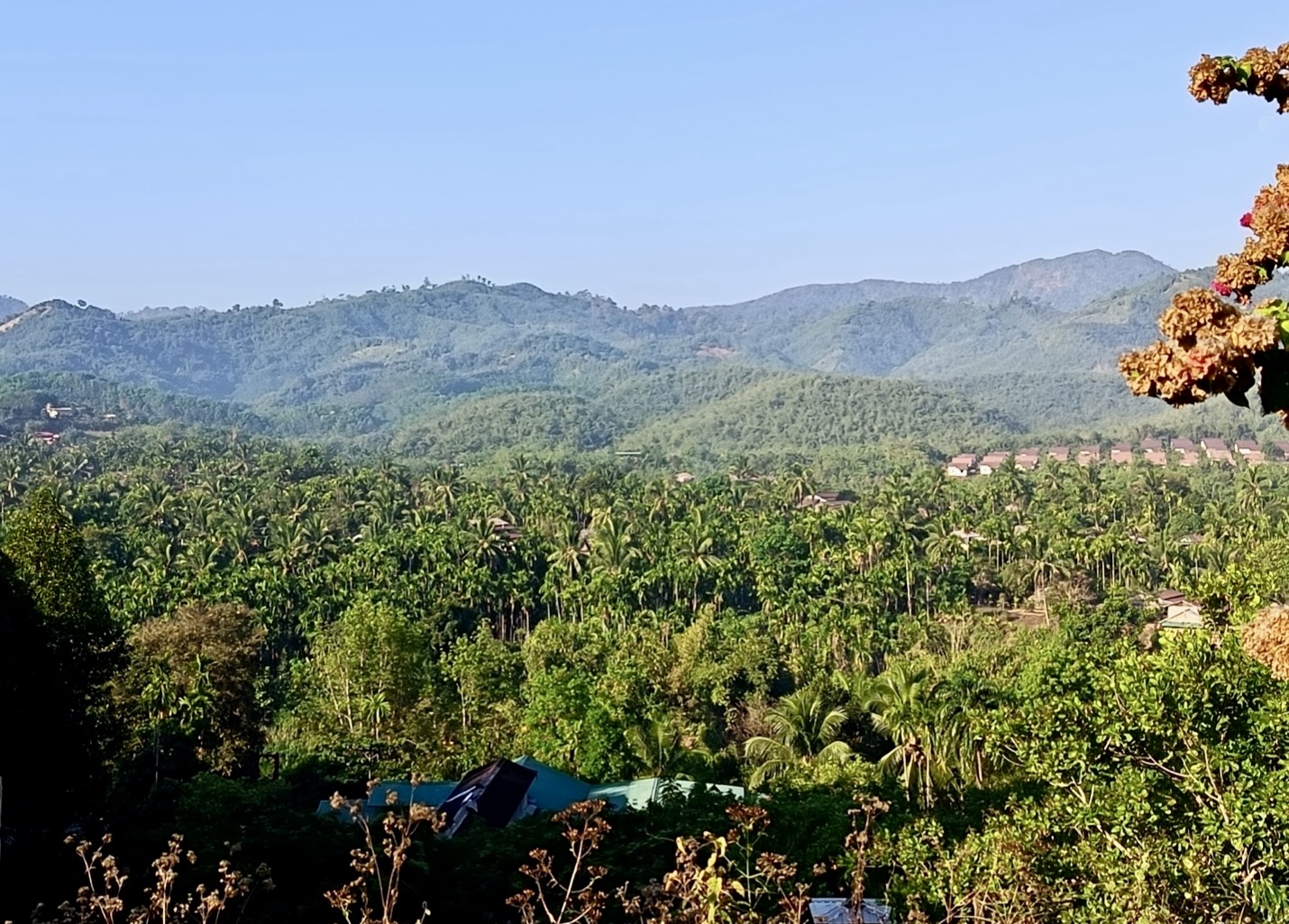
“When we first arrived in that region, the forests were dense, wildlife and fish were abundant, and the weather was extremely cold during the winter. It was also an area where malaria was very prevalent. I remember frequently falling ill with malaria; even today, I can still recall the bitter taste of the medicine provided by the clinic. At that time, the land and forests existed in their natural state, quite unlike how they appear today.” From the author’s journal
Introduction
So much has changed in the world over the past few decades, including the quality and condition of the landscapes in which people live and all the life – human and non-human – that is connected to it. How human societies see and relate to these landscapes has changed too.
This is especially the case in Myanmar. Here land is not only a symbol of ethnic identity for the indigenous people but also an absolute necessity for their survival. Disputes over land have been a driving force behind nearly 80 years of civil war in the country. People rely on the land to cultivate crops and trees to generate income for their livelihoods. Without land, it is as if their lives are lost. Land represents more than just sustenance; it is a heritage passed down through generations.
The Mon, a people of long history and culture, believe that land is a foundation upon which all living and non-living things depend. For us, land and the Mon people are inseparable. Land is essential for our economy, health, education, social welfare, and it is a legacy that must be handed down to future generations.
This commentary is an account of how life and land evolved from the 1990s onward in the Ye River headwaters area of Mon State, a territory known as the Ye Chaung Phya region. Mon State is well known for its vast rubber plantations, but in the Ye Chaung Phya region rubber cultivation is less common compared to other areas of the state, while betel nut plantation is more prevalent.
The author is a local resident who arrived in the Ye Chaung Phya region with their parents in 1995 to live in a camp for displaced people until 2006. The account is based on personal lived experience as well as interviews with current residents and migrant workers currently living in Thailand and Malaysia.