Introduction
In Kachin State, many working families combine multiple strategies to ensure their survival on the land. To make ends meet, rural families cultivate their own small-scale farms and raise livestock, while also sending members away to work in larger industries like agribusiness, mining or the service sector, both locally and outside the state. Yet Kachin State is a land rich in natural resources. But despite such potential, people and communities across the state are increasingly struggling to maintain their ways of life. This trend of combining survival strategies particularly intensified after the post-1994 “land rush,” which started when the Myanmar military regime and the Kachin Independence Organisation (KIO) signed a ceasefire agreement. As one land activist put it, the ceasefire agreement was the "ground zero point" for the land rush, unleashed in Kachin State with unprecedented speed and scale.
In this context, it is crucial to distinguish between a “land grab” and a “land rush,” while both reveal land injustice. A “land grab” is a specific act: a single land deal, such as a corporate land acquisition or a military land occupation, limited by physical and sectoral boundaries and a specific timeline. For instance, single deals like the Letpadaung copper mine in Sagaing Region or the Yuzana biofuel crop concession in Kachin State are vital to monitor and investigate to secure justice for the families affected. However, while essential, focusing exclusively on these individual “land grab” cases can overlook the larger, more structural issues. Individual land grabs may at the same time be part of a bigger trend of land grabbing – a land rush. Focusing only on a single land deal might overlook the bigger “land rush”, which transforms social relations across a wider area or landscape.
A land rush therefore is usually understood as a pivotal and often short-lived historical period defined by a sudden explosion in the demand for land. It is a chaotic, extremely competitive, and often violent transition where the basic rules governing land and commodities break down or are rapidly rewritten. Land rushes are not new nor are they unique to one country; they have been triggered throughout history by specific conditions. In Myanmar, land rushes have typically been fuelled by two main factors: (i) a sudden surge in speculative demand for land where there is no clear governance system, followed by (ii) the rapid adoption of new rules that redefine who gets to own, use and allocate land. These two factors inject extreme urgency and competition into land politics across the landscape. During a land rush, an atmosphere of irrationality and wild speculation takes hold, driving massive upheaval and rapid change on the ground. For anyone concerned with social and economic justice, understanding these land rush dynamics and how they transform social relations across entire regions is crucial.
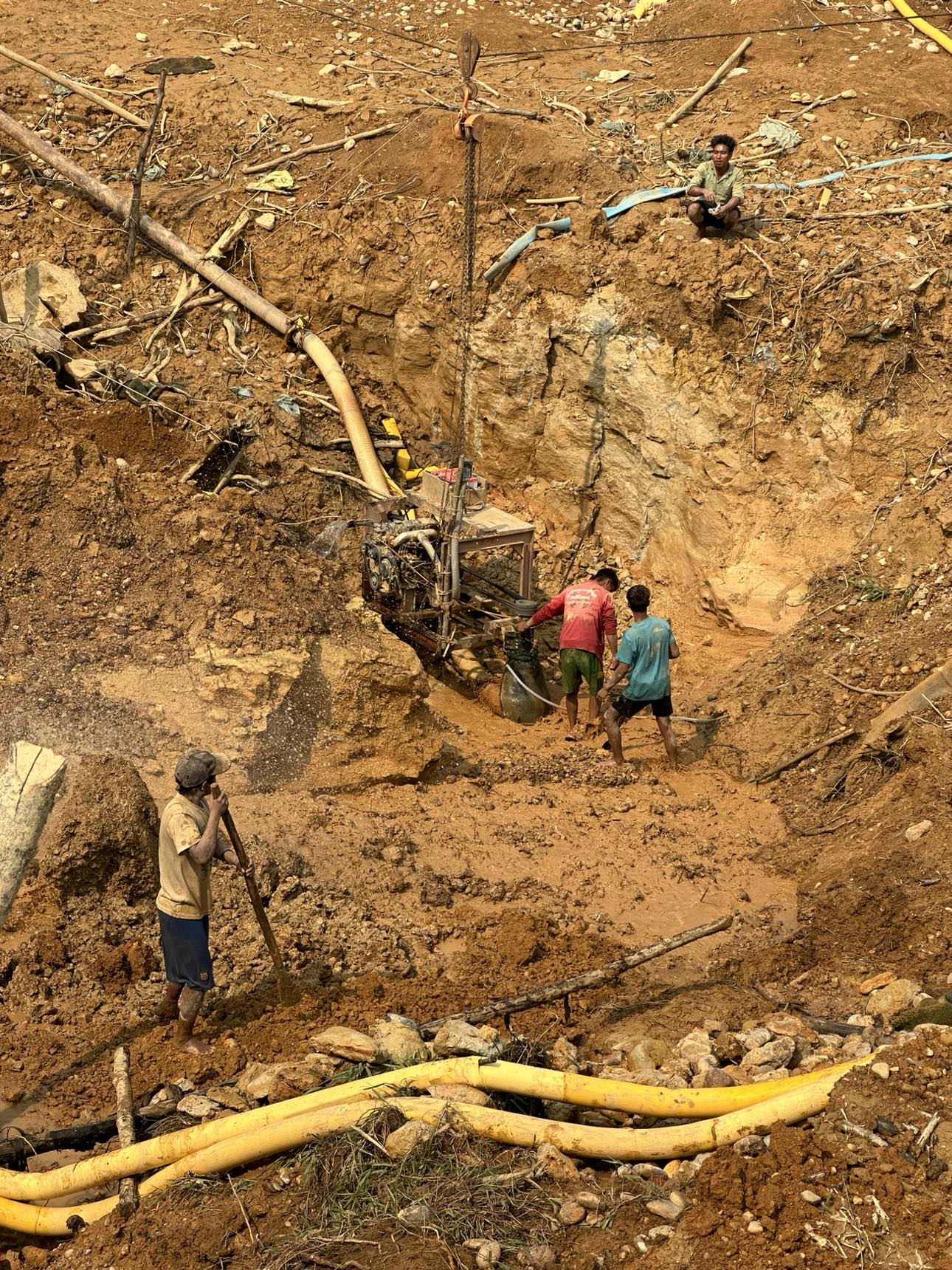
In Kachin State, a land rush that began in the mid-1990s led to the extractive economy boom, transforming land and people relations. Intensive logging by local and foreign companies in collusion with the Myanmar military, known as the Tatmadaw (Sit-Tat), and ethnic armed actors led to massive deforestation across the state. At the same time, the mining of high-value commodities like jade and amber – notorious for the negative consequences known as the "resource curse" – quickly intensified. This explosion in resource extraction severely limited the land available to local people. According to a local activist, “Considering all the conservation initiatives and other state-approved projects, the land left in Kachin State for ordinary people’s use may be only around 15% of the total land area.”
While this figure is an estimate, it vividly illustrates the sweeping scale of transformation decades after the 1994 land rush and the subsequent waves of land grabs.
Of the many changes underway, this article focuses on a particular outcome: the ever-tighter intertwining of the mining and agriculture sectors and their impact on rural Kachin communities and households. The basic survival of these farming families – their ability to care for themselves, raise their children and ensure the continuation of next generations – is now inextricably linked to mining. How did such a profound change happen?