Dear Friend,
In the northern Jordan Valley, Palestinian communities are facing escalating settler violence that is placing increasing strain on daily life. Roads connecting villages to nearby towns are frequently blocked, families report harassment and intimidation, and children are often unable to reach school safely or consistently. These small rural communities already contend with limited infrastructure and geographic isolation; repeated incidents are compounding that vulnerability and further restricting access to essential services. Based on demographic estimates, approximately 20-25,000 children under the age of 16 live across the Jordan Valley, with a substantial number in northern communities where disruptions have become more frequent.
Combatants for Peace, together with members of the Jordan Valley Activists, maintains a protective presence in the area as part of our commitment to nonviolent civilian protection. Our activists accompany residents along exposed routes, document incidents, and remain present during periods of heightened tension. While this cannot resolve the broader structural realities, it can help deter violence, ensure violations are recorded, and reduce the isolation that many families experience.
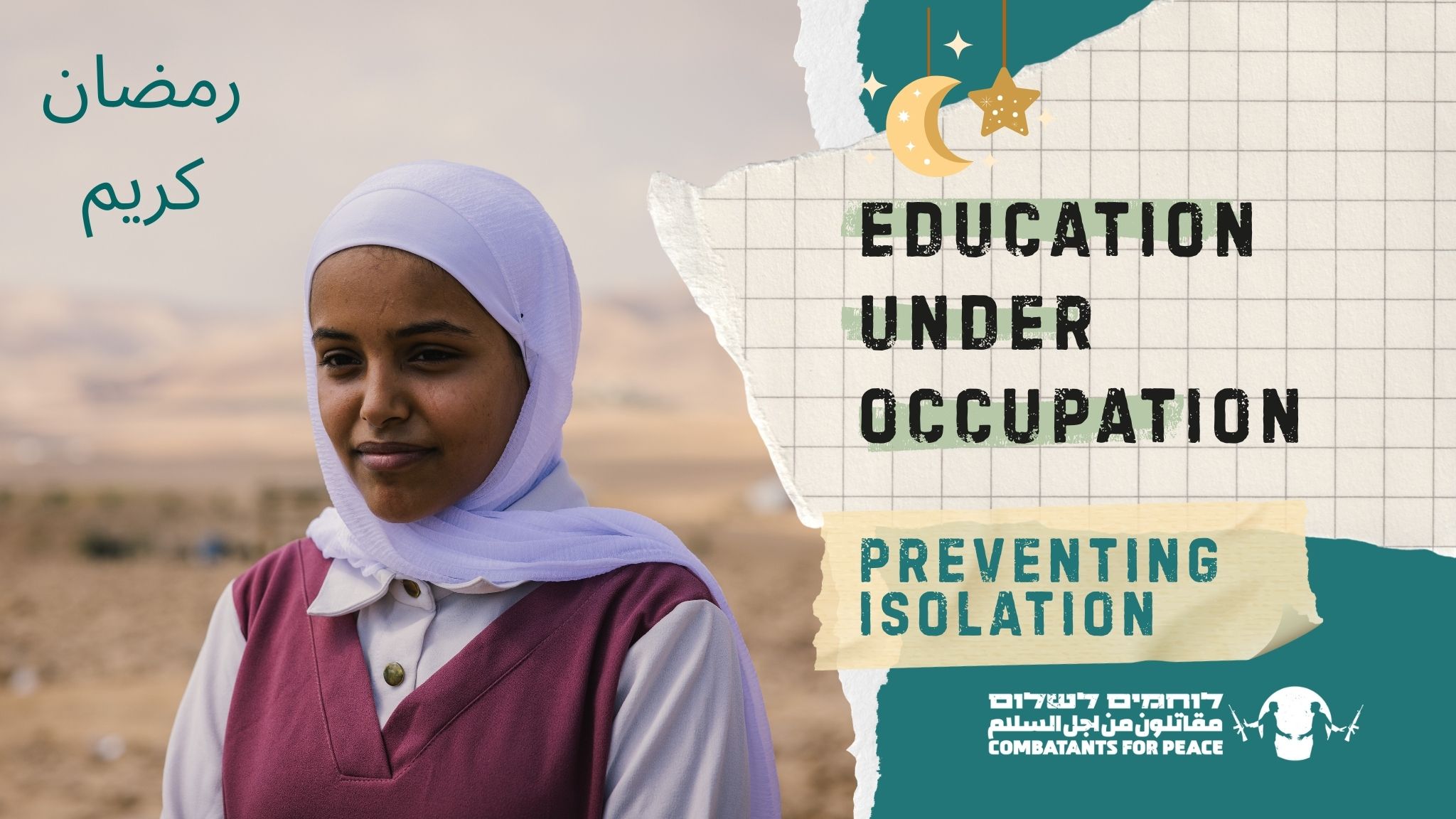
Education is one of the first areas to suffer under these conditions. Schools in these communities are already coping with reduced hours due to the ongoing public education budget crisis, which has strained staffing and limited programming. At the same time, access to education is further disrupted when teachers cannot safely reach the village or when parents decide it is too dangerous for their children to travel along roads where violence has occurred. The combined impact of financial crisis and settler violence is creating a reality in which children’s right to education is becoming rapidly eroded.
Through our Education Under Occupation campaign, we are raising 10,000 NIS to help provide internet routers and data packages to vulnerable communities in the Jordan Valley so that learning does not stop when classrooms and roads are closed. Reliable connectivity cannot replace safe physical access to school, but it can preserve continuity when movement is prevented. With stable internet, students can attend remote lessons, and communities can communicate and document incidents in real time. In an environment where isolation is often used as a means of pressure and displacement, maintaining connection becomes an act of survival. |