Dear Friend,
As we wrap up our Education Under Occupation campaign, we turn our focus to the children of Gaza, and to what “access to education” currently means there - and how far it has been pushed from anything that resembles a normal school day.
Before October 2023, Gaza’s education system, despite years of blockade and repeated escalations, functioned with high enrolment and strong literacy rates. Schools were often overcrowded, but children went to class, sat exams, and planned for university. Today, that system has largely collapsed. According to UNICEF, Gaza is home to approximately 658,000 school-age children, the vast majority of whom have had little to no consistent access to in-person learning for more than two academic years.
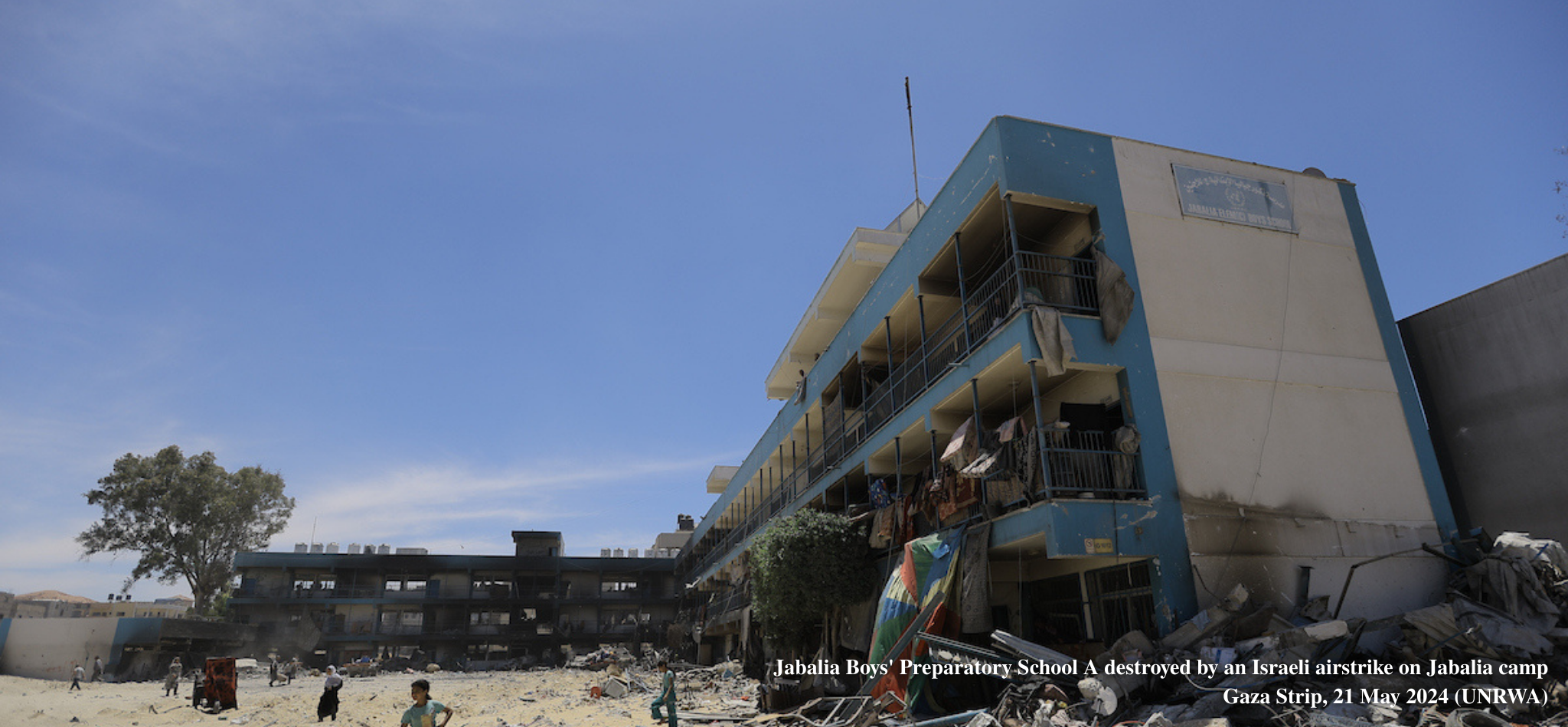
The scale of damage to educational infrastructure is staggering. UNICEF reports that more than 97% of schools have been damaged or destroyed, and that 91.8% of education facilities will require either full reconstruction or major rehabilitation to become functional again. Education has been pushed into temporary spaces, tents, and whatever can be made available. UNICEF describes running non-formal learning in 78 learning centres, reaching 109,310 children, with children attending three days a week for three hours because demand is so high and space so limited. OCHA has reported that, over a two-year period, only about 38% of school-aged children (250,000 out of 658,000) were able to access any form of learning organized or supported by partners through temporary learning spaces and related support. That means hundreds of thousands of children have been left without consistent learning, routine, or the protective structure that school is meant to provide.
|