Why Music Matters in the Early Years
Music is often seen as something fun for young children, and of course it is. Children love to sing, clap, dance, move and make noise. What can sometimes be missed is that music is also a powerful learning tool. In the early years, music supports language, listening, memory, movement, confidence and social connection.
Young children learn through repetition. They like hearing the same song again and again because it helps them feel safe and successful. Each time they sing a familiar song, they are practising sounds, rhythm, words and sentence patterns. This is one of the reasons nursery rhymes and action songs have been used with children for generations.
Music and language are closely connected. Both use rhythm, patterns, tone and memory. When children sing, they are not simply repeating words. They are learning how sounds fit together. They are hearing rhyme. They are noticing the beat of language. They are also learning to predict what comes next.
This is especially important before children begin formal reading and writing. A child’s ability to listen carefully, hear differences in sounds and remember word patterns all contributes to early literacy. Songs, chants and rhymes help develop those skills in a natural and enjoyable way.
Music also helps children focus. A song can gather attention more gently than repeated verbal instructions. A clean-up song, a greeting song or a transition song gives children a clear cue about what is happening next. Over time, children begin to respond to the music automatically because it becomes part of their routine.
Movement adds another layer of learning. When children clap, stamp, tap, sway or dance, they are connecting sound with physical action. This supports coordination, body awareness and rhythm. It also gives children who learn best through movement a stronger way to participate.
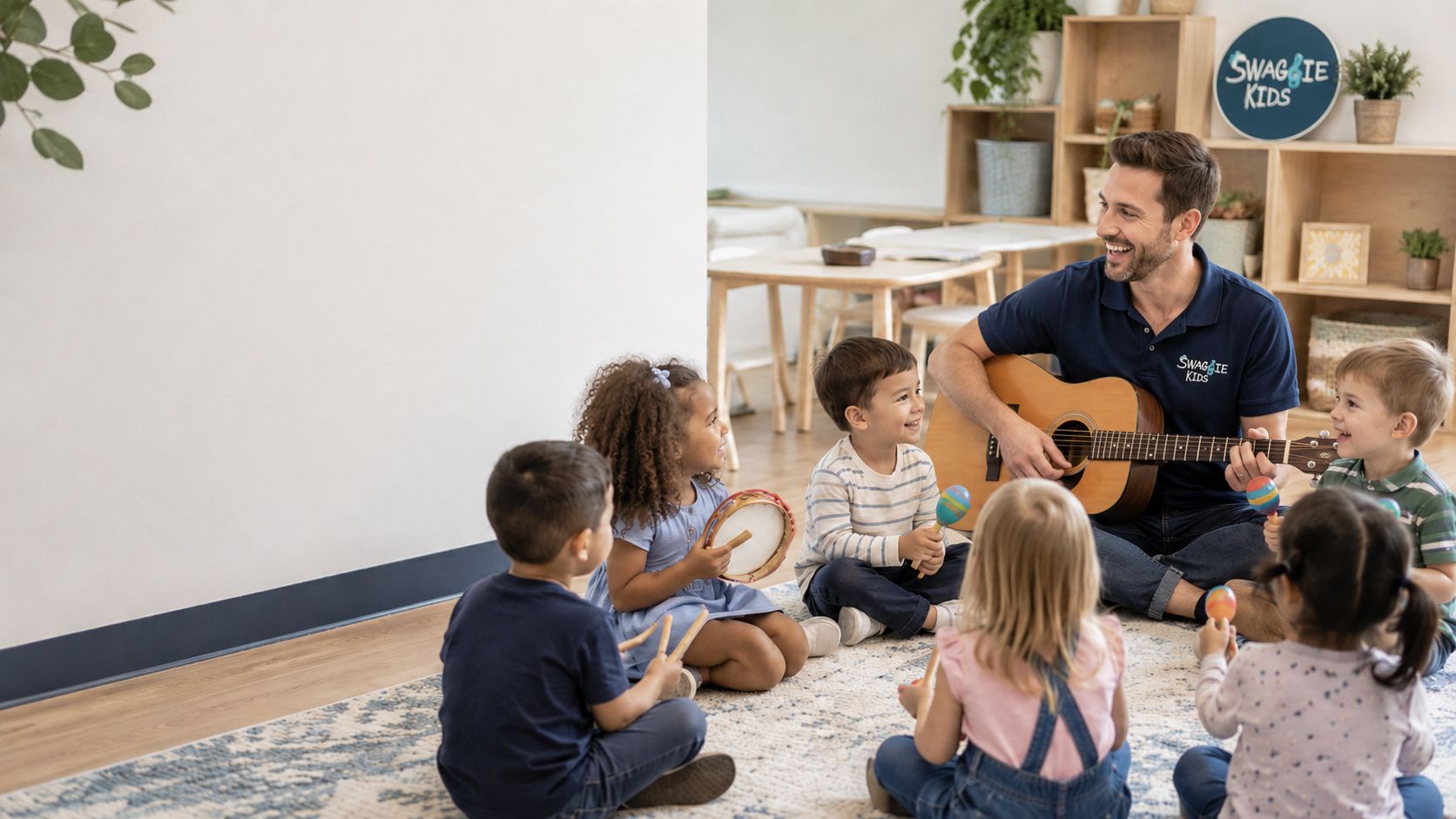
Programs such as Swaggie Kids show how music, education and culture can work together in early childhood settings. When music includes movement, storytelling, rhythm and participation, children are not passive listeners. They become part of the learning experience.
Music does not need to be complicated to be valuable. Educators and parents do not need perfect singing voices or expensive instruments. A simple song, a steady beat or a repeated rhyme can make a meaningful difference.
The key is to use music with purpose. It should not simply become background noise. When music is chosen thoughtfully, it can calm children, energise them, help them listen and support their learning.
In the early years, music is far more than entertainment. It is one of the simplest and most natural ways to help children grow.
For more information please CLICK HERE