Subject: Colombia exits ISDS — amid growing global pressure

Backed by our new regional data and a call from 200+ economists.
Was this forwarded to you? Sign up here

Dear Friend,


The Colombian government’s decision to withdraw from the international investment protection regime marks a significant step away from a system that has consistently privileged corporate rights over environmental protection and democratic decision-making.


Colombia has faced a surge of ISDS claims in recent years, largely in the extractive sector. Over the past three years, TNI has been part of sustained international efforts, engaging policymakers and highlighting the risks these mechanisms pose to public interest regulation.


This decision comes amid growing international pressure. In March, more than 200 economists and legal scholars called on Colombia to move forward with exiting ISDS and to help build a broader coalition of countries stepping away from these mechanisms.


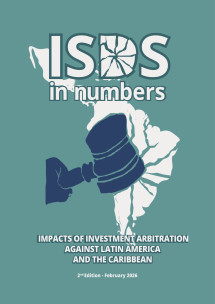
Our new report, ISDS in Numbers, shows that this reflects a wider regional pattern: across Latin America and the Caribbean, ISDS claims are heavily concentrated in extractive sectors and continue to raise concerns about policy space.

By Bettina Müller and Luciana Ghiotto

These dynamics are also visible on the ground, as shown in Mexico in our new documentary And Yet We Exist (Pero Sí Existimos).


Why this matters: Colombia’s move reflects growing regional and international scrutiny of ISDS and its implications for environmental governance and public policy.


Source (Spanish): Official announcement from the Colombian government

Please consider a donation towards TNI to help us continue to be an independent and positive resource in creating an equitable, democratic and peaceful world. We know change is possible when we unite and give movement to ideas. Thank you for your support.

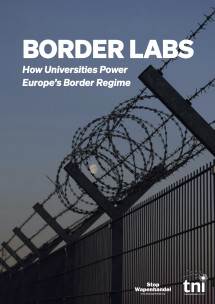
Border Labs

How Universities Power Europe’s Border Regime


By Mark Akkerman


This report examines how universities are embedded in the EU’s border regime, contributing to the expansion of surveillance, militarisation, and externalised migration control.

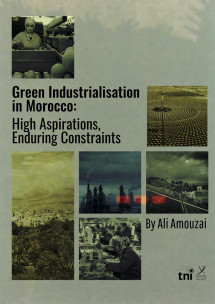
Green Industrialisation in Morocco

High Aspirations, Enduring Constraints


By Ali Amouzai


Morocco is often presented as a leader in the Global South’s green transition, but its export- and investment-driven model has struggled to deliver genuine industrialisation. A just transition will require a more sovereign and socially grounded industrial policy.

Coca Leaf: Revisiting a 75-Year-Old Injustice


Coca Chronicles: Coca Review Denouement

Issue #7: The UN drug scheduling system in dispute

By Martin Jelsma


After a two-year critical review, the WHO has decided to retain the coca leaf in Schedule I of the 1961 Single Convention. Despite finding no evidence of meaningful public health harms, the Expert Committee relied on a controversial interpretation of the ‘convertibility’ principle to justify its recommendation. This decision raises serious legal, scientific and human rights concerns and casts doubt on the UN drug control system’s capacity to confront its colonial legacy.


Directed by Nicolás Martínez and Daniel Pineda


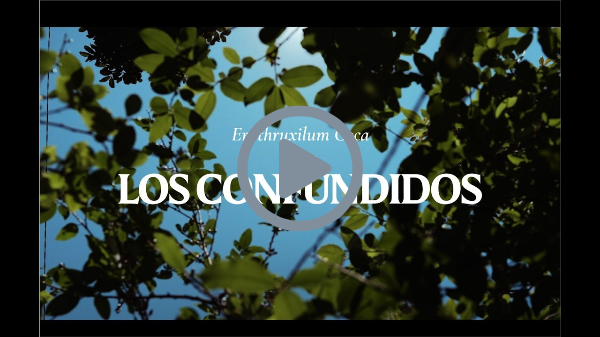
The international ban on the coca leaf has long been debated without the meaningful participation of the communities who have lived with the plant for generations. The documentary “Erythroxylum Coca. The Confused,” focuses on the voices of indigenous and peasant communities in Peru, Bolivia, and Colombia.


Towards a Bandung de los Pueblos

Multilateralism, corporate power, and the building of a Global South Front


By Brid Brennan, Gonzalo Berrón, Juliana Rodrigues de Senna, Sol Trumbo Vila

Amid rising fascism and a shifting capitalist order, progressive forces face a historic choice: fragmentation or solidarity. Drawing on liberation struggles, this paper calls for shared strategy and collective action to build a transformative Global South front for justice worldwide.

Industrial Politics from Below

Reclaiming Industrialization as a Liberation Agenda in Indonesia and Beyond


By Benny Agung P, Olisias Gultom, Rachmi Hertanti

Industrialisation in the Global South—including Indonesia’s mineral downstreaming and green transition—continues to reproduce dependency and green extractivism. This article argues for “industrial politics from below,” centred on agrarian reform, democratic control, and reclaiming industry as a life-centred project.

The Weaponisation of Migration Policy in Germany’s Crackdown on Palestine Solidarity


By Josephine Solanki

Since October 2023, Germany has increasingly used migration law to repress Palestine solidarity, particularly targeting non-citizens, while framing the movement as a security threat to justify tighter controls.

Migrant Farmworkers & Farmers: Intersectional & Internationalist Alliances


By Jun Borras, Jennifer Franco

In today’s global food system, migrant farmworkers remain central yet exploited. This longread confronts global capitalism, migrant labour regimes, and land–labour politics, highlighting the urgent need for alliances between migrants, peasants, farmers, and food sovereignty movements worldwide.

ICARRD+20 and the emerging global coalition behind the 4Rs


By Jun Borras, Jennifer Franco

ICARRD+20 in Cartagena brought governments, scholars, and social movements together to revisit the unfinished agenda of agrarian reform. Amid deepening land inequality and ecological crisis, debates converged around the 4Rs: Recognition, Redistribution, Restitution, and Regulation, as pillars for democratizing land and advancing systemic transformation.

Podcast: Order Without Meaning and Dysfunctional Governance in Myanmar


TNI has launched a second podcast series with Martin Smith on the conflict history of Burma/Myanmar. Drawing on decades of research, the series explores cycles of conflict and state failure, emphasising the need for political solutions to achieve lasting peace and reform.

Announcements

The Transnational Institute (TNI) seeks two additional Supervisory Board members


TNI is looking for two committed individuals to join its Supervisory Board: one to serve as Audit Committee Member, with a focus on financial oversight and risk management, and one as Supervisory Board Member, contributing broader strategic, legal, organisational or fundraising 

expertise.

In Memoriam: Susan George (1934–2026)

Honouring the life and contributions of Susan George, a longstanding voice in global justice movements.

Webinar

The War on Iran and Its Wider Implications


Escalating conflict around Iran, Gaza, and Lebanon is reshaping global power dynamics. What does this mean for energy security, economies, and international politics? This webinar explores the wider impact of war and imperialism, and examines resistance across Asia, Europe, and the Global South.


March 31 - 11am CEST/3.30pm India/6pm Philippines

YouTube pick

What we're reading

Please consider a donation towards TNI to help us continue to be an independent and positive resource in creating an equitable, democratic and peaceful world. We know change is possible when we unite and give movement to ideas. Thank you for your support.


Powered by:
GetResponse