Subject: The kettlebell swing vs. the snatch

Are these two exercises interchangeable? Or do you have to do both?


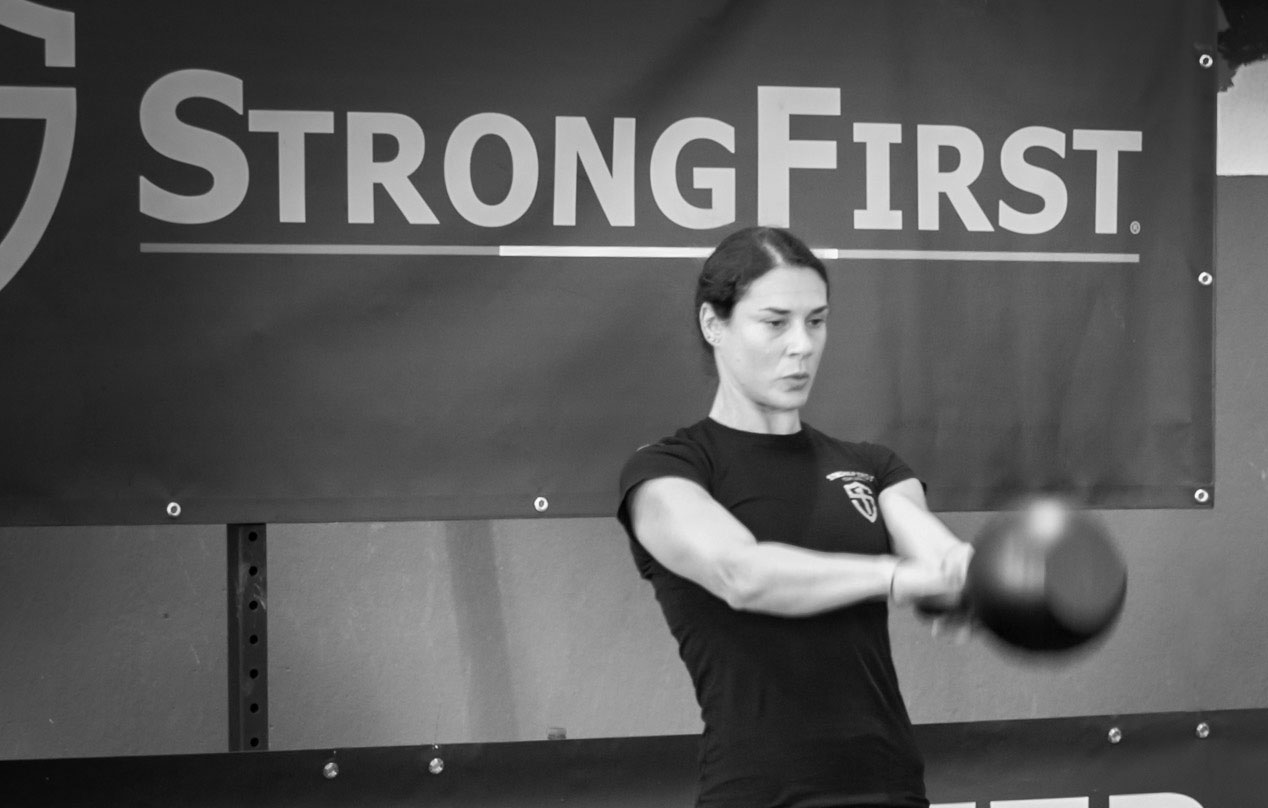
A study by former StrongFirst Certified Senior Instructor Brandon Hetzler and colleagues found a similar mechanical output in both exercises and suggested “using kettlebell snatch and 2-handed swing exercise interchangeably for the ballistic component of athlete strength and conditioning programs.” In other words, if you are after power, either drill delivers.


The swing dominates the snatch in lower body strength development and hypertrophy, simply because one can swing a lot more weight. Ladies who get on a regular diet of two-handed swings with 32-48kg never fail to develop spectacular curves. And once a gent can confidently swing a pair of 32s—as opposed to being swung by them—posterior chain strength is no longer his priority.

Both pulls are powerful developers of the upper back and the traps.


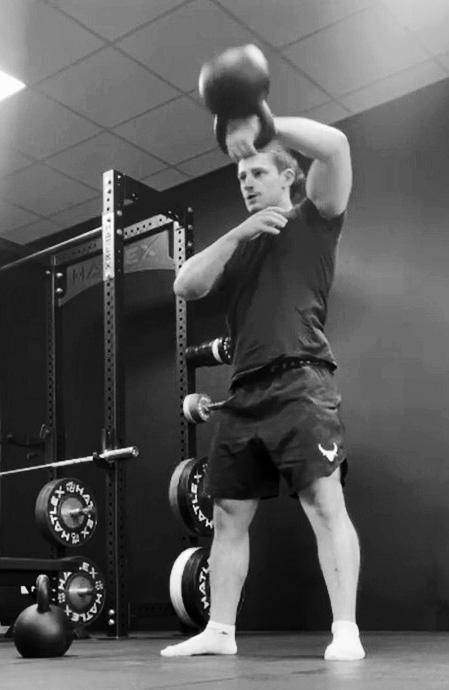
The one-arm swing rules in the midsection and glute training department. The abs contract powerfully when you perform a karate style kime at the top of each rep. The obliques lock down to prevent you from being twisted and pulled forward by the heavy kettlebell. The glutes cramp to put you in a “standing plank.” In the snatch, your abs “open up” as the arm goes overhead, which prevents the kime. The obliques do not have to work as hard, as the bell stays close to your body and eventually stacks on top of it.


The snatch scores a win when it comes to burning fat. Former StrongFirst Certified Master Instructor Geoff Neupert prefers it to the swing because the snatch works the arms and shoulder girdle harder. More muscle groups involved should translate to greater fat burning. In addition, Hetzler’s research shows that the kettlebell travels twice as far in a snatch rep than in a swing rep. He explains, “All things being equal—the same person swinging and snatching the same size bell with the hard style approach—the snatch will accomplish more work… From a fat loss standpoint, snatches have a noticeable advantage.”

The snatch also has an edge in grip development. A long semi-vertical drop from an overhead lockout—or even a throw with a lighter kettlebell—loads the grip in a very “plyometric” manner. Such ballistic eccentric loading builds strength exceptionally well. And given the high number of total reps a snatching girevik will do each week, it builds Popeye forearms too.


The big strike against the snatch is the serious thoracic and shoulder mobility it demands—beyond what a typical Western gym rat, and even many athletes, possess. (This is why the get-up is the first overhead lift taught at StrongFirst.)


In summary, it is a tie:

  • Both exercises are equally effective in building power.

  • Both are equally effective in upper back development.

  • The swing is superior for posterior chain and midsection development and strength.

  • Per rep, the snatch burns more fat than the swing.

  • The snatch has an advantage over the swing in grip development.

  • The snatch demands great thoracic and shoulder mobility.

Provided mobility is not an issue and you are skilled in both, which one should you choose?


A good analogy is the barbell squat and deadlift. Both exercises work more or less the same muscle groups, yet each has its own edge. One can choose to do both to get the most benefits—at the expense of more complex programming. Or go minimalist, select one lift and polish it to perfection.


Swing, snatch, or both, you cannot go wrong.

(Speed Metal + Victorious)

now available for a limited-time special offer

Last Call