Onto the training tip.
The Active Squat Negative
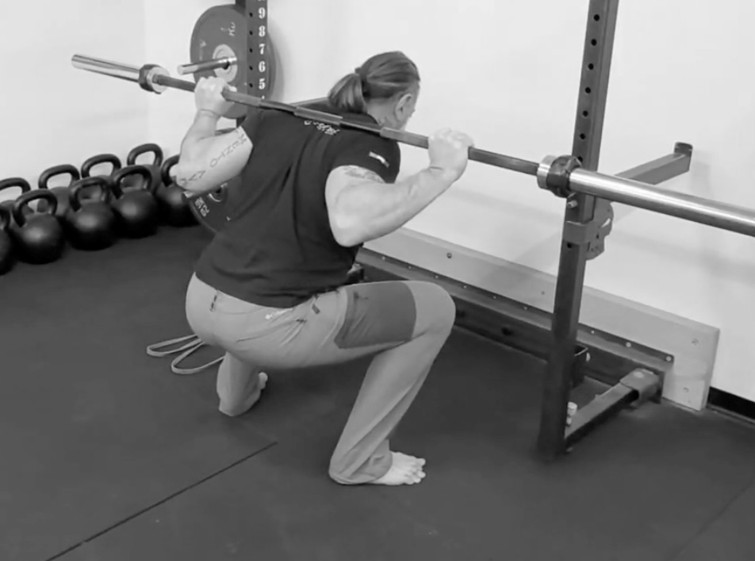
There are three ways to get down to the bottom of a squat (barbell, kettlebell, or bodyweight).
One is to drop. “Dive bomb” squats are unsafe for all but highly coordinated and healthy athletes.
Two, by yielding to gravity, which is common and weak.
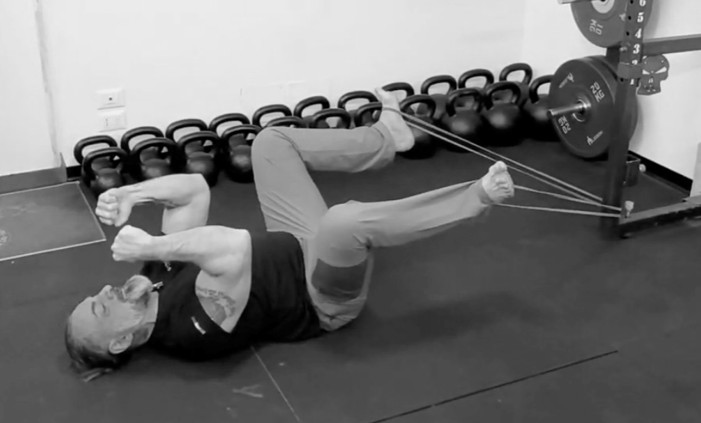
Three, by pulling yourself down against the resistance of your own muscles. Which is what strong people do, consciously or not.
An active negative has four benefits.
First, it loads elastic energy into your muscles and tendons for a more powerful return.
Second, it amplifies your strength through a neurological phenomenon of successive induction: a muscle will be stronger immediately after its antagonist’s contraction.
Third, it dramatically increases your control of the weight and therefore cuts the odds of injuries. Imagine two opposing pulleys controlling a crane, rather than one.
Fourth, when the weight is heavy, an active negative gives you a psychological edge over cautiously feeling your way down.
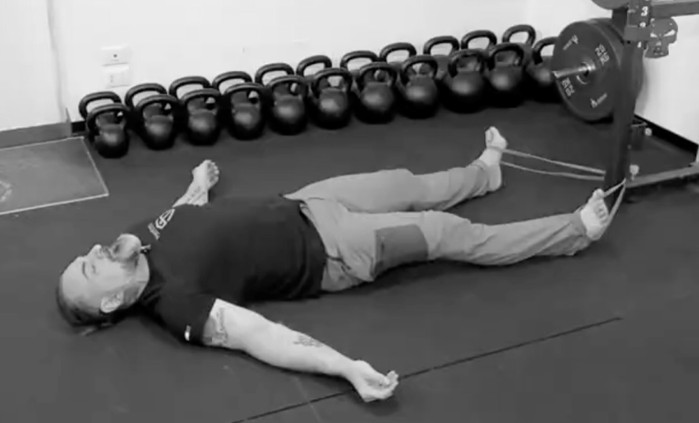
We teach active negatives for different lifts at all StrongFirst instructor certifications, usually against partner resistance. Today, StrongFirst Certified Master Instructor Fabio Zonin will show you how to do it on your own with a rubber band.