Hey Friend
I remember back in 2008 being faced with my first ever organisational restructure, and my goodness was it a doozy.
It started with a new CEO and trickled down through every level of leadership. There was a spill-and-fill approach across teams in my division and it was absolute mayhem. I’m pretty sure the whole team I was part of was shut down and moved into a centralised area.
At the time, restructures weren’t nearly as common as they are today. And while I can absolutely understand the need to restructure now - with rising costs, changing customer expectations, technology removing manual work - back then it felt a lot more like territory marking.
Looking back, I still can’t see much value in that particular exercise. But it was the first of many to come, and it prepared me well.
I eventually lost count of how many times my department restructured. It felt like the end of one led straight into the beginning of another.
And because there was so much secrecy around them, it was hard to ever really trust that your role was safe. It was mentally challenging, stressful and incredibly unsettling.
The light side to this is that it also taught me some important lessons. It taught me that…
If my sense of security depended entirely on my leader or organisation, I was giving away agency over my career.
My role was not the same thing as my value.
Subject matter expertise would only get me so far.
Transferable skills, relationships, reputation and advocacy mattered.
Continually investing in my own learning made me far more adaptable.
And, probably most importantly, change was going to keep happening whether I liked it or not.
The outcome of that first restructure was a move into a completely different business area and a role that depended heavily on leadership skills…which I quickly discovered I didn’t really have.
I’d spent years building my expertise and nowhere near enough time building the skills that would help me lead people through uncertainty, complexity and change.
Ultimately, I failed as the leader of that team.
While I was absolutely capable, I hadn’t yet built the leadership capability to help other people navigate uncertainty while I was trying to navigate it myself.
It was a tough lesson but the experience allowed me begin letting go of my dependency on sameness and control. That lesson has stayed with me ever since.
During one of the many restructures that follow a leader announced to the whole department something that really changed how I thought about change:
“There will always be more change, more restructures. I can’t always share every detail or as early as you’d like, but I can absolutely assure you that change is the only constant.”
What I loved was the lack of sugar-coating. She wasn’t trying to convince anyone the change was exciting - but it was necessary.
What I needed at the time was perspective, honesty and a way to think differently about what was actually within my control. And what that did was give me back my agency and confidence that things would be ok in my life.
That, to me, is what a change mindset is really about.
We need to stop pretending change is easy. And we need to go beyond forcing positivity and optimism.
A change mindset is about building the adaptability, perspective and agency to move through uncertainty without becoming completely dependent on certainty - or on your leader to save or protect you from it.
And as leaders, I think this matters enormously.
We can’t always give people certainty.
We can’t always share every detail.
We can’t always protect people from what’s changing around them.
What we can do is help them build the capability to move through change with greater confidence, ownership and perspective.
If this is something you or your leaders need to build, there are two ways we can work together:
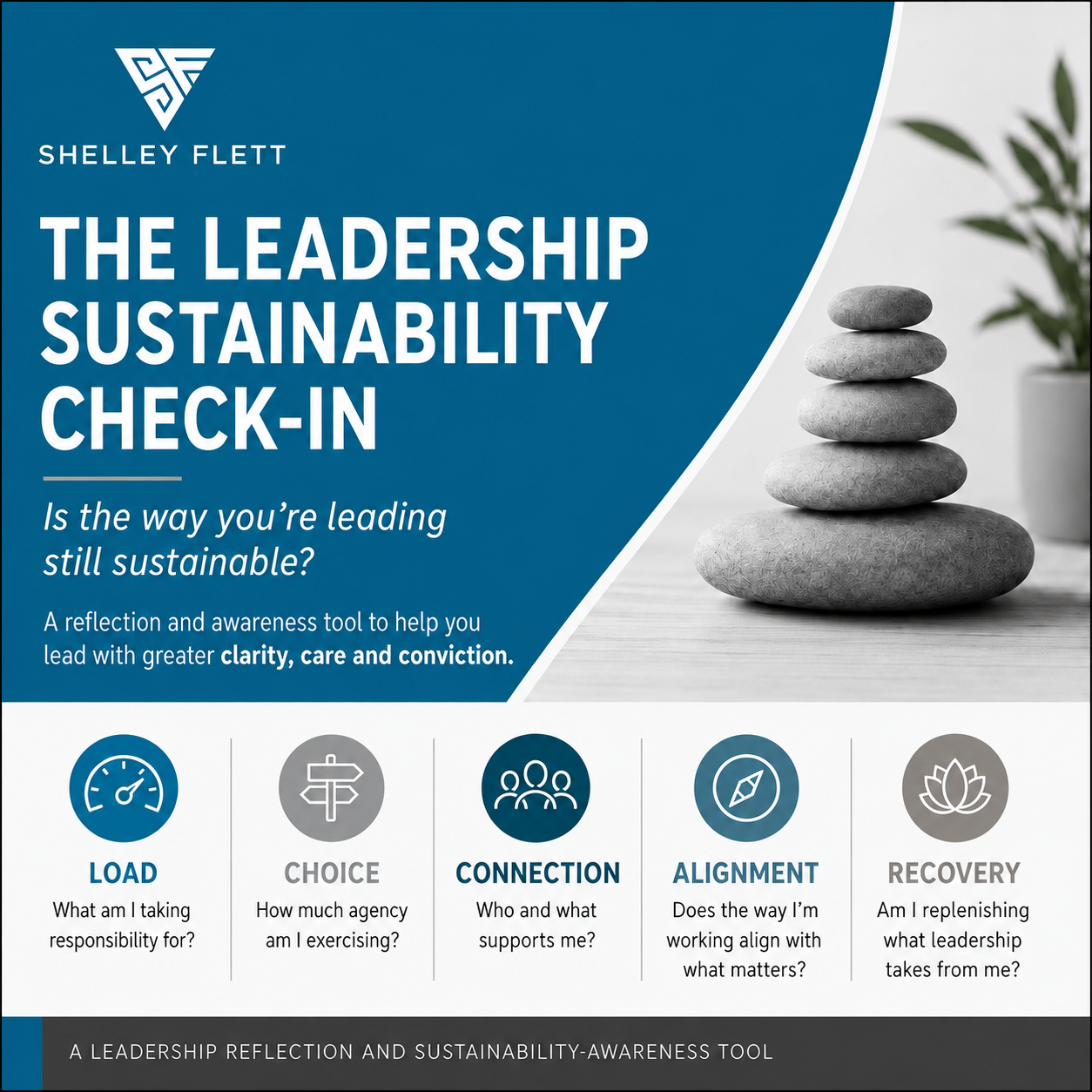
Join my upcoming Lead to Empower public program, kicking off 5 November, where we build the leadership capability needed to lead with greater confidence, adaptability and ownership.
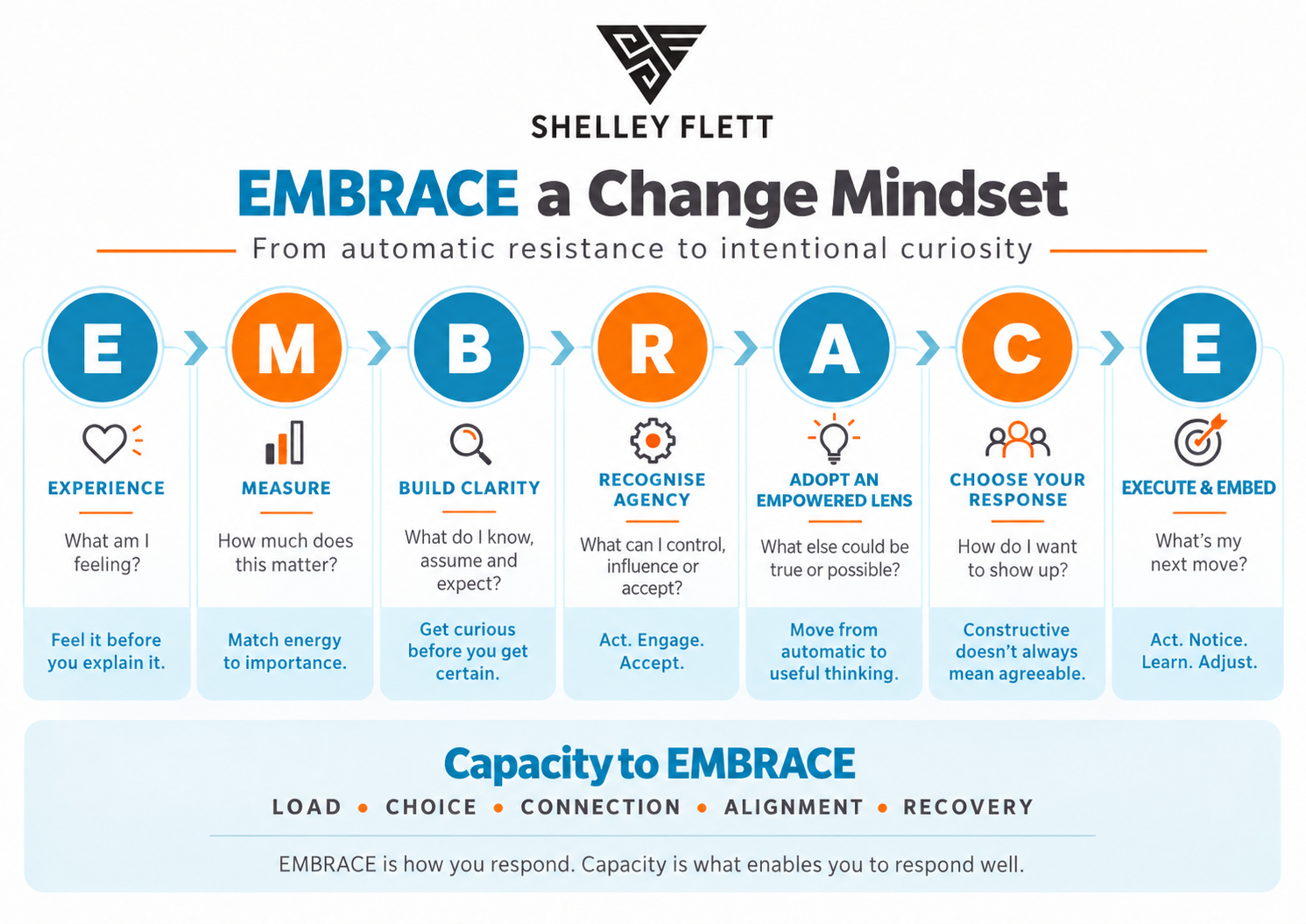
Bring my EMBRACE mindset methodology into your organisation through bespoke in-house training designed to help your people shift how they think, feel and respond to change.