Subject: Taste the Flower: Litchi — can honey really taste naturally fruity?

Light, floral and naturally fruity — discover the South African flower behind Litchi Honey.
 

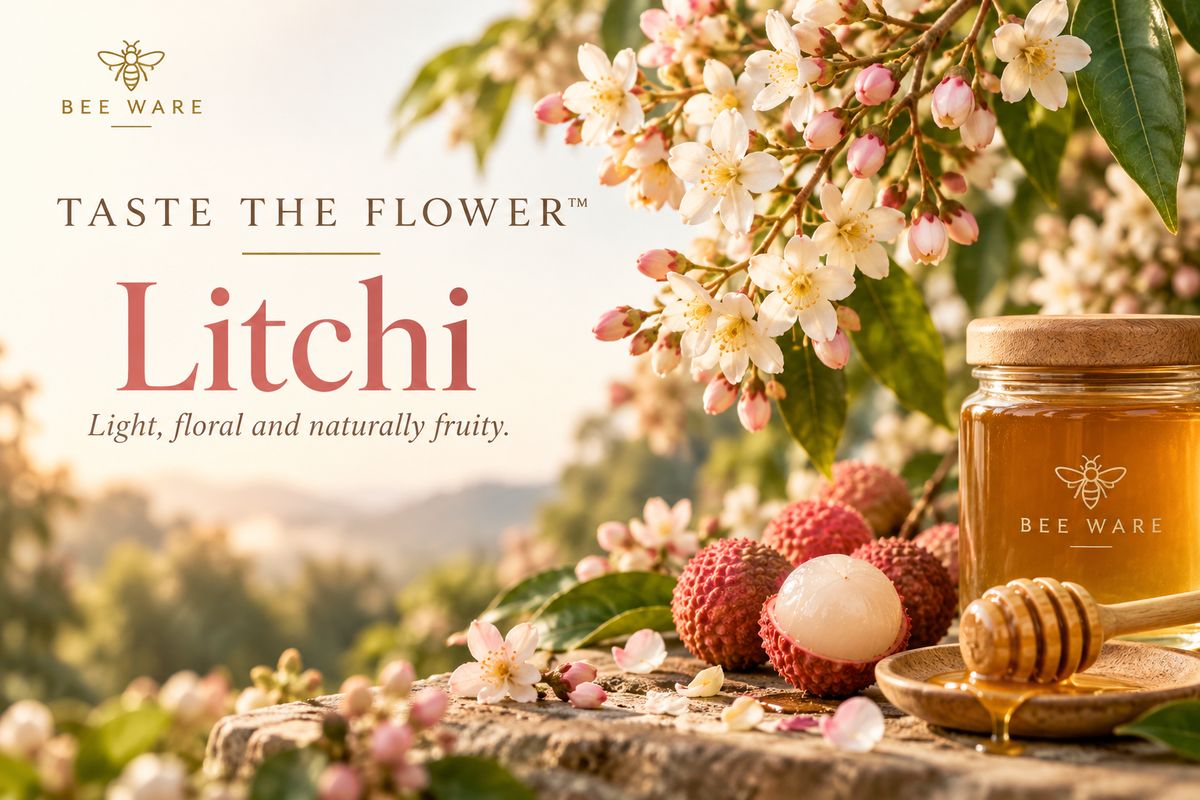
Taste the Flower™: Litchi

Before there is fruit, there is a flower.

You probably know the taste of a ripe litchi.


Sweet. Fragrant. Almost perfumed.


But long before the fruit appears, the tree produces masses of tiny flowers — and those flowers become a valuable source of nectar for honeybees.


When bees work flowering litchi orchards, some of that floral character can follow the nectar all the way back to the hive.


The result is one of our lightest and most aromatic varietals:


Litchi Honey.

No litchi fruit, flavouring or extract is added.


The flavour starts with the flower.


The Flower

The fruit gets the attention. The flower starts the story.

Litchi trees produce large branching clusters of many small flowers.


In South Africa, flowering timing varies with cultivar, region and weather, but the important Mauritius cultivar typically reaches its main flowering period around spring. [Southern Hemisphere in September]


A single tree may flower for roughly three weeks.


For the grower, this is the beginning of the fruit crop.


For the beekeeper, it is a short seasonal opportunity.


And for the bees?

It can mean thousands upon thousands of nectar-bearing flowers waiting to be visited.

The Bee Forage

The bees aren't just visiting.

Honeybees play an important role in South African litchi orchards.


Research conducted in a litchi orchard near Tzaneen found that honeybees were the most important pollinator — and that nectar collection dominated their foraging activity.


That creates a fascinating exchange.


The tree offers nectar.

The bee moves between flowers.

Pollination helps the orchard produce fruit.

And the colony brings that nectar home.


When enough litchi nectar is gathered during the flowering period, it can contribute to a honey with its own floral character.


The crop gets pollinated.
The hive gets fed.
And sometimes, we get the honey.

The Honey

What does Litchi Honey taste like?

This is where Litchi begins to separate itself from Macadamia.


COLOUR
Light golden.

AROMA
Delicate, floral and naturally fruity.

FLAVOUR
Gentle sweetness with a subtle litchi-like character.

TEXTURE
Smooth and easy pouring.

FINISH
Clean, fragrant and delicate rather than heavy.


There is no litchi juice or flavouring hiding in the jar.


The subtle fruit-and-flower character comes from the nectar source itself.

That is the magic of learning to taste honey by its flowers.


Different flower. Different honey.

The Harvest Story

A short flowering season captured in a jar.

Real Honey’s Litchi Honey comes from bees working flowering litchi orchards in the subtropical growing regions of KwaZulu-Natal and Mpumalanga.


The opportunity is seasonal.

The trees flower.

The bees work the bloom.

The flowers fade.

Fruit begins developing.


And that particular nectar flow is finished until the trees flower again.


That is why varietal honey should never be thought of as an endlessly manufactured flavour.


It is a harvest.


And every harvest begins with whatever nature happens to produce that season.

Taste It Properly

This time, follow your nose.

Take half a teaspoon of Litchi Honey.

1. Look at the colour
Notice how light it appears compared with a darker honey.


2. Smell it first
Litchi is a good honey for practising aroma. Look for the lighter floral and fruity notes.


3. Taste slowly
Let the honey warm on your tongue rather than swallowing it immediately.


4. Notice what happens after the sweetness
Does the flavour feel floral? Fruity? Perfumed? Clean?


5. Now compare it with Macadamia
This is the interesting part.


Both can be light, gentle honeys.

But they should not taste identical.


Macadamia leans towards the soft, rounded and subtly nutty.


Litchi moves towards the floral and aromatic.


That difference is exactly what Taste the Flower™ is about.

Best Food Pairings

Let the lighter flavour do the work.

Litchi Honey is particularly useful when you want sweetness without burying more delicate flavours.


TEA
Try it in rooibos, green tea or lighter herbal teas.


YOGHURT & BREAKFAST
Drizzle over plain yoghurt, oats, granola, pancakes or fresh fruit.


SOFT CHEESES
Pair with brie, camembert, ricotta or cream cheese.


FRUIT
Excellent with fresh berries, citrus, melon or tropical fruit.


DESSERTS
Use over panna cotta, vanilla ice cream, cheesecake or plain yoghurt.


ASIAN-STYLE DRESSINGS & GLAZES
Combine with lime, chilli, ginger, soy or sesame for a sweet-savoury glaze.


And if you really want to understand it?


Taste a little straight from the spoon first.

Taste This Flower

Litchi Honey

Light. Floral. Smooth. Naturally fruity.

A distinctive South African varietal honey produced from nectar gathered by bees working flowering litchi orchards.

1 kg — R198

Available online and from the Real Honey Bar in Hennopspark, Centurion.

Bring your own container when visiting the Honey Bar and ask which varietals are currently available for refill.

Compare Another Flower

Next: Blue Gum

Macadamia gave us something mild and subtly nutty.

Litchi moved us towards the light, floral and fruity.

Next we leave the subtropical orchard.


And we go to a tree that generations of South African beekeepers know very well.


Blue Gum.

Its flowers can produce another remarkably distinctive honey — and another chance to discover how much the nectar source matters.


Next edition: Taste the Flower™: Blue Gum

Real Honey Bar
Shop 6, Coachmans Centre
26 Jakaranda Street
Hennopspark, Centurion

Whatsapp: 061 980 6551

Cell: 081 426 4333

Visit: www.realhoney.co.za