Subject: This Week in LR: UAW Woes, LR Benchmark Survey, and Fractional LR Support: LRI INK

December 4, 2025

To visit the blog post, click on the link below the article.

Help Us Build Better Labor Relations Data (Union Facilities)

by Michael VanDervort

Where Does Your Union Facility Really Rank?

If your company has unionized locations, here is the question almost no one can answer with confidence:


Where do you rank on labor relations performance?


At the Fortune 500 level, labor departments track everything. Grievance resolution rates. Arbitration velocity. Legal spend ratios. Contract administration workloads. They know exactly where they stand.


Mid-market employers? They are usually guessing. And guessing is not a strategy.


We are fixing that problem by building the first comprehensive labor relations performance database. But we need your help. To make the benchmarks real and useful, we need data from union facilities across industries and across regions.

What You Get For Participating

Everyone who completes the confidential seven-minute survey receives the complete Managing the Union Shop Toolkit:

  • The 7 Tests of Just Cause Decision Flowchart

  • The 6 Step Grievance Investigation Cheat Sheet

  • The Union Steward Communication Playbook, including ten ready-to-use supervisor scripts

  • Plus a signed copy of Managing the Union Shop if you want one. Please feel free to request it at the end of the survey.

What You Will Receive When We Hit 500 Responses

Once the data set is large enough to support reliable benchmarking, you will receive a custom report that includes:

  • Your percentile ranking across five core labor relations performance categories

  • A side-by-side comparison with top-performing facilities

  • Industry-specific insights for your sector

  • A list of targeted gaps and recommended improvements

This is the type of visibility large employers already use to get ahead of issues. Our goal is to make that level of intelligence available to everyone.

Take the 7 Minute Survey

You can complete the survey here: https://forms.gle/yTJCjQXdsCKcdvgB6


Every union facility that participates helps build the database that will shape the future of labor relations intelligence.


Thank you.


The Labor Relations Institute Benchmarking Team


P.S. Fortune 500 labor departments are invited too. Your data is essential for setting the benchmark.

Sneaky Ways "Advice Anxiety" Is Bleeding Your Company Dry

by Phil Wilson

(And You Didn't Even Know It Had a Name)

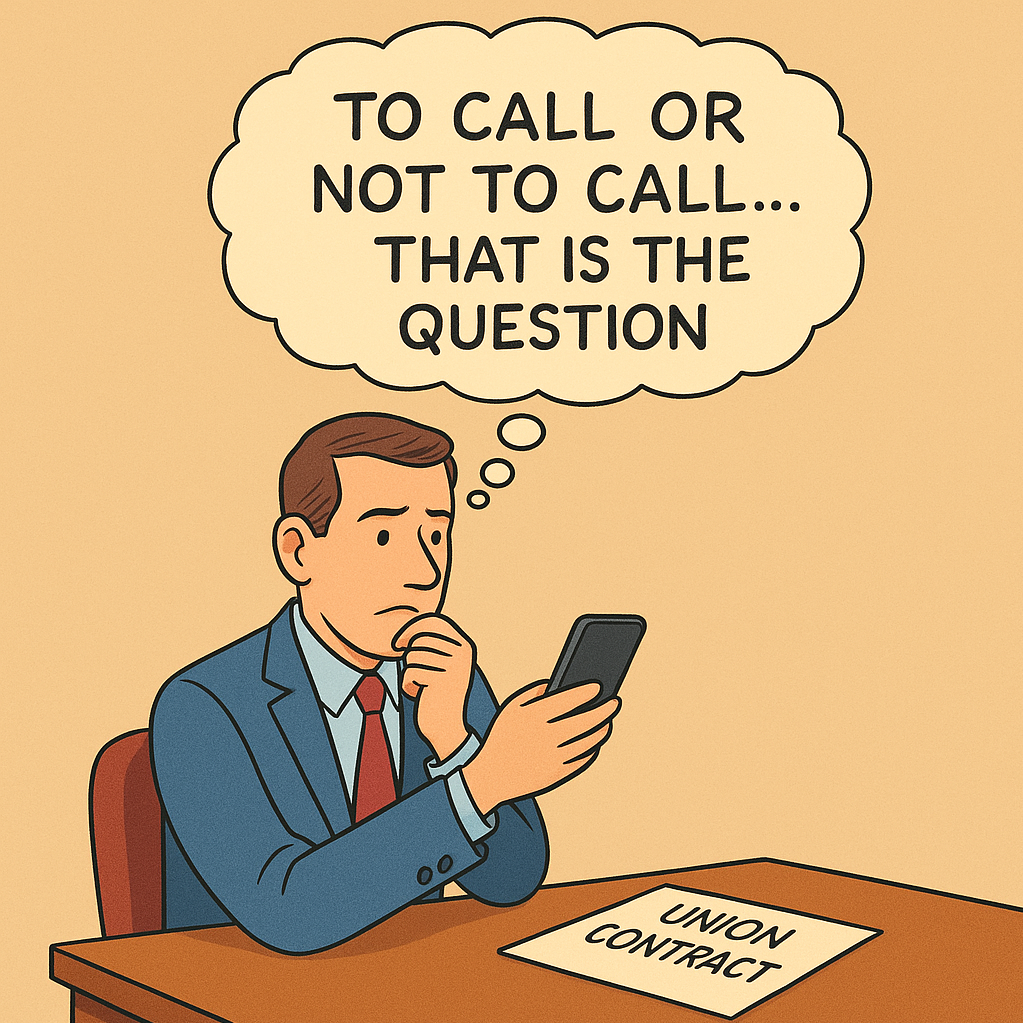
You know that hesitation, right? The one where you need expert guidance about a labor relations issue—or a legal question, an IT decision, a financial matter—but you pause before reaching out because you're already doing the math.

"Is this question worth $600? What about $800? How am I going to explain this bill to the CFO?"


So you tell yourself, "It's not that urgent. I'll figure it out myself."


Congratulations! You've just experienced "advice anxiety,” and it's costing mid-market companies 3% of their profits annually. But you're not cheap. You're not weak. You're just trapped in a broken system that Fortune 500 companies escaped decades ago.

How We Got Here: The 20-Year Transformation

In the 1990s, mid-market companies had specialized internal staff, including labor relations directors, IT managers, and financial analysts. They were salaried. You could ask questions all day without triggering billable hours.


Then came the Great Recession, "lean operations," and PE-driven cost discipline. The new mantra: "Outsource everything that's not core to the business." Companies eliminated specialized roles and adopted a new model: "We'll just call experts when we need them."


It sounded efficient. It was a disaster. When every question triggers an hourly bill that you must justify to your boss or accounting, you stop asking questions. That advice anxiety fundamentally changes how you make decisions—and transforms minor problems into expensive crises.

1. You're Playing "Problem Roulette" Every Single Day

Here's how it works in labor relations: Should you discipline that employee? How should you respond to that grievance? What does Section 12.3 really mean? Is this termination defensible?


But instead of calling for guidance, you're calculating: "Is this worth $600?" "Will my boss question my judgment?" "Will the controller flag this expense?" So you guess, cross your fingers, and hope it doesn't blow up.


The hidden cost: One manufacturing client avoided an $800 call about a grievance response. That decision became a $185,000 arbitration loss. When the controller asked why he hadn't been given advice first, the answer was: "I was trying to control legal costs."


Fortune 500 companies don't play this game. They have labor relations departments handling operational questions—calling attorneys only for arbitrations and complex legal matters. The same pattern holds across functions: IT teams don't hesitate when it comes to security threats, and tax departments don't delay planning decisions.

2. Your Supervisors Are Improvising Without Support

When did your supervisors last have a labor relations question? When did they actually reach out without hesitation? If you're like most companies, you've learned that asking for help creates friction—check with you first, justify the expense, get approval. By then, the shift is over, and they've already decided.


The hidden cost: Companies with available labor relations support get 47 consultative touchpoints per year. Companies where advice anxiety blocks outreach? Just 12. That's 35 missed opportunities to avoid arbitration.

Your supervisors are interpreting contracts on the fly, responding to stewards without guidance, and creating "past practices" that will haunt you. One healthcare company had three locations interpreting the same provision in three different ways. Cost to fix the conflicting precedents: $78,000.

3. You're Training Your Organization to Call LATER, Not EARLIER

This is the truly insidious part. You're not just avoiding calls; you're systematically training everyone to wait until problems are bigger, more expensive, and more complicated to solve.


Month 1: Supervisor has a contract question. Hesitates. Decides to "monitor the situation."


Month 2: Issue surfaces again. You both agree it's "not urgent enough yet" to justify calling.


Month 3: Union files grievance. You call. Attorney says, "Why didn't you call three months ago?"


Month 4: You're managing a crisis requiring emergency intervention and extensive hours. The bill is massive.


You've trained your team that "call the expert" equals "everything is on fire." Advice anxiety transformed expert guidance from prevention into a crisis response.


The hidden cost: Organizations with predictable-cost access resolve 91% of grievances at Step 1. Companies where advice anxiety delays intervention? Just 67%. That 24-point gap is about timing—problems caught early are exponentially cheaper than problems caught late.

4. Your CFO Can't Budget Because Costs Are Unpredictable

Advice anxiety creates a perverse budgeting problem: You budget $150,000 for labor relations. But that "discipline" means problems escalate. Instead of preventive guidance throughout the year, you spend $387,000 on Q4 crisis management.


That's a real example from a PE-backed manufacturer. When the CFO asked why they didn't see it coming, the answer was: "We trained everyone to avoid calling until it's an emergency." PE firms especially feel this demand predictability, but advice anxiety ensures every problem becomes an expensive crisis.

5. You're Stuck in the "Help Trap" Vicious Cycle

The cycle: Need guidance → Hesitate due to cost → Delay calling → Problem escalates → Crisis requires extensive hours → Massive bill confirms your fears → Hesitate even more next time.


This "Help Trap" affects 73% of mid-market companies. A $100M company with 250 union employees typically spends $1.3- $4.4 million over three years—most of which is preventable by eliminating advice anxiety and enabling early intervention.

6. You're Stuck Between Bad Options

Full-time VP of Labor Relations costs $235,000+, but you can't fully utilize them for 75-500 employees. Hourly attorneys cost $600-$800/hour ($150K-$400K+ annually) with zero predictability and maximum advice anxiety. Winging it looks cheap until arbitrations cost $50K-$200K each.


Stuck between these options, you chronically under-invest in labor relations expertise—leading to preventable arbitrations, deteriorating union relationships, untrained supervisors, and restrictive contract language.

7. The System Transforms Prevention Into Crisis Management

You want to call early when problems are minor. But calling early means more calls and more expenses to justify. So, you wait. By the time you call, it will be a crisis requiring extensive intervention.


A grievance that could've been resolved with a 30-minute consultation at Step 1 now requires 40 hours of arbitration preparation. You're not paying for prevention—you're paying for crisis management at 10-20x the cost.


Companies with immediate access to labor relations expertise resolve 89% of grievances at Step 1 and have an arbitration rate of 3.5%. Companies where advice anxiety prevents early intervention? 17% Step 1 resolution and 36.7% arbitration rates. The difference isn't expertise—it's access.

The Solution: Eliminate Advice Anxiety

Fortune 500 companies solved this with internal labor relations departments. Mid-market companies couldn't afford $235,000+ for a VP of Labor Relations, until now.


Fractional Labor Relations brings Fortune 500 support through three principles:


UNLIMITED ACCESS: No hourly billing eliminates advice anxiety


TEAM-BASED EXPERTISE: 150+ years combined experience


PREDICTABLE ECONOMICS: $4K-$12K/month, 40-60% less than full-time, 50-70% less than crisis-driven hourly billing


One client reduced spending from $387,000 to $96,000 annually—75% less—while increasing touchpoints from 12 to 47 per year. Result: Zero arbitrations in two years because advice anxiety was eliminated, and supervisors called immediately when issues arose.


Request Your Executive Briefing on The Help Trap

We've created a comprehensive executive briefing explaining how advice anxiety developed, why it impacts labor relations most severely, the actual financial cost, and how the fractional model eliminates this problem.


This isn't a sales pitch. It's an educational briefing used by PE firms, CEOs, and operations leaders.


LRI Consulting Services

📞 (800) 888-9115

🌐 www.LRIonline.com/fractional

📧 fractional@LRIonline.com


30-minute briefing. No pressure. No sales pitch.

Fortune 500 companies don't have The Help Trap. You shouldn't either.


Next 52 Weeks: Supervisors - Foundation for Your Success

by Michael VanDervort

Fix Your Supervisors, Fix Everything

What if I told you your entire workplace culture lives or dies at the supervisor level? Not in the boardroom. Not in the town hall meeting. Right there on the floor, at the desk, in the breakroom. That is where culture becomes real. Or collapses.


Today, we are diving into the one topic that makes or breaks almost every labor relations situation we see on the ground—frontline supervisors. The folks who carry the culture on their shoulders usually get almost none of the training, support, or clarity they need to do it well.


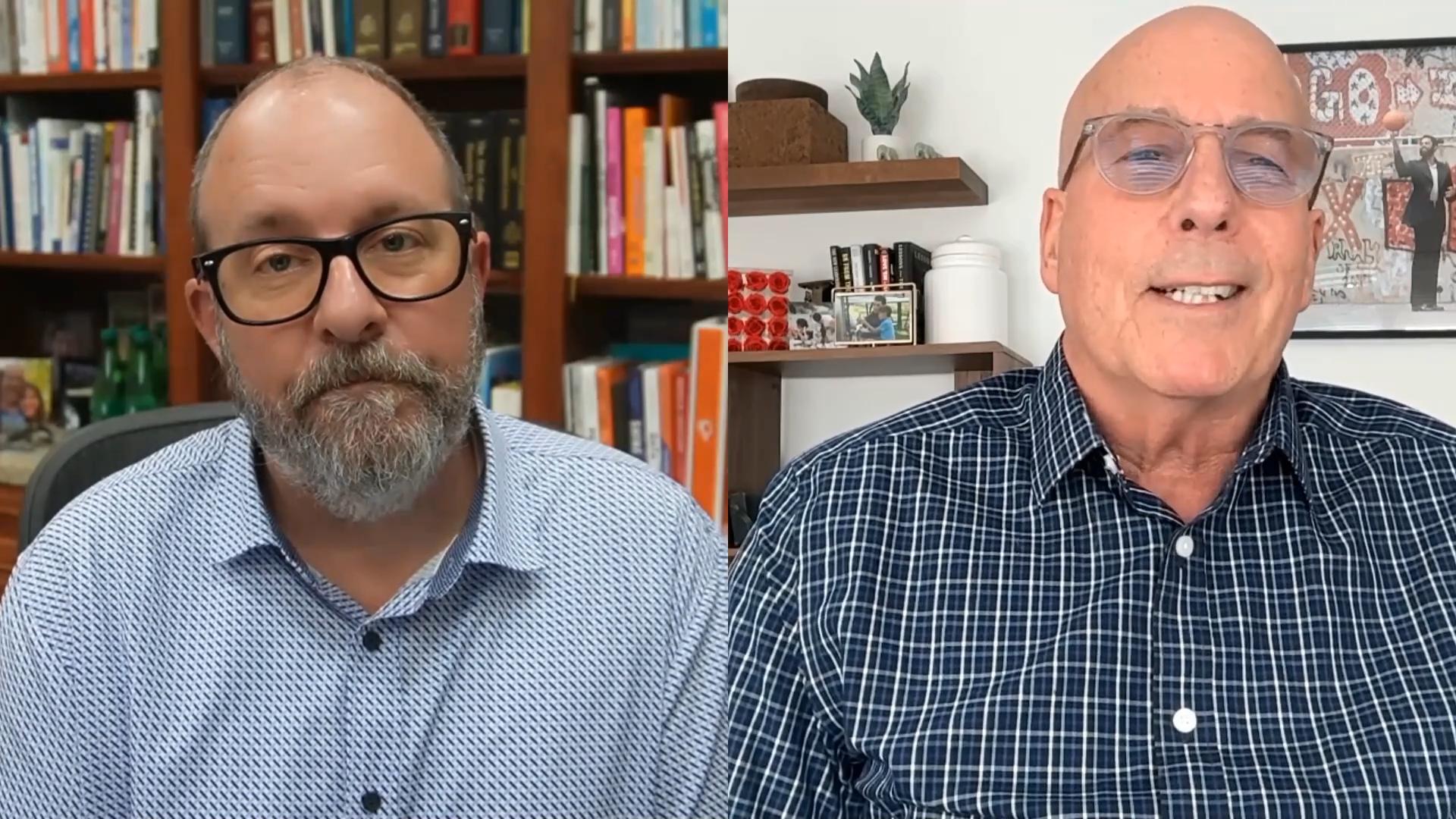
In this episode, Phil Wilson sits down with longtime HR leader and consultant Glenn Album to get real about what supervisors struggle with, what they need, and why so many companies end up building cultures they never intended. Glenn has lived this stuff in manufacturing plants, corporate offices, Fortune 100 boardrooms, and right at the center of union organizing campaigns. What he lays out in this conversation is the blueprint for the next 52 weeks if you want a stronger workforce, better performance, and a culture that is more than a poster on the wall.


They cover the traps companies fall into when they promote the best individual performer instead of the best leader, how tolerated behavior quietly scripts your culture, and what it really takes to develop supervisors who know how to lead, not just manage.


If you care about team dynamics, leadership, or building the kind of culture that keeps you out of trouble and ahead of problems, this is the episode you need to watch right now.


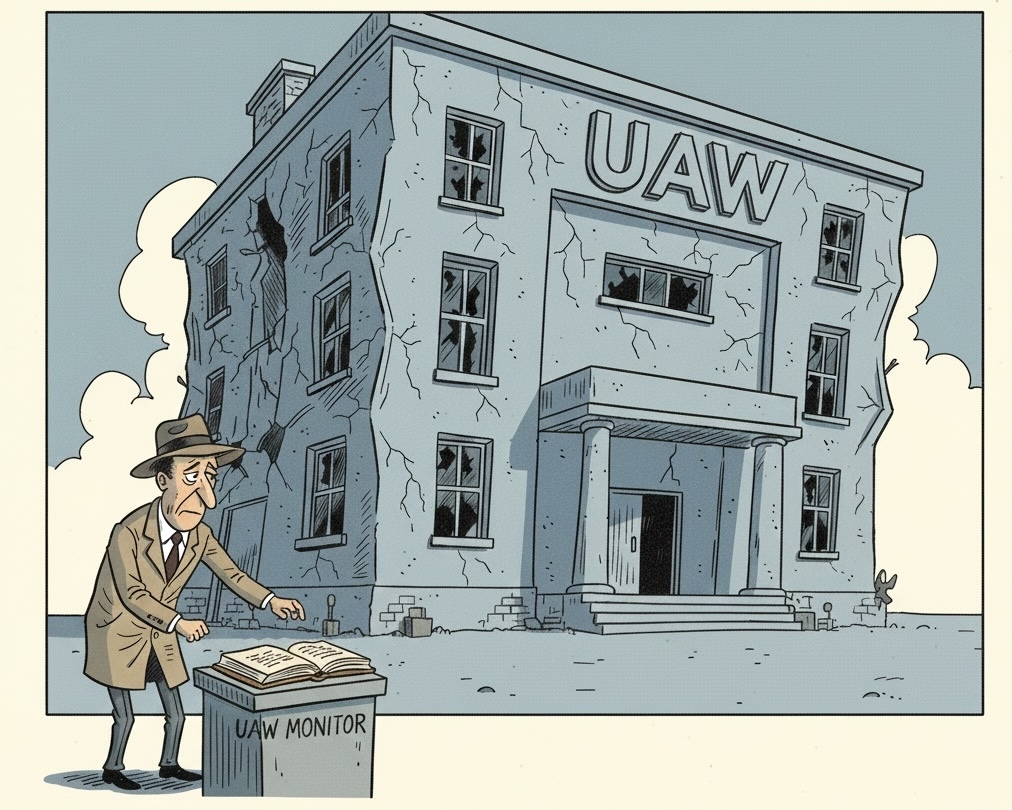
Surprise! The UAW Monitor’s Newest Report Reveals Shawn Fain’s Union to Be a Miserable Workplace

by Kimberly Ricci

The UAW’s federal watchdog was always destined to have a tough job. In 2021, a district judge appointed Neil Barofsky for a six-year term to monitor this notoriously corrupt union as it supposedly worked toward legitimacy. Barofsky then issued a stream of reports with the twelfth edition being a doozy that detailed how President Shawn Fain ousted two officers who “refus[ed] to divert benefits to his fiancée” and approved ambiguous spending requests “for the benefit of those in the President’s Office.”


That report also showcased Fain’s penchant for profanity and threats to “slit” or “cut” the “f***ing throats” of those who “messed” with his inner circle. Fain admitted that he “got sh*tty” by making a UAW staffer cry, and Barofsky recommended the reinstatement of ex-Secretary-Treasurer Margaret Mock, which is where we pick up with today’s discussion.


Barofsky’s thirteenth report recently dropped, and “profanity” has been replaced by “retaliation” as the word of the day, pointing toward an insidious “culture of fear” that grips the UAW’s staffers. Of course, these findings are awfully ironic for an organization that infiltrates workplaces with false promises of improvement. Although, Barofsky notes that retaliation has historically been present within the UAW, it’s now gone into overdrive.


Case in point: The magic of “Ctrl+F” reveals over 100 uses of "retaliation" within the thirteenth report. Further smatterings of “retaliatory,” “retaliate,” and “retaliated” add up to 135 uses, leading to Barofsky’s main findings:

  • Fear of retaliation among UAW staffers

  • Retaliatory actions taken against Secretary-Treasurer Mock, which were initially detailed in the twelfth report

  • Failure to adequately address the union’s culture of retaliation

  • Staff reluctance to report misconduct due to fear of retaliation

A dizzying array of retaliatory acts is then described in this 62-page report (and a 40+ page appendix of recommendations), but what’s most telling is how 51% of surveyed UAW staffers are so worried about the consequences of reporting retaliation that they admitted they would not report it.


Yes, that’s right: The UAW’s staffers fear being retaliated against for either reporting retaliation or commenting upon past acts of retaliation.


If that’s not a cut-and-dried description of a toxic and miserable workplace, we’re not sure what else could easily qualify.


Individual workers further detailed their fears about the twelfth report:

  • Employee #1 declared, “The President is going to retaliate against me when he hears this."

  • Employee #2 expressed how they were “really concerned” about how Fain “is going to retaliate against me when he hears this.”

  • Employee #3, a senior official, admitted that they were "afraid" to talk to Barofsky because Fain "would be vindictive."

  • Additional employees admitted feeling “constantly on eggshells” about “the President’s potential to retaliate.”

Shockingly, this thirteenth report wasn’t 100% bad, though.


Barofsky conceded that he recently observed “green shoots of positive change” within the UAW, including plans to hire a new compliance director and the timely completion of recent financial audits, with Fain’s office cooperating. Still, Barofsky noted that although there’s still room for the union to “renounce the same-old culture of fear and retaliation and embrace one of inclusion and reform,” time is running short.


Conclusion: To drive the point home, Barofsky’s own words point toward how, if the UAW does not get serious about “cultural reform,” then “it is only a matter of time before abuse and corruption creep back into the Union.”

In short, the UAW monitor sounds skeptical about lasting reform within Fain’s union, and Barofsky isn’t done yet. He’s got at least a few more reports to compile before his job as federal monitor is done. Stay tuned.


Starbucks Strike Enters Week Three, Locked In A Stalemate

by Michael VanDervort

If you have been watching the Starbucks strike unfold, you already know this isn’t just another Red Cup publicity hit. Three weeks in, the walkout has turned into a standoff, with a relatively small group of Starbucks workers participating alongside Teamsters and other allies. The strike has been marked by political cameos, dueling narratives, and a union that insists it is nowhere close to backing down.


Let’s walk through what is happening, cut through the noise, and talk about what matters.


A strike that keeps growing… depending on who you ask

According to Forbes, Starbucks Workers United (SWU) reports that roughly 2,500 baristas across 120 stores and 85 cities are on strike. If you look at the union’s messaging, they claim momentum is still building. They say new stores keep joining, and they’re prepared to escalate even further.


Starbucks, naturally, tells a different story. In interviews with The Seattle Times, the company says the union claims are inflated and that only about 55 stores actually closed during the Black Friday surge. Meanwhile, 99 percent of its 17,000 US stores stayed open. The company has no problem reminding reporters that Red Cup Day was the biggest sales day in Starbucks history, strike or not.


Why this strike feels different

Part of the reason this walkout has lasted so long is that the union is trying to bring additional pressure on the company. The union is not just striking stores. They have staged a picket line at Starbucks’ York, Pennsylvania, distribution center. They showed up at CEO Brian Niccol’s Newport Beach office. They are being supported by the Teamsters, which means deliveries and trash pickup are interrupted at select locations. And they’ve rallied support from more than 100 federal lawmakers and a laundry list of officials to show up on picket lines. The Guardian captured the tone nicely: the union’s attitude is defiant, “We’re not going anywhere.”


This all helps a multi-week strike stay in the headlines. But it does not automatically translate into bargaining leverage, especially when the employer can legally hire permanent replacements in a ULP strike and when consumer behavior doesn’t shift enough to hit revenue.


Starbucks’ strategy: confidence, data, and waiting

From Starbucks’ perspective, there is no need to rush. They are making it clear they believe:

  • The union’s demands, including a reported 65 percent wage increase, are unrealistic

  • They already offer what they call “industry-leading” pay and benefits

  • They have applicant pipelines and retention metrics to weather a long strike

  • They can easily hire strike replacement workers should they choose to do so

So, the company is sticking to a simple public message: when the union is ready to return to the table, we’re here. Until then, business continues.


The union’s challenge: energy vs. endurance

The union unquestionably has enthusiasm. They get media attention, political allies, and worker stories that magnify the frustrations of a small segment of the Starbucks barista population. They also have a narrative about stalled bargaining and hundreds of lingering ULP allegations that fuel union members.


But sustaining a multi-week ULP strike across dozens of cities is hard. The Seattle Times noted the company’s claim that momentum is fading and that more than half of the stores initially closed have reopened. That matters.


This is the quiet tension running underneath the headlines: who runs out of steam first?


The NYC settlement: important, but not the center of the story

One more plot point landed this week: Starbucks agreed to pay about $35 million to New York City workers for violations of scheduling laws.


It’s notable, mainly because it adds fire to the union’s messaging about broader labor-law violations. But it is not what is driving the strike.


So what does this mean for labor relations pros?

For now, neither side is blinking. Nearly four years after the first Buffalo election, Starbucks is the most prominent example of just how difficult first contracts are to achieve. The union seems to have a very long road ahead.


Stories You May Have Missed:


Misfire: Gun Range Instructor Wins Job Back After Using Profanity Toward Manager

Link


Gig Drivers, Union Tensions, and the UPS Business Model

Link


US Senate committee clears Boeing lawyer's stalled NLRB nomination

Link


NLRB Urges Ninth Circuit to Decide Long-Delayed Cemex Case

Link


Sysco Drivers Are an Appropriate Unit

Link


Third Circuit Says Norris-LaGuardia Act Prevents It from Enjoining the NLRB

Link


About Labor Relations INK

Labor Relations INK is published weekly and is edited by LRI Consulting Services, Inc. Feel free to pass this newsletter on to anyone you think might enjoy it. New subscribers can sign up by visiting here.


If you use content from this newsletter, please attribute it to LRI Consulting Services, Inc. and include our website: http://www.LRIonline.com 


Contributing editors for this issue: Greg Kittinger, Michael VanDervort, and Kimberly Ricci.


You are receiving this email because you subscribed to receive our labor relations newsletters and updates. You can manage your email preferences by clicking the link at the bottom of any of our email communications.


About LRI Consulting Services, Inc.

LRI Consulting Services, Inc. exists to help our clients thrive and become extraordinary workplaces. We improve the lives of working people by strengthening relationships with their leaders and each other. For over 40 years, LRI Consulting Services, Inc. has led the labor and employee relations industry, driven by our core values and our proven process, the LRI Way.


Share