Subject: LRI Ink: NLRB Roadmap, A Revote, UAW Strikes + LRI Institute

August 27, 2026

To visit the blog post, click on the link below the article.

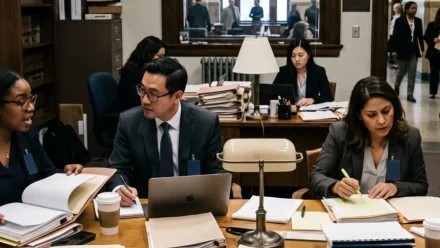
The UAW’s Latest Seemingly Unlikely Craze: A Summer Of Attorney Strikes

by Kimberly Ricci

At what point should the United Auto Workers (UAW) rebrand under a different name? That might seem like a flippant question, but more than half of this union’s membership now works outside auto manufacturing. There’s a reason for the aggressive poaching, since this union’s most recent LM-2 report detailed 391,000 members, which is far below the 1.5 million members of its 1970s heyday.


This shift in the UAW’s demographic is all about self-preservation, so the union is now largely funded by dues from higher ed, museum, movie theater, and casino workers. Also, attorneys? Yep, and UAW Local 2325 originally encompassed only New York City public interest lawyers but has expanded to include public defender (PD) nonprofit workers across the US.


Over the past few months, the union has waged several PD strikes in New York City, Texas, and Detroit.

A dramatic strike in the UAW's backyard

Earlier this month in Detroit, 90 Neighborhood Defender Service workers–about 60 PDs along with social workers and investigators–went on strike at the Wayne County Criminal Justice Center. Shawn Fain joined the picket line and issued a “shame on you” to district judges while accusing them of intimidation. One attorney had been held in contempt over the scheduling chaos that befell the courthouse.


In response to Fain’s criticism, Chief District Court Judge William McConico pointed out how, strike or not, the county is bound to “manage its docket in a way that maintains fairness and continuity for all parties.”


Indeed, the ruckus Fain raised adds to the disruption these strikes can cause in communities. For 11 days, the UAW effectively shuttered a nonprofit service that provides constitutionally mandated legal services for around 50% of Wayne County defendants who can’t afford representation. Taking these attorneys out of the courtroom throws a wrench in the wheels of justice, which already run notoriously slowly.


Multiple prosecutors spoke about the chaos from this single strike, and although Wayne County judges did their best to hand off cases to other counsel, one lawyer pointed out there are simply “too many public defense cases for outside court-appointed attorneys to take.”

A trio of Big Apple strikes

Three PD strikes throughout New York City boroughs involved disputes over workloads, healthcare benefits, and wage increases. On that final subject, the union didn’t exactly score astronomical money:

  • 300 The Bronx Defenders workers went back to work after 11 days with a tentative contract including 3% annual wage boosts and more paid leave days.

  • 140 Harlem’s Neighborhood Defender Service also went on an 11-day strike and, likewise, received a 3% annual wage increase in their tentative deal.

  • 500 Brooklyn Defender Services went on strike for 5 days and reached a deal that has not yet been disclosed to the public, although the union did issue a vague claim of “significant” raises.

Everything’s biggish in Texas, including strikes

In July, at least 200 San Marcos Public Defender attorneys and support workers walked off the job with few details revealed about the 3-year contract that brought them back to work after 7 days.

How far can the UAW take its legal dreams?

The good news for the legal profession is that public interest staffers are likely the limit for the UAW’s attorney organizing. Private law firms are relatively resistant to union infiltration for various reasons, including ethical considerations. And as mentioned above, wage increases following these PD strikes aren’t anything to write home about, so these aren’t exactly inspiring results that will allow unions to topple the entire legal sector.


That reality doesn’t do much to ease the chaos that some courthouses have experienced this summer, but at least there’s a limit to the UAW madness.


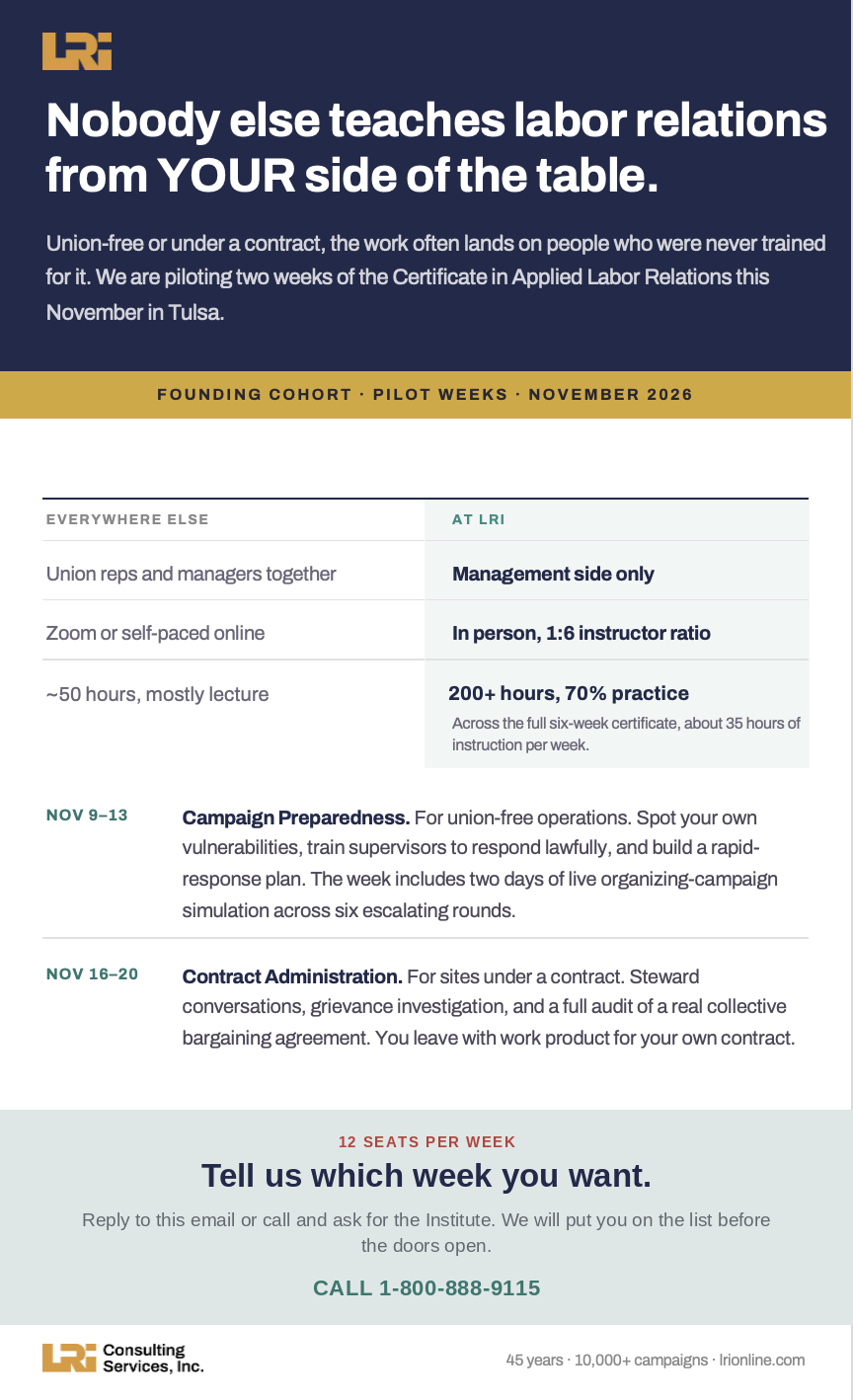
New Program: LRI Certification in Applied Labor Relations

by Michael VanDervort

The Contract Proposal Didn't Change. The Vote Did

by Michael VanDervort

On August 3, Teamsters Local 455 members at Cargill’s Fort Morgan, Colorado, beef plant rejected a tentative agreement on a contract proposal by 25 votes. Two weeks later, they approved the same contract in a contract ratification vote by a margin of 902 votes.


More than 1,700 employees had been locked out since May 20. After the first vote failed 749 to 724, more than 1,000 workers reportedly signed a petition asking for another vote. The Colorado Sun reported confusion among workers about the first ballot, and union officials pointed to language barriers as part of the problem.


Chris Suazo, a Teamsters business agent representing the locked-out workers, told Fight Back! News, “We had a large group of members that felt like there was some misunderstanding through the language barriers.” The publication reported that workers at the plant speak 27 languages.


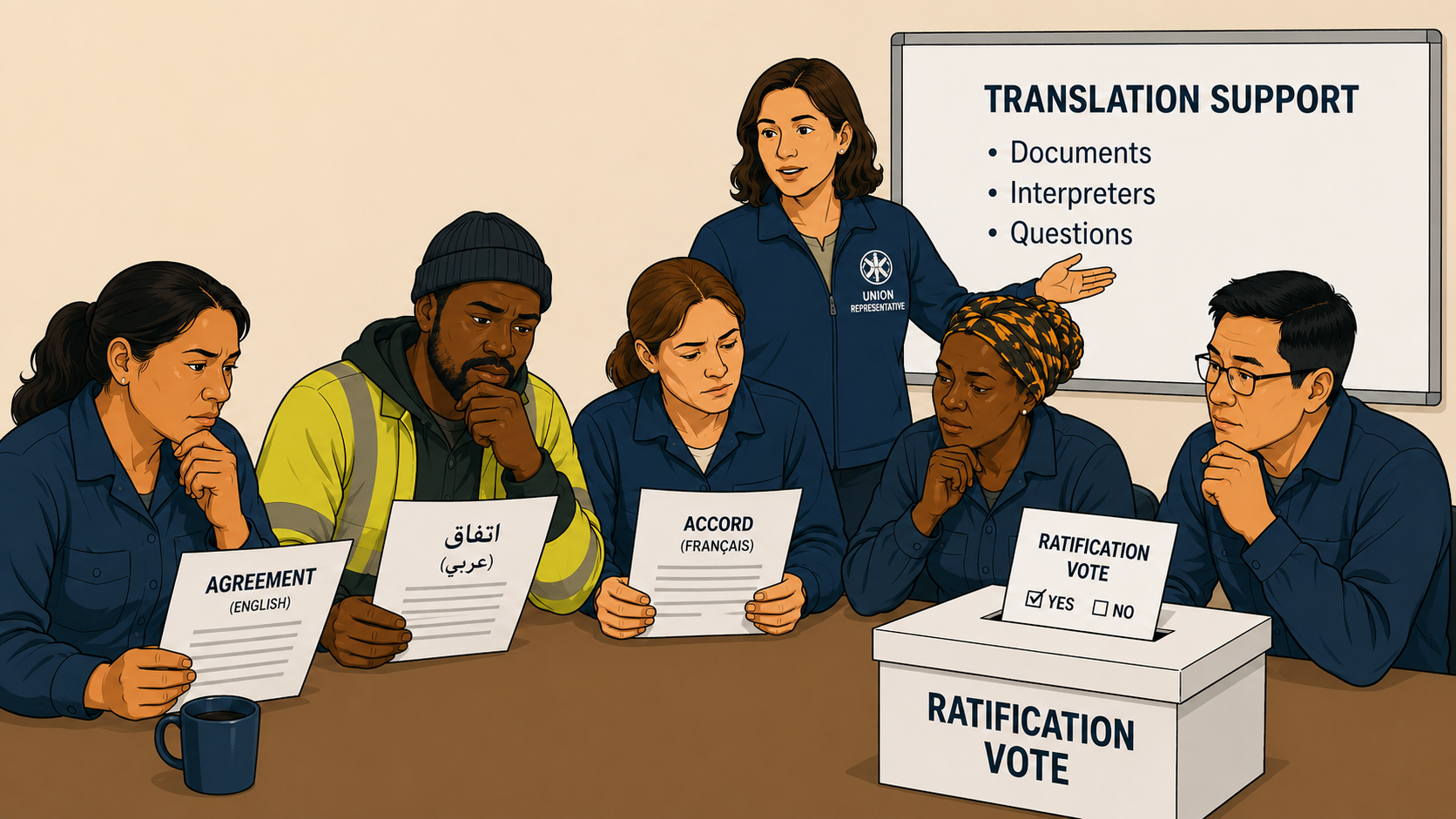
Before the second vote, Local 455 changed its communication process. Colorado Public Radio reported that the union expanded translations from a handful to nearly a dozen languages and added more explanation about the agreement and what a yes-or-no vote would mean. Suazo told Fight Back! News, “[We're] being very clear what a no vote would entail and what a yes vote would entail. We're now doing the ballots in their languages – Haitian Creole, Arabic, Spanish, French, Somali, Tigrinya.”


On August 17, the agreement passed 1,113 to 211, ending the 89-day lockout.

The First Vote Was Poorly Managed

Local 455 knew it represented a workforce that spoke multiple languages. It also knew members had been locked out for nearly three months and were being asked to decide whether to return to work under a new contract. The Colorado Sun reported that Teamsters strike benefits were sharply reduced after the August 3 rejection. Translation and explanation should have been built into the first ratification process.


Instead, more than 1,000 members asked for another vote after the first one failed.


That sequence raises a fair question about the level of representation those members received before the first ballot. Dues-paying members should reasonably expect enough information from their bargaining representative to understand the agreement they are being asked to approve.

Why was that work not done before the first vote?


That is the harder question for Local 455. A union that represents a multilingual workforce must communicate with its members, especially when they are being asked to approve a collective bargaining agreement after months away from work.

Employers Should Pay Attention

Employers can make the same mistake. A policy, bargaining update, or campaign communication does little good if employees cannot understand it.  Local 455 fixed the problem before the second vote. Its members had every reason to expect that work to be done before the first vote.


Carey’s NLRB Roadmap: What’s Coming

by Michael VanDervort

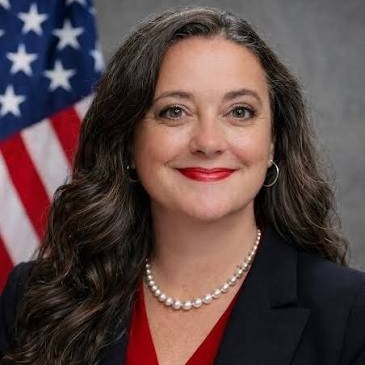
In her newly released GC Memo 26-04, National Labor Relations Board (NLRB) General Counsel Crystal Carey has provided a roadmap of case precedents she wants changed as the new Trump Board moves ahead with its newly sworn three-member Republican majority. 


In the memo, Carey breaks down her list of precedents into two categories: those already being challenged and those she intends to challenge later. This is a promising development from the employer perspective, but for now, the memo is just a roadmap, not a change in law. 

Cases Already Being Challenged

The following is a summary from the memo outlining issues and cases that Carey says she has already begun challenging:

  • Severance Agreements (and other Employment Agreements): Arguing to overrule McLaren Macomb, 372 NLRB No. 58 (2023) in an answering brief in Valley Radiology, P.A. (10-CA-324512).

  • Consent Orders: Requesting to overturn Metro Health Inc. d/b/a Hospital Metropolitano Rio Piedras, 373 NLRB No. 89 (2024) in Amazon (31-CA-317349, 31-CA-319781, 31-CA-320596).

  • Work Rules: Arguing to overturn Stericycle, 372 NLRB No. 113 (2023), in Honeywell International Inc. (09-CA-327389).

  • Captive Audience Meetings: Encouraging the Board to reverse Amazon.com Services LLC, 373 NLRB No. 136 (2024), and return to the longstanding “captive audience” standard set in Babcock & Wilcox, 77 NLRB No. 577 (1948), in a motion to withdraw exceptions in UPS Supply Chain Solutions, Inc. (32-CA-295913, 32CA-297314). 

  • Predictions on Impact of Unionization: Clearly stating, in a motion to withdraw exceptions in UPS Supply Chain Solutions, Inc. (32-CA-295913, 32-CA-297314), that I do not share my predecessor’s views on Siren Retail Corp. d/b/a Starbucks, 373 NLRB No. 135 (2024), and will argue to the Board to reinstate Tri-Cast, Inc., 274 NLRB No. 377 (1985).

  • Dress Codes: In exceptions and supporting brief in Starbucks Corporation (13CA-322871, 13-CA-327142), I argue against applying Tesla, Inc., 371 NLRB No. 131 (2022), and request that the Board reinstate Wal-Mart Stores, Inc., 368 NLRB No. 146 (2019).

  • Waiver of Right to Bargain: In a supplemental brief filed with the ALJ in HPC Industrial Group, LLC. (07-CA-308650), I noted that the standard set in Endurance Environmental Solutions, LLC, 373 NLRB No. 141 (2024) should be overturned. I intend to urge the Board to return to the standard set in MV Transportation, Inc., 368 NLRB No. 66 (2019). 

The Next Cases to Watch


GC Carey added a second section outlining several other precedents that she intends to challenge, if and when the opportunity arises. Sections of the GC memo have been slightly edited and comments on employer impact added.


These include: 


Bargaining Orders: Intent to challenge the Board’s decision in Cemex Construction Materials Pacific, LLC, 372 NLRB No. 130 (2023), enfd., 2026 WL 1079297 (9th Cir. 2026) because Cemex is contrary to Supreme Court precedent and sound labor policy. The Board should return to and reaffirm the binding applicability of NLRB v. Gissel Packing Co., 395 U.S. 575 (1969) and reinstate 2 Linden Lumber Div., Summer & Co., 190 NLRB 718 (1971), (1974). 


Why employers should care: Cemex dramatically changed the potential consequences surrounding demands for recognition, elections, and unfair labor practice allegations during organizing campaigns. This is one of the clearest examples of a rule that could materially change organizing strategy if the Board reverses course.


Employers’ Duty to Bargain Prior to Changing Terms and Conditions of Employment: Intent to challenge the Board’s positions in Wendt Corporation, 372 NLRB No. 135 (2023), and Tecnocap, LLC, 372 NLRB No. 136 (2023), which make for slower labor contracts by requiring parties to bargain over every single issue, even those for which there is longstanding precedent of action, before making a change.


Why employers should care: this reaches directly into day-to-day contract administration and management decision-making.


Protected Concerted Activity: Intent to urge the Board to revisit Miller Plastic Products, Inc., 372 NLRB No. 134 (2023), vacated in part, 141 4th Cir. 492 (3d Cir. 2025) and Lion Elastomers, LLC, II, 372 NLRB No. 83 (2023), vacated and remanded, 108 F.4th 252 (5th Cir. 2024). Lion Elastomers II is problematic and has led to the protection of generally prohibitable employee conduct tenuously connected to rights protected under the Act. Notably, Lion Elastomers is pending remand before the Board.


Why employers should care: this affects how much latitude employees may receive for abusive or otherwise objectionable conduct when it occurs in connection with protected concerted activity.


Employers’ Obligation to Discuss Dues/Fees Under Security Agreements After the Contract Expires: I disagree with Valley Hospital Medical Center, Inc., 371 NLRB No. 160, (2022), enfd., 93 F.4th 1120 (9th Cir. 2024) and will urge the Board to reconsider and return to the 1962 Bethlehem Steel standard, 136 NLRB 1500 (1962), which held that an employer’s statutory obligation to check off union dues ends when its collective-bargaining agreement containing a checkoff provision expires.


Why employers should care: particularly relevant during expired-contract situations, prolonged bargaining, and decertification activity.


Novel and Unprecedented Enhanced Remedies: I intend to request the Board to reconsider Thryv, Inc., 372 NLRB No. 22 (2022), vacated in part, 102 F.4th 727 (5th Cir. 2024). Thryv remedies have yet to be tested in a compliance hearing, but courts have repeatedly struck down the case and its accompanying remedies.  


Why employers should care: this could significantly affect the financial exposure attached to unfair labor practice findings.


Likely, several of the most consequential NLRB decisions of the last few years may not survive under this Board.

Friday Five: Teamsters Gloss Over Contract Corruption, Contempt, And Court Rulings

by Kimberly Ricci

Union corruption allegations hit a local’s leadership team:

International Alliance of Theatrical Stage Employees (IATSE) President Matthew Loeb reportedly “declared an emergency” earlier this summer over Local 479. Now this local’s leadership has been suspended following corruption allegations, and Loeb cited the need to avoid “irreparable injury” to the “property and membership rights” at the local serving Georgia and Alabama TV and film technicians and craftspeople.


IATSE Local 479 is under an emergency conservatorship following a July 20 hearing, and drama must have gone down, although details remain under wraps. Around 7,000 members are now represented by appointed temporary trustees, and this adds to the union’s woes after they’ve become embroiled in Big Labor’s fight against the Paramount merger.

A Teamsters nursing strike is nearing a milestone:

We’ve discussed the Teamsters’ plans to mass-organize Michigan nurses despite the union’s questionable expertise in the field. Part of their plan includes pushing employers into lengthy strikes. That’s precisely what’s been going on at Henry Ford Genesys Hospital in Grand Blanc, where about 750 nurses and case workers have been on strike since Sept. 1, 2025, with plenty of union-waged fact vs. fiction in the mix.


As that one-year anniversary approaches, the hospital responded to union allegations about workplace violence that is all-too-common in healthcare settings. A Henry Ford spokesperson declared that the hospital has “zero tolerance for violence of any kind” and has addressed the issue with armed guards and other security measures. The spokesperson added that the hospital views the union’s agenda as “simply an economic strike.”

Shawn Fain is lashing out at judges in Detroit:

United Auto Workers President Shawn Fain appears to be the focus of a grand jury subpoena, but he’s not letting those looming legal problems distract him from popping off at judges on his home turf in Wayne County.


Fain joined a public defenders’ (PD) strike that’s part of a contract dispute for 60 UAW-represented lawyers. Although many of the striking lawyers handed off their cases to other attorneys, one striking PD is being held in contempt, and Fain issued a statement of disapproval while suggesting that the district judges would be voted out at election time: “Shame on you.”


Naturally, this walkout is having effects on the PD’s case load, and Chief District Court Judge William McConico emphasized that judges aren’t taking sides, but the court must “manage its docket in a way that maintains fairness and continuity for all parties.”


Meanwhile, Shawn Fain’s own reelection is not a sure thing.

SEIU-lobbied boosts to Minnesota nursing home wages will soon take effect:

No one can accuse the Service Employees International Union (SEIU) of not staying busy. They’ve got their hands all over the sectoral bargaining bandwagon in California, and in Minnesota, they lobbied for years for across-the-board raises in nursing homes.


Federal approval arrived for those raises, which will go into effect on Sept. 10 and provide for new hourly wage floors, ranging from $19 to $27 hourly, for all categories of workers in these facilities. A further $1.50 raise for every nursing home worker will arrive on Jan. 1, 2027. These boosts come at a time when Minnesota nursing homes are, like those across the U.S., struggling to stay afloat, and facility closings have been leaving families with fewer options to seek healthcare for loved ones.

The Ninth Circuit rewrote union turf war rules:

In Int'l Longshore and Warehouse Union v. NLRB, the full Ninth Circuit shut down a loophole that unions were using to keep pursuing work despite the NLRB having stepped in and assigned that work to a rival union. This court ruling restores the Board’s ability to settle skirmishes between unions battling over the same jobs, at least in Washington, California, and other Ninth Circuit states.


This dispute involved the International Longshore and Warehouse Union filing grievances over Port of Seattle jobs that the Board previously assigned to the International Association of Machinists. For employers in the Ninth Circuit, this at least shuts down some workplace meddling from turf-warring unions. That is, unions now have far less protection if they’re pushing for work that the Board has assigned to another union.


About Labor Relations INK

Labor Relations INK is published weekly and is edited by LRI Consulting Services, Inc. Feel free to pass this newsletter on to anyone you think might enjoy it. New subscribers can sign up by visiting here.


If you use content from this newsletter, please attribute it to LRI Consulting Services, Inc. and include our website: http://www.LRIonline.com 


Contributing editors for this issue: Greg Kittinger, Michael VanDervort, and Kimberly Ricci.


You are receiving this email because you subscribed to receive our labor relations newsletters and updates. You can manage your email preferences by clicking the link at the bottom of any of our email communications.


About LRI Consulting Services, Inc.

LRI Consulting Services, Inc. exists to help our clients thrive and become extraordinary workplaces. We improve the lives of working people by strengthening relationships with their leaders and each other. For over 40 years, LRI Consulting Services, Inc. has led the labor and employee relations industry, driven by our core values and our proven process, the LRI Way.


Share