Subject: LRI INK: Progressive Brand Battles, Teamsters Woes, Decertification Ruling

March 26, 2026

To visit the blog post, click on the link below the article.

𝐏𝐫𝐨𝐠𝐫𝐞𝐬𝐬𝐢𝐯𝐞 𝐁𝐫𝐚𝐧𝐝𝐬, 𝐏𝐫𝐨𝐥𝐨𝐧𝐠𝐞𝐝 𝐁𝐚𝐭𝐭𝐥𝐞𝐬: 𝐓𝐡𝐞 𝐔𝐧𝐢𝐨𝐧 𝐖𝐢𝐧𝐬 𝐓𝐡𝐚𝐭 𝐃𝐢𝐝𝐧’𝐭 𝐃𝐞𝐥𝐢𝐯𝐞𝐫

by Michael 

This week, we are going to do a deeper dive into what’s happening in union organizing among so-called progressive brands that have become a notable labor trend since 2021.


Unions are winning elections at some of the most culturally progressive, consumer-facing brands in the country: Starbucks, Trader Joe’s, REI, Chipotle, Whole Foods, and New Seasons Market. The campaigns are loud, visible, and increasingly successful at the ballot box.


But here’s the punchline, labor doesn’t like to say out loud:

Almost none of these wins have resulted in a contract.

Despite hundreds of NLRB-certified elections across these brands since 2021, actual collective bargaining agreements are rare. And where they do exist — New Seasons being the best-known example — the eventual outcomes raise more questions than they resolve.

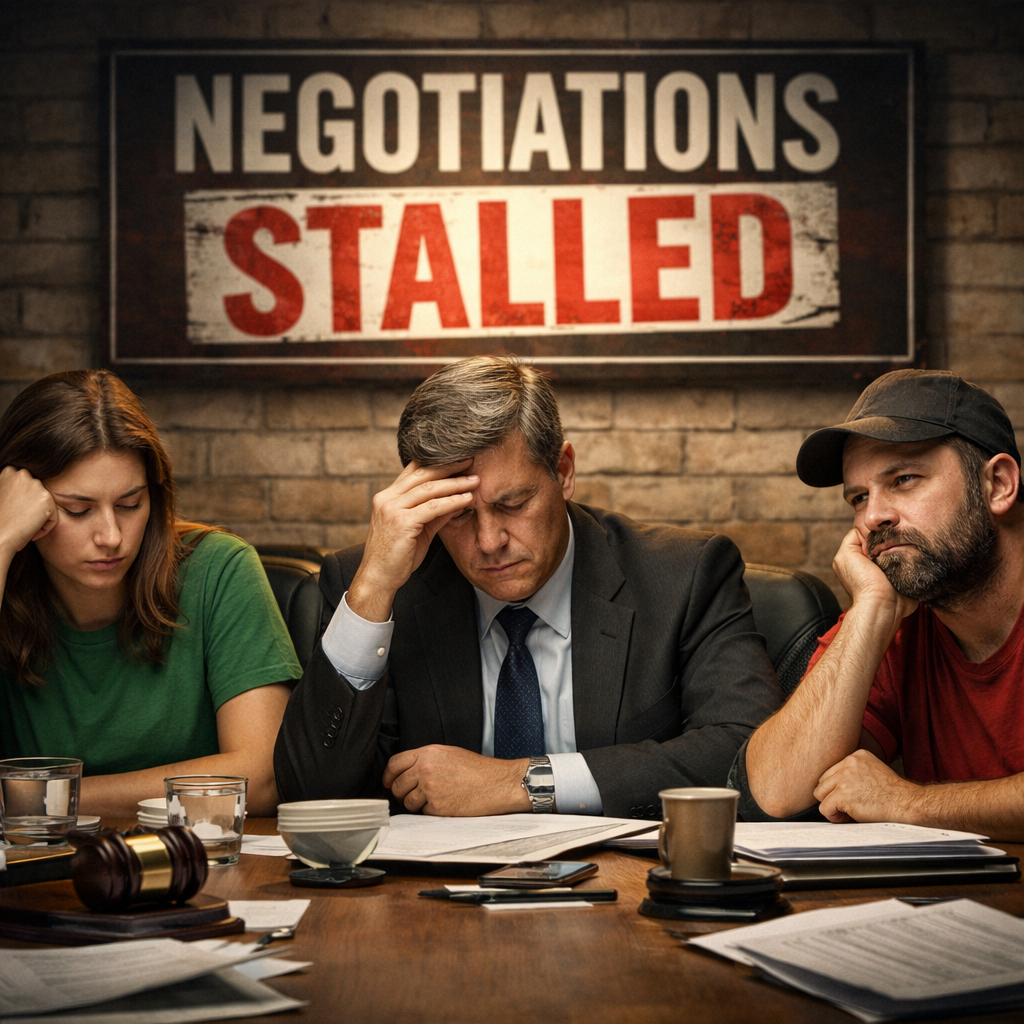
For management-side labor professionals, this wave is not just about representation. It’s about what happens after. Because right now, the post-election landscape is turning into a long, expensive, high-friction holding pattern, and management is the one footing the bill.

The Numbers Look Big — Until You Ask About Contracts

Starbucks alone has seen over 600 stores vote to unionize since 2021. Trader Joe’s, REI, and Apple have all had successful campaigns. Even Whole Foods saw a Philadelphia store vote to unionize in 2025.


But what unites nearly all these efforts is what’s missing: a finalized collective bargaining agreement. Some negotiations have dragged on for more than three years. Some haven’t even started. Others fell apart at the ratification stage.


This is the long tail of modern organizing. And management is learning to live with it.

The New Risk Is the Second Year, Not the Election

The traditional playbook focused on avoiding a union win. Now? It’s about managing the slow spiral afterward.

  • At Starbucks, bargaining efforts have stalled out amid constant litigation and PR battles. While no contracts are yet in place across the more than 600 unionized stores, Starbucks Workers United submitted a new comprehensive offer in March 2026 in an attempt to break the deadlock and restart negotiations.

  • Trader Joe’s United has yet to secure a contract at any store despite wins dating back to 2022.

  • REI’s coordinated bargaining campaign collapsed in 2026 when workers rejected a tentative deal, leaving the parties to continue negotiations with no closure in sight.

No Contract? Still a Cost

The irony is rich: unions that can’t get contracts still extract real costs.

  • Regulatory drag. Delays, complaints, and compliance burdens stretch months and sometimes years.

  • Internal uncertainty. Managers are left managing ambiguity around rules, representation, and employee expectations.

  • Reputation management. Organizing campaigns (and the PR that follows) often outlast the campaign itself.

Even Chipotle, which saw just one store unionize in Lansing, Michigan in August 2022, ended up facing NLRB litigation and negative headlines for allegedly denying raises to union workers.  The Chipotle Union of Teamsters has decided to end bargaining after failing to get a contract for several years.


One store. One contract-less unit. But a multi-year distraction.

The New Seasons Outlier

New Seasons Market remains one of the lone bright spots for union organizers — or so it seemed.


The Portland-based grocer finalized a contract in late 2025 covering roughly 850 workers. By February 2026, it announced layoffs affecting over 90 employees across 20 stores.

It’s the first completed cycle of this new wave: win → bargain → ratify → restructure.


Not exactly the outcome labor advertised.

Bottom Line for Management

The story isn’t “unions are winning.”


The real story is: unions are getting in the door, but they can’t get to a deal.


That means employers are now managing a new class of labor risk. And it’s one that stretches long past the vote. The contracts aren’t coming anytime soon, but the cost of bargaining purgatory is already here.


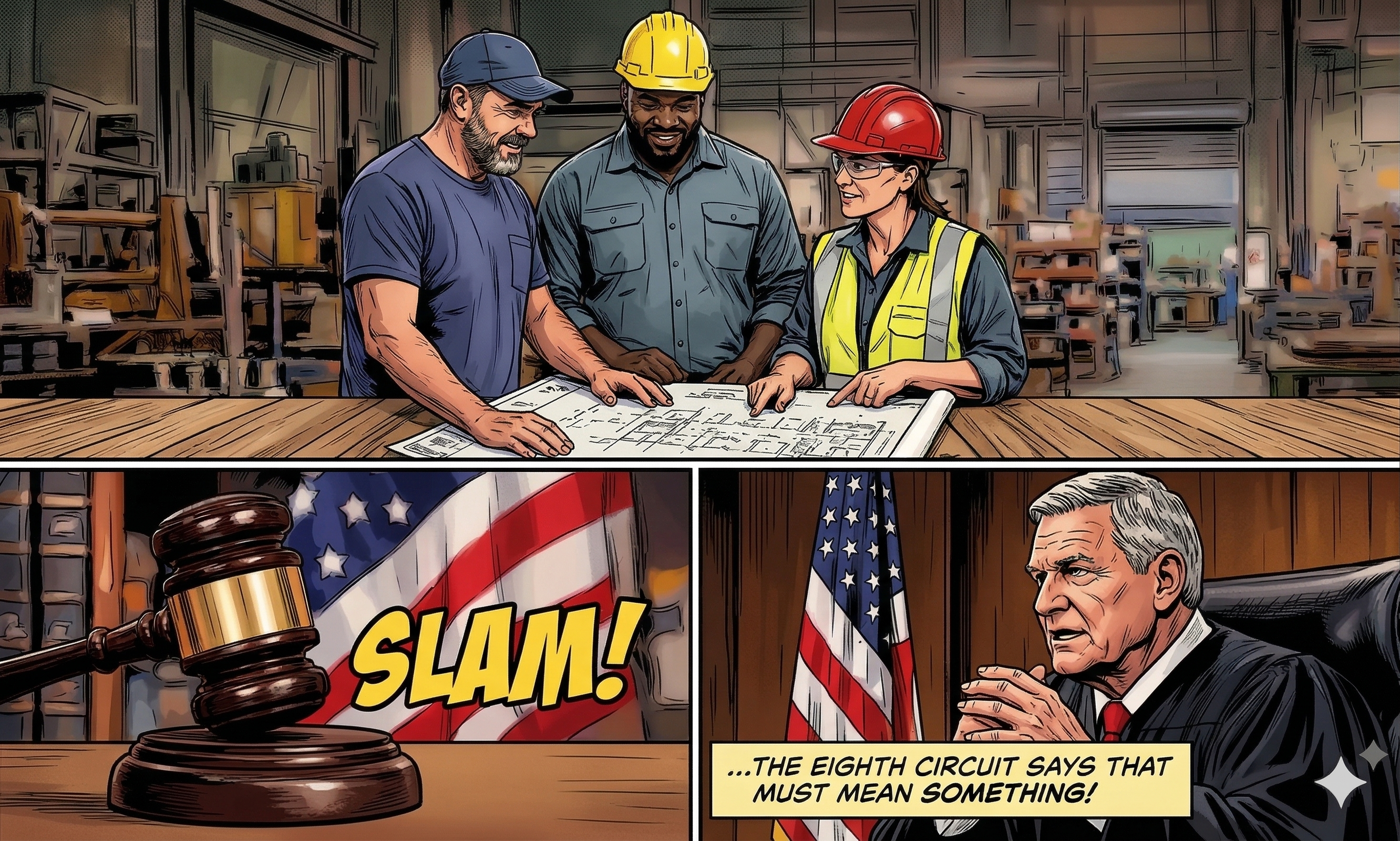
Employees Voted To Decertify A Union. The Eighth Circuit Says That Should Mean Something.

by Kimberly Ricci

Decertification elections are a complicated process fraught with challenges. Before a formal NLRB petition can be filed, 30% of workers in a bargaining unit must sign a petition affirming that they don’t wish to be represented by their union. Further hurdles include Board dismissals based on procedural grounds or unresolved ULPs, which can lead to blocking charges from the union itself.


When employees vote to remove their union, you might assume that the vote results settle the matter. That isn't the case, at least not right away. Federal labor law still requires employers to recognize and bargain with a union until the NLRB formally certifies the election results, a process that can take weeks after the vote. The Eighth Circuit is now pushing back on how that interim period has been handled.

The Case

At Research Medical Center, an acute care center in Kansas City, workers voted to decertify SEIU, and the employer withdrew recognition during the post-vote certification window. The employer also stopped withholding dues from workers’ paychecks, ceased bargaining, and disallowed union access on the premises.

The Eighth Circuit’s decision in Midwest Division-RMC, LLC v. NLRB (2026) counters the Board’s finding that the employer’s withdrawal was an automatic NLRA violation under W.A. Krueger Co., 325 NLRB 1225 (1990). That standard required that even if workers voted to remove their union, an employer must keep bargaining until the Board certifies. Also under that standard, an employer who withdrew recognition before Board certification committed an automatic NLRA violation, regardless of how the vote went.


The Eighth Circuit referred back to Mike O'Connor Chevrolet, 209 NLRB 701 (1974), in which the Board found that an employer acts "at its peril in making changes in terms and conditions of employment during the period that objections to an election are pending and the final determination has not yet been made." Those actions were not automatic violations, though, and the Eighth Circuit characterized W.A. Krueger as inconsistent with how employers are allowed to act upon election results before NLRB certification when workers choose to unionize.


Furthermore, the Eighth Circuit pointed toward the Board's own decision in Johnson Controls, Inc., 368 NLRB No. 20 (2019). The Board had found that an employer who cancelled a bargaining session following a decertification vote had not automatically violated the NLRA, signaling that the rigid W.A. Krueger standard was already losing ground even within the Board itself.

What’s next?

The Eighth Circuit's ruling draws on Fifth Circuit rationale from two prior cases in rejecting the automatic-violation approach of W.A. Krueger on post-decertification employer conduct. It now becomes harder for the Board to maintain the W.A. Krueger position in federal court. At some point, we could also see the current, employer-friendly NLRB overturn this standard.

What Changes And What Doesn’t For Employers

The Eighth Circuit ruling frees employers from being unequivocally required to keep bargaining with a union while waiting for the Board to formally certify the result.


However, choosing to cease bargaining during that period doesn’t remove risk if a union succeeds in objecting to a decertification vote. In that event, an employer could be required to bargain retroactively. Yet this is a more practical standard for employers in cases where their workers make it overwhelmingly clear that they want a union out.


Crucially, the Eighth Circuit is not only expressing employer-friendly views but also siding with workers who are disappointed after a union fails to deliver on its promises. In a time when Biden-era blocking charge policies still shape the landscape by allowing unions to easily block decertification votes, appeals court judges are signaling that workers’ voices matter when they choose to remove a union.


The Teamsters Have Been Projecting Strength: Evidence Is Starting to Diverge

by Michael VanDervort

For a Teamsters union that has spent two years projecting strength and organizing momentum, a different story is starting to take shape internally.


It isn't dramatic. It isn't coordinated. That's what makes it worth paying attention to.

The document that started this

In February, the Teamsters' Independent Investigations Officer issued a formal charge report against two senior officials: Chris Griswold, former IBT Vice President and Local 986 Secretary-Treasurer, and Sean Harren, Local 986 President.


This isn't anonymous sourcing or reform-faction spin. It's a primary investigative document with detailed findings.

Key allegations:

  • Using union credit cards for personal meals, alcohol, and non-union guests

  • Lavish spending: $1K– $3K restaurant tabs, high-end wine up to $890/bottle

  • Charging expenses with no legitimate union purpose

  • Concealing or failing to document expenses

  • Converting credit card rewards for personal travel

  • Weak or bypassed financial controls

  • Failure to enforce proper dues payments (including their own eligibility issues) 

What it describes isn't a one-time lapse. It's a pattern of personal spending on union credit cards, including meals with family members, high-end alcohol purchases, and charges that bypassed the per diem policy designed to prevent exactly this kind of abuse. In multiple instances, the same individuals who incurred expenses also approved them.


The report's conclusion: misuse of union funds and potential embezzlement-type conduct. The amounts tied to each official, $51,000 for Griswold and more than $82,000 for Harren over five years, are not trivial. 


Both resigned in November 2025 under pressure from leadership.

Why this doesn't stand alone

On its own, a corruption finding and two resignations are a governance story. Serious, but containable.


What makes this more interesting is the context around it.


Reform voices inside the union are already framing the charge report as a test of whether leadership will enforce accountability or let the issue fade after the initial headlines. Teamsters for a Democratic Union have been direct in treating this as a signal about institutional culture, not just individual misconduct.


At the same time, Sean O'Brien's political positioning is drawing sharper criticism, particularly for his engagement with the Trump administration, with few clear policy gains to show for it. That criticism is coming from the left, including outlets that were broadly supportive of O'Brien's early tenure.


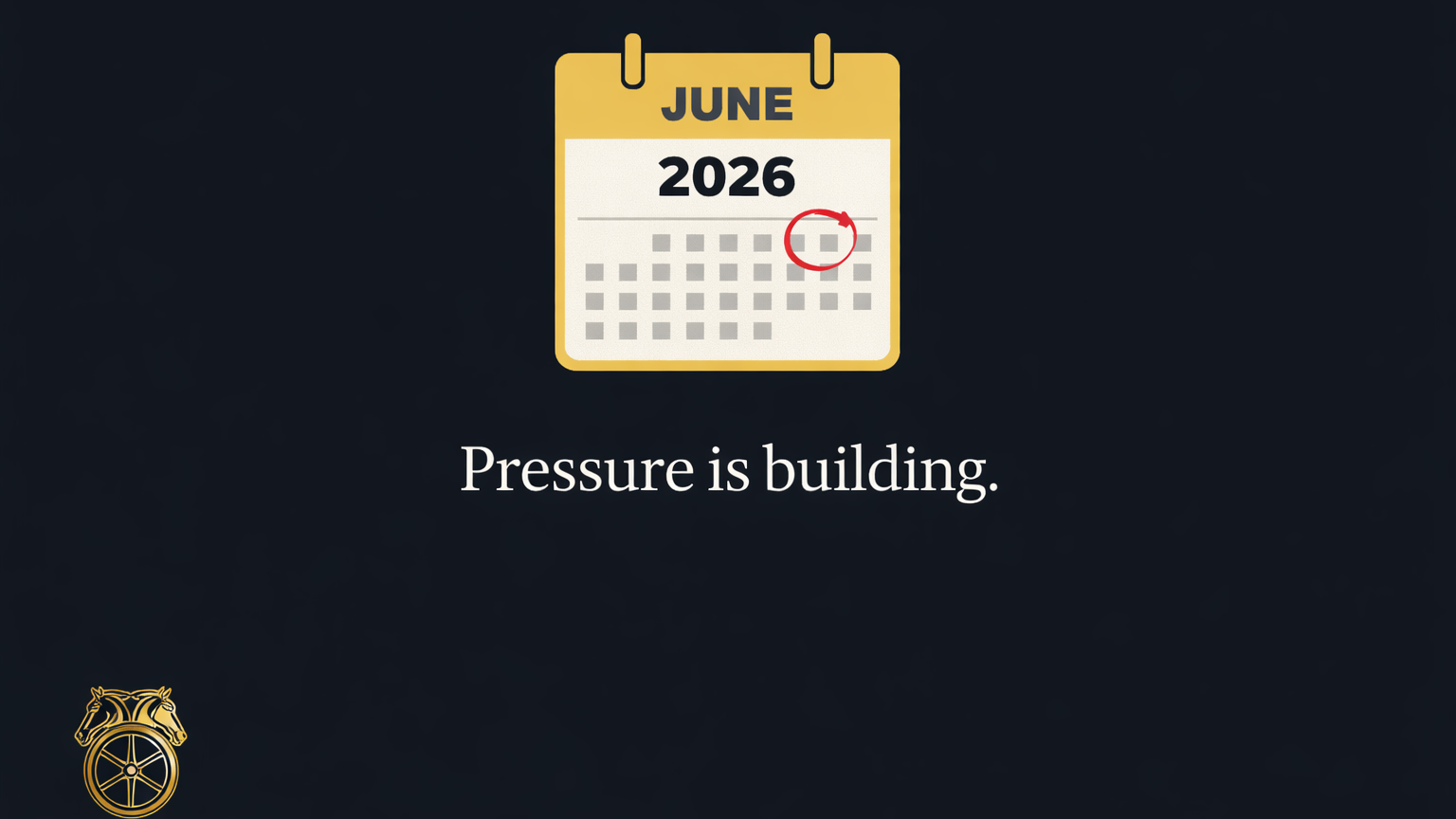
And organizing for the June 2026 IBT election is already underway, with external groups publishing demands and attempting to set the agenda before leadership does.


None of these threads is directly connected to the others. That's the point. When governance concerns, political criticism, and early election activity all start moving in the same direction independently, the conversation shifts from "what happened" to "what does leadership do next."

What this tends to mean in practice

Leadership under scrutiny pushes harder externally. Messaging sharpens. Organizing and bargaining posture often becomes more aggressive, not less, to consolidate member support and change the subject.


But something else typically surfaces at the same time: inconsistency. Gaps between national-level messaging and local execution. Mixed signals on strategy. Uneven application of priorities across regions and locals.


For employers and labor relations professionals, that's often where internal union dynamics show up, not in press releases, but across the table.


The story is still developing. The question for the next few months isn't whether pressure exists. That's already established. The question is whether these separate threads converge into a single narrative and present problems for O’Brien heading into June.

Friday Five: Cesar Chavez Fallout, Hospital Strikes, WGA Talks, and More

by Kimberly Ricci

Fallout from grave accusations against United Farm Workers leader Cesar Chavez:

Earlier this week, a New York Times investigative report detailed a “pattern of sexual misconduct” by UFW co-founder Cesar Chavez. The newspaper uncovered “extensive evidence,” backed up by interviews of 60+ people, that Chavez allegedly groomed and raped underage girls. The publication independently verified and corroborated “many” survivors’ accounts via third-party interviews and a vast array of historical documents.


Further, UFW co-founder Dolores Huerta lodged her own accusations against Chavez, who allegedly raped her during her 30s, leading to two pregnancies. She spoke of him as a “Dr. Jekyll and Mr. Hyde” personality who “used some of his great leadership to abuse women and children.”


After this news broke, UFW cancelled their late-March annual celebrations of Chavez’s legacy. California lawmakers are also moving to rebrand Cesar Chavez Day (Mar. 31) as “Farmworkers Day.” As well, community centers, libraries, and parks across the U.S. are starting to take action on whether to remove statues and rename these landmarks.


It’s worth noting Huerta’s revelation that she had stayed silent because she “feared that no one within the union would believe her.”

Will Writers Guild of America and SAG-AFTRA strike again?

In 2023, WGA went on a 148-day strike against the Alliance of Motion Picture and Television Producers (AMPTP). This led to a 2023 contract that supposedly protected both sides on AI. Yet WGA’s new bargaining agenda shows that writers believe that the contract, which was pushed by union leaders, didn’t really address their concerns on AI or streaming residuals.


This week, contract renewal talks formally began between WGA and AMPTP while members picketed. Surely, workers don’t want another full-fledged strike when their union doesn’t provide guaranteed strike pay, instead claiming to do hardship determinations before issuing assistance.


Meanwhile, SAG-AFTRA’s own month-long talks with AMPTP reportedly “broke off” last week without much progress on a new contract.

Major hospital strikes ending, pending, and ongoing:

  • 170 technical employees, including radiologists and surgical techs, ended a Teamsters strike at Multicare Yakima Memorial Hospital in Washington. Despite two months off the job, they still have no contract.

  • 23,000 Kaiser Permanente nurses joined 2,400 mental health therapists and social workers for a 24-hour strike in California on Mar. 18. Those workers are represented by the National Union of Healthcare Workers and California Nurses Association.

  • 900 nurses plan to strike at Northern Light Eastern Maine Medical Center on Mar. 23. They’re represented by National Nurses United.

  • 10,000 Teamsters-represented Corewell Health East nurses authorized a strike in Michigan over stalled contract talks.

  • 750 nurses at Michigan’s Henry Ford Genesys are closing in on 200 days on strike. The hospital’s latest proposed offer would increase RN salaries by 13% in 2026. They would also add new weekend and off-shift premium pay and make significant staffing-ratio changes. Teamsters aren’t budging.

UFCW’s inconsistent messaging on the JBS meatpacking strike:

The first meatpacking strike in 40 years is now taking place at Swift Beef Co. in Greeley, CO. Around 3,800 workers walked out, and accusations are flying on both sides with the company revealing that the union won't let members vote on their most recent proposed contract.


The union also appears to have a short memory.


UFCW Local 7 President Kim Cordova grumbled about JBS’ offer being too “similar to a national agreement the company made with unions in other states last year.” Yet last year, UFCW bragged about the “historic” nature of that deal, and International VP Mark Lauritsen claimed to have scored “major wins” on safety. He added, “Every employer in the meatpacking industry should follow JBS’s leadership and reintroduce pension plans for the hard-working men and women who keep America fed.”

The hits keep coming for the Cemex standard:

As we previously discussed, the Sixth Circuit declined to enforce a Cemex bargaining order in Brown-Forman Corporation v. NLRB and remanded the case to the Board. The judges found that “the Cemex Board exceeded its adjudicatory authority” in overriding the Supreme Court's Gissel standard, which limited bargaining orders to cases of serious employer misconduct.


An update: On Mar. 12, Ogletree Deakins attorney Ryan T. Sears filed a rulemaking petition on behalf of a coalition of business groups including Associated Builders and Contractors, National Federation of Independent Business, and the National Retail Federation.


The petition requests that the NLRB formally rescind the Cemex decision. The coalition pointed out that the Board’s aggressive move not only chilled lawful speech by employers but also hindered workers’ free choice by favoring card-check rather than secret-ballot elections.


We’ll see how the Board responds. Elsewhere, Cemex cases in the Ninth Circuit and D.C. Circuit are pending after oral arguments.


About Labor Relations INK

Labor Relations INK is published weekly and is edited by LRI Consulting Services, Inc. Feel free to pass this newsletter on to anyone you think might enjoy it. New subscribers can sign up by visiting here.


If you use content from this newsletter, please attribute it to LRI Consulting Services, Inc. and include our website: http://www.LRIonline.com 


Contributing editors for this issue: Greg Kittinger, Michael VanDervort, and Kimberly Ricci.


You are receiving this email because you subscribed to receive our labor relations newsletters and updates. You can manage your email preferences by clicking the link at the bottom of any of our email communications.


About LRI Consulting Services, Inc.

LRI Consulting Services, Inc. exists to help our clients thrive and become extraordinary workplaces. We improve the lives of working people by strengthening relationships with their leaders and each other. For over 40 years, LRI Consulting Services, Inc. has led the labor and employee relations industry, driven by our core values and our proven process, the LRI Way.


Share