Subject: LRI INK: Costly Nurses Strike, Sticky Fingers, States Protect Secret Ballot

February 19, 2026

To visit the blog post, click on the link below the article.

Sticky Fingers: A Tour of Early 2026 Union Corruption Cases

by Kimberly Ricci

The number of workers organized plummeted in 2025, but that hasn’t stopped union corruption from thriving. From multimillion dollar embezzlement by teachers’ union officers to multiple UAW-related cases, there is no shortage of Big Labor hands-in-the-cookie-jar this year.

Multimillion Dollar Thievery?

Two ex-leaders of Duval Teachers United will serve prison time after sentencing by the U.S. Attorney’s Office for the Middle District of Florida. Former union President Teresa Brady and former VP Ruby George are guilty of embezzling over $2.6 million during a decade-long scheme. They stole dues paid by 5,000 members by handing themselves unauthorized bonuses and sold back an immense amount of PTO that didn’t exist.


Their crimes could have amounted to 70 years behind bars. However, a Department of Justice announcement revealed that Brady, who is 70 years old, received a 27-month prison sentence, and George, who is 82 and wheelchair bound, will serve a year in prison followed by six months of home confinement. The pair has been further ordered to repay the funds.

Happy Valentine’s Day?

Apparently. The timing of this news is interesting, considering that two Teamsters officers are accused on Valentine’s Day of handing themselves sweetheart deals by “abusing the union credit card, treating it as a blank check to permit them luxury living without limit.” That’s the word from a Feb. 14 announcement about a report from the Teamster Independent Investigations Officer.


Ex-International Union VP Chris Griswold is one of a pair who allegedly committed “a litany of financial misconduct,” including splashing out on $300- $890 bottles of wine. As the recent Local 986 principal officer, Griswold apparently racked up unauthorized expenses of $51,261.38, and Local 986 President Sean Harren is similarly on the hook for $82,681. Both officers were asked to resign and pay restitution by International President Sean O’Brien, who surely does not want the Hoffa-era of rampant corruption exposed again.

What UAW Financial Abuses Were Exposed by Ford Workers?

At Ford's Kentucky Truck Plant, an audit of UAW Local 862 found financial mismanagement, union leadership spent lavishly, and granted themselves raises that effectively doubled their salaries.


Around 8,000 union members work at this Ford plant, and many responded with fury after catching wind of luxury travel and unauthorized purchases by the officers. One worker declared, “the UAW is stealing from the retired” by rolling back their healthcare benefits while spending like kings. These members’ feelings aren’t helped by the revelations that union leaders aren’t addressing concerns about working conditions and wages.


Sadly, these union members can’t negotiate directly with their employer on working conditions after voting for third-party representation. And if their UAW local isn’t listening? Welcome to union membership.

What’s Going on with a Disgraced UAW Official’s Media Gig?

Former UAW Chief of Staff Chris Brooks scored a new gig as a columnist for Jacobin, a progressive publication that recently published his articles on improving UAW strategy and struggling against low-union density. Brooks was removed from his position after the UAW’s federal watchdog revealed his text messages, in which he bragged about his role in Shawn Fain’s scheme to oust Secretary-Treasurer Margaret Mock for refusing to approve Fain’s questionable financial demands.


Brooks hasn’t publicly addressed his dismissal, nor has Jacobin, which isn’t a good look for a “pro-Labor” publication.

Same Old, Same Old

As illustrated by these cases, union officers can be more interested in enriching themselves than addressing members’ concerns. These cases don’t reveal anything new for those familiar with union corruption. Yet workers should know that Big Labor has an ongoing pattern of self-dealing and of betraying the members whose interests it claims to represent.


Secret Ballots, State Incentives, and Labor Law Reform

by Michael VanDervort

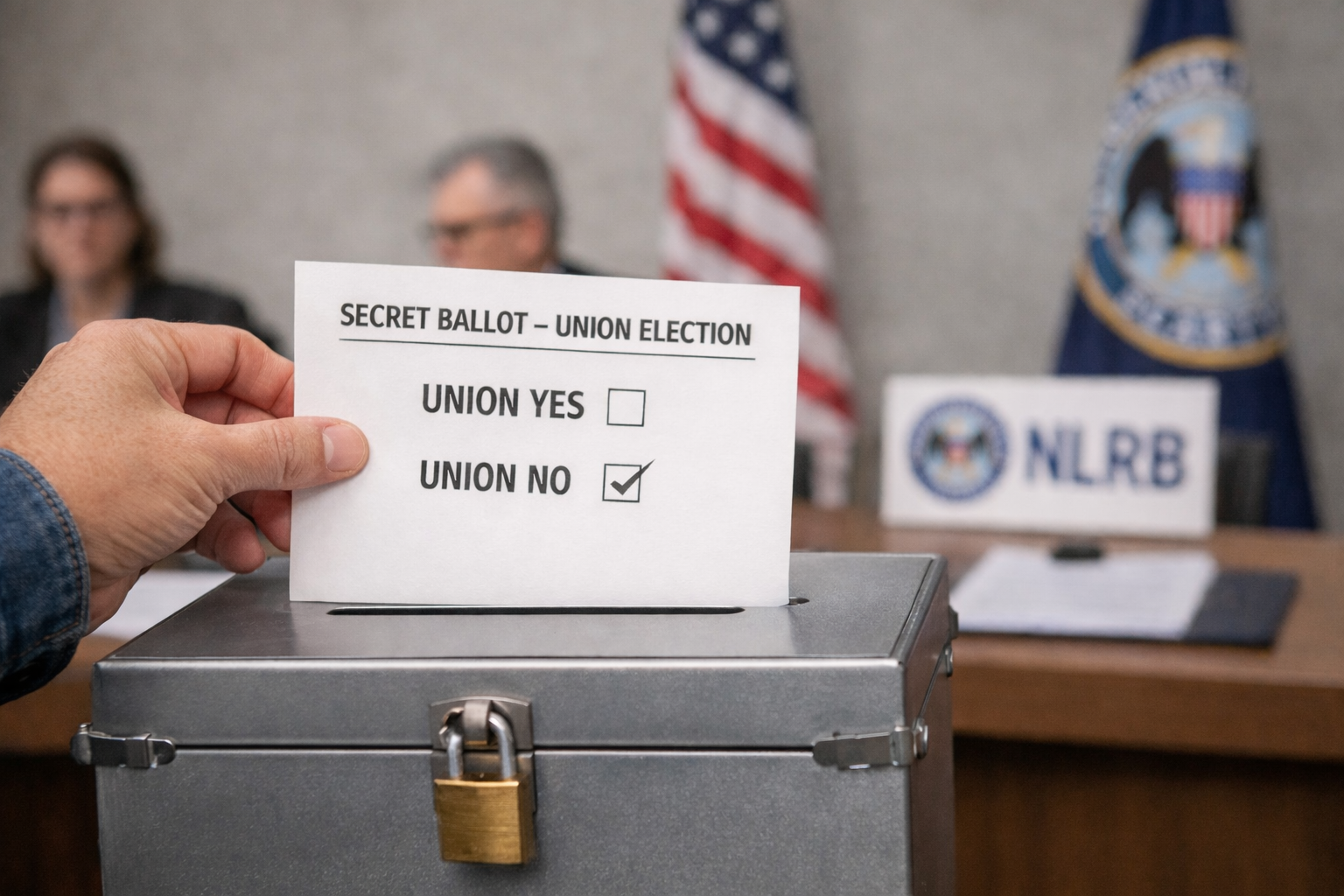
Florida lawmakers are advancing Senate Bill 1236 and House Bill 1387 during the 2026 legislative session. The bills would condition eligibility for certain state economic development incentives on an employer’s commitment that union representation decisions occur through a secret-ballot election conducted by the National Labor Relations Board, rather than through card-check or other forms of voluntary recognition without an election.


Predictably, critics have labeled the proposal anti-union. That framing misses the larger point. From a management-side perspective, these bills sit squarely within the long-running labor law reform debate over how employee choice should be exercised and protected, not whether employees should have the right to organize.


Under the National Labor Relations Act, secret-ballot elections conducted by the NLRB have been the preferred method for determining union representation. The premise here is simple. When voting is conducted on a secret ballot, employees can make their choice without fear of peer pressure or retaliation.

Florida’s SB 1236 and HB 1387 do not ban organizing, restrict union access, or rewrite federal labor law. What they do is draw a line around how representation decisions are expected to occur when taxpayer-funded incentives are involved. The state is not weighing in on outcomes. It expresses a preference for the process, specifically the federally supervised election process that has governed representation questions for decades.


Florida is not acting in isolation. Similar bills were introduced and passed in other states, including Georgia and Alabama.


In Georgia, lawmakers enacted Senate Bill 362 in 2024. The law conditions eligibility for certain state economic development incentives on union recognition being established through a secret-ballot election rather than card-check recognition.


Alabama followed with Act 2024-340, enacted through Senate Bill 231, which takes the same general approach as Georgia and Florida.


These measures are part of a broader policy discussion about labor law reform at the federal and state levels.  By passing this type of legislation, states are signaling that if labor unions want to organize workers, they should do so through secret-ballot elections, not through indirect pressure campaigns that lead to neutrality agreements that bypass the election process.


From a management perspective, the appeal is obvious. Secret ballot elections are uniform, federally supervised, and reliable. They provide a well-established process that reduces uncertainty and avoids the risk of prolonged corporate campaigns intended to force the employer to agree to a union voluntarily. They provide both parties with a clear and defensible outcome. They also protect the employees’ right to make their own choices about union representation.


Advocating for secret ballots is not about opposing unions. It is about ensuring that one of the most consequential decisions in the workplace is made through a process that employees understand, trust, and can participate in without pressure.


Activating Your Employees as Advocates

by Michael VanDervort

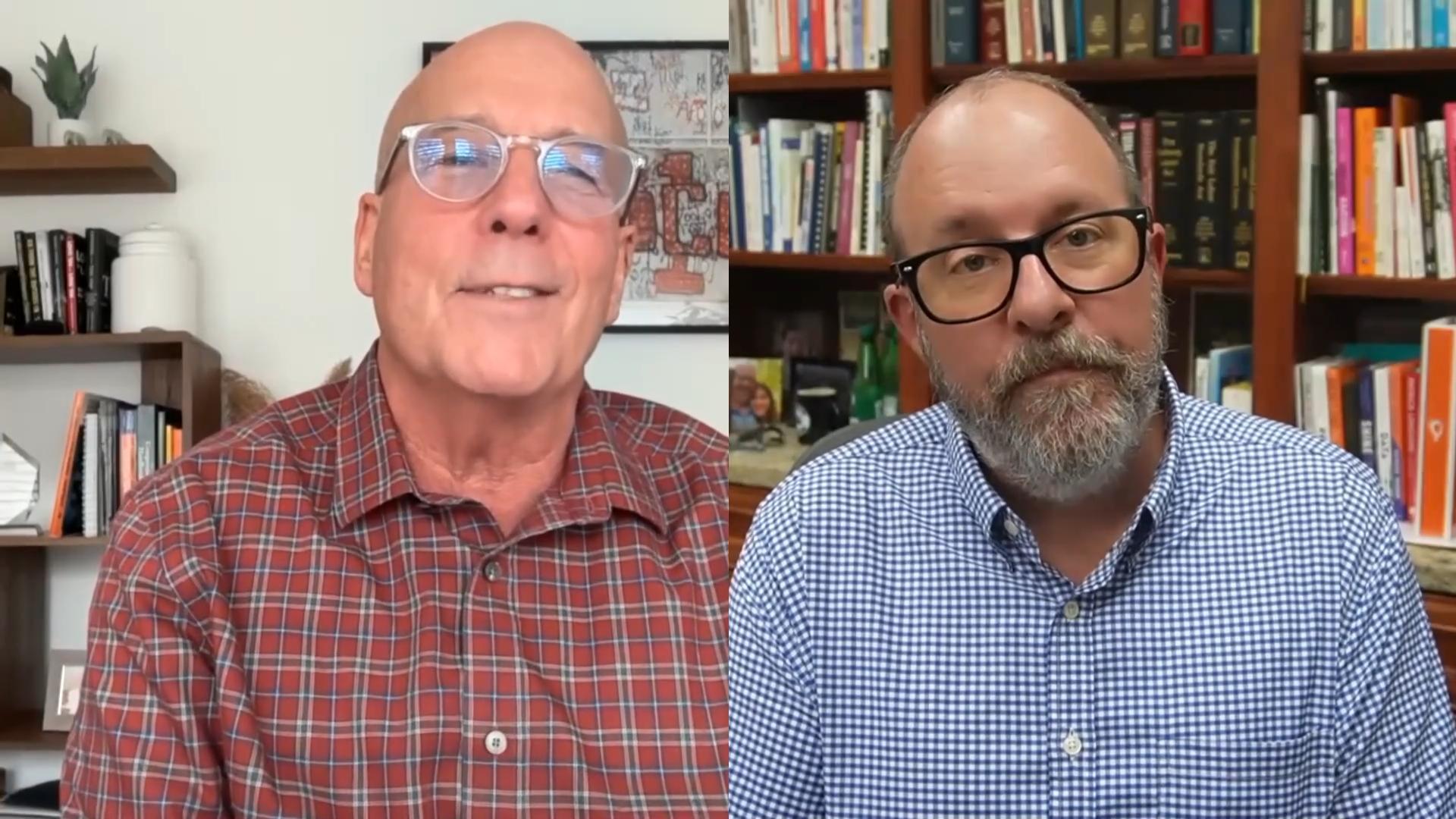
In this episode of The Left of Boom Show, Phil Wilson and Glenn Album explore what it takes to build a net promoter culture, one where employees actively advocate for the organization, challenge it constructively, and help solve real problems.


Rather than focusing on slogans or programs, the conversation centers on trust, inclusion, and everyday leadership behaviors that invite employees into ownership. A story from Glenn’s manufacturing experience illustrates the point. A complex operational issue was ultimately solved not by outside experts, but by a frontline employee who felt empowered to speak up.


The takeaway is straightforward and uncomfortable for some leaders. Cultures strengthen when organizations treat employees as partners in problem-solving rather than as passive recipients of decisions. When that happens, advocacy follows.


Key Takeaways

  • A net promoter culture is built on pride, trust, and employee advocacy, not perks or posters.

  • Employees closest to the work often see what leadership and experts miss.

  • Real engagement means inviting input before there is a crisis or campaign.

  • Collaboration across roles produces better solutions and stronger commitment.

  • Frontline voices matter when leaders make space for them to be heard.

  • Advocacy grows when employees feel ownership of outcomes, not just tasks.

  • Cultures improve fastest when disagreement is encouraged and handled constructively.

Chapters

00:00 Creating a Net Promoter Culture
01:06 Activating Employees as Advocates Through Trust and Inclusion


The NYSNA Strike: A Costly Battle for Nurses Without Meaningful Results

by Kimberly Ricci

On January 12, 15,000 New York State Nurses Association (NYSNA) members walked off the job for the largest nursing strike in New York history. A month later, nurses from two out of three hospital systems went back to work. They reported feeling financially drained and “betrayed” by the union that sent them to the picket line. It’s a lesson in false union promises and what can realistically be achieved at the bargaining table.


Nurses Were Set Up for Disappointment

NYSNA had set an aggressive target. They wanted base salaries of $220,000 for nurses, up from the current average of approximately $160,000. The contract that these nurses ratified after losing their paychecks for a month was something altogether different.


Nurses from Mount Sinai and Montefiore hospital systems returned with a contract featuring 12% raises spread over three years. Even measured against NYSNA's own track record at these hospitals, that’s a step backward. In 2023, nurses at Mount Sinai and Montefiore received 18% raises after striking. They fared worse this time, and the gap between union claims and what transpired is impossible to ignore.


"We Are All Out of Money"

The frustration among rank-and-file members has been palpable. Nurses returning to work have used the word "betrayed" while citing a lack of communication from union leadership throughout the strike and negotiations. One nurse emphasized that she was ready to get back to work because "we are all out of money," a statement that suggests a related question: Where was the union's financial support for members?


Well, that support may not have been there. NYSNA members pay union dues in exchange for representation. Yet rather than providing traditional, guaranteed weekly strike pay, NYSNA uses a donation-driven, needs-based “Protected Action Hardship Relief Fund.” The union has not publicly disclosed how much money nurses received from this fund, or what hoops members had to jump through to get it. 


Two Years to Break Even, Or More

The math remains sobering. Assuming a nurse earns the current average salary of $160,000, going on strike costs her approximately $3,077 per week in lost wages, or roughly $12,308 over a four-week period. For those who ratified the 12% raise, averaged out to 4% per year, that amounts to an approximately $6,044 increase. Under those figures, a nurse would need to work at least two years just to recoup wages lost during the strike. That’s assuming she received nothing from the relief fund or unemployment benefits, which in New York require a 14-day waiting period before applying for those on strike.


Meanwhile, 4,200 nurses at the NewYork-Presbyterian hospital system remain on strike.


A “Historic” Strike, A Hollow Outcome

When the NYSNA strike began, nurses chose to sacrifice weeks of income because they received promises of transformational gains, only to receive an outcome that didn't match union-planted expectations. This strike was also costly for hospitals, which reportedly had to shell out over $100 million to hire temporary replacements. Only NYSNA appears to have benefited. They’ve retained members’ dues while delivering far less than promised. Hopefully, word will spread that union membership doesn’t pay.


Friday Five: Striking New York Nurses, Teamsters Buyout Spin, And An Unusual Organizing Effort

by Kimberly Ricci

Surprise, the NY Nursing strike is bringing disappointing results for workers

Last week, we brought you word that the New York State Nursing Association (NYSNA) was planning to make "major concessions” during the strike involving 15,000+ nurses, and yep, this is definitely happening.


After a month on the picket lines, nurses from Mount Sinai and Montefiore hospital systems have gone back to work. They ratified a contract with 12% raises over three years. Clearly, that’s a far cry from the NYSNA demand of $220,000 base salaries, which would have been a significant boost from their current average base salary of around $160,000. It’s also noticeably lower than the 18% raises that the nurses received with their 2023 renewal.


Why did these nurses approve a contract with such strikingly different wage results than they were promised by the union? Well, they probably felt that they didn’t have a choice. Approximately 4,000 remain on strike against New York-Presbyterian, where the bargaining committee is holding out for a commitment to hire 120 more full-time workers. There, one vocal nurse already feels “betrayed,” which suggests that they’re not pleased by the wage developments there, either. However, she’s ready to get back to work because “I miss my patients” and “we are all out of money.”


Once again, a healthcare strike isn’t producing meaningful results.


Why are Nevada brothel workers seeking to unionize?

This certainly isn’t a story that you hear every day.


A unit of 74 courtesans filed a union petition this week while citing intellectual property worries as their reason for organizing. They seek to join the Communication Workers of America. A few points on this subject:

  • CWA is further proving that they haven’t met an industry that they don’t want to infiltrate. After expanding a telecommunication workers base to include gaming, journalism, ski resort, and healthcare support workers, CWA organizers just couldn’t resist branching out again.

  • The workers believe that their contracts have “overly broad” terms that “could reasonably be used to claim ownership of anything we do,” and they want to protect their content creation on the web.

  • The company is arguing that these courtesans are classified as independent contractors rather than employees and therefore not eligible to unionize. CWA claims that the opposite can be proved, although they haven’t explained how they will attempt to prove this.

If successful, these workers would be the first legalized brothel workers to unionize in the U.S. Never a dull moment, as they say, in labor relations!


The Teamsters Won’t Stop Lying About Their UPS Contract Regarding Another Buyout Plan

In 2023, Sean O’Brien and the Teamsters substantially raised labor costs for UPS around the time when the company’s volume began to slow. To stay in business, the company has been implementing a multiyear turnaround plan that has included facility shutdowns and corporate staff layoffs. This is an unfortunate but predictable result of a high-profile contract battle that pushed driver salaries upwards of $170,000 annually.


The logistics company has now launched its second voluntary buyout program for drivers, and the Teamsters sued while requesting an injunction to halt the program, which O’Brien characterizes as illegally eliminating jobs in violation of the union’s master contract.


This has happened before. Last July, O’Brien reacted to the first buyout plan by claiming that UPS “is contractually obligated to create 30,000 Teamsters jobs.” At that time, we scrutinized the master contract and found that the company agreed to “fill,” not “create,” 22,500 job openings but did agree to fill “at least seventy-five hundred (7500) new full-time jobs from existing part-time jobs” before 2028. So, the company only agreed to create 7,500 jobs, and O’Brien’s spin didn’t match the contract’s plain language.


Guess what? O’Brien’s claims for the second buyout don’t add up, either. The Teamsters-UPS contract has rules around job reduction notifications, but it doesn’t prohibit them because it can’t do that. Unions cannot protect workers from job reductions, although they often make that false promise.


AI Turbulence Straight Ahead, Including in the Legal Industry

As always, the AI-related news overfloweth, but Claude developer Anthropic’s safety researcher prompted sensational headlines by posting his resignation letter on social media.


In doing so, Mrinank Sharma cryptically warned, “The world is in peril,” and he recently published a study on how AI chatbots can cause “users to form distorted perceptions of reality” and “act in ways misaligned with their values.” He now plans to become “invisible” and pursue a poetry degree.


In other AI news, the legal field continues to see an alarming frequency of attorneys citing hallucinated case law in court documents. This month in Kansas, a judge fined patent lawyers $12,000 for relying upon “non-existent quotations and case citations” made up by an AI chatbot.


This industry is also grappling with how AI tools induce “a discovery nightmare,” as noted by employment law attorneys Matt Margolis and Noah Bunzl. They point toward a current New York federal criminal case, in which the government is arguing that a lawyer’s AI bot chats, which he used to refine his thoughts based upon his notes on client conversations, are like “talking to a friend” and therefore not confidential or privileged.


That would obviously be bad news for the client and could lead to even more lawsuits and fines levied against law firms and the companies that hire them. Be careful out there in the wild, wild AI west.


The NLRB’s Regional Offices Are Digging Out, Too

Over the past month, the three-member NLRB has issued at least 20 Board decisions and over 60 unpublished counterparts. They are still chipping away at their petition, and ULP backlog after an essentially nonfunctional 2025, but that pain is also heavily affecting regional offices, where staffers not only process representation elections but do the investigative legwork for ULPs, handle trials before ALJs, and much more.


Only 2 of 26 regional offices are adequately staffed to dig through their heavy workloads with around 510 total workers as opposed to the 670 reportedly needed to keep operations running at their smoothest.


Although the Board wasn’t subject to last year’s mass federal layoffs, many staffers retired or otherwise voluntarily exited while a hiring freeze was in place. Additionally, the agency received 5% less funding this year, so it doesn’t seem as though a hiring spree will happen soon, although the NLRB’s new docketing procedure should lighten the workload a bit.


About Labor Relations INK

Labor Relations INK is published weekly and is edited by LRI Consulting Services, Inc. Feel free to pass this newsletter on to anyone you think might enjoy it. New subscribers can sign up by visiting here.


If you use content from this newsletter, please attribute it to LRI Consulting Services, Inc. and include our website: http://www.LRIonline.com 


Contributing editors for this issue: Greg Kittinger, Michael VanDervort, and Kimberly Ricci.


You are receiving this email because you subscribed to receive our labor relations newsletters and updates. You can manage your email preferences by clicking the link at the bottom of any of our email communications.


About LRI Consulting Services, Inc.

LRI Consulting Services, Inc. exists to help our clients thrive and become extraordinary workplaces. We improve the lives of working people by strengthening relationships with their leaders and each other. For over 40 years, LRI Consulting Services, Inc. has led the labor and employee relations industry, driven by our core values and our proven process, the LRI Way.


Share