Subject: LRI INK: 'Cemex' In Free Fall, Three Teamsters Tales Of Woe

March 12, 2026

To visit the blog post, click on the link below the article.

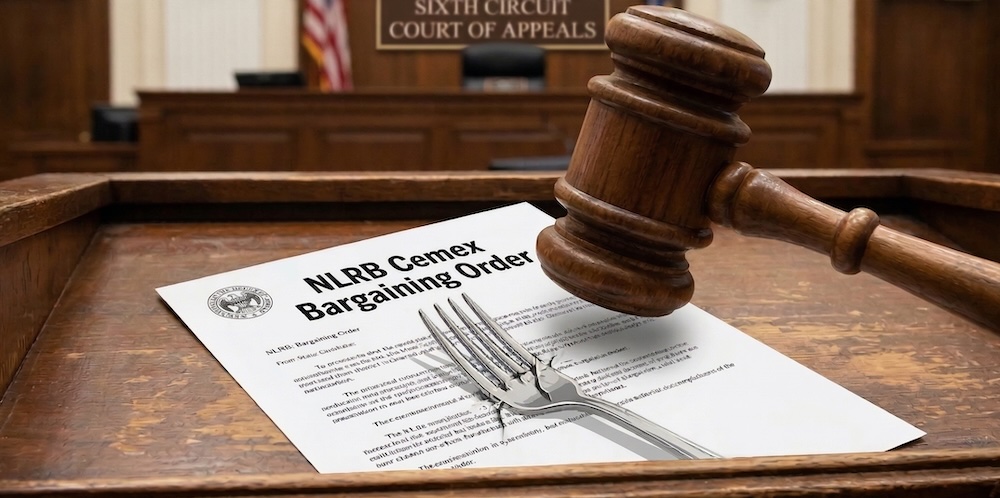
Time To Put a Fork in Cemex? The Sixth Circuit Just Made It Closer to Happening

by Kimberly Ricci

In 2023, the NLRB’s aggressive Cemex decision repudiated decades-old precedent established in the Supreme Court’s 1969 Gissel ruling. Our own Phil Wilson branded the Board’s move as “game-changing” regarding what employer conduct can lead to bargaining orders with a union that lost an election. Wilson further described Cemex as “a ‘prior restraint’ on employer speech” that put employers at risk of a bargaining order over a single ULP charge. This is a sharp contrast to the Gissel standard, which led to a bargaining order only in cases of extreme employer conduct.


Cemex was in line with the Biden Board’s other combatively pro-Labor moves that are now falling, one by one. Last week, the current NLRB halted the effort to bury Ex-Cell-O's “make-whole” remedy framework, a longtime Abruzzo priority. Now, the Cemex court fallout has taken a turn with a new ruling from the Sixth Circuit in Brown-Forman Corporation v. NLRB. In this case, the appeals court declined to enforce a Cemex bargaining order and remanded the case for review at the NLRB.


Other appeals courts are still considering Cemex bargaining orders, and here’s what happened with the newest court ruling:


The Sixth Circuit’s ruling wasn’t a surprise:


In Dec. 2025, these appeals court judges seemed “leery” of the Cemex standard during oral arguments of this case, which involved whiskey-maker Brown-Forman’s conduct during a Teamsters election. The judges agreed with the Board’s fact finding regarding ULPs but suggested that the Board got carried away while overturning Gissel precedent. 


During those oral arguments, a judge also posed a ”fundamental question”: “Is the Board authorized to overrule Supreme Court decisions?”


Well, the Sixth Circuit opinion continued that train of thought while declining to enforce the Cemex bargaining order:

  • The court found that “the Cemex Board exceeded its adjudicatory authority,” which confirms that the Biden NLRB was in overreach mode.

  • The court dragged the NLRB for not reaching the Cemex standard in light of “case-specific facts, but on general observations from ‘[d]ecades of experience administering the Gissel standard’ in other adjudications.” In other words, the Board had already decided what they wanted to do with Cemex and backed into the decision without considering the case’s facts.

Where Other Appeals Courts Stand On Cemex:


The Ninth Circuit heard oral arguments on the Cemex appeal back in Oct. 2024, and there has been no further movement other than the NLRB pushing for a resolution in Nov. 2025. However, the judges did express skepticism on applying Cemex for a bargaining order.


The D.C. Circuit also heard oral arguments in NP Red Rock LLC vs. NLRB with judges leaning toward using Gissel rather than Cemex to issue a bargaining order for a Las Vegas casino. Judge Florence Pan, a Biden nominee, voiced skepticism while declaring it “superfluous” to use Cemex for a bargaining order rather than to apply Gissel if that standard is met. 


Other inflection points in this saga: 


Wells Fargo: In Aug. 2025, the banking giant was targeted for a Cemex order by an acting NLRB regional director over a representation election lost by CWA. Wells Fargo has asked the Board to overturn Cemex.


An early testing ground: In the months after the Cemex decision, multiple employers in the cannabis industry tangled with this standard after unions lost elections at dispensaries.


Where Cemex Goes Next


The case will now go back to the Board, where employer-friendly members are likely to act accordingly with the Sixth Circuit determination of overreach by the Abruzzo-Biden Board. Additionally, the other appeals court proceedings are pending, but it looks like, at some point, the drastic overreach of Cemex bargaining orders will be no more. 


Employers should know that Gissel bargaining orders can still happen in cases of ULPs during union elections. Less harsh remedies are more likely, including election re-runs, in such cases. Yet if Cemex is fully vanquished as a standard, that would score a point for employer free speech.

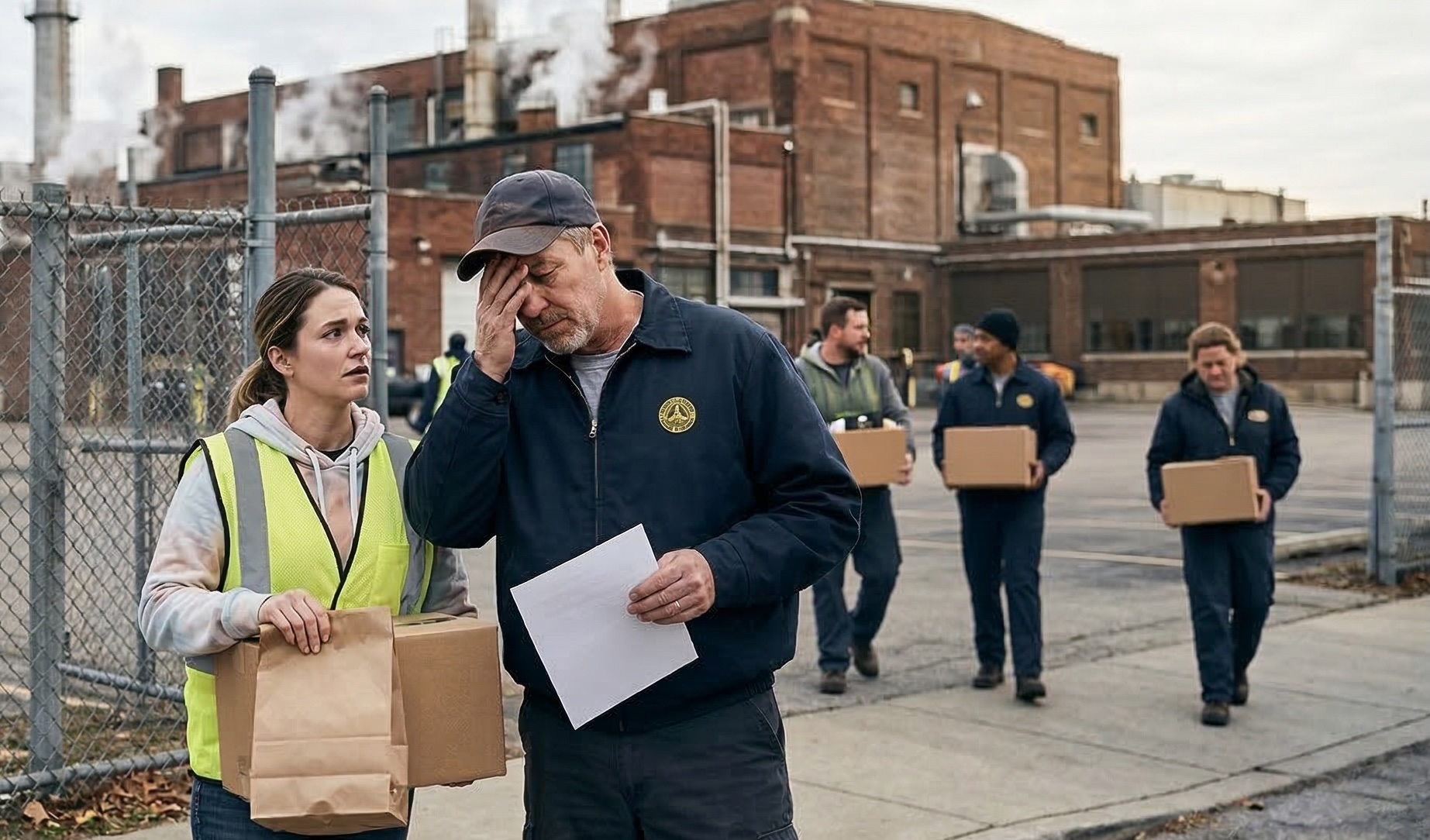
Three Teamsters Tales Of Woe And More: When Union Wins Become Layoff Notices

by Kimberly Ricci

We hear this one a lot. During organizing drives, unions falsely assure workers that they can protect jobs, and during contract negotiations, unions strongarm employers into unsustainably high labor costs. Big Labor then shouts about “victory,” and employers find themselves cutting costs to stay in business. Workers get left holding the bag after job losses.


In response to layoffs, unions tend to issue sternly-worded releases while pointing the finger elsewhere. As we discuss below, this recently happened at a Pacific Northwest-based grocery, but of course, it’s nothing new. 


Also, this roundup includes a trio of Teamsters troubles.


The United Electrical Radio and Machine Workers of America (UE) vs. New Seasons: 


In 2022, New Seasons workers at 10 stores formed an independent union and later affiliated with UE. A three-year contract battle and an averted strike led to a Dec. 2025 contract ratification and hikes of over $4 per hour for most workers.


The company soon announced a wave of layoffs across the grocer’s Oregon and Washington stores. The UE’s statement was one of “outrage” after the company explained that “limited staffing reductions across 20 locations, both union and non-union” were the result of “significantly increased” labor costs due to “a new labor agreement.”


Teamsters vs. Yellow Corp: 


The freight carrier permanently shuttered after a union dispute led to the company warning in 2023 that it could not withstand a strike amid a restructuring plan. This followed a long struggle with the union demanding $11-per-hour raises, which the company stated it could only afford by securing new funding. Yellow ended up suing the Teamsters for maneuvering to block the company’s restructuring.


In late 2025, the Tenth Circuit Court of Appeals revived that lawsuit, but this won’t save the nearly 30,000 jobs lost when Yellow went out of business.

Teamsters vs. Stop & Shop: A more delayed effect occurred years after an 11-day strike by 31,000+ workers in 2019 led to an expensive contract that reportedly raised wages by up to 80% over four years. A few years later, the company had closed 32 New England stores. 


In 2025, a distribution center in Freetown, Massachusetts nearly met the same fate when Stop & Shop cautioned that it would have to outsource jobs to keep operations running after another strike threat.


Teamsters vs. UPS: 


Tens of thousands of jobs have been lost in the years since the 2023 contract that infamously hiked full-time driver pay upwards of $170,000 annually


The fallout has included rounds of corporate layoffs and shuttered warehouses, along with a pair of buyouts and a failed union lawsuit while union President Sean O’Brien kept the lies coming. Sadly, workers learned too late that unions cannot stop layoffs, especially when market conditions collide with skyrocketing labor costs after a CBA.


UAW vs. Stellantis: 


Shawn Fain’s so-called “stand-up strike” against the Big Three automakers led to a contract that raised Stellantis starting wages up to 67% with additional COLA benefits. In an attempt to recover, the company was forced to idle multiple plants and lay off thousands of temporary workers while reducing hours of some permanent workers. 


It’s no wonder that Labor Pains labeled this as a “failed UAW contract.”


SEIU vs. California fast-food franchisees: 


The hardest-lobbying union pushed an industry’s minimum wage to at least $20 per hour. This was an unsustainable leap that led to layoffs after the law passed and before it took effect. The nonpartisan National Bureau of Economic Research estimated that between 18,000 and 23,000 fast-food jobs evaporated due to the SEIU’s heavy-handed tactics, which included an illusory union and “Fast Food Council” that hasn’t fulfilled its promises to workers yet.


Conclusion: The Union Math Doesn’t Pay


To put this bluntly: Unions shout victory, and workers get the bill.

Friday Five: NLRB Overload, Strikes With Slim Results, Tariff Fallout, And AI Rivalry

by Kimberly Ricci

Yes, the labor law rules of the game are stacked against employers.


The “new” NLRB already rolled out some employer-friendly decisions in its first two months. These include making two major workplace classification shifts and cementing Ex-Cell-O to protect employers who refuse to bargain while seeking judicial review for union certification. 


However, these decisions are a mere drop in the bucket in comparison to the existing federal framework on labor law. The Institute for the American Worker has done that legwork in a new report that explains how several decades of regulatory creep and court decisions have heavily tilted the NLRA toward Big Labor while pushing employers into a legal minefield.


That’s especially the case for small employers, for which union election results can make the difference between staying in business or closing.


The full I4AW article is an engrossing read, covering many subjects including a lack of union accountability for false promises on what can be delivered at the bargaining table. The report closes with a discussion of Sen. Bill Cassidy’s proposed labor package, which seeks to right many wrongs.


Speaking of the NLRB, the agency’s ULP backlog is no joke.


William Cowen served as acting Board GC for about a year before Crystal Carey was finally confirmed. Cowen has since switched roles to NLRB operations division chief, and his load hasn’t gotten any lighter. In fact, he revealed that the NLRB currently has at least 17,000 open ULP investigations, and nearly 10,000 cases have been “pending review” for over six months.


To compare, the Board usually processes around 20,000 ULP cases annually, but the government shutdown did not help matters, and the agency’s budget decreased by 4.7% for 2026.


It’s no wonder that Cowen saw fit to adjust the docketing procedure for ULPs to require charging parties to submit evidence and witnesses within 2 weeks before cases get assigned for investigation by regional offices. Carey affirmed that directive, which might cut down on frivolous ULP filings, although the existing backlog will take time to clear.


The nursing strikes keep coming despite disappointing results. 


The recently concluded six-week NYSNA strike results at three NYC hospital systems began with unrealistic $220,000 salary demands from the union and ended with 12% raises over three years. The strike also left nurses’ wallets hurting due to NYSNA not using a traditional strike fund to keep workers afloat while on the picket line.


Elsewhere, a four-week UNAC/UHCP strike against Kaiser Permanente ended in late February for 31,000 nurses, physician assistants, and other support staffers in California and Hawaii. The resulting deal led to 21.5% wage increases. Interestingly enough, UNAC/UHCP claims to have asked for 25% increases, although Kaiser says the union demanded 64% raises.


This week, a 5-day SEIU strike began by nurses at Providence St. Joseph Medical Center in Burbank, CA. And at Henry Ford Genesys hospital in Grand Blanc, MI, 750 nurses remain on a Teamsters strike after six months with no indication that the conflict might end soon.


Shawn Fain’s tariff cheerleading is backfiring again on workers.


Last fall, UAW President Fain went all in to cheerlead for tariffs imposed by the Trump administration, only to look the other way when GM conducted layoffs in response to costs related to those policies.


More recently, Stellantis revealed that its workers won't receive profit-sharing checks after the company suffered “a negative 3.1% operating profit margin in North America for 2025.” The company attributed this downswing to falling sales but also “added expenses from U.S. tariffs under the Trump administration.” 


In response to this news, Fain trumpeted, "It’s a damn shame that autoworkers continue to pay the price for horrible mismanagement at Stellantis.” Did he mention tariffs? Nope, nor has the union boss accepted any responsibility for contributing to automaker woes.


The ChatGPT vs. Claude competition got wild this week.


If Claude is your preferred AI chatbot model, then you might have noticed the platform running slower than usual this week. That’s not really Claude’s fault because Anthropic was working to accommodate an onslaught of new Claude fans. Those users were fleeing ChatGPT due to controversy over OpenAI’s new Department of Defense deal for use of its AI models.


The exodus has been significant. ChatGPT uninstalls reportedly “jumped 295% day-over-day on Saturday, February 28” and continued through this week. Claude ascended to the top spot on Apple’s top free apps list, and Anthropic publicly declared their refusal for Claude to be used for “mass domestic surveillance” or “fully autonomous weapons” in its DoD contracts.


Amid the fallout, OpenAI CEO Sam Altman admitted that the ChatGPT agreement was “rushed” and “looked opportunistic and sloppy.” He further stated that OpenAI was seeking deal revisions, and the company posted a statement to that effect, claiming that ChatGPT “shall not be intentionally used for domestic surveillance of U.S. persons and nationals.” 


Word then dropped that Defense Secretary Pete Hegseth called Anthropic a supply-chain risk and prohibited its tools for use by the military and its suppliers, partners, and contractors. In a late-breaking update, talks reopened between Anthropic and the DoD, so this isn’t over yet.

About Labor Relations INK

Labor Relations INK is published weekly and is edited by LRI Consulting Services, Inc. Feel free to pass this newsletter on to anyone you think might enjoy it. New subscribers can sign up by visiting here.


If you use content from this newsletter, please attribute it to LRI Consulting Services, Inc. and include our website: http://www.LRIonline.com 


Contributing editors for this issue: Greg Kittinger, Michael VanDervort, and Kimberly Ricci.


You are receiving this email because you subscribed to receive our labor relations newsletters and updates. You can manage your email preferences by clicking the link at the bottom of any of our email communications.


About LRI Consulting Services, Inc.

LRI Consulting Services, Inc. exists to help our clients thrive and become extraordinary workplaces. We improve the lives of working people by strengthening relationships with their leaders and each other. For over 40 years, LRI Consulting Services, Inc. has led the labor and employee relations industry, driven by our core values and our proven process, the LRI Way.


Share