Subject: LRI INK: AI Deepfakes, Two Contrasting Union Campaigns, and UAW in the Crosshairs

December 18, 2025

To visit the blog post, click on the link below the article.

Season's greetings from the staff here at LRI Consulting Services.


This will be our last full issue of INK for 2025. We will resume publishing on January 8, 2026. Have a safe and happy holiday!


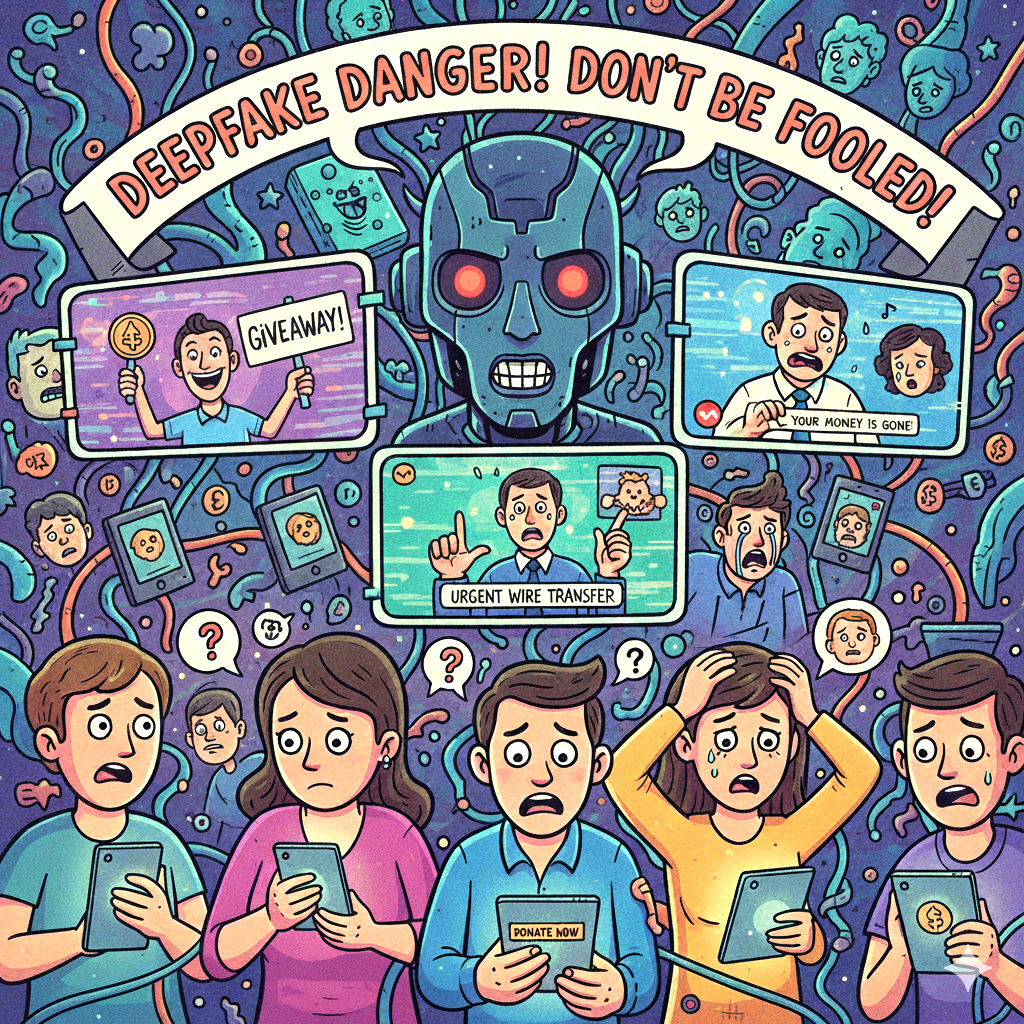
An Emerging Workplace Threat: How Deepfake AI Scams Are Targeting Executives and Employees

by Kimberly Ricci

Artificial intelligence is no longer something that one can take or leave in the workplace. Quite simply, these tools are indispensable time savers that can automate repetitive tasks, summarize lengthy documents, and analyze complex data sets. And since AI can drastically enhance productivity, these tools give humans more time for the creative and strategic side of work.


Unfortunately, danger also lurks on the AI workplace horizon in the form of elaborate deepfakes. In 2024, a Ferrari executive found themselves fending off a voice-cloning fraudster who impersonated CEO Benedetto Vigna, and even more advanced efforts are now invading the marketing realm. As the below incidents show, vigilance is vital in this AI-enhanced world, lest humans be left holding the ball of a costly scam.

Deepfakes So Convincing They Can Fool Marketers

Renowned marketing consultant Mark Schaefer recently admitted to being one of thousands of people fooled by a deepfake video that claimed to show Nvidia CEO Jensen Huang delivering one of his trademark inspirational talks. This was an authentic-looking crypto-scam event that starred a digital clone of Huang on a livestream. The AI-rendered forgery video hijacked search and social rankings, subsequently prompting Schaefer to warn how “authenticity in branding now demands proof.”


The fact that an experienced marketing professional was deceived by such a sophisticated attack is sobering. It underscores how consumers and companies must exercise extreme caution to verify the truth and weed out scams. Further, businesses must realize that intricate AI fakes are part of the competition, and they can harm the bottom line elsewhere, as shown below.


Another alarming example: Fraudsters also cloned the voice of Mark Reed, CEO of WPP, the largest global advertising company. They used this “voice” in a deepfake scam deployed via WhatsApp and a Microsoft Teams meeting. Fortunately, the scam artists’ efforts failed to fool Reed’s direct reports, but this case further emphasizes how even companies who create marketing content are vulnerable to AI manipulation.


A bit more on that Ferrari story mentioned above: Most of us are surely familiar with the antics of fraudsters who attempt to mimic the CEOs of our own workplaces. Those notorious gift-card text messages usually don’t work these days, but the Ferrari scam was so elaborate that the fraudster used generative AI to closely imitate Benedetto Vigna’s Southern Italian accent in a follow-up call to urge the immediate signing of documents.


Fortunately, the executive who took that call tested the scam artist on a bit of trivia that only Vigna would know, and financial disaster was averted.

Conclusion: Avoiding Real Disaster in Our AI-Enhanced World

These examples illustrate how AI might be advancing faster than the ability to manage its risks and consequences. In response to this Wild Wild West, businesses must establish safeguards against deepfake scams and train both leaders and workers accordingly. Ultimately, AI hazards can be avoided in workspaces while not losing sight of the truth, which will always be human.


Two Union Campaigns. Two Very Different Outcomes

by Michael VanDervort

Why New Seasons settled a first contract while Starbucks remains unresolved

First contracts are complicated. Anyone who has worked in labor relations or employee relations knows that. They are usually the most prolonged and most painful phases of the bargaining process, especially when you are dealing with multiple locations or a national footprint.


Which is why the timing of these labor disputes is interesting.


Two long-running labor campaigns in the retail and service sectors hit inflection points at roughly the same time, the 2025 holiday season.


One ended with a ratified first contract and a strike averted just before Christmas.


The other escalated into a weeks-old strike into same-day unfair labor practice activity at distribution centers on both coasts, including arrests, with first contracts still unresolved.


Same labor law. Same economy. Same calendar. Very different structural conditions.


New Seasons Market: When leverage has an address

Workers represented by New Seasons Labor Union, affiliated with UE, ratified their first collective bargaining agreement with New Seasons Market by a reported 98 percent margin, avoiding a planned Christmas-period strike.

From a labor relations perspective, the setup matters more than the slogans.

  • 853 employees

  • 10 stores

  • One metropolitan area

After an extended bargaining period, the union authorized a strike by more than 80 percent, set a clear deadline, and tied escalation to a high-revenue period. In the final days, the parties reached an agreement.


Reported contract terms included wage increases, scheduling rules, just-cause standards, grievance procedures, and some job-specific working condition changes.


You can debate whether those outcomes are modest or meaningful. That is not the point.


The point is this: a concentrated workforce in a single market created a very clear economic and operational risk. Management could see it, measure it, and decide whether to resolve it.


That is often what closes first contracts.


Starbucks: National bargaining is a different animal

Now compare that to Starbucks Workers United and Starbucks.

This is not a single-market negotiation. SBWU is attempting to bargain a national framework agreement, layered with individual store-level contracts, across a geographically dispersed system.


That reality drives everything that follows.


This week, SBWU expanded its unfair labor practice strike activity again by staging same-day protests at Starbucks distribution and roasting facilities on both coasts, including sites in York County, Pennsylvania, and Minden, Nevada. Protesters picketed and, in some cases, blocked access points. After repeated warnings, law enforcement cited or arrested multiple participants, primarily for trespass or failure to disperse. No injuries were reported, and operations continued.


The move upstream was intentional. When store-level pressure does not compel movement, unions seek alternative leverage points.


But it also highlights the challenge of national campaigns: pressure gets spread out.


SBWU is not avoiding concentration because it prefers spectacle. It lacks a single city, region, or bargaining table that could serve as a choke point. Scale and coordination are the tools available, not focus.


That explains the recent escalation pattern:

  • Expanded ULP strike activity

  • Same-day actions at eastern and western distribution centers

  • Law enforcement involvement tied to access and trespass issues

This is less about messaging and more about math. Distributed pressure is harder to translate into a single decision point within a large, layered organization.


Starbucks absorbs that pressure across:

  • Thousands of stores

  • Multiple regions

  • Multiple legal and operational channels

Risk does not disappear. It becomes manageable rather than decisive.


Why one campaign closed, and the other hasn’t

This is not about commitment, motivation, or public sympathy. It is about leverage.


New Seasons

  • Local footprint

  • Unified bargaining unit

  • One economic window

  • One decision to make

Starbucks

  • National footprint

  • Fragmented bargaining units

  • Rolling escalation

  • No single settlement trigger

New Seasons faced a defined, time-bound risk that management could evaluate and resolve. Starbucks faces ongoing, distributed risk that can be managed, litigated, and delayed.


That difference explains a lot.


The practical takeaway

This is not a story about who is “winning.” It is a reminder about how outcomes get shaped.

  • First contracts are complicated, and the campaign structure makes them harder or easier

  • Localized bargaining tends to resolve faster, for better or worse

  • National strategies trade speed for reach

  • Visibility does not always equal leverage

  • Strike authorization votes tied to real economic risk still matter

For employers, the lesson is simple. The most critical variable here is not how loud a campaign gets. It is how closely pressure lines up with operational outcomes.


That is the real contrast between these two stories.

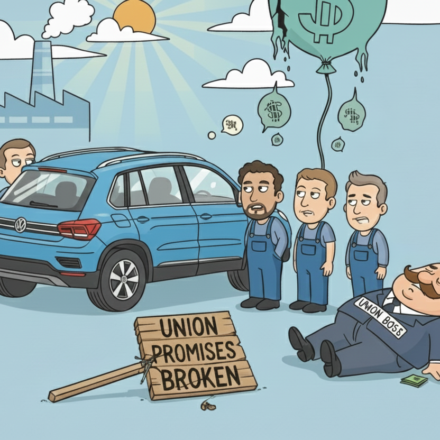
A Budding Decertification Effort at Volkswagen: A Wake-Up Call on Broken Union Promises

by Kimberly Ricci

In April 2024, the United Auto Workers had their first Southern auto plant "win" at Volkswagen (VW) in Chattanooga. Contract talks later stalled out, and in October, VW publicized their "last, best, and final" offer including a 20% wage boost over four years, $4,000 ratification bonus, and first-ever COLA benefits. That bonus would have even reached $5,550 if ratification happened by Oct. 31, which clearly was not the case. Instead, the union essentially ignored the offer and is waving around an authorized strike.


Prior to this election victory, UAW president Shawn Fain made no secret of his dream to double his union's size by organizing auto workers in the South. Yet the VW situation makes Fain’s goal look increasingly unlikely, for multiple reasons including the union’s adversarial representation.


Nor does this bode well for VW Chattanooga workers, who are feeling the gulf between union promises and union delivery, as we’ll see below.

A Union’s Claims Unravel, And A Decertification Effort Emerges

Prior to the VW Chattanooga union election, data reflected how manufacturing industry wages were higher for non-union versus union workers in 2023. Fain surely did not want Southern auto workers to see that data, and during negotiations, VW revealed that the union came to the table with an unrealistic wish list of 800+ demands. VW reports resolving 90% of these asks and making "meaningful moves and offers” while the union then made more "economically unfeasible demands.”


Some VW workers grew weary of the wait and began gathering signatures in hopes of launching a decertification petition. They hope to “vote the UAW out so we can get our raise directly without the UAW in the way.”


Here are quotes from three workers who have each been at VW Chattanooga for 5-15 years:

  • Angelo Robinson expressed dismay at the UAW leaving members with "no voice” on their working conditions. He added that a “majority” of workers wanted to vote on VW’s offer, but they were denied by the bargaining committee. Robinson further explained how the UAW’s presence caused workplace morale to deteriorate: "Everybody used to get along. Now, with the UAW here, it's like a clash. It's like they're putting employees against each other.”

  • Dakotah Bailey is also frustrated at how the union won’t let workers vote on VW’s offer: “Especially right before the holidays. It would be great to have an extra $5,500 sitting in my bank account."

  • Darrell Belcher noted that many of his coworkers “worry about retaliation or being targeted” if they speak out against the union, and “they don't want to come out, so it makes it hard.”

Several other workers spoke anonymously on their disappointment, and their wish for secrecy is understandable, considering how Shawn Fain has a well-documented retaliatory streak when his ideas are challenged.


At present, no information exists on how many members signed the petition effort, which was initially launched by around 15 workers.

Conclusion

These workers are feeling the post-election reality of a union’s unrealistic contract demands and rigid bargaining processes, which have alienated the very UAW members whose interests that the union claims to represent.


Meanwhile, Volkswagen’s public offer signaled transparency that put the onus on the union. We’ll be watching whether the frustrated workers’ efforts lead to a formal decertification petition.


Hiring and Onboarding: Right People, Right Seat

by Michael VanDervort

In this episode of the Left of Boom Show, Phil Wilson and Danine Clay of LRI Consulting Services, Inc. discuss the critical aspects of recruiting and onboarding, particularly for companies that have recently undergone a union election.


They explore the cultural challenges that arise post-election, the importance of transparency, and best practices for hiring and integrating new employees into the company culture. The conversation emphasizes the significance of cultural fit over mere qualifications, effective onboarding strategies, and the role of pay and benefits in employee satisfaction. The episode concludes with actionable insights for organizations to improve their hiring processes and create a supportive work environment.


Takeaways

  • Transparency is crucial for new hires to understand the company culture.

  • Cultural fit is more important than just qualifications.

  • Onboarding should set clear expectations for new employees.

  • High turnover indicates deeper organizational issues.

  • Engaging the team in onboarding fosters a supportive environment.

  • Pay and benefits are important, but culture drives employee satisfaction.

  • Companies should evaluate their hiring processes regularly.

  • Effective communication is key to integrating new hires into the team.

  • Creating opportunities for team interaction boosts onboarding success.

  • Feedback from departing employees can provide valuable insights

Friday Five: Union Tensions, Cemex Friction, Agency Crosswinds, And An AI Sprint

by Kimberly Ricci

Volkswagen workers might be booting the UAW:

The UAW’s first election victory at a Southern auto plant didn't lead to raging success, and that victory might be over soon, too.


Workers at Chattanooga’s VW plant were unionized in April 2024. The UAW has been dragging out contract negotiations, always holding out for a “better” deal. In October and after enduring those stalling tactics, VW made public their “last, best, and final” offer, which included a 20% wage increase over four years, $4,000 ratification bonus, and first-ever COLA benefit.


This was a signal of transparency that put the onus on the union, which has done nothing in response but wave an authorized strike threat around.


Well, some VW workers have had enough and are gathering signatures for a decertification petition, partially in an effort to convince the UAW to accept the VW offer already. A local ABC affiliate spoke to several frustrated union members who requested anonymity out of fear of being fired, which is understandable considering how Shawn Fain is allegedly Mr. Retaliation.


Any decertification process is an uphill battle and begins with 30% of union workers signing a petition before an election requiring a majority vote. Still, if these VW workers do oust the UAW, that will likely signal the end of Fain’s stalled-out quest to win the South.

Another indicator that the NLRB’s Cemex standard could fall:

The lengthy Cemex litigation road continues.


This week, Sixth Circuit judges seemed “leery” during oral arguments about the Cemex standard while suggesting that the Board got carried away while overruling the 40-year-old Gissel precedent from the Supreme Court. In this Sixth Circuit case, Brown-Forman Corporation v. NLRB, the court side-eyed Cemex while considering whether whiskey-maker Brown-Forman should have to bargain with a union that lost an election.


Other noteworthy moments in this saga:

OpenAI made quite the sprint this week after that “code red”:

Last week, we discussed how OpenAI CEO Sam Altman was directing workers to focus on improving ChatGPT amid rapid improvements from Google and Anthropic’s AI models. The Wall Street Journal even reported that Altman called a “code red” over the situation, which led The Atlantic to publish a doom-and-gloom column about how Google’s Gemini 3 was winning converts from ChatGPT, followed by this dig: “OpenAI seems like just another chatbot company.”


Well, not so fast? This week, OpenAI introduced GPT-5.2 and announced integration with powerful Adobe tools including Acrobat, Photoshop, and Express, which will allow users “to edit photos, enhance designs and transform documents without leaving ChatGPT.”


That’s not all. Disney also entered into a 3-year licensing agreement that will allow OpenAI’s Sora and ChatGPT to integrate Marvel, Star Wars, Pixar, and Disney characters. Additionally, Google received a cease-and-desist letter from Disney to shut down the same in Gemini.


In other words, get ready to watch Thor take his hammer to Tony Stark’s luxury car collection in a ChatGPT window near you.

Unions are hypocritically steamed over a possible Netflix-WB merger:

Streaming TV fans are surely aware of the bidding battle between Netflix and Paramount to acquire the troubled Warner Bros. Discovery.


Previously, Netflix excitedly announced an $82 billion “definitive” agreement, and Paramount countered with a hostile takeover bid offering a $108 billion counteroffer. Who will win this war? Nobody knows, and the same goes for whether any merger will pass governmental muster.


What is certain, though, is that unions are not thrilled. Those include WGA insisting that a merger “must be blocked,” and “[t]he problem is the acquisition and pending consolidation of two media giants, not who the buyer is.” Likewise, Hollywood Teamsters chief Lindsay Dougherty claimed that the proposed deal “not only kills jobs but also raises prices and hurts the U.S. entertainment industry.” DGA and SAG-AFTRA denounced as well.


Meanwhile, progressive publication WSWS called out these unions as enablers of “the corporate consolidation they now claim to oppose” through the 2023 contract “betrayals.” That takes us back to how actress and director Justine Bateman called out SAG-AFTRA’s MOA as something that actors should only ratify “if they don’t want to work anymore.”


Same ol’ union duplicity? Sounds like it.

The Supreme Court won’t get involved in NLRB vs. SpaceX, yet:

The highest court’s justices shut down a union’s motion to stand in during a lawsuit for the NLRB, which had decided not to appeal the Fifth Circuit ruling that sided with SpaceX’s argument on how the Board’s structure could violate separation of powers and therefore be unconstitutional.


This finding effectively froze ULP cases against SpaceX, along with other employers challenging the Board’s structure, until their lawsuits are resolved. It was a finding that brought implications to Texas, Louisiana, and Mississippi.


Well, the Office and Professional Employees International Union (OPEIU) requested to take the Board’s place in a lawsuit, and the Supreme Court said nope. Of course, this doesn’t mean that the court won’t someday decide to review any of several employer challenges to the Board’s constitutionality.


After all, a deepening circuit split exists regarding statutory job-removal protections for Board members and ALJs, but the Supreme Court is not here for a union attempting to insert itself into the NLRB’s shoes.

About Labor Relations INK

Labor Relations INK is published weekly and is edited by LRI Consulting Services, Inc. Feel free to pass this newsletter on to anyone you think might enjoy it. New subscribers can sign up by visiting here.


If you use content from this newsletter, please attribute it to LRI Consulting Services, Inc. and include our website: http://www.LRIonline.com 


Contributing editors for this issue: Greg Kittinger, Michael VanDervort, and Kimberly Ricci.


You are receiving this email because you subscribed to receive our labor relations newsletters and updates. You can manage your email preferences by clicking the link at the bottom of any of our email communications.


About LRI Consulting Services, Inc.

LRI Consulting Services, Inc. exists to help our clients thrive and become extraordinary workplaces. We improve the lives of working people by strengthening relationships with their leaders and each other. For over 40 years, LRI Consulting Services, Inc. has led the labor and employee relations industry, driven by our core values and our proven process, the LRI Way.


Share