Subject: Latest: New Edition of East Africa Fertilizer Watch

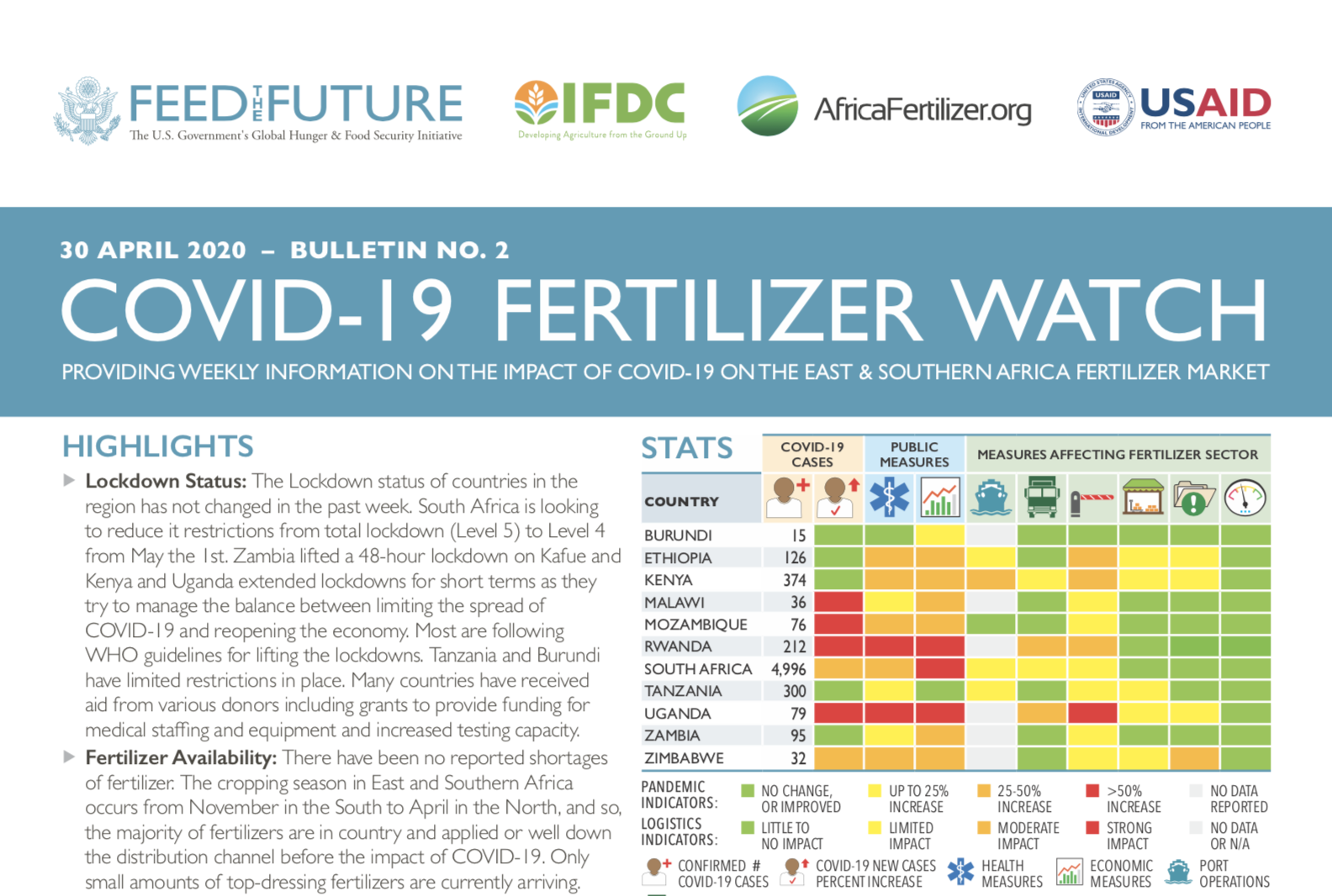
East Africa Fertilizer Watch for 30 April

Current Highlights in Brief

  • Lockdown Status: The Lockdown status of countries in the region has not changed in the past week.

  • Fertilizer Availability: There have been no reported shortages of fertilizer. The cropping season in East and Southern Africa occurs from November in the South to April in the North, and so, the majority of fertilizers are in country and applied or well down the distribution channel before the impact of COVID-19. Only small amounts of top-dressing fertilizers are currently arriving.

  • Ports: All vessels entering ports are required to have an isolation time since previous port of 14 days. Ports have generally reduced shifts (1/3 operational on a 15-day cycle) and have had to modify operations that do not meet social distancing requirements.

  • Road Freight: Issues related to freight costs, rather than availability, in the SADC region have been eased slightly since SA has re-opened up its mining sector, which allows for two-way freight efficiency. Reduced copper freight out of Zambia is having an impact on two-way freight efficiency to Durban and Dar es Salaam, resulting in more fertilizer for Zimbabwe and Zambia fertilizer being pushed through Beira.

  • Border Crossing: Transport in the Kenya/Tanzania/Uganda/ Rwanda corridor is experiencing significant delays.

  • Fertilizer Sector Response: In most countries, fertilizer associations and private sector companies are working closely with ministry officials to ensure efficiency in distribution channels within the needs of the COVID-19 restrictions.

 
Read More
 

What is the East Africa Fertilizer Watch?

The East and Southern Africa Fertilizer Watch is designed to provide weekly updates to stakeholders throughout 11 countries in the region using data collected around 10 indicators. These indicators are related to a variety of information such as the spread of COVID-19, measures taken by country governments, and logistical constraints that affect fertilizer flows. The goal is a well-informed and prepared fertilizer supply chain, where actors can use the information to plan accordingly and ensure consistent delivery to farmers.

Subscribe for Updates

info@africafertilizer.org


Powered by:
GetResponse