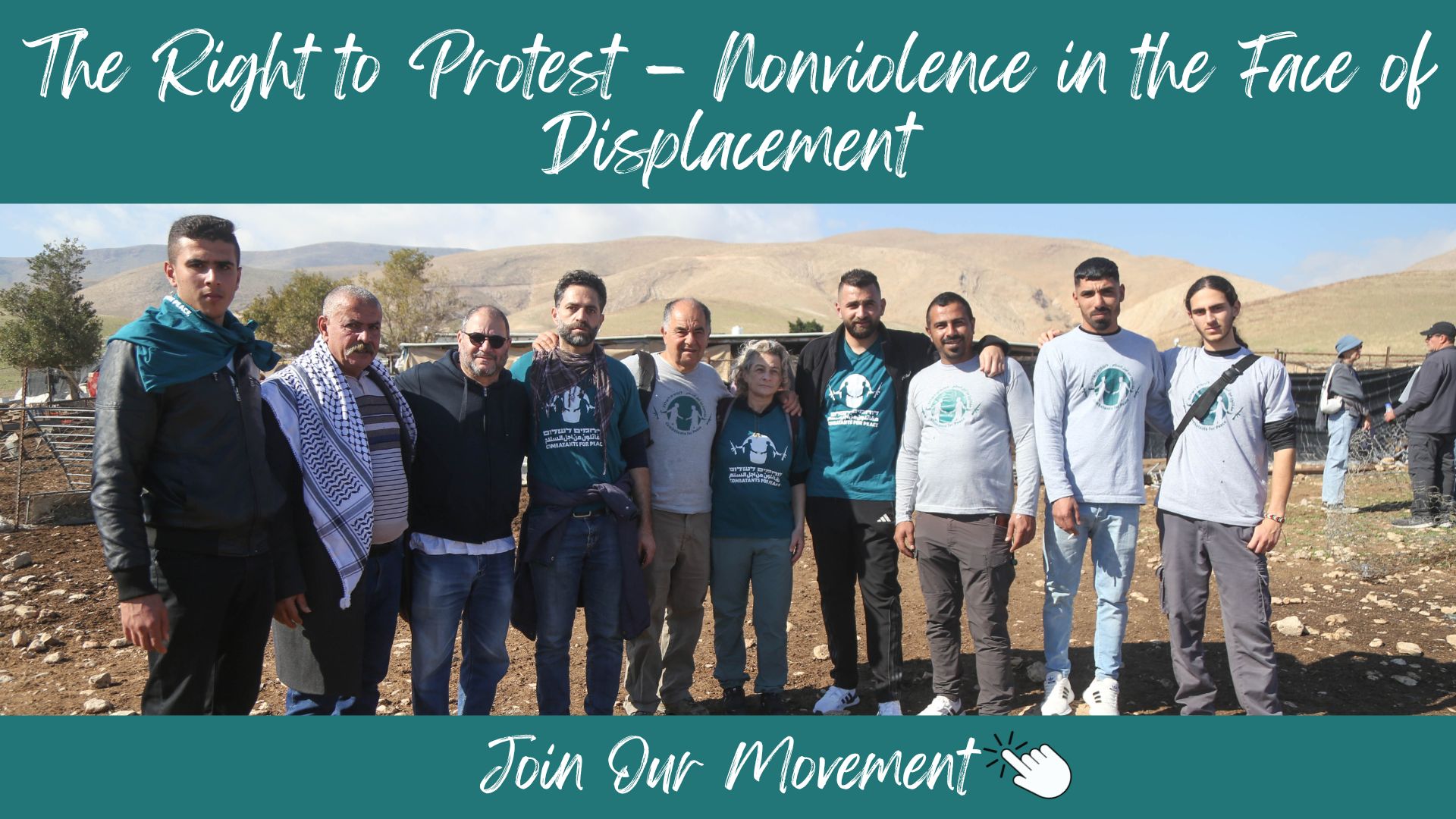
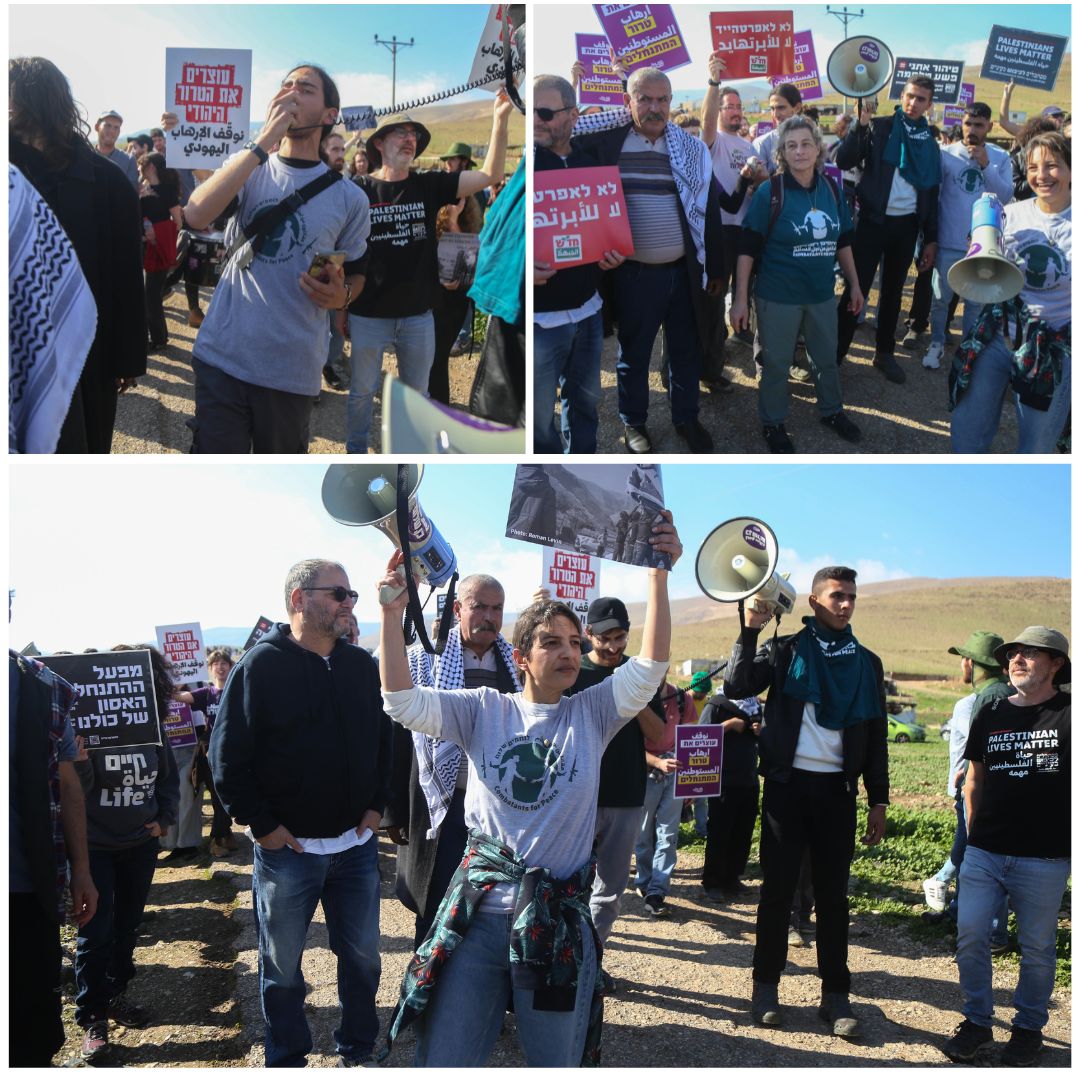
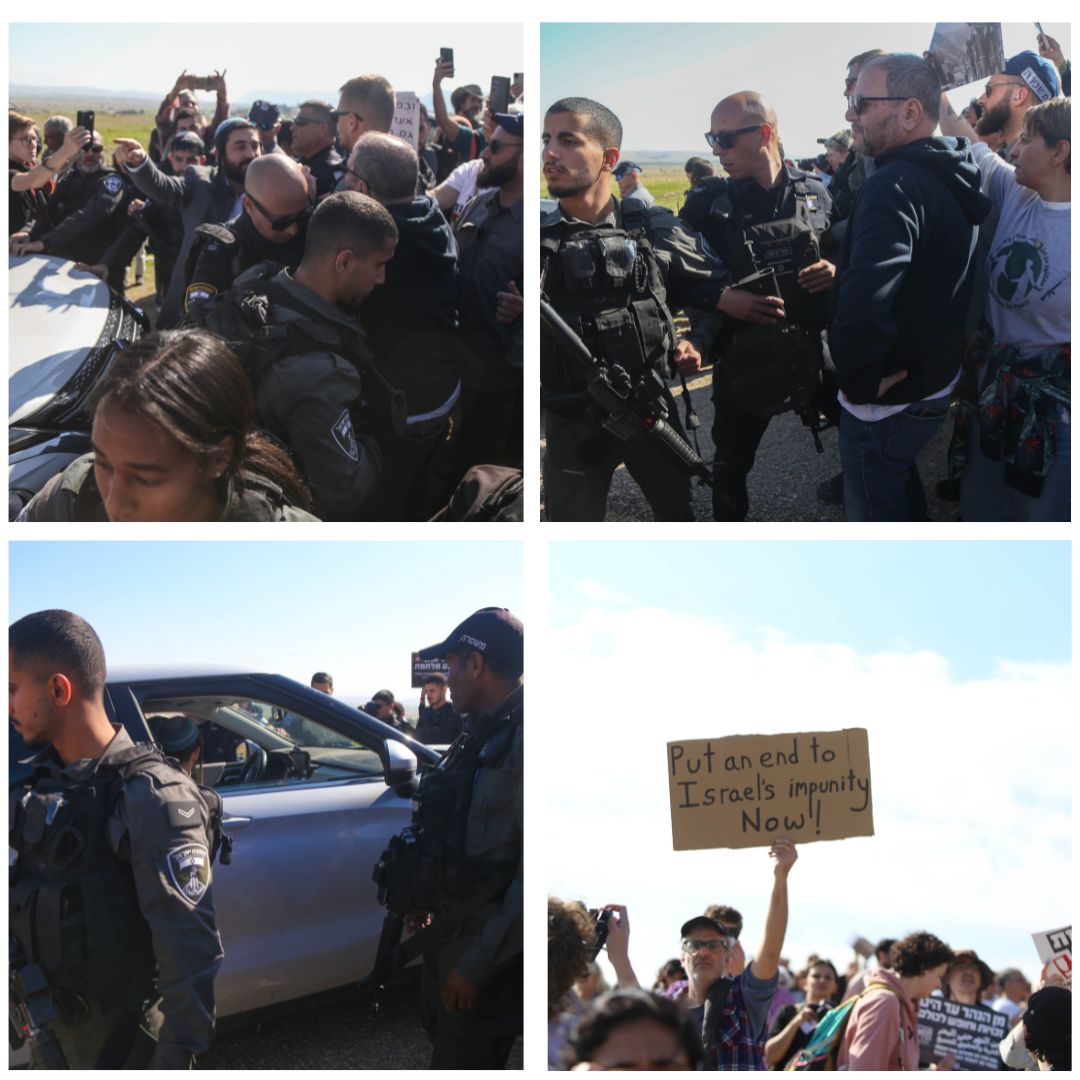
Sukkot, a member of the Religious Zionism party whose political positions have recently included opposing certain educational materials and advancing hardline policies, has become a controversial figure in the current political climate. His presence at Ras Ein al-Auja and efforts to interfere with a peaceful protest, highlight the growing tension between civic space and the political forces that seek to curtail it.
The right to protest is not symbolic - it is a fundamental human right. It is the way communities make their voices heard when other avenues are blocked or ignored. In Ras Ein al-Auja, settlers and extremist actors are working to erode the daily conditions that make life possible, while state protection for the community is absent or inconsistent. This creates an environment where nonviolent resistance and solidarity actions are not just expressions of principle, but of survival.
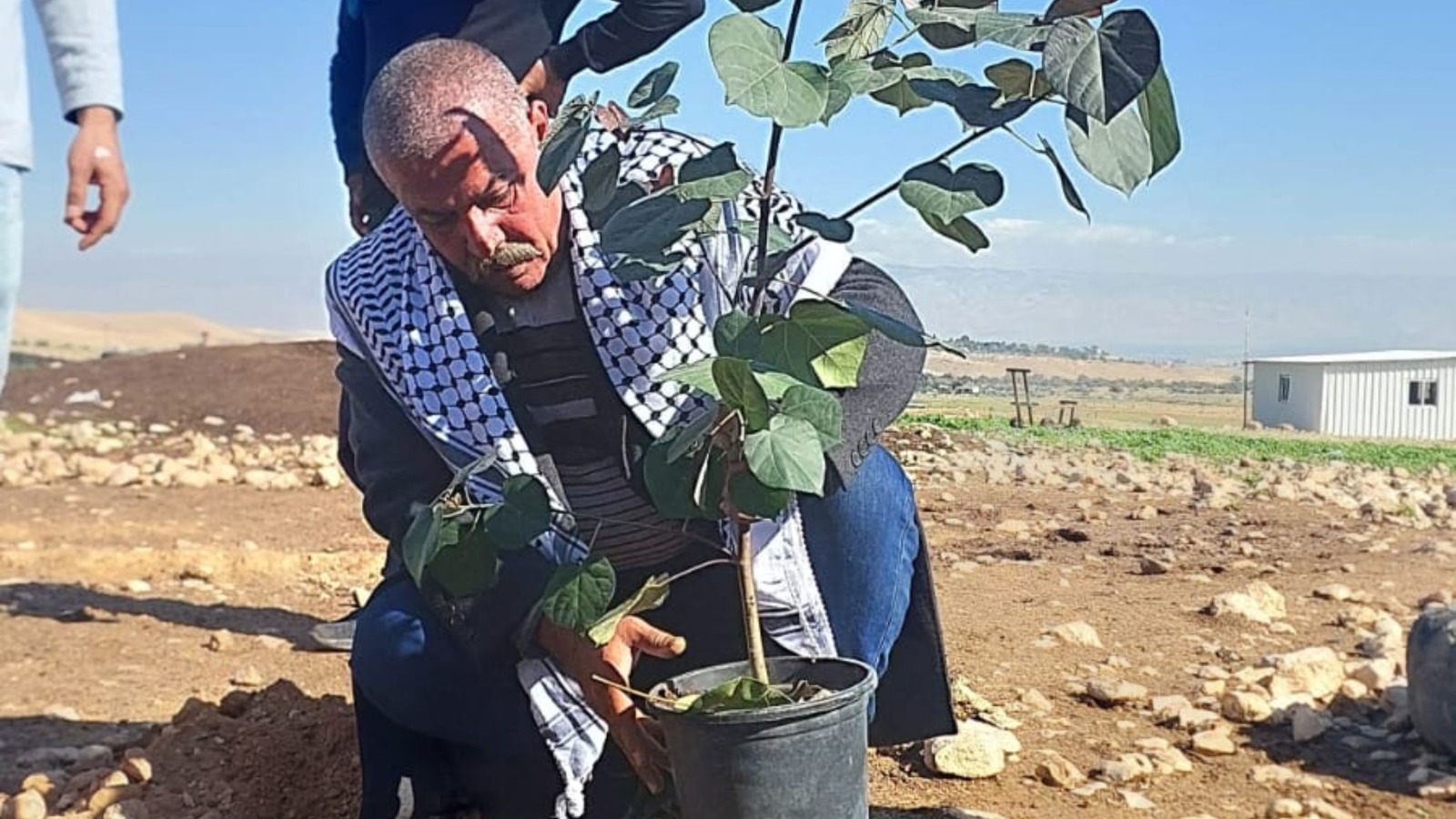
As a token of support for families choosing to stay and resist displacement, Combatants for Peace helped plant trees beside homes in Ras Ein al-Auja. This act was small in scale but profound in meaning - an affirmation of life, rootedness, and continued presence in the land, even under threat. |