One of the biggest mistakes in beekeeping is thinking that more hives automatically means better results.
It doesn’t always work that way.
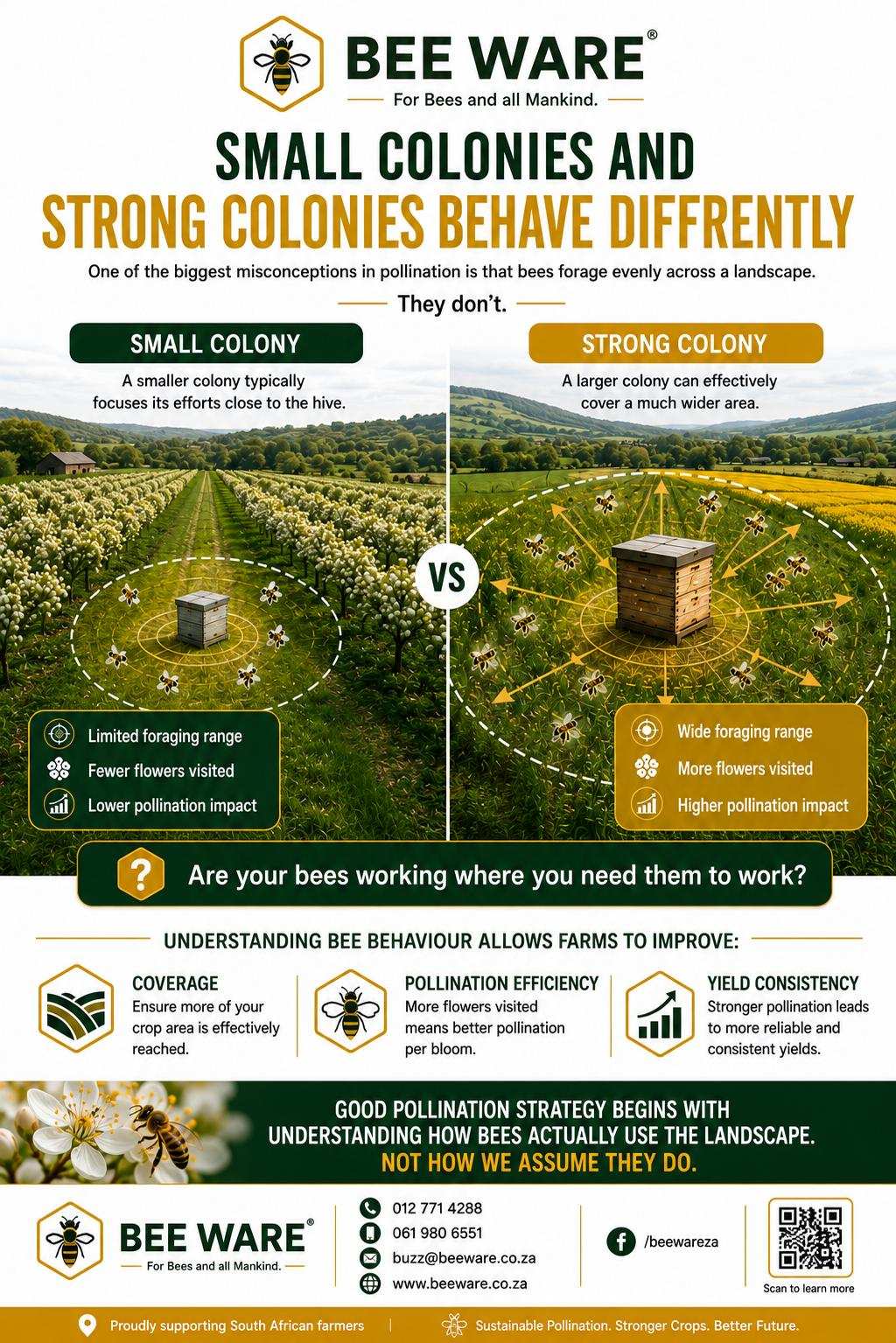
A small colony and a strong colony behave very differently.
A small colony may stay close to the hive, visit fewer flowers, and build up slowly.
A strong colony has the population, energy and field force to cover more ground, collect more resources, and deliver better pollination value.
That matters whether you are keeping bees for honey, pollination, queen rearing, nuc production, or simply trying to grow your apiary properly.
The better question is not only:
“How many hives do I have?”
The better question is:
“How strong are my colonies?”
Strong colonies are built through good seasonal management:
Feed before they fall behind.
Inspect before problems become expensive.
Make sure queens are performing.
Give colonies enough space at the right time.
Reduce space when colonies are weak.
Keep equipment clean, practical and ready to use.
This is where good beekeeping becomes less about luck and more about management.
A well-managed apiary gives you better options. You can split stronger colonies, build nucs, recover faster after tough seasons, and create a more reliable beekeeping operation over time.
At this point in winter, focus on joining weaker colonies using the newspaper method. Feeding colonies that have low or no winter stores in the brood chamber. Leave honey for the bees. Cut fire breakers. Look for spring and summer apiary sites if you're a small scale to medium scale operator with more than 20 hives.
At Bee Ware®, our goal is to help more beekeepers build colonies that are not just alive, but productive, useful and ready for growth.
If you are serious about growing your apiary, visit www.beeware.co.za and get the right beekeeping tools, equipment and support to build stronger colonies this season.
For Bees and all Mankind.
Bee Ware®