Bee Ware Editorial Commentary | Opinion:
There's a lot of climate change charged arguments for both sides, for and against.
Climate discussion often presents estimates as settled measurements. The frequently quoted pre-industrial CO₂ level of 278 ppm was not recorded in 1750; it was reconstructed decades later from Antarctic ice cores, with an estimated value of 278.3 ± 2.9 ppm.
Direct atmospheric measurements began only in 1957–58. Those records confirm that CO₂ is increasing, but they also show that vegetation, soils and oceans absorb a substantial share of human emissions, while increased CO₂ has contributed to measurable global greening.
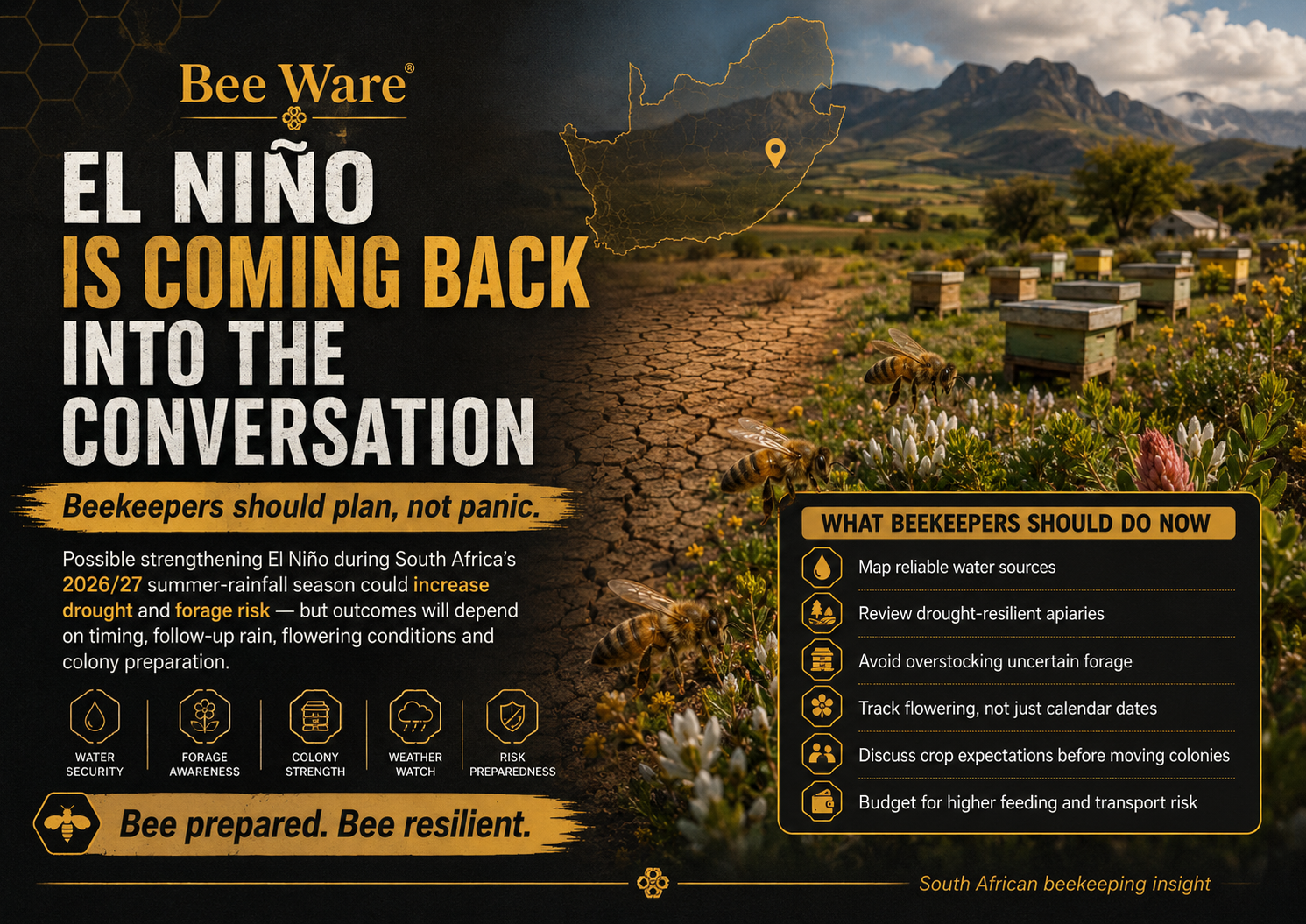
El Niño is likewise a natural, recurring climate cycle—not proof by itself of permanent climate change. For beekeepers, the useful question is not which political argument wins, but what is actually happening in the field: when rain arrives, whether follow-up rain occurs, temperatures during flowering and whether plants produce nectar.
We should monitor long-term trends seriously, but we should be equally cautious about blaming every drought, storm or poor honey season on climate change.
Good beekeeping begins with observation, measured evidence and preparation—not alarm.
Specific Interest to Note:
Instrument records show warming since 1931, exceeding 2°C per century in some western, northern and eastern regions of South Africa. That is a regional rate, not a uniform national figure. South African National Climate Change Information System.
What's your plan?
This is a personal opinion commentary following hours of review and reading findings from across the globe sourced from various sources as listed below.
Sources:
Scripps direct atmospheric record
NOAA’s Law Dome archive
IPCC explanation and underlying references
Berkeley Earth history and methodology
IPCC assessment of extreme events
South African National Climate Change Information System
NASA greening observations