In this newsletter: and much more! | | Latest from our world | | For over a year now, Kathy and I have been involved in a property dispute.
Someday, maybe, I may write about our nightmare. But I will say that what began as a disagreement over property has become far more complicated than we ever imagined. With numerous court hearings, judges, ex parte orders, temporary restraining orders involving both parties, assault, and the death of our beloved dog. It has been all-consuming.
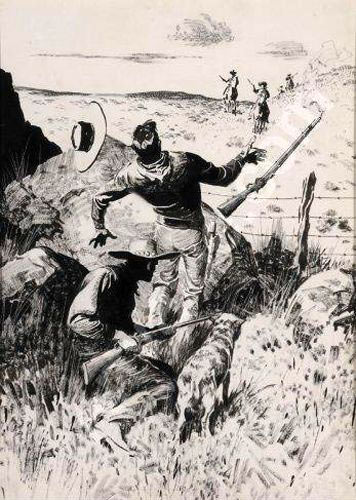
We've written about range wars, land disputes, cattle wars, feuds, and shootouts for years. Disagreements over fences, water, grazing rights, property lines, and land ownership often escalated into violence. But they didn't have many other options in the Old West.
Today, when Americans disagree about a property line, a fence, or who has the right to use a particular piece of land, we can hire a surveyor. We can examine deeds, hire attorneys, and go to court. It can cost a lot and be frustrating, but there is a process.
That wasn't always the case on the American frontier. One of the best examples is the Colfax County War in New Mexico.
What began as a dispute over the enormous Maxwell Land Grant eventually became a prolonged and sometimes violent struggle involving landowners, settlers, squatters, ranchers, businessmen, and competing claims to the land.
Its complicated history stretched back to Spanish and Mexican land grants before New Mexico became part of the United States.
After the American takeover of the Southwest, questions about who actually owned the land became increasingly complicated. New settlers arrived. Existing residents claimed rights to land they had occupied for years. Others purchased or inherited claims. Still others believed they had legal rights under federal land laws. The result was a tangled web of competing interests, and it eventually became violent.
The Johnson County War in Wyoming is another example. The conflict wasn't simply about cattle. It was about who would control the land and resources. Who was a legitimate rancher and who was considered a rustler or an interloper?
In one tragic episode, James Averell and Ellen Watson, otherwise known as Cattle Kate, who had established a homestead and ranch, became caught up in accusations of cattle rustling. Their property interests conflicted with those of powerful cattlemen, and they were eventually lynched. Later investigations cast serious doubt on the accusations against them.
The Johnson County conflict ultimately escalated into an armed invasion by hired gunmen. The Wyoming governor eventually called for federal assistance, and U.S. troops were sent to restore order.
Then there was the Pleasant Valley War in Arizona. This one involved disputes over cattle, sheep, grazing territory, water, and property. As tensions increased, the dispute became a feud.
The Pleasant Valley War eventually resulted in numerous deaths. A disagreement over land and resources had become a cycle of revenge.
Today, a property dispute can feel like the system drags on forever. But it's important to have a system in which the two sides don't have to settle the question themselves.
That doesn't guarantee that everyone will be happy with the outcome. And it certainly doesn't mean that the process is easy. But it gives us something the frontier often lacked: A peaceful alternative to settling the matter ourselves.
The Old West makes for great history. There is something compelling about the images of ranchers riding across an open range, settlers staking their claims, and sheriffs facing down armed men. But there was nothing romantic about being caught in the middle of one of these conflicts. Behind every famous feud were real families, real homes, & real fear.
And, too often, real graves.
So, as much of a nightmare our own property dispute has been, sometimes the slow, aggravating, costly process of letting the courts decide is a sign that the legal process is actually preventing an all-out war.
"The wheels of justice turn slowly, but grind exceedingly fine"
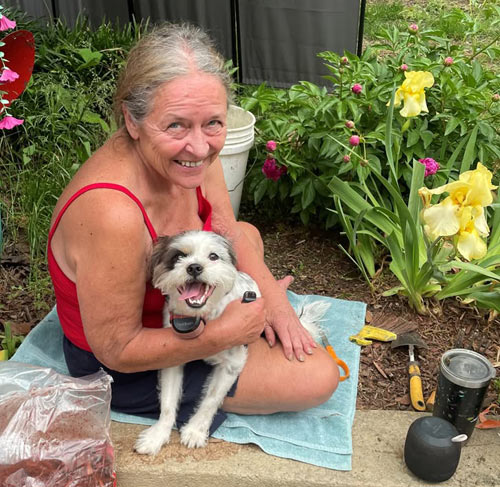
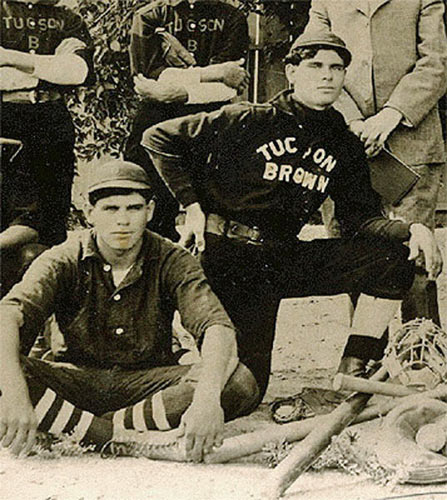
Dave Alexander | | Rest in Peace, Jaxon. 2024 - 2026. | | | Here are some of the recent additions since our last newsletter | | Six Shooters and Baseball - (submitted by Steven “Pacheco” McCann) Arizona Law enforcement in the very early 1900s was comprised of a different breed. Many of them were natural-born athletes who excelled at baseball.
Pacheco the Matchmaker - (submitted by Steven “Pacheco” McCann) Among the many firsts credited to Arizona Sheriff Nabor Pacheco, in 1906 he helped play matchmaker for New York ladies and Arizona Cowboys.
Fort Colvile, Washington - This trading center, just North of Kettle Falls, Washington, was first spelled Colvile when the Hudson's Bay Company established the post in 1825.
Chinese Massacre Cove, Oregon - In May 1887, Chinese Massacre Cove, along the Snake River in Oregon, was the location of the Hells Canyon Massacre, where up to 34 Chinese miners were murdered.
What's New on Legends Of Kansas | | Seneca, Kansas - Nemaha County Seat - (Legends of Kansas) Seneca, Kansas, on the Nemaha River, is a city and the county seat of Nemaha County. As of the 2020 census, the city's population was 2,139.
Webster Reservoir & State Park - (Legends of Kansas) Webster Reservoir and State Park in Rooks County and Osborne Counties, Kansas, provides many opportunities amid rolling hills and spacious skies.
Oberlin, Kansas - Decatur County Seat - (Legends of Kansas) Oberlin, Kansas, on the northwest side of Sappa Creek in Oberlin Township, is a city and the county seat of Decatur County.
Soldier, Kansas - (Legends of Kansas) This location was first known as Smithland when a post office was established on July 12, 1867. A new townsite called Soldier was established in 1877.
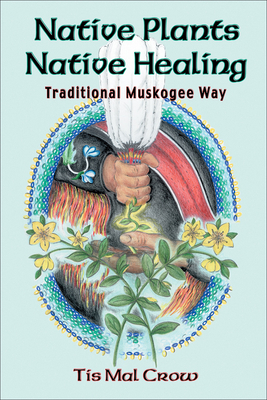
We've added 35 new articles since our last newsletter. | | | From Legends' General Store | | Readers learn how to identify, honor, and select common wild plants and are given information about responsible harvesting versus cultivation. He also explains how to prepare liniments, lotions, oils, salves, teas, and tinctures, and recommends specific remedies for numerous ailments. A must for beginners as well as serious students of herbology. Illustrated and indexed by both plant name and medical topic.
Author Tis Mal Crow also worked internationally with indigenous healers and herbal groups to promote the medicinal uses of herbs and the conservation of the wild habitat needed to sustain the growth of medicinal herbs.
Published by Native Voices, 2001.
Save 20% more off sale price when you use our newsletter coupon code NEWS20 in cart view.
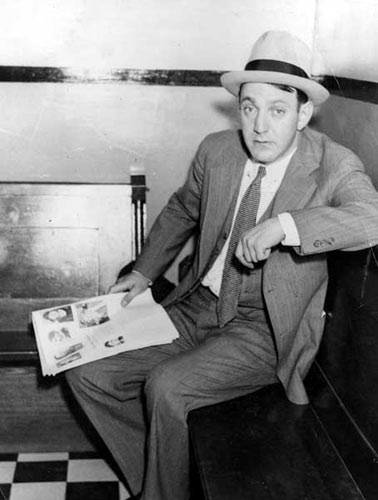
| | | | | Born Arthur Simon Flegenheimer on August 6, 1901, in the Bronx borough of New York, Dutch Schultz was a New York City-area mobster of the 1920s and 1930s who made a fortune in criminal activities.
Before he was killed, he was said to have buried a treasure trove in the Catskill Mountains.
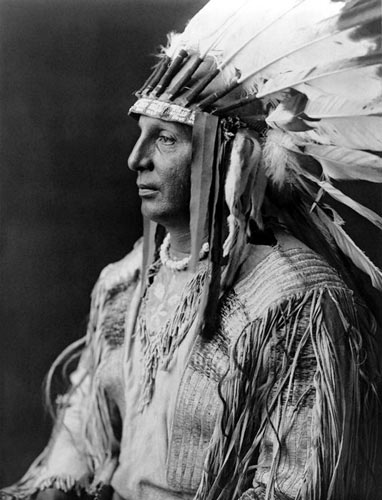
| | | The Arikara War – The First Plains Indian War | | The Arikara, also known as the Arikaree or Ree Indians, were a semi-nomadic group who lived in tipis on the plains of South Dakota for several hundred years.
Taking place in 1823, the Arikara War is noted as the first Plains Indian War between the United States and the western Native Americans, ending in August of 1823.
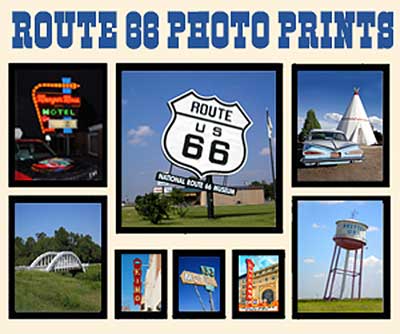
| | | From Legends' Photo Print Shop | | See our collection from all eight states of America's Mother Road, available in prints from small to large.
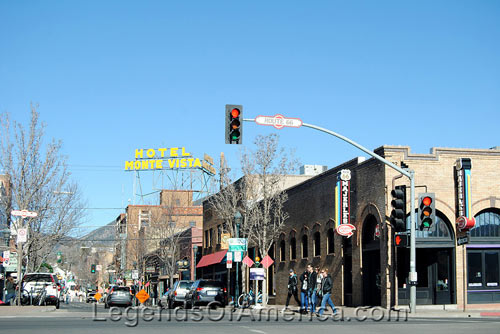
Save 20% when you use our newsletter coupon code NEWS20 during checkout. | | | Flagstaff, Arizona – City of Seven Wonders | | Flagstaff is often called “The City of Seven Wonders” because it sits amid the Coconino National Forest and is surrounded by the Grand Canyon, Oak Creek Canyon, Walnut Canyon, Wupatki National Monument, Sunset Crater National Monument, and the San Francisco Peaks.
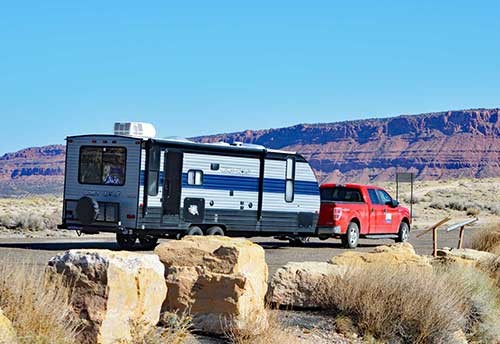
Today, this city of 77,000 celebrates 100 years on America's famous Route 66. | | | Do You Know the Way to Santa Fe? | | In 2021, we made a winter adventure out west. Coming home from Arizona, we winded our way to the Land of Enchantment. This ad-free photo travel blog covers our 588-mile journey from the Paiute Reservation in Northern Arizona all the way to our final "primary" destination, Santa Fe, New Mexico.
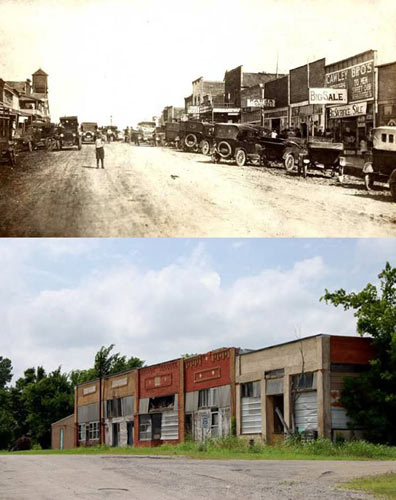
| | | Popular Stories on Facebook | | In case you missed it, here are some of the articles that have been popular on our Facebook Fan Pages recently. | | | Shamrock, Oklahoma, began as a small farming hamlet, with its post office established on July 9, 1910.
When the Cushing Oil Field began five years later, Shamrock became a boomtown overnight and once boasted a population of 10,000. The boom was short-lived, and today, only about 65 people remain.
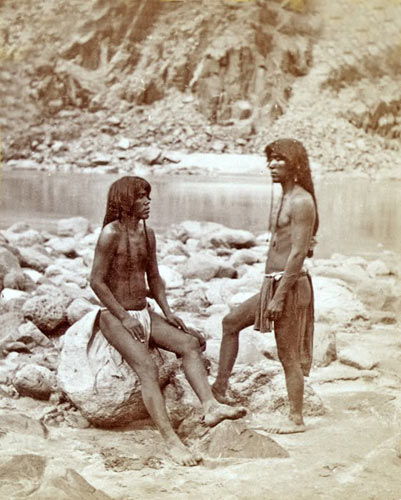
[Image: Shamrock, Oklahoma, during its boom days and more recently.] | | | The Mojave or Mohave are Native Americans indigenous to the Colorado River in the Mojave Desert.
In their language, they were called the Pipa Aha Macav — “The People By The River." Mojave culture traces its origins to Spirit Mountain. The land of the Mojave, the most northern of the Yumán tribes, stretched from Black Canyon to the Picacho Mountains below today’s Parker Dam, straddling the Colorado River. The Mojave language belongs to the River Yumán branch of the Yumán language family.
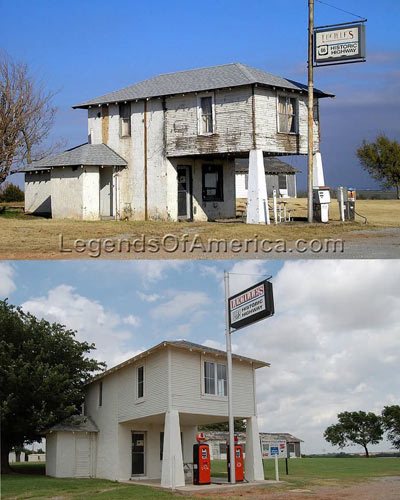
| | | On August 6, 1901, the town was officially founded and was first called Caddo.
When the post office opened the next month, the name was changed to Hydro, OK, for its abundance of good well water.
Today it's a favorite Rt. 66 stop for its historic gas station.
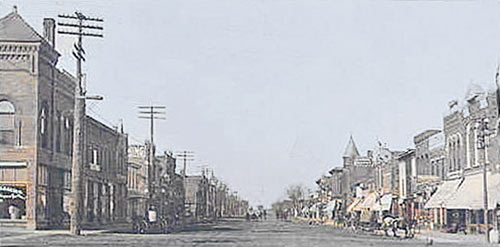
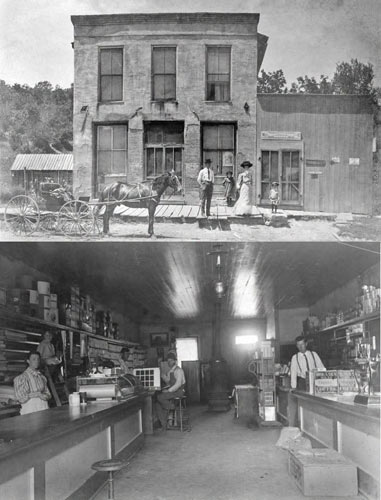
[image: Today, this classic old gas station is only one of two upper-story over-style stations left on Oklahoma's ribbon of Route 66. Route 66 enthusiast Rick Koch shored up the gas station building in 2007 as a photo-op. Photos by Kathy Alexander] | | | Settled in the mid-1850s, Iowa Point outstripped Atchison in size by 1858 and was Kansas's second most populous city. It even outpaced Leavenworth in business.
But its growth would get cut short, and the post office closed on July 19, 1933.
[images: Fred Massey Store in Iowa Point, Kansas, about 1900.]
| | | | | Our website and newsletter are supported by some mighty fine readers. Yeah, we're talking about YOU Friend! We just can't thank you enough! Be sure to check out our General Store and Photo Print Shop, helping keep our content free of charge since 2003.
All newsletter readers can enjoy 20% savings. Just use coupon code News20 in 'cart view' at our General Store, or during checkout on our Photo Print Shop. | | | Have a comment about something in this newsletter or any of our stories? Reply to this email or send them to travel@legendsofamerica.com. | | |
|
|