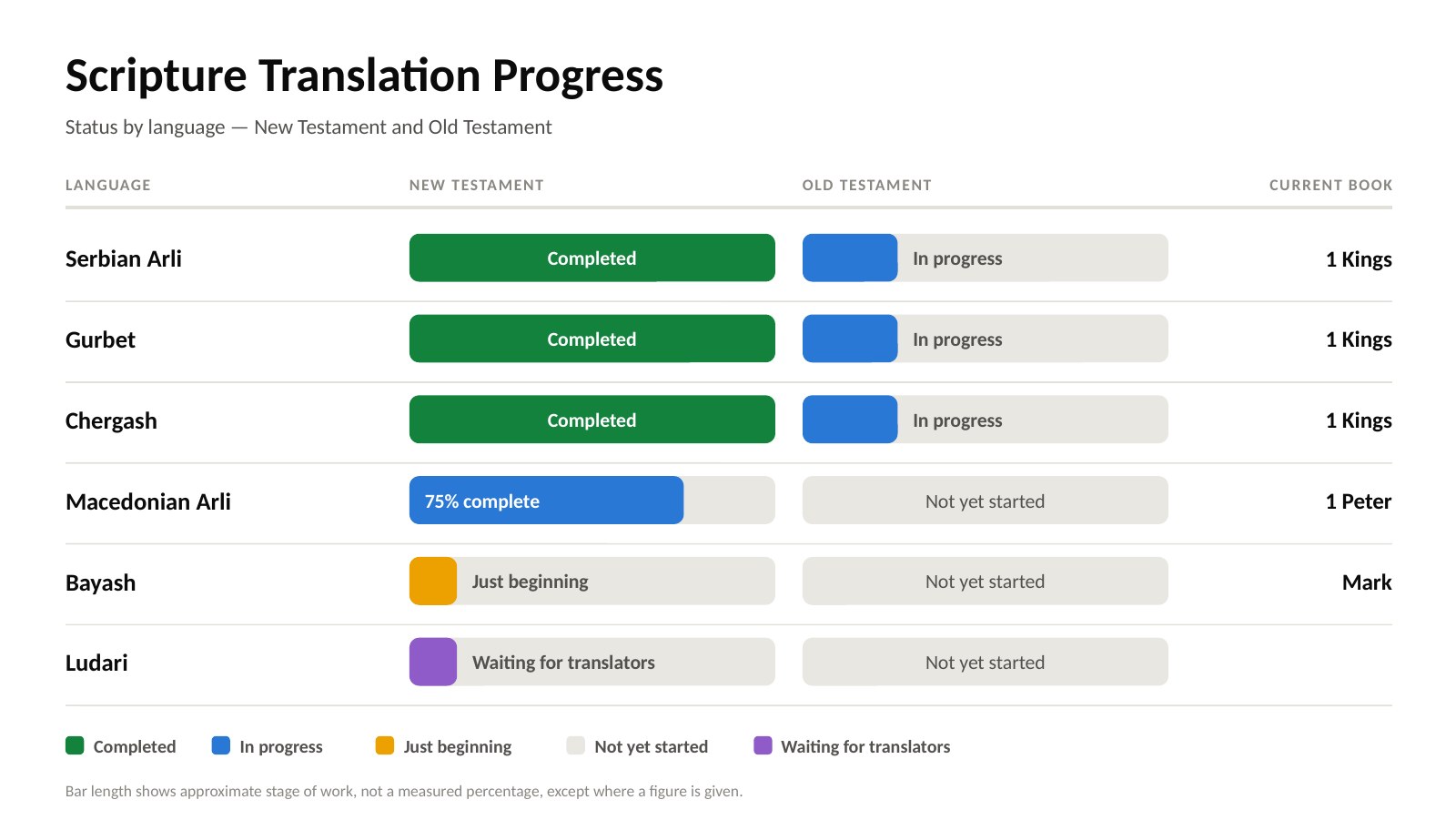
| Attempt Great Things for God: An update on the need and progress of Bible translation and sermon transcriptThis is the text of a missions sermon I preached in October 2026, along with the slides. You can watch it on YouTube here. | Where the translation projects stand | | Let me give you an update on how the Bible translation projects are going. There are six languages I want to update you on.
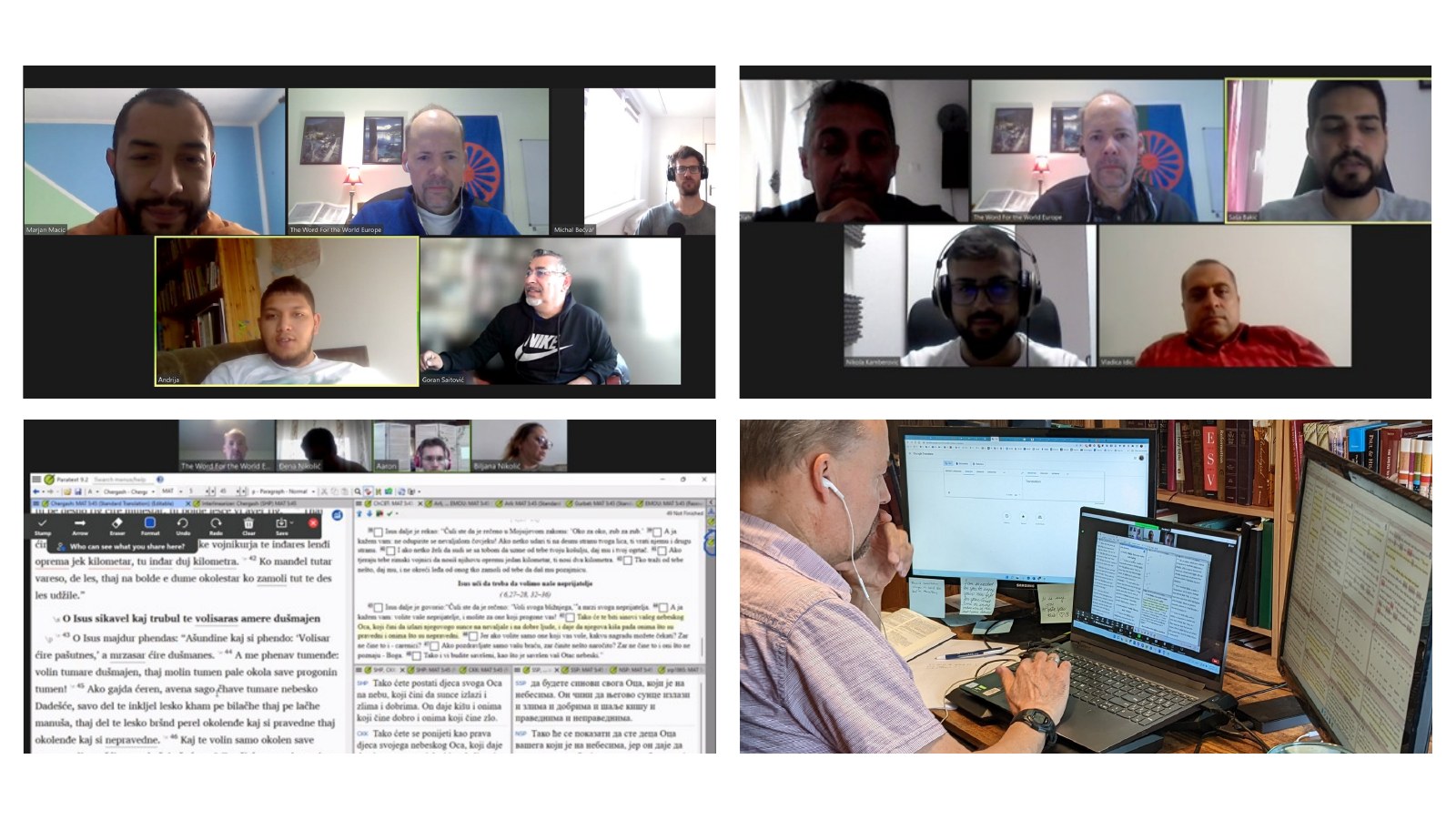
The first three are Arli, Chergash, and Gurbet. We recently finished the NT in these. We are now translating the OT, currently in 1 Kings.
The next language on the list is Macedonian Arli. We’re about 3/4 of the way done with the NT, currently in 1 Peter.
Bayash is the next language. We recently restarted this translation and are currently working on the Gospel of Mark.
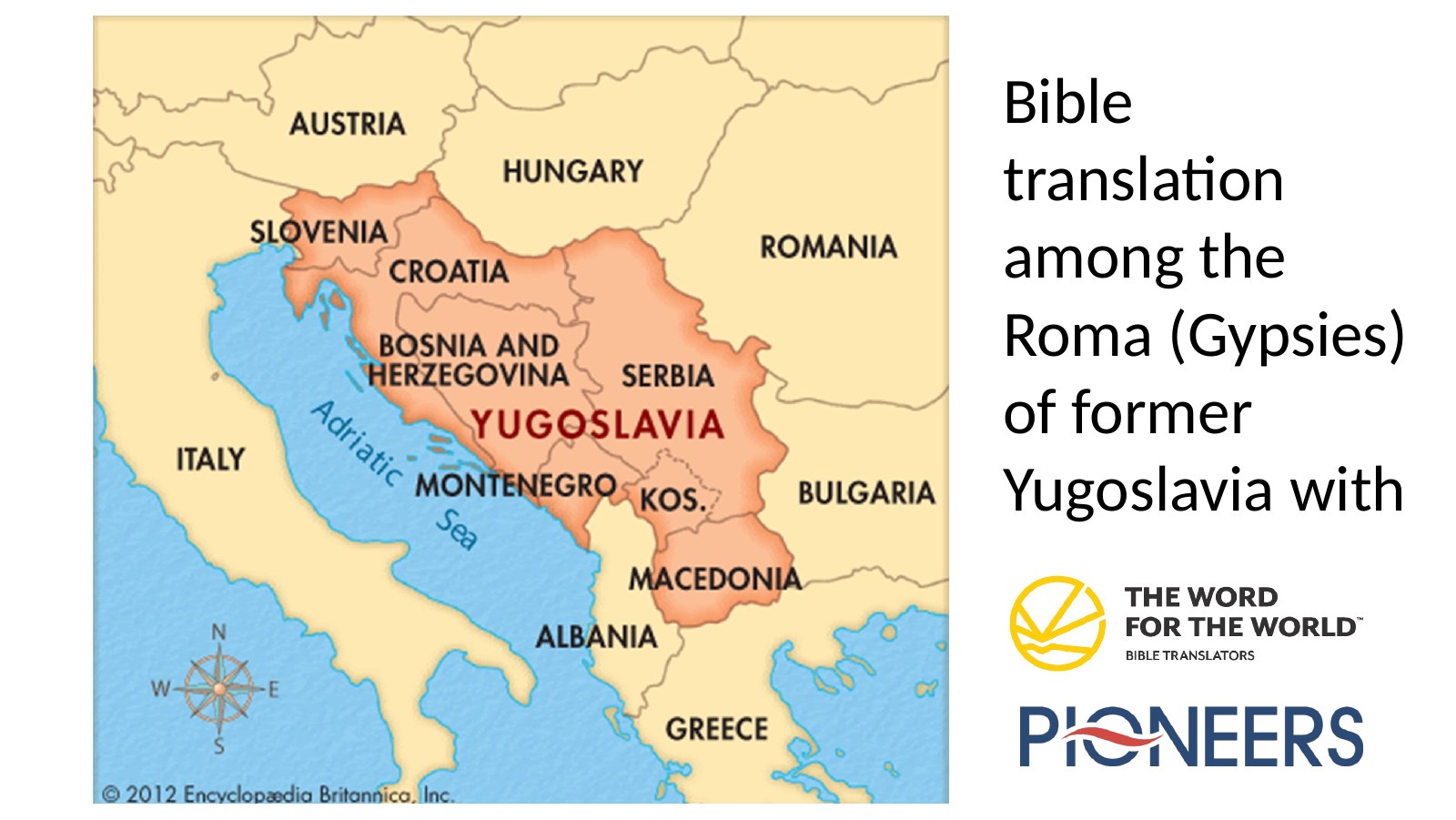
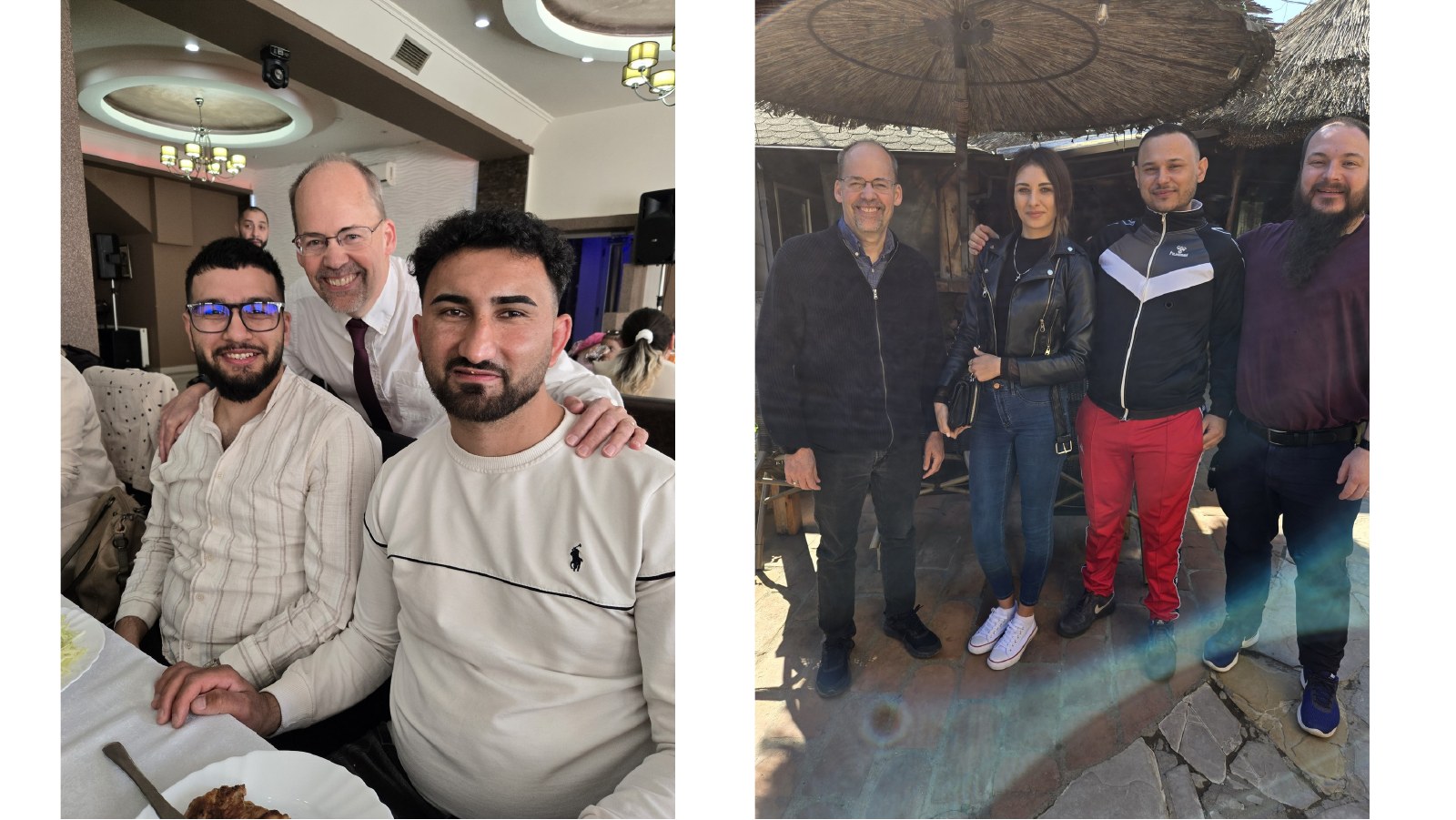
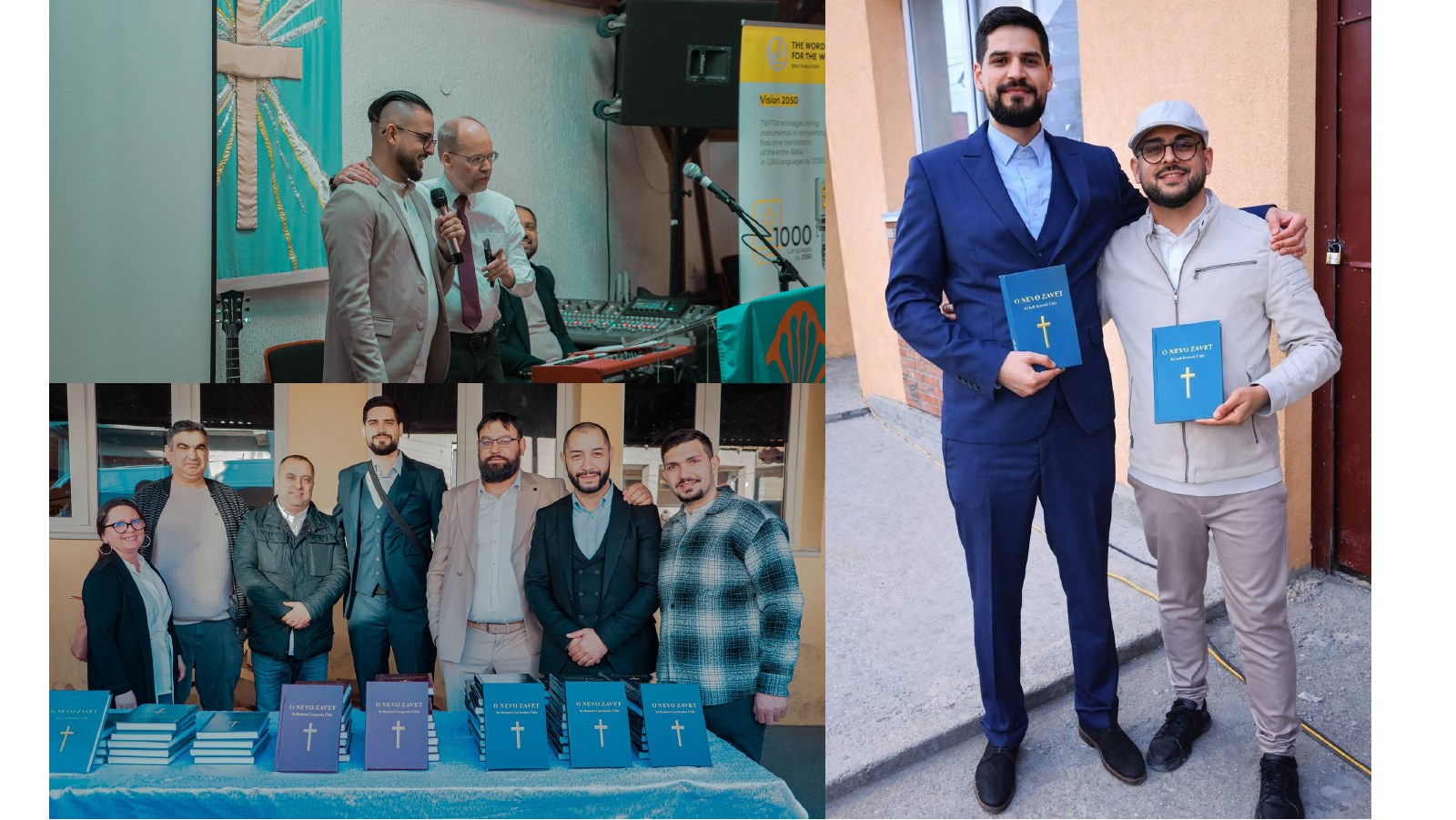
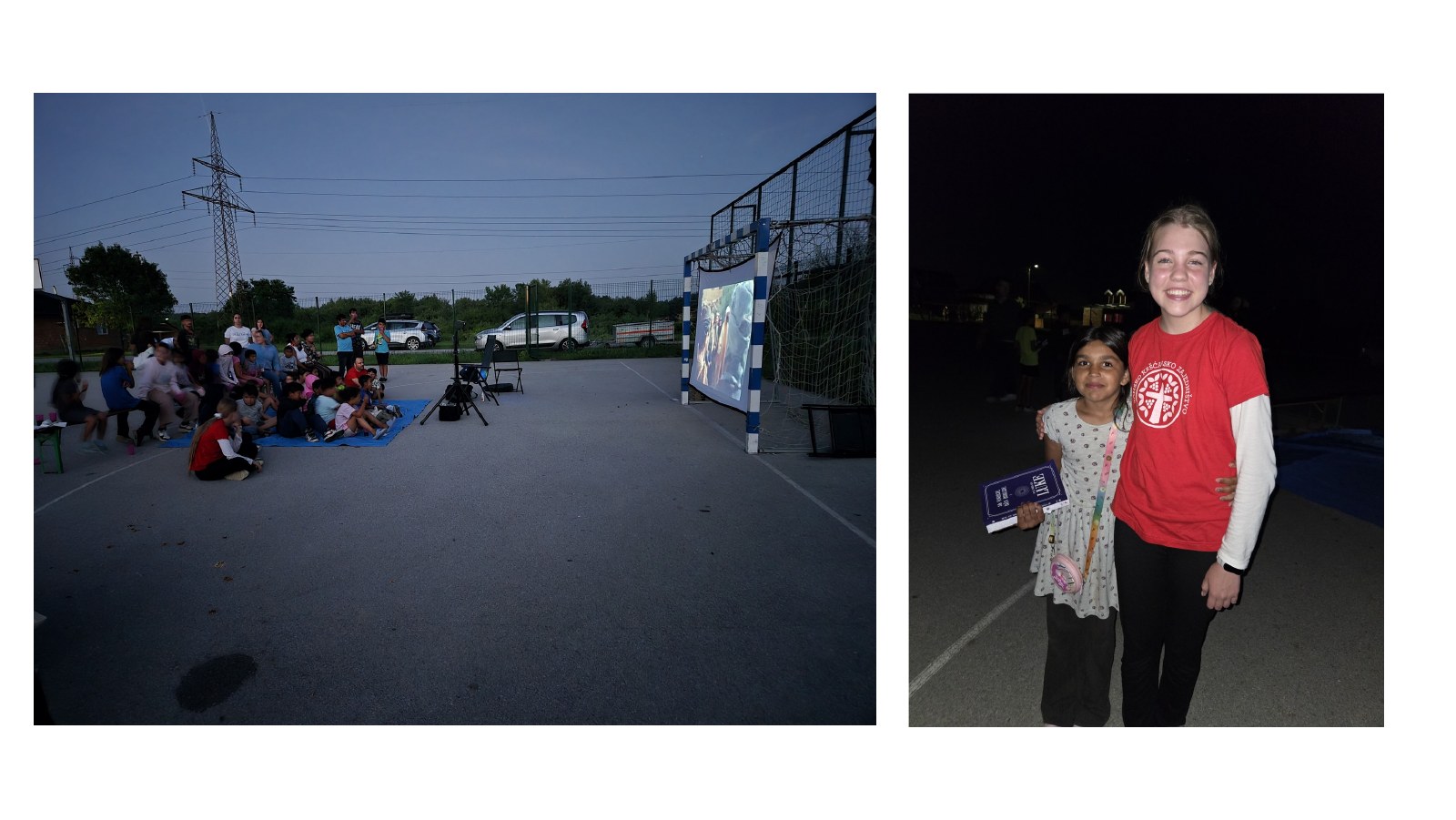
For the Ludari language, we are praying for translators. Years ago, we translated Luke, but we haven’t had translators to go forward with more of the NT. So please pray the Lord will raise up translators for this language. | | These languages are spoken by Roma or Gypsies who live in what used to be Yugoslavia. The current names of the countries where we are working are Croatia, Bosnia & Herzegovina, Serbia, Montenegro, and North Macedonia. | | My role is Bible Translation Consultant, which means I work with teams of mother-tongue translators to do quality assurance by checking all the verses they translate. I help them improve the translations and then sign off on them as approved for publication. | | New milestones this year include distributing the NT in three languages. In the picture above, you can see several Roma translators with copies of the NT in the 3 languages. | | Another milestone was our summer trip to three Roma villages in Croatia this year. One was a new village for us where we made new contacts and gave out Bible stories and the Gospel of Luke. And in the other two villages, we showed parts of the film of the Gospel of Luke in the Bayash and Ludari languages, which were the first public showings ever of a film synced word-for-word with the Gospel of Luke in these languages. | | I do this work from home, in Belton, MO, meeting online on Slack, with shared Bible translation software, with the translators who live in Croatia, Serbia, and North Macedonia. I covet your prayers for wisdom as I serve the translators and work with them to make sure that the Bible is translated into their languages in a way that is accurate, clear, and natural for Roma in their communities. | | Our sermon today is entitled: “Expect Great Things from God; Attempt Great Things for God: The Great Commission — Matthew 28:16-20.” A question no one wanted to discuss | | 240 years ago, in 1786, a young bi-vocational pastor, who paid his bills as a shoe repairman and school teacher, was at a gathering of ministers in his home area in Northampton, England. This group of pastors would gather occasionally to discuss and debate various theological topics.
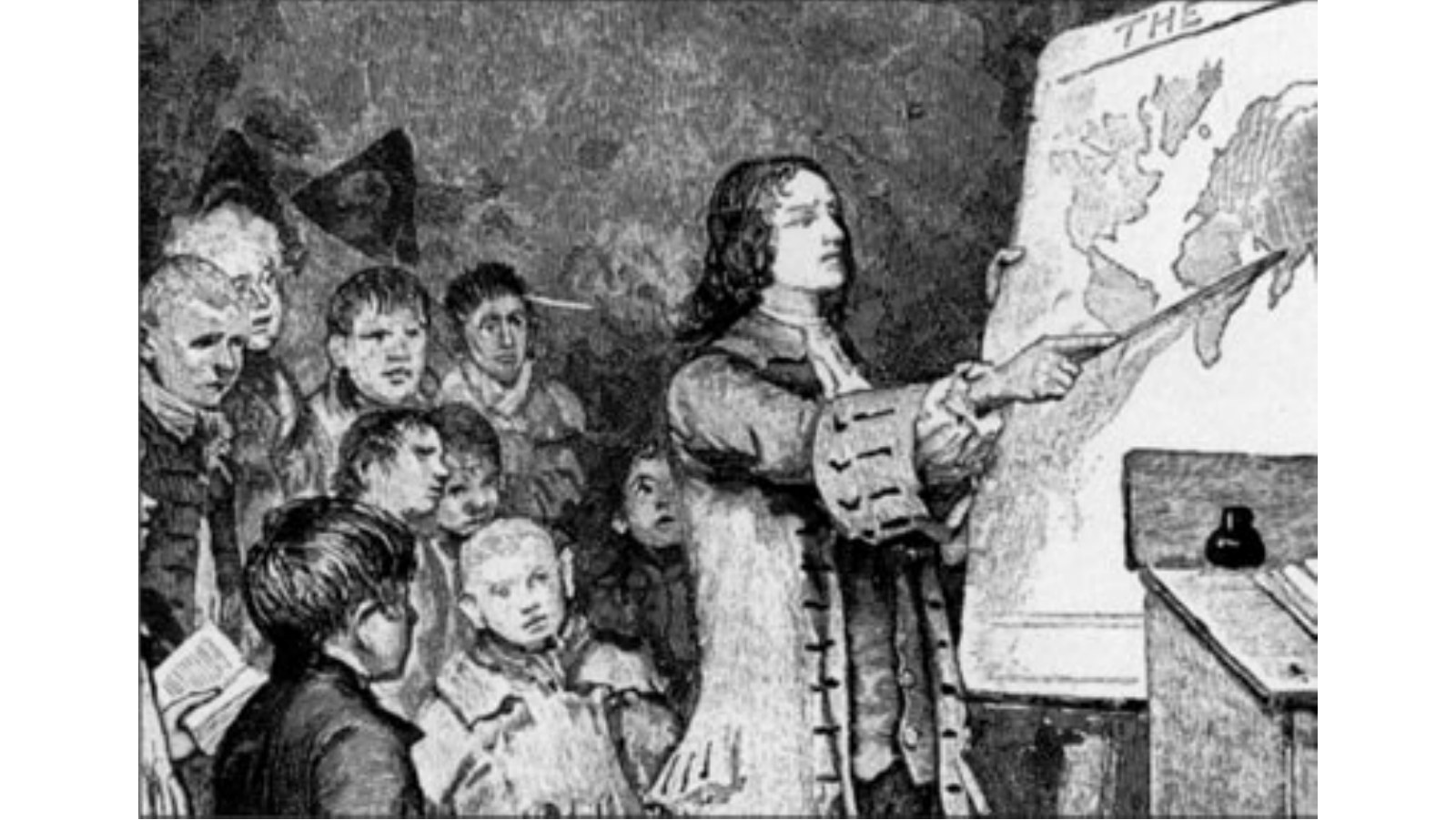
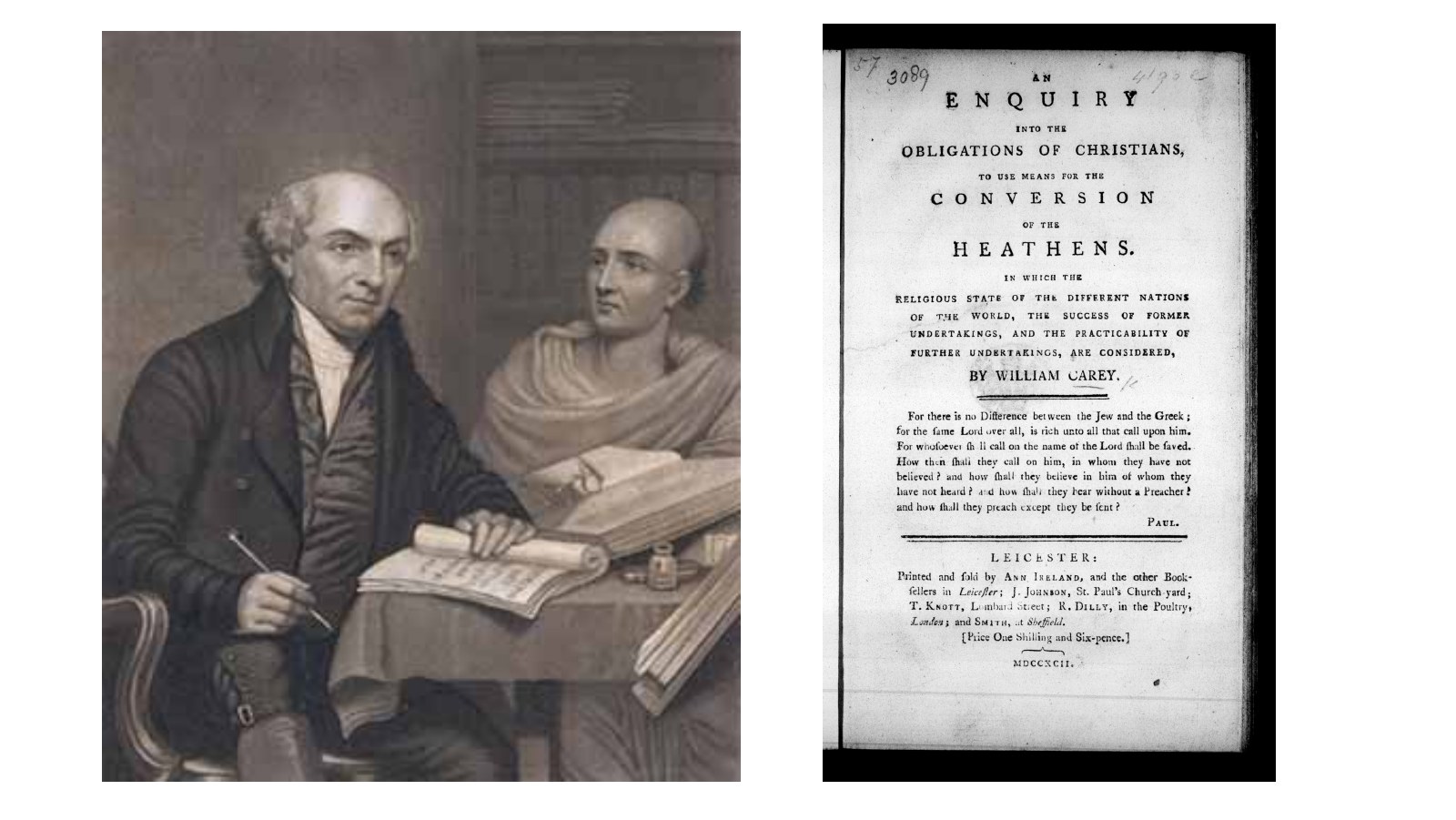
On this occasion, no one had come up with any topics for discussion until this young man, William Carey, stood up and asked whether the Great Commission was still valid today and whether we, as Christians, are still obligated to go and teach all nations.
The chairman quickly shut him down for asking such a ridiculous question. The chairman said that it was an outrageous question, since there is nothing we can do about getting the Gospel to the heathen unless God chooses to send another Pentecost and pour out miraculous gifts, including the gift of languages. | | So, William Carey sat back down and stayed silent. He had been muzzled at that meeting, but he would not let the topic lie. He wrote a book in which he studied the Scriptures and concluded that, yes, the Great Commission still applies today.
In the spirit of the day, his book had a very long title: An Enquiry into the Obligations of Christians to use Means for the Conversion of the Heathens, in which the Religious State of the Different Nations of the World, the Success of Former Undertakings and the Practicability of Further Undertakings are Considered, by William Carey.
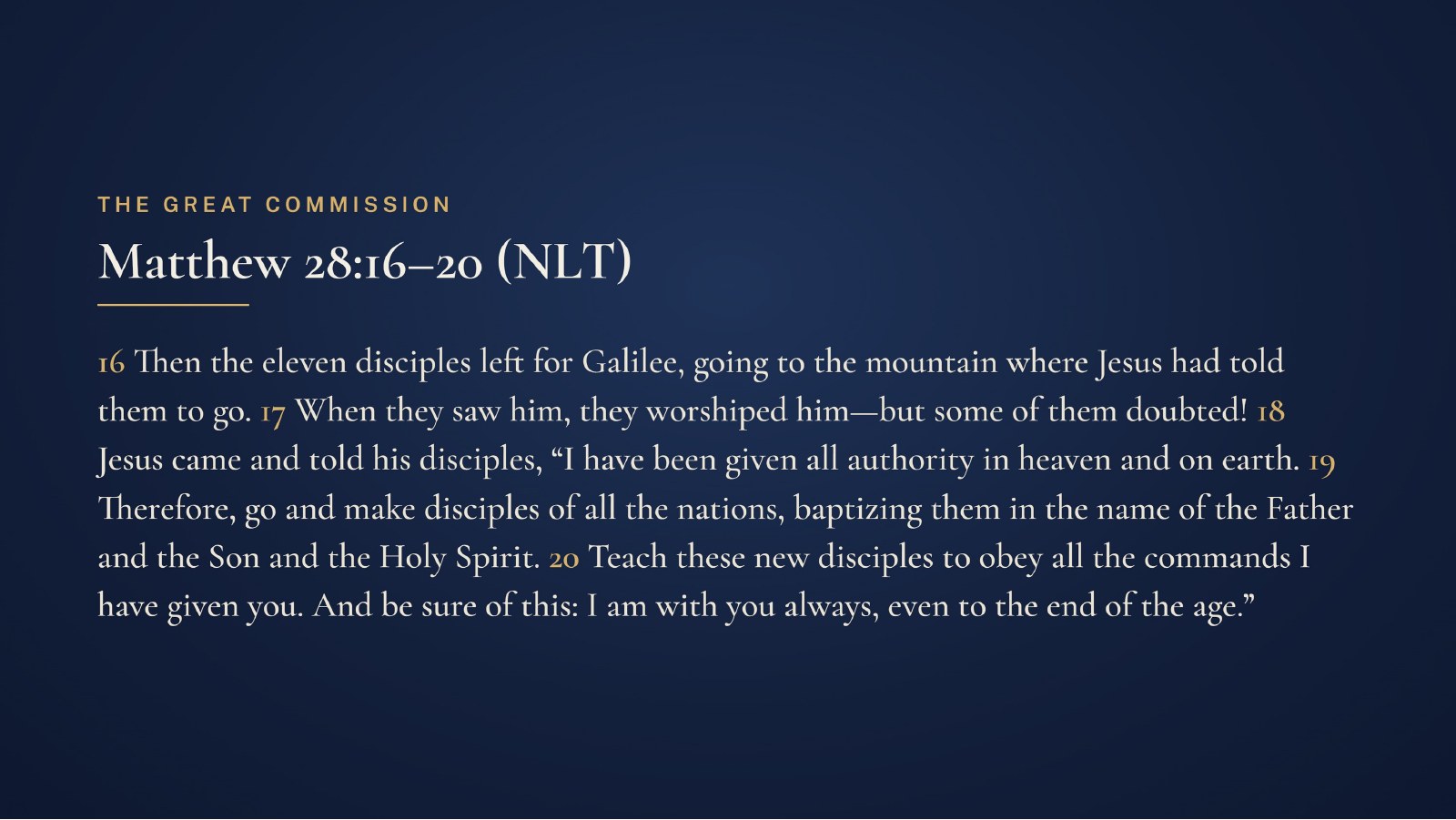
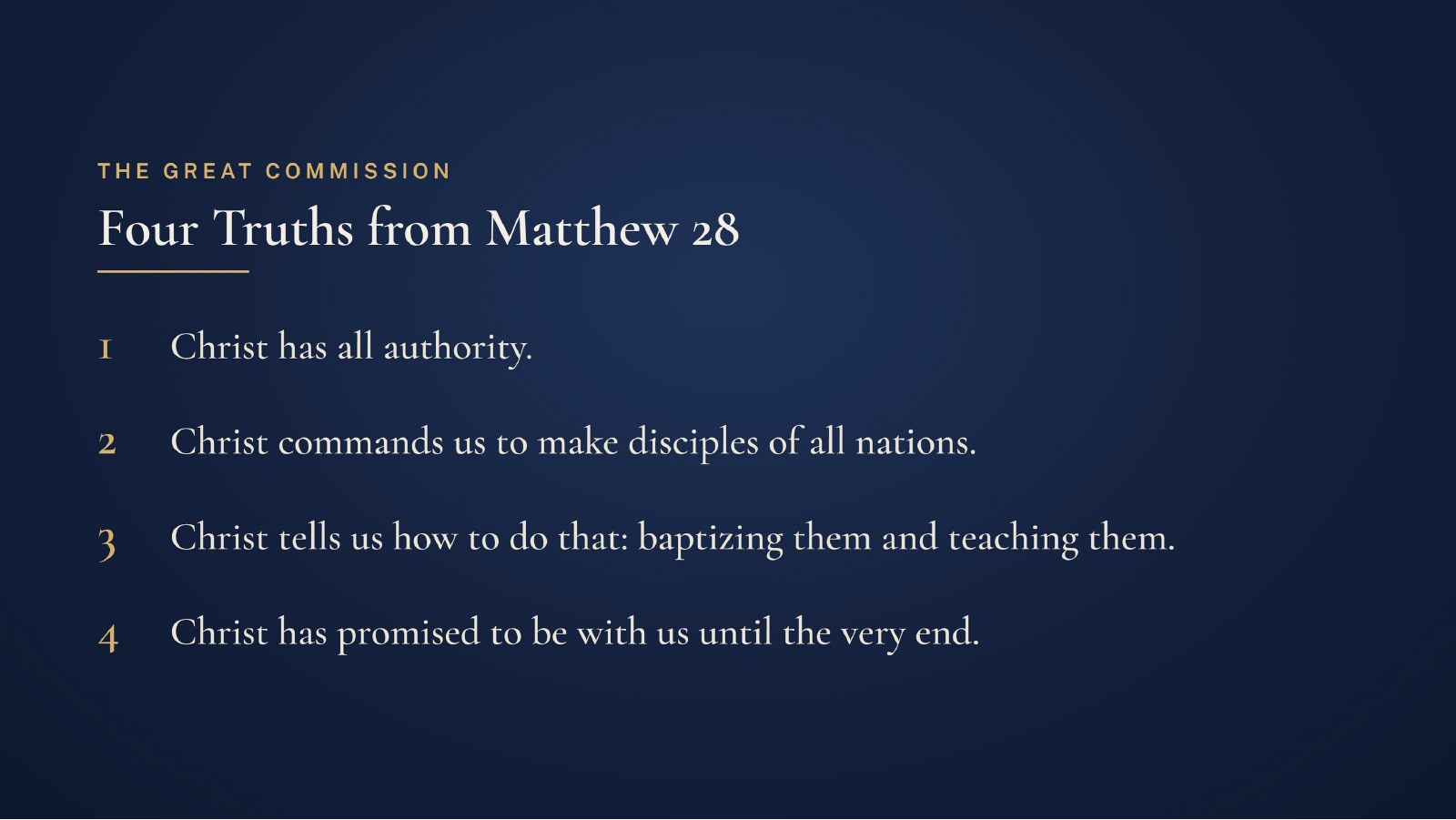
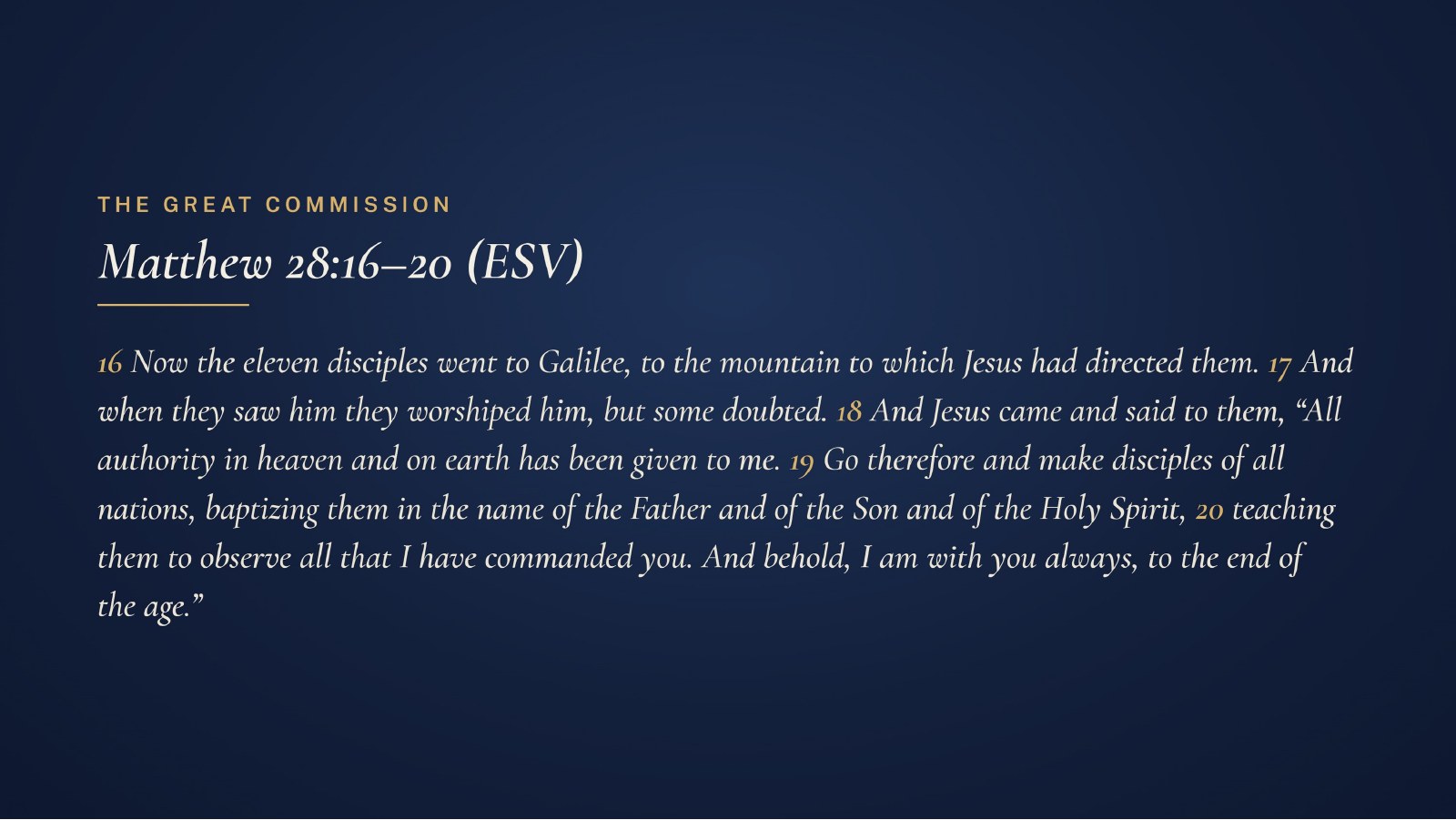
Let’s read the passage he was talking about, the Great Commission. The Great CommissionTurn with me in your Bibles to Matthew 28:16-20. | | Matthew 28:16–20 NLT ¹⁶ Then the eleven disciples left for Galilee, going to the mountain where Jesus had told them to go. ¹⁷ When they saw him, they worshiped him—but some of them doubted! ¹⁸ Jesus came and told his disciples, “I have been given all authority in heaven and on earth. ¹⁹ Therefore, go and make disciples of all the nations, baptizing them in the name of the Father and the Son and the Holy Spirit. ²⁰ Teach these new disciples to obey all the commands I have given you. And be sure of this: I am with you always, even to the end of the age.” | | Notice several things in this passage: Christ has all authority. Christ commands us to make disciples of all nations. Christ tells us how to do that: baptizing them and teaching them. Christ has promised to be with us until the very end.
William Carey looked at this passage and concluded that this commission is still in effect, since Christ still has all authority—nothing has changed in that regard from the first century. And the Great Commission is still in effect, since Christ is still with us until the end of the ages. Nothing has changed in that department either.
Carey concluded that since Christ has all authority and will exercise it until the end of time, we can expect God to do great things. In other words, he concluded that, in light of Christ’s authority and presence with us, we should be expecting amazing things from God.
Second, in light of Christ’s authority and presence with us, God expects us to attempt great things for him. It is an enormous task to make disciples of all nations. It is truly an attempt to do great things to teach all nations to obey all that Christ commanded. What Carey did about it | | In William Carey’s day, in 1792, his research showed that 570 million people were “utterly destitute of the knowledge of the gospel of Christ, or of any means of obtaining it.” He was also aware that in 1792 there were many, many lands with “no Bible and no written language.”
So what did he do about it? Did he sit down in the meeting and give up all hope of making the Gospel known to the unreached? No, he looked at the promises of God, not just in Matthew 28 in the Great Commission, but in many other passages, including the OT prophets, and he concluded that 1) God had made promises for the Gospel to spread to the ends of the earth, so he therefore expected God to do great things to fulfill those promises.
And then he looked at the commands of God, again, not just in Matthew 28 in the Great Commission, but in many other passages, and he concluded that 2) the right response was for us to attempt to fulfill the Great Commission, or in his words “to attempt great things.”
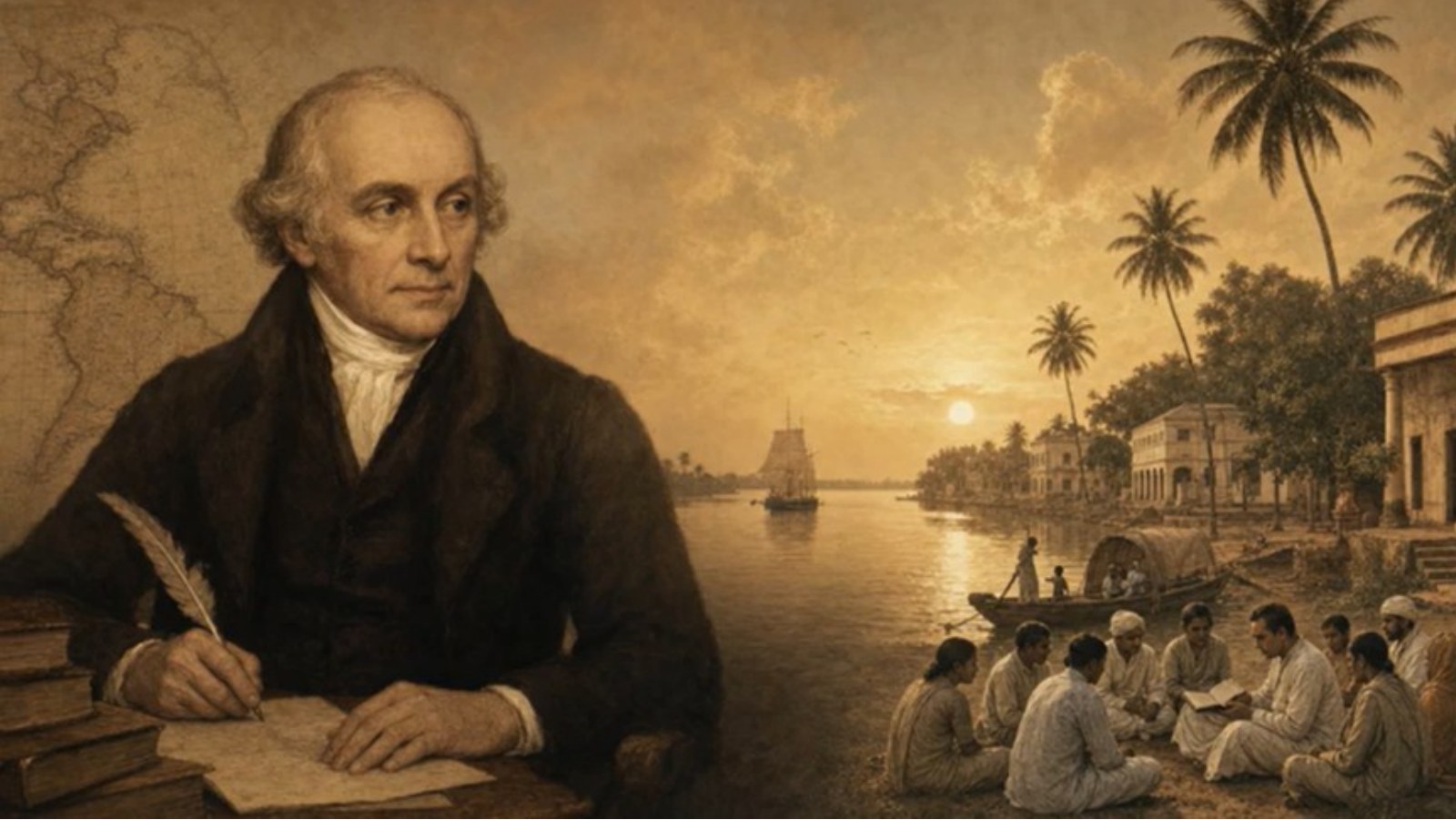
So in 1792, he and a few faithful friends started the first English Protestant mission society, and he left the shores of England by boat, never to return.
His was not an easy commission. He served for 41 years in India, and never went back home. He buried two wives, a young son and an adult son on the mission field. He labored for 6 years without a convert. He moved house numerous times, and many of his projects and plans failed.
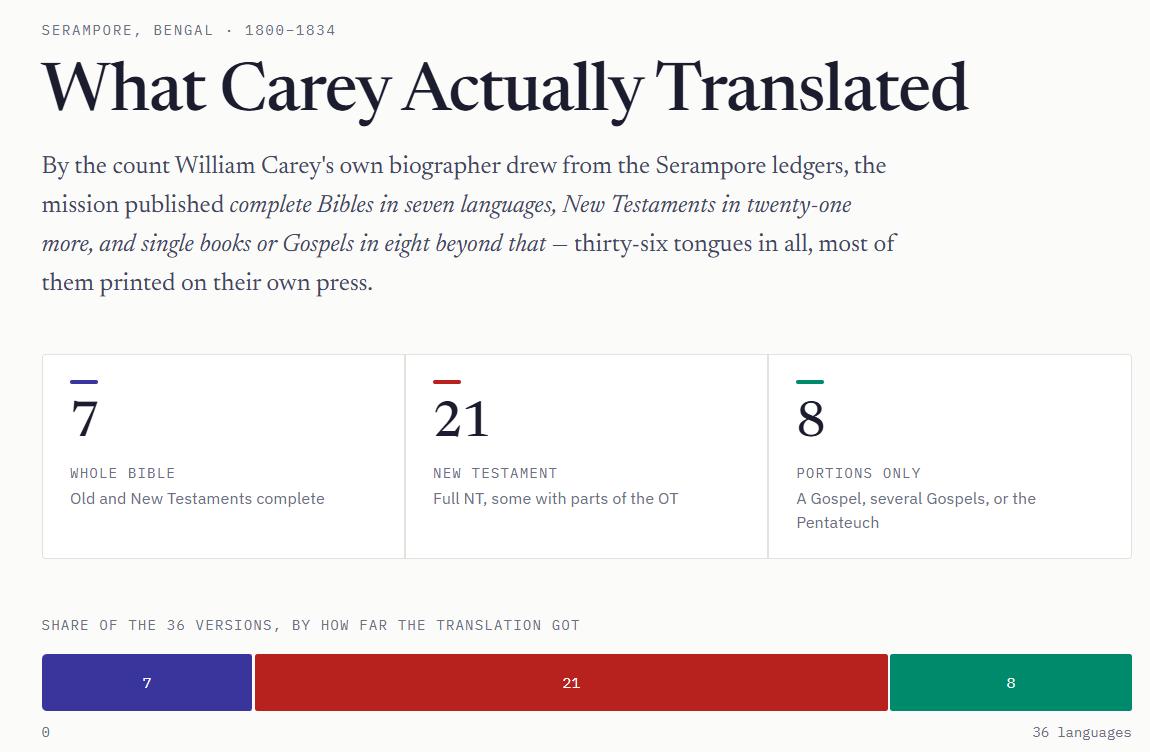
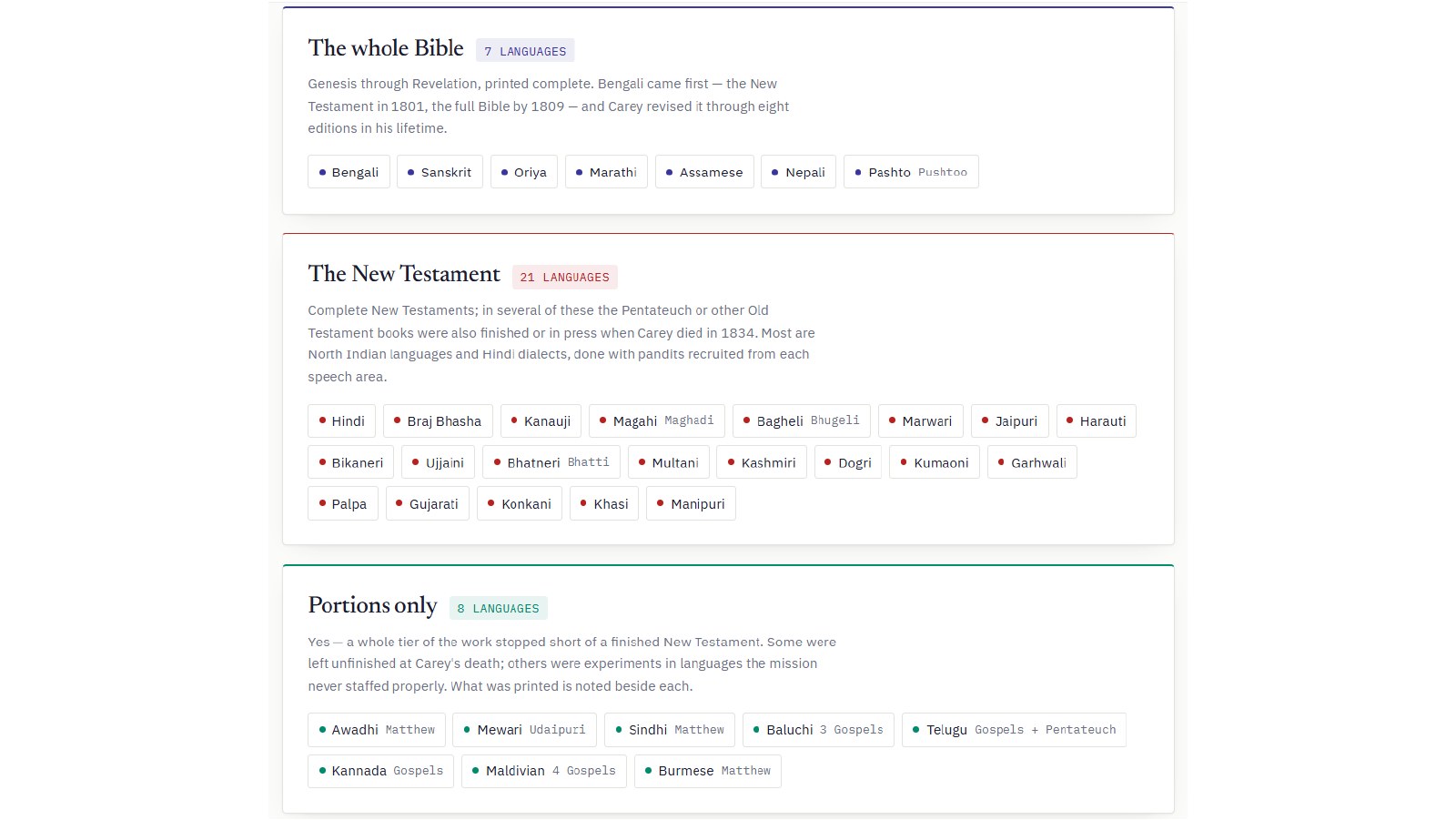
But he plodded on. And back in a day before electricity, typewriters, computers, or the Internet, when so much work had to be done by hand, William Carey and his teams accomplished truly great things for God. | | They translated the entire Bible into 7 languages. They translated the entire NT into 21 more languages. They also translated a Gospel, or parts of the OT or NT, into 8 more languages, for a total of 36 languages. | | And he did that even after his print shop burned down, destroying numerous manuscripts and handmade metal-type alphabets for the printing press. He did that in a day when dysentery and other tropical diseases took the lives of many Western missionaries. He did it with a wife who lived in deep depression and near insanity.
But he took God at his promises, expected God to do great things, and then went and attempted those great things. The need todayToday, we face a similar challenge: we need God to do great things, and we are seeing him do them now, and we are excited to attempt greater things for him. | | Let’s get specific. I gave you the statistics from William Carey’s research of how things stood in 1792. What about today, in 2026?
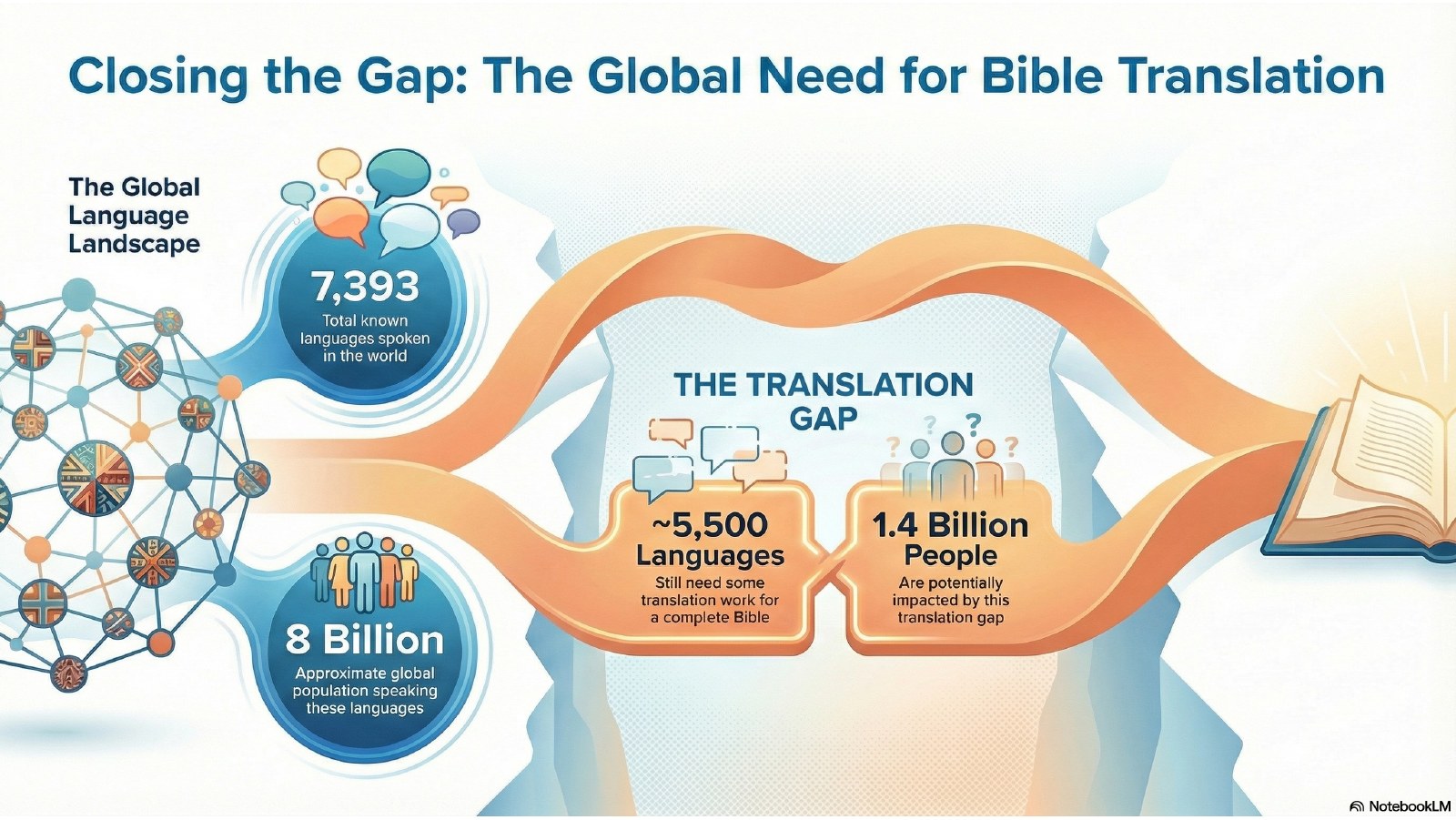
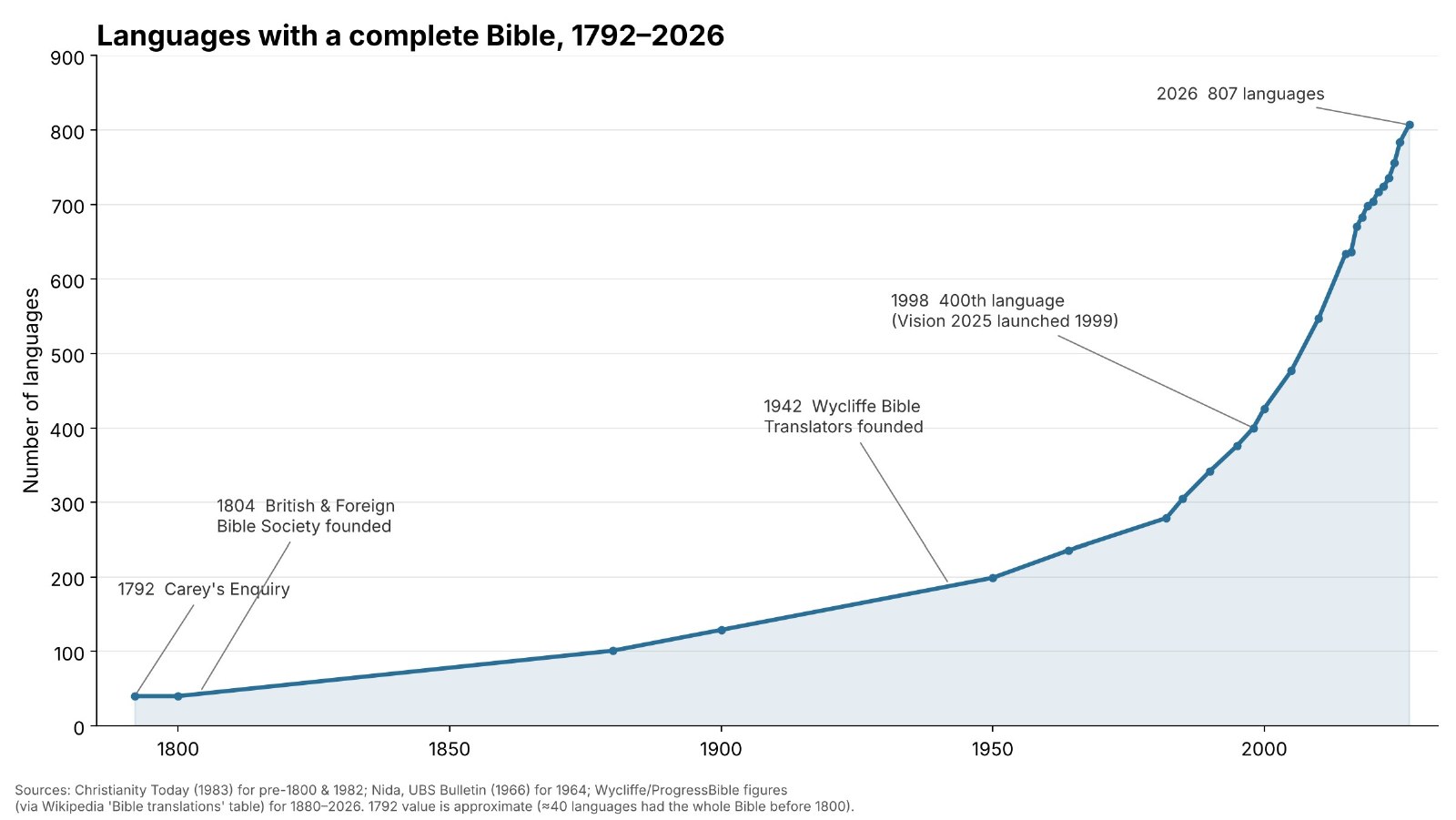
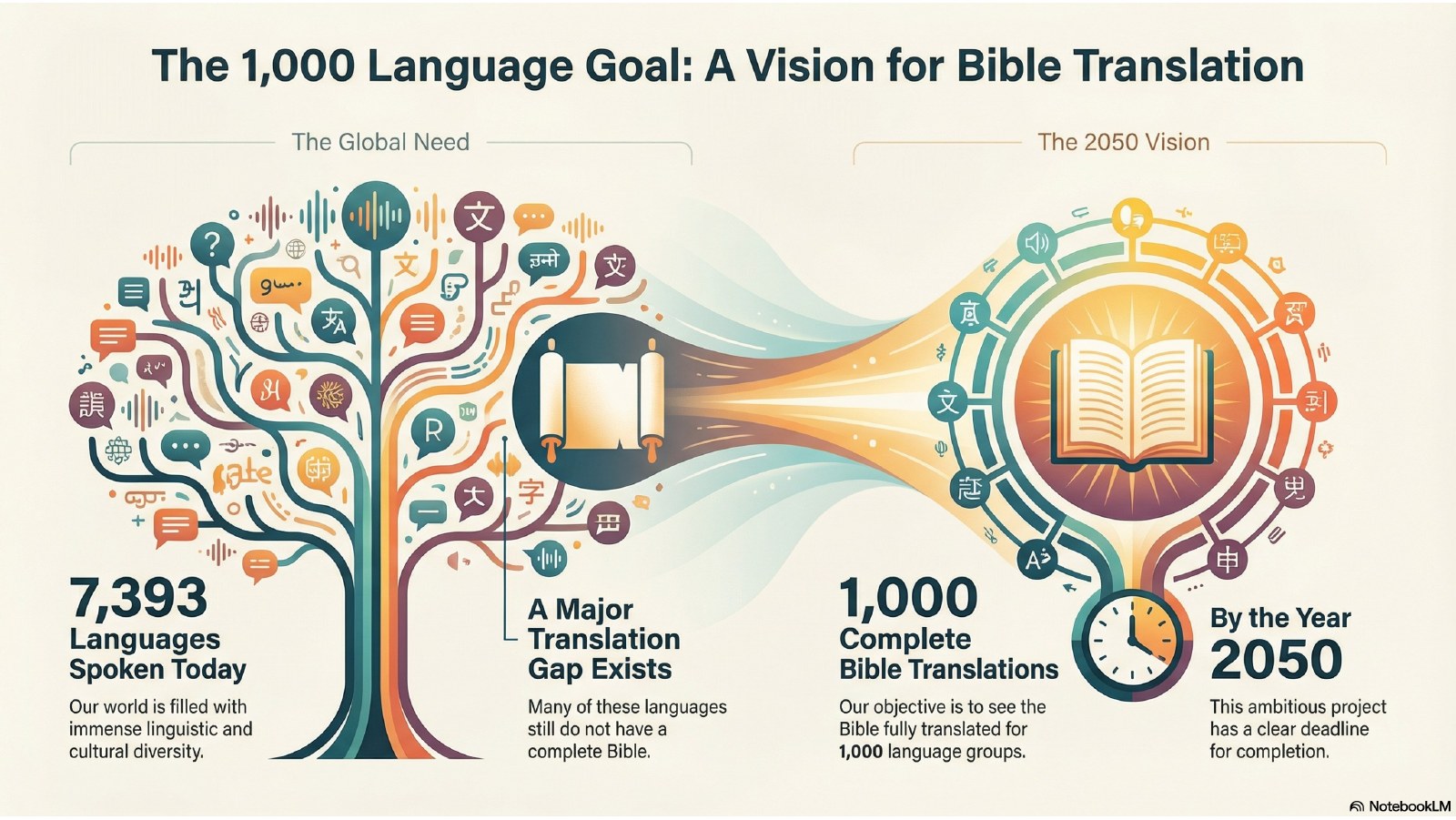
Today, 7,393 languages are known to be spoken by the world’s 8 billion people. Of these languages, as many as 5,500 languages, spoken by 1.4 billion people, still do not have a full Bible. | | But progress is being made. The number of languages receiving a full Bible translation is growing at a wonderful rate. In William Carey’s day, 1 new language received a translated Bible every year and a half. Today, 1 new language receives a translated Bible every two weeks.
God is currently doing great things. By His amazing grace, we want to keep attempting great things for His glory. | | Our organization, The Word for the World Bible Translators, has set a God-sized goal. We are praying that by 2050 (less than 25 years away), he will use us as instruments to help complete the Bible in 1000 languages. That will happen only if we expect God to do this great thing while also trying to do it by his power. So far, our organization has helped finish 11 full Bibles. But we have 455 in process.
Will you join us in believing God for this need? Will you join us in expecting God to do this great thing? And will you join us in attempting this great thing for God?
The beautiful thing about the Great Commission is that every believer can be involved. Whatever gifts and abilities you have, you can use them to fulfill the Great Commission. In faith, you can trust that God will do great things through your weak self, in order to glorify himself and fulfill His global mission. Then you can go and attempt great things for God’s glory and to fulfill His Great Commission.
So ask yourself, “How can I attempt something great to help fulfill the Great Commission?” How will God use you?
If you don’t know, I have a few practical suggestions that I will give at the close of this sermon. Some doubtedLet’s look at this morning’s text in more detail now, Matthew 28:16-20. | | (For the rest of the transcript of the sermon, please go here.) | | Financial support update: We are so grateful to each individual and church that gives financially to make this ministry of Bible translation possible! Thank you! Because of rising living costs (health, dental, vision, car, and property insurance; utilities; gas; etc.), we currently need $2,050 more per month in financial support pledges. Please pray for this ongoing need. If you would like to give, please use the information below to donate. | | | To donate by mail, phone or to set up monthly automatic transfers: PIONEERS (account #110250) |
|
|