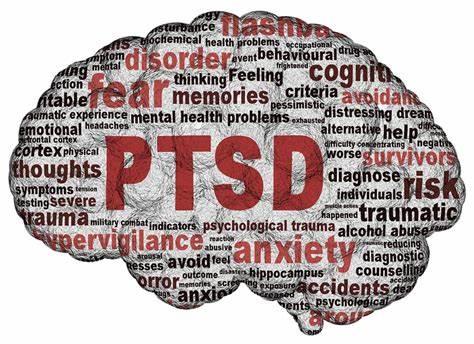
Not all wounds from war are visible, P T S D or Post-traumatic stress disorder can be just as serious and painful as a gunshot wound. A diagnosis of PTSD requires exposure to an upsetting traumatic event. Exposure includes directly experiencing an event, witnessing a traumatic event happening to others, or learning that a traumatic event happened to a close family member or friend. Symptoms and Diagnosis Symptoms of PTSD fall into the following four categories. Specific symptoms can vary in severity. • Intrusion: Intrusive thoughts such as repeated, involuntary memories; distressing dreams; or flashbacks of the traumatic event. Flashbacks may be so vivid that people feel they are reliving the traumatic experience or seeing it before their eyes. • Avoidance: Avoiding reminders of the traumatic event may include avoiding people, places, activities, objects, and situations that may trigger distressing memories. People may try to avoid remembering or thinking about the traumatic event. They may resist talking about what happened or how they feel about it. • Alterations in cognition and mood: Inability to remember important aspects of the traumatic event, negative thoughts and feelings leading to ongoing and distorted beliefs about oneself or others (e.g., “I am bad,” “No one can be trusted”); distorted thoughts about the cause or consequences of the event leading to wrongly blaming self or other; ongoing fear, horror, anger, guilt or shame; much less interest in activities previously enjoyed; feeling detached or estranged from others; or being unable to experience positive emotions (a void of happiness or satisfaction). • Alterations in arousal and reactivity: Arousal and reactive symptoms may include being irritable and having angry outbursts; behaving recklessly or in a self-destructive way; being overly watchful of one's |