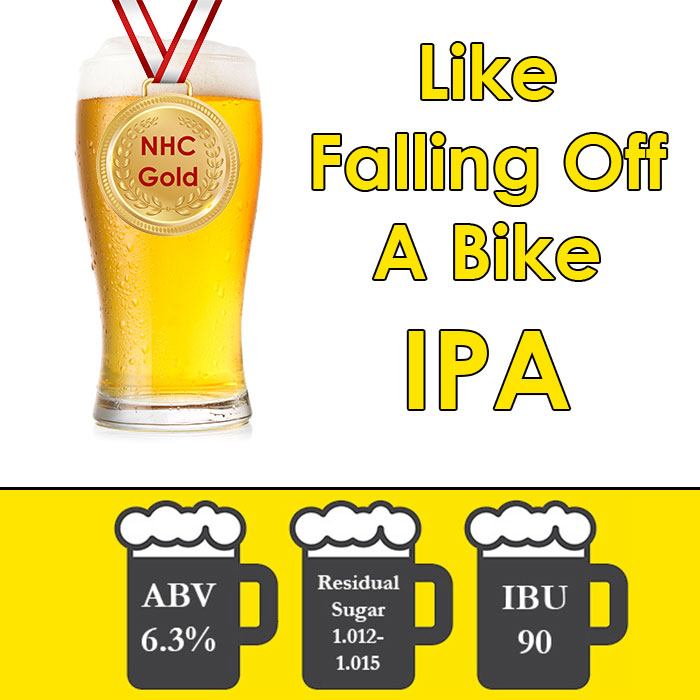
This recipe made the Gold Medal winning beer in the American IPA style at the 2023 National Homebrew Competition, taking the top award out of 153 entries in the category. It was brewed by Christopher Burgess of Castle Rock, CO. At The Beverage People, we have adapted his recipe into an all-grain beer kit, and this discussion is intended to prepare you for brewing this recipe yourself. I brewed this beer myself in May 2026 as a part of our launching of the recipe kit, and I hope these notes about the ingredients, processes, and my own experience with the beer will help you. With thanks to the recipe founder Christopher Burgess, and the AHA, let’s get into the details! Overview of the StyleIPA has evolved well beyond a its origins, and also beyond any single style category. While it began as a British style of beer made strong and bitter to survive the shipping route from England to India, hence the name India Pale Ale (IPA), today it is a whole different creature. The current trend, especially for the American IPA version, is to brew the beer with a primary focus on aroma hops rather than bittering hops. Note that such aromatics could never survive the long, hot journey around the world on a ship without refrigeration. Along with the shift from bitterness to aroma, other aspects of the style have evolved as well. The caramel malt traditionally used in orange colored IPA has largely been replaced with purely low color malts. The use of very low color caramel malt (or none at all), along with acidulated malt and corn sugar, have allowed the base beer to become even more pale and the hops to become an even greater focus. And our beloved hops truly shine in such a base beer---much as European hops have long stood out in Czech and German Pilsener beers. Indeed, the IPA style has moved closer to the Pilsener style, with the exception of the hop aroma profile. IPA as a style has been the primary beneficiary of the amazing hop breeding programs of the USA, along with those of Australia and New Zealand. While American hops were once defined by a citrus aroma profile, the spectrum of aromas now available from hops has grown beyond most brewers ability to experiment with them all. Tropical aromas, stone fruit, pine, and citrus all make their appearance in various new varieties, along with descriptors like dank, blueberry, strawberry, coconut, lychee and on and on. Thanks to this proliferation of new hops, the IPA style continues to excite and please the masses. Key Ingredients to Be DiscussedAbout Mosaic Hops: This beer recipe is designed to immerse the drinker in the pure enjoyment of the Mosaic hop. Mosaic is one of the best selling and most beloved of all hops. At our shop, it was the 3rd most sold hop by volume during the prior twelve months before this writing, only topped in sales by Cascade and Citra, with Simcoe as a close competitor. It is well known for its very refreshing and approachable aromatic mix of tropical fruit, stone fruit, blueberries along with a little pine and citrus. Somehow it seems one never tires of this intoxicating and satisfying mix. Thanks to its relatively low cohumulone content it can be used as a bittering hop as well without imparting much too much astringency, even though the alpha acid content is on the high side. Note that this recipe kit comes with 2 oz more hops than the recipe calls for. This is because the most economical way to accommodate the huge hops bill of this recipe is to use rather large 4 oz hop package sizes in the kit, resulting in some bonus hops. I don't recommend using the excess hops in this recipe as it will likely result in an unbalanced beer with too much bitterness and astringency. Even a massively hopped beer like this one has a certain balance that should be respected.
CONTINUED READING.... |