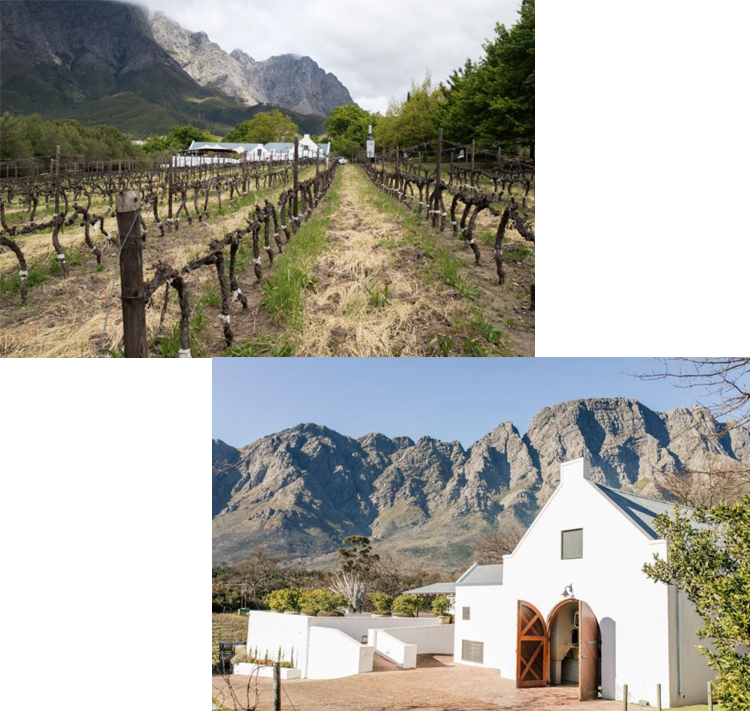
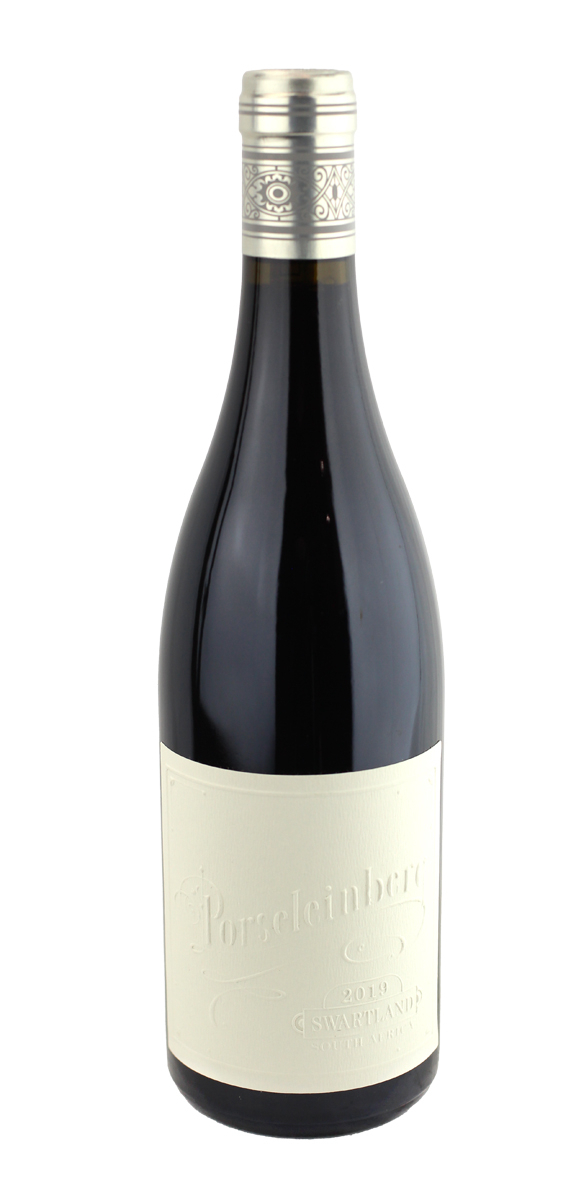
The revolutionary Porseleinberg project is the result of South African icon Marc Kent's search for premium Rhône grapes for his Boekenhoutskloof label. The journey naturally took him to the Swartland, which at the time was emerging as a premium South African wine region. Kent found a remote, rugged, and windswept 173-acre wine farm atop the Porseleinberg mountain and purchased the property in 2009. Recognizing the enormous potential of the area, and after replanting the vineyards, he decided to create a premium Swartland Syrah from the choice fruit.
Winemaker and grape grower Callie Louw headed this start-up project from the very beginning, shepherding this unique wine into bottle since the inaugural 2010 vintage. Callie lived on the property and literally lived the wine as well, vineyard work, putting the labels on, you name it!
Why this spot? A windswept hill, composed of mostly blue slate soils with barely a foot of topsoil on top. Marc and Callie knew the area had the potential to produce world-class Syrah; it was simply up to them to make it happen. The hill already had a reputation with other up-and-coming winemakers (at the time) like Eben Sadie, Adi Badenhorst and Callie himself having worked with the fruit prior to Mark’s purchase of the property. | | | | Harvest for the Porseleinberg Syrah 2021 started during the first week of February. The farm enjoyed a cold, wet winter with 390.5mm of rain for the year. Budbreak was approximately 2 weeks later, starting during the first week of October. Cool, dry growing conditions kept disease pressure at bay, also resulting in a smaller berry-set, with smaller bunches. Some 34mm of rain during early November was the mere difference between a difficult and a great vintage as from there on, we they only received 14mm between mid-November and the end of harvest, in March.
A cool summer with minimal heat waves resulted in a long, drawn-out vintage, allowing them to pick when grapes were at optimal ripeness. The harvest started on February 5th and finished on March 3rd.
Grapes were hand-picked and crushed as whole-bunches into concrete fermentation tanks. Minimal pump-overs were performed with the cap submerged; the ferments ran cool and dry within ten days. Maturation took place over 12 months in 95% foudre & 5% concrete egg.
One of the greatest Syrah wines produced on the planet, the wine has a restrained opulence, red fruited with quite a bit of pepper for the first time. The tannins are crunchy with grip and carry the fruit well. It’s savory, yet deeply fruited, with a spicy finish and some salty minerality. It’s like a combination of a great Cote-Rotie from Jamet and a top vintage of Clarendon Hills fabled Astralis Shiraz. Crazy stuff! You’ve tasted nothing like it.
Scores? How does 99 points grab you?
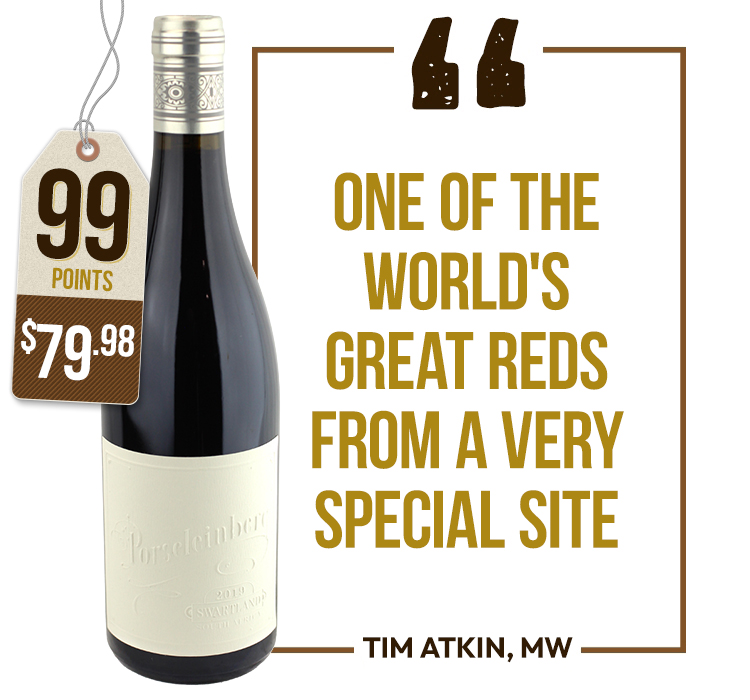
99 Points! Given its consistently outstanding quality, it’s easy to forget that the average age of Porseleinberg's 14 hectares of vineyards is only seven years' old. Showing what Callie Louw calls a "little more crunch" in 2021, this is a Syrah with time on its side. Wild herb aromas of sage, oregano and rosemary introduce you to a palate that's dense yet refined, with lots of whole bunch spice and structure, negligible oak influence, detailed, layered tannins, some underlying grip and layers of dark berry fruit. One of the world's great reds from a very special site. - Tim Atkin, MW
And for good measure, a HUGE 97-point score from the stingy Neal Martin at Vinous…
97 Points! The 2021 Porseleinberg is whole bunch fermented and aged for 12 months in foudres. I gave my glass plenty of aeration. Chatting with winemaker Callie Louw, this wine can be closed, this being the first time I had tasted it at the remote Swartland estate. It has a compelling bouquet with fabulous delineation, a mélange of, say, one-third red and two-thirds black fruit, hints of iron filings and reflecting its soils, slate-like scents. Obstinately backward, after 10 minutes, it positively blossoms in the glass. The palate is medium-bodied, with filigree tannins framing the mineral-rich black fruit. Plenty of extract is interwoven, but perhaps unlike the vintages of old, Louw's winemaking sense means that it's not immediately tangible. A discrete build in the mouth reveals hidden layers as it sashays towards its crunchy finish and then delivers a dash of cracked black pepper on the aftertaste. Outstanding…but what else do we expect? - Neal Martin, Vinous
We bought all their remaining stocks, exactly 82 bottles available for all of you…it won’t be enough…
|
|
|