Supplemental Info:
SITREP: Middle East / Persian Gulf Region
November 24, 2026
U.S. missions across the Middle East issued coordinated security alerts November 24-25, 2026. The messages urge heightened vigilance for Americans in the region.
Focus: Iran–US blockade dynamics, Strait of Hormuz, Houthi activity
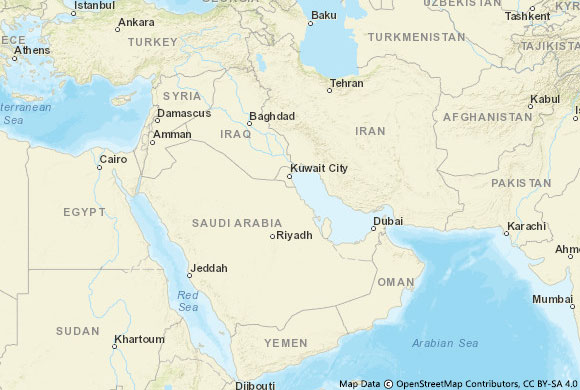
The Persian Gulf and adjacent theaters remain in a state of active, multi-vector confrontation. The core risk is concentrated on the US naval blockade of Iranian ports and reciprocal Iranian efforts to restrict or attack shipping in the Strait of Hormuz. Secondary flashpoints are Houthi attacks on Saudi targets and continued Israeli strikes in Gaza. No near-term de-escalation is evident.
Strait of Hormuz & US–Iran Blockade (Primary Theater)
The United States continues to enforce a naval blockade of Iranian Persian Gulf and Gulf of Oman ports (initially imposed April 2026, briefly eased, reinstated July 2026). Iranian seaborne crude exports have been driven near zero. President Trump has publicly stated that Iranian vessels attempting to break the blockade “will go to the bottom of the sea.” A third US carrier (USS Theodore Roosevelt) has been added to regional forces in recent days
Iran maintains that it controls passage through the strait and will only restore normal navigation if the US meets its conditions (including lifting the blockade and sanctions). Foreign Ministry spokesman Esmaeil Baghaei has repeatedly stated Iran will use “all available tools” to confront the blockade, which Tehran calls military aggression. Army Chief Hatami has ordered the strait to be made “more restricted day by day.”
Shipping attacks: Attacks on commercial vessels are at the highest levels since the conflict began in late February 2026. In the past week, multiple tankers have been struck by unidentified projectiles (UKMTO-confirmed incidents, including three vessels on November 22–23).
Houthi–Saudi / Yemen Dimension
Houthi forces continue kinetic activity against Saudi Arabia. A second strike in under a week hit a Riyadh tower (Public Investment Fund headquarters area), injuring people. Houthi spokesmen have claimed the downing of a Saudi armed reconnaissance aircraft. Fighting continues inside Yemen, with Saudi-backed forces and Houthi elements exchanging strikes (including reports of casualties from attacks on buses/trucks and facilities). This remains a secondary but persistent risk to Red Sea/Bab el-Mandeb shipping and Saudi energy infrastructure.
The security alert below comes from the US Embassy in Jerusalem. Others include:
- - -
Security Alert
US Embassy Jerusalem
November 24, 2026
Event: Americans in the Middle East should exercise heightened vigilance due to the increased threat of armed attacks by Iranian-supported Houthis and Iranian efforts to target U.S. government officials and facilities in the region. Be aware of potential alerts, flight cancellations, airspace closures, and travel disruptions.
Check your flight’s departure status with the airline directly or through:
Iran has launched attacks targeting U.S. assets in both Bahrain and Kuwait, and Iranian-supported Houthis have engaged in hostilities against Saudi Arabia, including attacks on civilian airports and other critical infrastructure resulting in civilian casualties and severe travel disruptions. The hostilities have the potential to escalate rapidly.
Americans traveling to or from the Middle East should monitor information about airport and airline operations and develop contingency plans in advance.
Iran, the Houthis and other groups supportive of Iran may target U.S. interests overseas or at locations associated with the United States and Americans throughout the world, including U.S. businesses and other institutions.
Operating Status
The U.S. Embassy Jerusalem and Embassy Branch Office Tel Aviv consular sections are open for routine and emergency consular services.
The U.S. embassy will be closed November 26-29 for the Thanksgiving holiday. Routine American Citizens Services will resume on November 30.
Actions to Take:
Enroll in the Department of State’s Smart Traveler Enrollment Program (STEP) . STEP enrollment gives you the latest security updates and makes it easier for the U.S. embassy to contact you in an emergency.
Know the location of your closest shelter or protected space .
Download the free Israel Defense Forces Home Front Command application on Android or Apple devices to receive real-time alerts for rockets, missile attacks, and armed UAV intrusions. Free commercial applications, such as “Red Alert: Israel,” are also available.
Find a secure location within your residence or another safe building. Have a supply of food, water, medications, and other essential items.
If an aerial attack occurs, stay away from glass doors, windows, and any fallen debris, and monitor your phone and news outlets for official guidance.
Refer to the Embassy website for the latest Security Alerts: https://il.usembassy.gov/category/alert/
Keep your cell phone charged and pre-programmed with the emergency numbers listed below.
Be aware of your surroundings.
Avoid all demonstrations and large gatherings.
Avoid all areas where there is a heavy police presence.
Monitor local media.
Follow the instructions of local authorities.
Contact your airline directly for flight change details if your flight is affected.
Exercise caution and stay alert at locations publicly associated with the United States.
Keep a low profile.
Assistance:
Israel Police: call 100
Israel Ambulance: call 101
U.S. Embassy Jerusalem: JerusalemACS@state.gov
U.S. Embassy Branch Office Tel Aviv: TelAvivACS@state.gov
U.S. Department of State Consular Affairs Call Center: +1-202-501-4444 (from abroad) or 1-888-407-4747 (from U.S./Canada).
View the Original:
https://il.usembassy.gov/security-alert-u-s-embassy-jerusalem-november-24-2026/