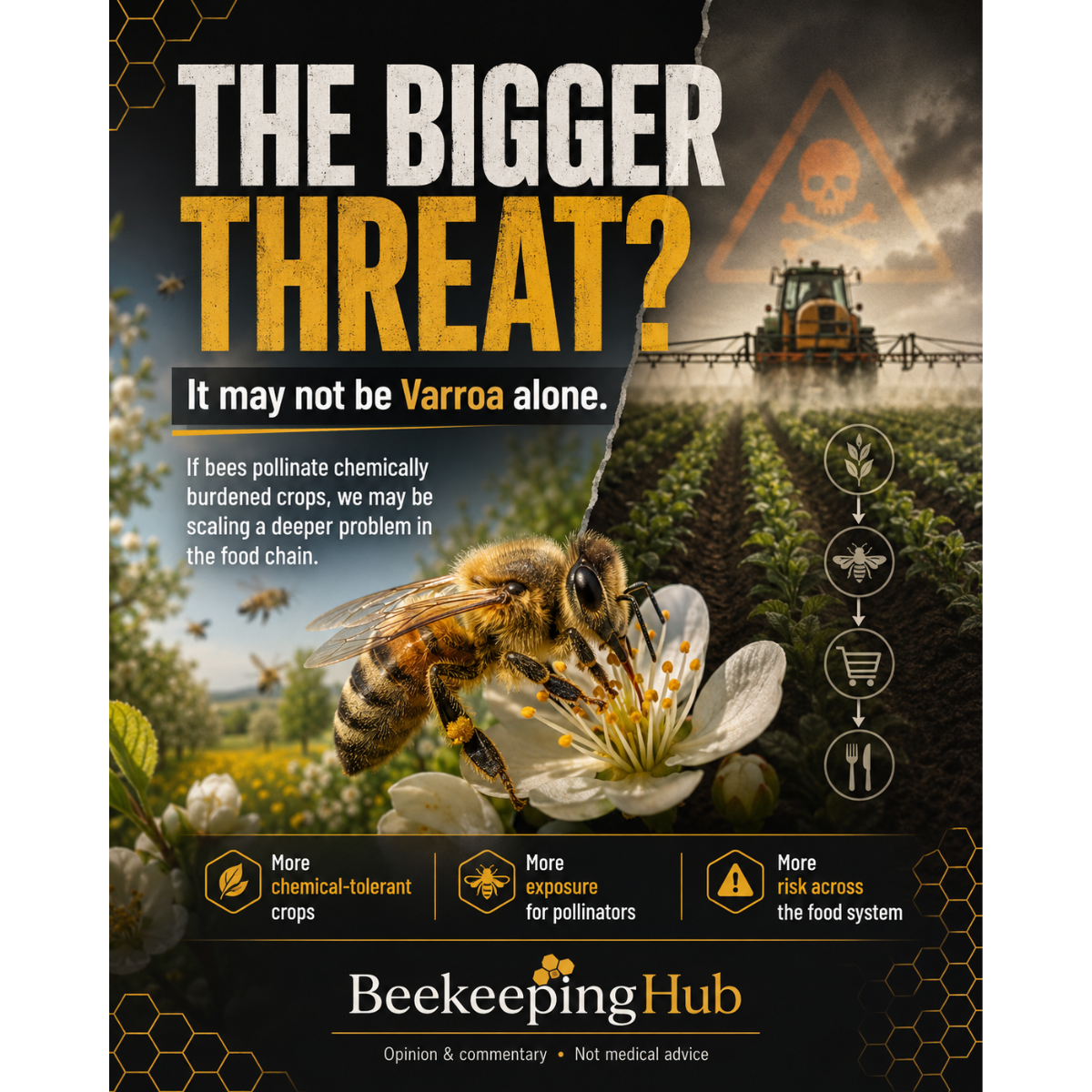
A Pesticide Does Not Have to Kill a Bee to Cause Harm
When we think about pesticide poisoning, we usually picture dead bees outside the hive.
But what happens when the bees survive—and the damage appears somewhere less visible?
New research has found that chronic, low-dose exposure to the insecticide sulfoxaflor altered gene activity and reproductive function in bumblebees.
The greatest changes appeared in ovarian tissue.
This matters in South Africa because sulfoxaflor is also registered locally for use on crops including grapes, citrus, nuts, pome fruit, stone fruit, potatoes and tomatoes.
However, we must report this responsibly.
The study examined a North American bumblebee species.
>>> It did not test Cape honey bees or African honey bees, and it does not prove that every legal application damages a colony.
What it does show is that pesticide risk cannot always be measured only by counting dead adult bees.
The Hidden Effects We Should Be Investigating
Pollinator protection should also examine:
• Reproduction
• Brood development
• Queen health
• Drone fertility
• Worker behaviour
• Navigation
• Immunity
• Repeated low-dose exposure
• Long exposure residue in the beeswax
• Combined exposure to several agricultural chemicals
A colony can appear alive while becoming less capable of maintaining its population.
Farmers and beekeepers need each other
Farmers need to control crop pests.
Beekeepers need safe forage and responsible chemical use.
The solution is not another argument between the two sectors. It is better communication before spraying begins.
Beekeepers providing pollination should ask:
• Which products will be used?
• Will the crop or surrounding weeds be flowering?
• When will spraying take place?
• How will nearby beekeepers be notified?
• Where will bees obtain clean water?
• What records will be available if a suspected incident occurs?
We also need South African research using our own honey-bee subspecies and realistic agricultural exposure.
Winter veldfire warning
The dry season presents another immediate danger.
Good summer vegetation can become heavy winter fuel, particularly when strong winds move ahead of a cold front.
Beekeepers should check access routes, reduce dangerous dry material immediately around hive sites, join local fire-warning groups and use smokers with extreme care.
Do not wait until smoke is visible from the apiary.
Always ensure you put your smoker out responsibly before packing up.
Western Cape pollination planning
Fruit growers in parts of the Western Cape continue repairing flood damage to orchards, vineyards, irrigation and farm infrastructure.
Pollination providers should contact growers early. Last season’s route, colony allocation or access point may no longer be practical.
Bee Ware's verdict
A pile of dead bees is easy to recognise.
Sublethal damage is harder to see, harder to prove and potentially easier to ignore.
We need evidence— research by universities, SABIO and ARC should be conducted on behalf of our Beekeeping industry regarding the top crop pesticides.
We also need pesticide systems capable of looking beyond immediate death and asking what happens to the future health of the colony.
Bee informed. Bee prepared.
The Bee Ware Team