Subject: LRI Ink: NLRB Election Rule Challenged + Practical Takeaways


October 29, 2026

To visit the blog post, click on the link below the article.


A 90-Year-Old Union Election Rule Is Facing A Post-Loper Bright Challenge

by Kimberly Ricci

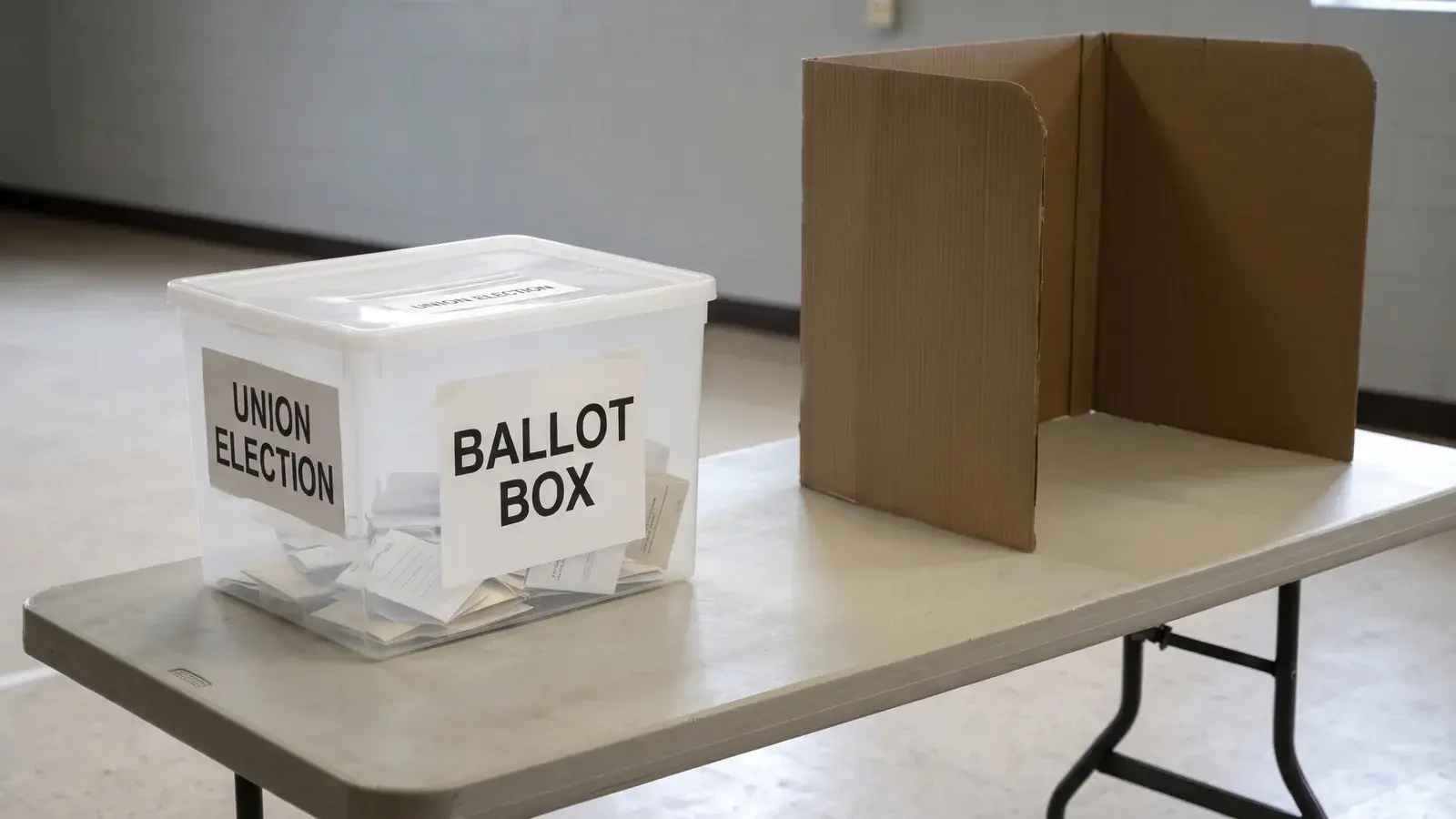
Unions win or lose elections according to a majority of valid ballots cast. That’s been NLRB practice since the 1930s, but arguably, this is not the approach that makes the most sense. Why do card checks require majority support from a whole bargaining unit, but representation elections only require a majority of votes that are cast? Employers have pushed back on the “votes-cast rule” over the decades, as we’ll discuss below, but Constellation Energy Generation is now asking the Board to outright overturn the doctrine.


Currently, Constellation has a matter pending in front of the Board. This involves an International Brotherhood of Electrical Workers (IBEW) election that took place in July. IBEW Local 15 won, 87 to 73, with one challenged ballot, but if the union had been required to win a true majority from the 181-worker bargaining unit itself, it would have needed 91 votes, as Constellation argued in a brief.

Where did the votes-cast rule come from?

This rule emerged from the Board’s 1936 R.C.A. Manufacturing decision, which revolved around a union vote where a rival union boycotted the election, and only around a third of the eligible bargaining unit cast votes. The Board then certified the winning union while reasoning that a turnout requirement would allow either a minority union or an employer to manipulate election results by keeping voters away through intimidation.


The current issue is whether a case that revolves around such extreme facts should have governed nearly a century of union elections. Most elections look nothing like what took place in 1936 Camden, NJ, where a rival union organized a boycott and where ballots did not include a "no union" option. In Constellation's case, around 89 percent of the bargaining unit voted, and such a high turnout makes a boycott unlikely.

A majority… of whom?

To consider that question, we need to look at the text of the NLRA. Under Section 9(a), bargaining representatives must be "designated or selected for the purposes of collective bargaining by the majority of the employees in a unit appropriate for such purposes." In its brief, Constellation argues that "the majority of the employees" should be interpreted to include all members of the bargaining unit, not simply those who showed up to vote. 


To support this argument, Constellation points out that Congress specified the words "valid votes cast" in Section 9(c)(3) as applied to runoff elections and "a majority of the employees eligible to vote" in Section 8(a)(3) concerning deauthorizations. This language, as Constellation argues, shows that when Congress wants to specifically define the measure of voters in a union election, it's explicitly done so through statutory text.


To stress that point more, Constellation is looking for consistency in how the NLRA is interpreted regarding the definition of “the majority of the employees” when it comes to fairness in union elections. The company wants the same standard applied to elections as for card check. For the latter, the Board requires a majority of the whole unit to support unionization. It’s only fair to have consistency in standards.

Why now?

This isn’t the first or even the second time that employers have made an argument similar to what Constellation is offering now. In 1940 and 1944, respectively, employers in NLRB v. Whittier Mills Co. and NLRB v. Central Dispensary & Emergency Hospital argued that Section 9(a) requires a majority of the entire unit, rather than simply a majority of votes cast. In both cases, the courts rejected that interpretation. 


Fast forward to 2026, and Constellation is arguing that “it is high time for the Board to revisit R.C.A.” because of the Supreme Court’s 2024 ruling in Loper Bright. That case ended Chevron deference, so courts no longer generally defer to agencies (and no longer accept what the Board decides is reasonable labor policy). Accordingly, Constellation’s brief argues that the Board must stop supplying its own meaning to the NLRA and instead follow the statute’s plain text.


R.C.A., the company argues, was a policy judgment made regarding an extreme situation, and after Loper Bright, agencies must follow a statute’s “single, best meaning” regardless of policy preferences.


Constellation also cites Hospital Menonita de Guayama, Inc. v. NLRB, the July 2026 D.C. Circuit decision that applied Loper Bright while striking down the successor bar. In doing so, the D.C. Circuit pointed out that Section 9 requires majority support for a bargaining representative, which is in line with the argument that Constellation is making. Hospital Menonita is one of the first appellate court decisions that have struck down an NLRB doctrine in a post-Loper Bright world. Also, if Constellation refuses to bargain with IBEW, and the NLRB orders it to do so, the company can take its case to the D.C. Circuit.

What’s next? 

For the moment, employers have a wait on their hands. The NLRB could decide Constellation’s election challenge solely on a separate issue regarding whether certain positions held by voting workers should be classified as supervisors, which would take them outside the NLRA. If the Board does this, it could choose to entirely bypass the company’s Section 9 arguments. However, if the Board does reconsider the Section 9 issue, there’s a question of how far back in time any change could go. Would any relief simply apply to election challenges currently in process or in the future, rather than taking a retroactive view? 


That’s a can of worms that the NLRB would probably be hesitant to open, considering the 90-year run for the R.C.A. presumption. The Board isn’t likely to offer retroactive relief from the votes-cast rule, but it’s not a stretch to imagine how challenges to pending elections would pile up pretty darn fast. Before any of that would happen, the Board must decide whether it wants to touch the Section 9 argument at all.


Fall 2026 CUE Conference: Practical Takeaways for Labor Relations Leaders

by Michael VanDervort

Several members of the LRI Consulting Services team attended the Fall 2026 CUE Conference in San Antonio, October 18–20. Discussions covered employee engagement, organizing campaigns, AI, labor law, and the challenges frontline supervisors face. Here are some of the things that we thought stood out at the conference.

Engagement Starts With What Managers Actually Do

One memorable moment came when a speaker described a conversation with a location manager about improving employee engagement.


“What are you going to do differently this year?” the speaker asked.

“We're going to work on engagement.”

“Okay, but what are you actually going to do?”

“We're going to focus on engagement.”


The conversation later turned to the speaker's son's football team, which he coaches. The team wasn't doing well, and the speaker said they needed to work on a few things at practice.


“What are you going to work on?” the manager asked.

“We're going to practice football.”

“But what are you actually going to do?”

“We're going to practice football.”


Eventually, the speaker explained they would work on blocking and tackling, improve their passing game, and make defensive adjustments.


Then he turned back to the manager. “Now, let's talk about what you're actually going to do to improve engagement.”


It's a familiar problem. Employers can set goals for engagement, communication, and employee trust without identifying what managers need to do differently to achieve them.


That theme surfaced throughout the conference.  Here are some of the other areas where useful information was shared.

Evaluating AI in Labor Relations

One session offered a five-part framework for evaluating AI tools: business value, accuracy, legal and labor relations risk, required human judgment, and whether results can be explained and defended. Each category receives a green, yellow, or red rating. A strong productivity score doesn't offset unacceptable legal or accuracy risks.


Contract interpretation, discipline, credibility assessments, bargaining strategy, and arbitration positions still require human judgment. AI can help process information, but people remain responsible for the decisions.

New Supervisors Earn Trust in the First Two Weeks

New supervisors inherit authority, but they still must earn credibility, particularly when they're promoted from within and suddenly find themselves managing former coworkers.


One session led by our own Phil Wilson recommended meeting individually with every employee during the first two weeks, sharing some personal background, and resolving at least one manageable concern early. Just as important, tell employees what was done. Early follow-through gives people a reason to trust their new supervisor.

Inclusion Requires Communication

Inclusion programs are more likely to gain traction when operational leaders explain their purpose and how they connect to employees' work. That includes business resource groups (BRGs), benefit changes, and employee referral programs.


Employers should also examine whether referral programs are repeatedly drawing from the same networks. Some worthwhile ideas, including peer mentoring and employee-hosted cultural lunches, originate with employees rather than corporate headquarters.

Digital Organizing Reaches Employees Before You Do

Union organizers are using short-form video, encrypted messaging, chatbots, mobile apps, geo-targeted advertising, and online review campaigns to reach employees. Workplace network mapping and sentiment analysis are additional developments worth watching.

Communication Channels and Follow-Through

Employers need communication channels that reach their own employees. Text messages and short videos may be more effective than email for some workforces, but the channel matters less if management doesn’t respond to concerns. Credible supervisors and consistent follow-through remain essential.

Safety Programs and ER Heat Maps: Measure What Happens After the Report

Employees judge safety programs by what happens after they report a problem. Slow responses and unresolved hazards can undermine confidence in management, regardless of how good the company's safety materials look.

Useful measures include:

  • Hazards and near misses reported

  • Time to acknowledgment

  • Percentage resolved, including feedback to the reporting employee

  • Employee-initiated improvements

  • Recurrence of previously identified hazards

ER heat maps combine data such as complaints, turnover, absenteeism, and other workplace indicators to identify locations or work groups needing attention.

The session recommended starting with 10 to 15 weighted measures, maintaining consistent definitions in a data dictionary, and updating results monthly or quarterly.


A heat map can show where problems may be developing. Managers still need to determine what's causing them.

Employee Engagement Beyond Perks

Another session examined why familiar engagement efforts, including recognition events, giveaways, pizza lunches, and employee appreciation activities, often have limited lasting impact.


One model described engagement as developing from more basic employee needs, beginning with health and stability and progressing through trust in management.


Effective strategies also depend on the workforce, leadership capabilities, operating conditions, and the location's history. Employee surveys provide useful information but shouldn't be the only source.


And that brings us back to the football story. Improving engagement requires more than naming it as a priority. Managers need to know what they'll work on, how they'll measure progress, and what they'll do when something isn't working.



Friday Five: A Stuck Starbucks Decertification And A Pair Of Supreme Court Snubs

by Kimberly Ricci

A Starbucks worker is fed up after waiting three years for a decertification election:

At least 47 decertification petitions (RDs) have been filed by petitioners seeking to boot Starbucks Workers United (SWU). To date, none of them have gone to election for various reasons, including NLRB regional directors dismissing some and holding others in abeyance after SWU filed unfair labor practice charges (ULPs) while asking regions to block the vote. At a Nichols Hills, OK location, one worker turned to the National Right to Work (NRTW) Legal Defense Foundation for legal representation to get the ball rolling toward an election.


Three years after Amy Smith’s 2023 petition involving the Nichols Hills location (an initial petition was filed in 2022 by another worker), Smith is pushing for her petition to be reinstated. Her main argument is that the NLRB’s multi-year delay in resolving these ULPs, which blocked an election from happening in this case, amounts to the type of “unusual and special situation” that should require the NLRB to put forth a vote.


As of now, no movement is happening on this petition. The long procedural timeline includes Region 14 deeming the matter closed, and in April 2026, Smith appealed to the full Board, which denied her request for review. This is happening despite Smith’s petition carrying enough worker signatures to trigger a decertification election, but the NLRB’s denial was based on the 2022 Rieth-Riley decision, which gives regional directors broad discretion to dismiss RDs subject to reinstatement. With the support of the NRTW Foundation, Smith is appealing again, and we’ll see if the results are different now that a third GOP member, James Macy, sits on the Board.

The hard-to-crack architecture sector’s new organizing campaign:

The architecture world doesn’t see union campaigns every day, so this isn't a trend like the art world’s flood of petitions and authorized strikes, but it’s still worth noticing.


In New York City, a unit of 100+ workers at Dattner Architects is asking for voluntary recognition of Architecture Workers United (AWU) as affiliated with the International Association of Machinists (IAM). The unit includes architects, designers, and support staff, and if the campaign becomes a union “win,” then Dattner would find itself in the unenviable position of being the largest unionized architecture firm in the U.S.


As we mentioned earlier this year, a much smaller unit at Sage & Coombe ratified a contract, and in 2022, around 22 Bernheimer Architecture workers were the first to organize in this sector. Both of those are AWU units.

The long, winding Cemex saga got denied by the Supreme Court:

This week, the Supreme Court’s order list revealed that the justices won’t be reviewing Cemex Construction Materials Pacific LLC v. NLRB, the company's challenge to a Board order requiring it to bargain with the Teamsters. The 2023 Abruzzo Board decision behind the order created the aggressive Cemex standard, which departed from the Supreme Court’s 1969 Gissel ruling and put businesses at risk of a bargaining order over a single alleged ULP.


Recently, the Supreme Court declined to halt a bargaining order against the company, and the denial of review now leaves in place a ruling from the Ninth Circuit Court of Appeals, which punted on the Cemex doctrine and affirmed the Board’s bargaining order under Gissel. Yet although the courts are closed for the employer (Cemex) in that case, a different employer respondent is challenging the Cemex standard at the NLRB, and there’s a distinct possibility that it will be overturned.


This doctrine sits on General Counsel Crystal Carey’s wish list for overturnings, and let’s just say that the amicus briefs are flying. So it may only be a matter of time before the Board restores the previously long-standing Gissel standard for issuing remedial bargaining orders. If that happens, the NLRB would need to prove that ULPs are so severe and pervasive that they would render a fair repeat election impossible in order to issue a Gissel order.


So stay tuned for more from the NLRB on the Cemex standard itself, but for now, it’s not terribly shocking that the Supreme Court decided not to review Cemex v. NLRB, since Justice Kagan recently denied the company’s bid to halt the bargaining order while awaiting review.

Former NLRB member Gwynne Wilcox’s legal limbo is over:

The above-mentioned Supreme Court order list did close the door on ex-NLRB member Gwynne Wilcox’s bid to reverse her firing by President Trump. That denial is consistent with the court’s recent Trump v. Slaughter ruling, which overturned Humphrey’s Executor by dismantling statutory for-cause removal protections for members of many federal agencies.


This isn’t an unexpected development. Although Trump v. Slaughter didn’t directly address Wilcox’s dismissal, she now has an answer in her case.

A related update: On the same day that the Supreme Court unveiled Trump v. Slaughter, it carved a narrow exception in Trump v. Cook, which preserved for-cause removal protections for Federal Reserve members (in this case, Fed Governor Lisa Cook). Since then, President Trump has directed Attorney General Todd Blanche to launch an investigation into whether cause does exist to fire Cook based on allegations she has denied.

A carpenters’ union is free from federal supervision, for now:

Many contrasts exist between Teamsters President Sean O’Brien and United Auto Workers President Shawn Fain. One of those differences is that the former’s organization recently shook off federal oversight after a 37-year monitorship, while the latter is personally the subject of a grand jury subpoena for UAW federal monitor Neil Barofsky’s reports.


For a minute there, it also seemed like every union but the Teamsters was the subject of new cookie-jar accusations, but there’s another exception to that rule. For the time being, the New York City District Council of Carpenters has been granted the right to self-govern for the first time since a 1994 consent decree went into effect following allegations that the leadership was deeply entrenched with an organized crime family, and the mob was hand-picking contractors for lucrative projects.


According to the order, there will still be a five-year period during which the  union must show “no systemic corruption or organized crime influence in the District Council.” So we’ll see how this goes, and whether union officials can’t resist the urge, as many cannot, to open that cookie jar.


About Labor Relations INK

Labor Relations INK is published weekly and is edited by LRI Consulting Services, Inc. Feel free to pass this newsletter on to anyone you think might enjoy it. New subscribers can sign up by visiting here.


If you use content from this newsletter, please attribute it to LRI Consulting Services, Inc. and include our website: http://www.LRIonline.com 


Contributing editors for this issue: Greg Kittinger, Michael VanDervort, and Kimberly Ricci.


You are receiving this email because you subscribed to receive our labor relations newsletters and updates. You can manage your email preferences by clicking the link at the bottom of any of our email communications.


About LRI Consulting Services, Inc.

LRI Consulting Services, Inc. exists to help our clients thrive and become extraordinary workplaces. We improve the lives of working people by strengthening relationships with their leaders and each other. For over 40 years, LRI Consulting Services, Inc. has led the labor and employee relations industry, driven by our core values and our proven process, the LRI Way.


Share