Subject: LRI Ink: NLRB Constitutionality + Teamster Biker Trouble


October 1, 2026

To visit the blog post, click on the link below the article.


Headlines:

  • Senate confirms Keith Sonderling as labor secretary. Link

  • Encore Boston Harbor strike enters its fourth week with no deal. Link

  • Boeing–SPEEA ratification vote closes today at noon, with results due this afternoon; contracts expire Oct. 6. Link


Challenging the NLRB's Constitutionality? Red Rock Shows Why Venue Still Matters

by Kimberly Ricci

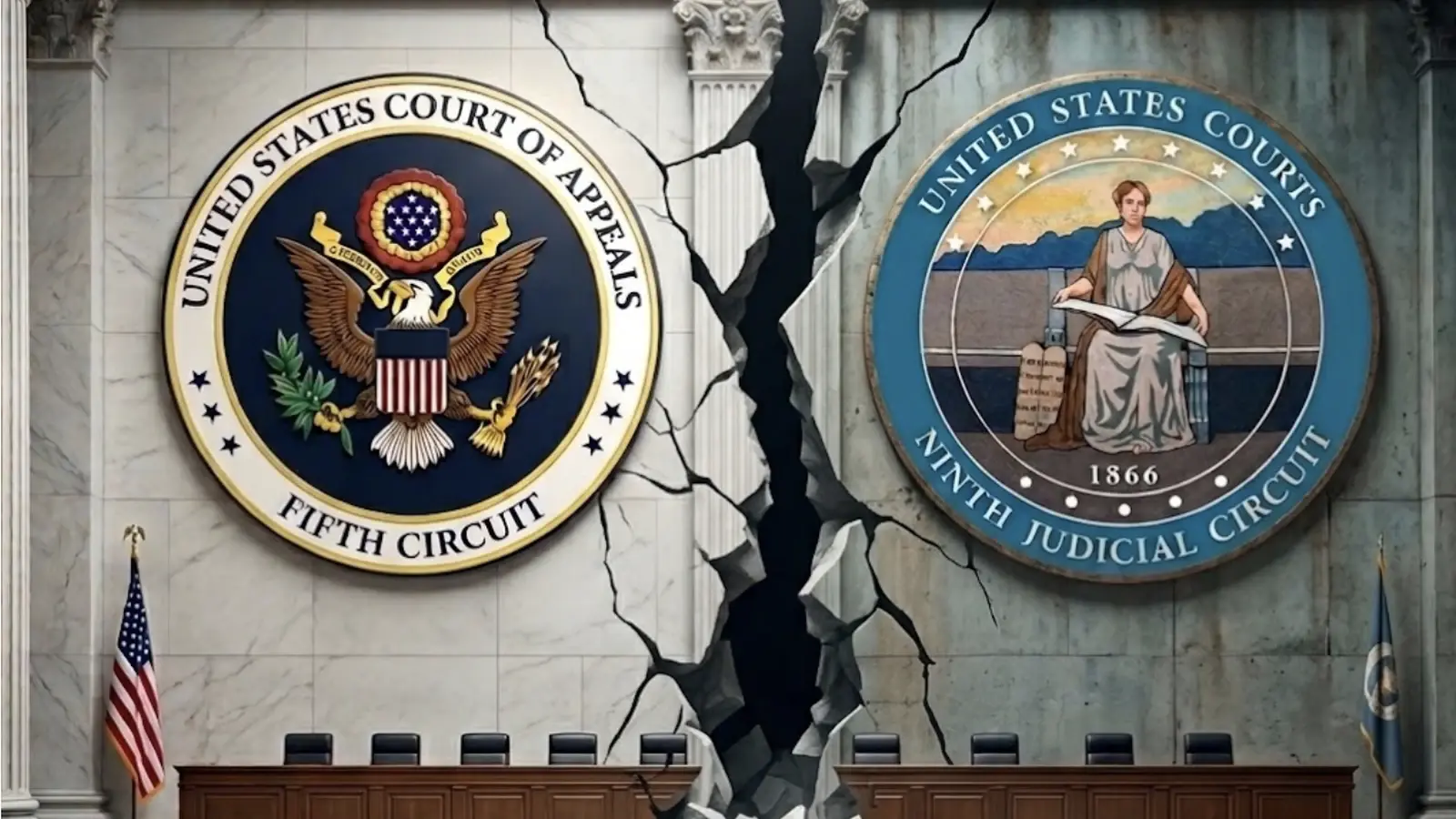
It hasn’t been a great month for one Las Vegas employer. First, Supreme Court Chief Justice John Roberts declined Red Rock Casino Resort and Spa’s request to pause a Gissel bargaining order upheld by the D.C. Circuit, so Red Rock must negotiate with the Culinary Union while awaiting further review of that case. Then a federal district judge in Nevada tossed out a Red Rock lawsuit challenging the constitutionality of the NLRB’s removal protections. That court sits in the Ninth Circuit, and the result is far different from what employers have experienced in the Fifth Circuit.

What Sank Red Rock’s Challenge

Biden-appointed Judge Anne Traum dismissed Red Rock’s suit challenging removal protections of Board members and administrative law judges.

In doing so, Traum relied upon Collins v. Yellen, in which the Supreme Court ruled that the Federal Housing Finance Agency’s removal protections were unconstitutional while remanding on the remedies issue. Under the Ninth Circuit’s reading of Collins, it’s not enough for a challenger to show that removal protections exist and are unconstitutional. The employer must prove real harm, meaning that the removal protections prevented a termination by the president. As Traum pointed out, President Trump was not prevented from firing NLRB member Gwynne Wilcox.


Additionally, Traum cited the Ninth Circuit’s ruling in a different case, NLRB v. North Mountain Foothills Apartments LLC, to dismiss Red Rock’s claim that the NLRB’s authority to exercise executive, judicial, and legislative power violated the separation-of-powers doctrine.

A Look At Where Circuit Courts Stand

The Ninth Circuit has plenty of company–the Second, Third, Sixth, and Tenth Circuits–in its reading of Collins’ causal harm requirement for removal protections. The Fifth Circuit’s outlier perspective landed in a 2025 case that halted NLRB proceedings while employer challenges against the Board’s constitutionality proceeded.


A wrinkle: In some circuits–the Third and Ninth–another hurdle must be overcome by employers before the issue of harm can even be considered. That would be the Norris-LaGuardia Act, which prevents courts from granting injunctions, including orders halting unfair labor practice (ULP) proceedings, when cases grow out of or involve a “labor dispute.”

The Fifth Circuit’s Loner Status

This might sound like an obvious statement, but plaintiffs who don’t bring lawsuits can’t win lawsuits, and Fifth Circuit legal proceedings show why employers continue to bring challenges.


The Fifth Circuit upheld orders that paused ULP proceedings against three employers, including Aunt Bertha and SpaceX, while their constitutional challenges against the NLRB continued. The court found that the Norris-LaGuardia Act doesn’t apply in cases brought against the NLRB. The majority also rebuffed the Board’s reliance on Collins while holding that employers suffer “irreparable harm” simply by being subjected to agency proceedings that are unconstitutional. And since “the harm is immediate,” then the “remedy,” i.e. an injunction, “must be, too.”


The Fifth Circuit’s ruling in this case was not unanimous. In a partial dissent, Judge Jacques Wiener argued that employers who seek remedies should still show causal harm related to Board member removal protections. Wiener walked through the relevant rulings from the Supreme Court and the Second, Sixth, and Tenth Circuits, illustrating the outlier status of the Fifth Circuit’s view. Still, in Texas, Louisiana, and Mississippi, employers receive friendly treatment from courts that halt ULP proceedings as their constitutional challenges make their way through litigation.

Meanwhile, At The Current NLRB

James Macy’s recent confirmation gave the GOP the 3-1 majority necessary to satisfy the Board’s tradition for reversing precedent, and General Counsel Crystal Carey revealed a wish list of decisions that she’d like to see overturned. However, overturning decisions is a slow process, and the Board’s employer-friendly status doesn’t change any ongoing challenges against the agency’s structure.


Red Rock’s September illustrates that the employer-friendly Board can only do so much. This employer’s constitutional challenge against the NLRB failed, and it must still bargain with the Culinary Union while seeking Supreme Court review. As with any other area of law, forum matters. The Fifth Circuit makes clear that there’s still some wiggle room regarding Collins’ reach on causal harm and the Norris-LaGuardia Act.


Where does that leave employers? Those who are watching from anywhere other than the Fifth Circuit shouldn't rule out their own challenges, but they should consult counsel and remain aware of the hurdles that Red Rock faced this month.


Build Your Rapid Response Team Before You Need It

by Michael VanDervort

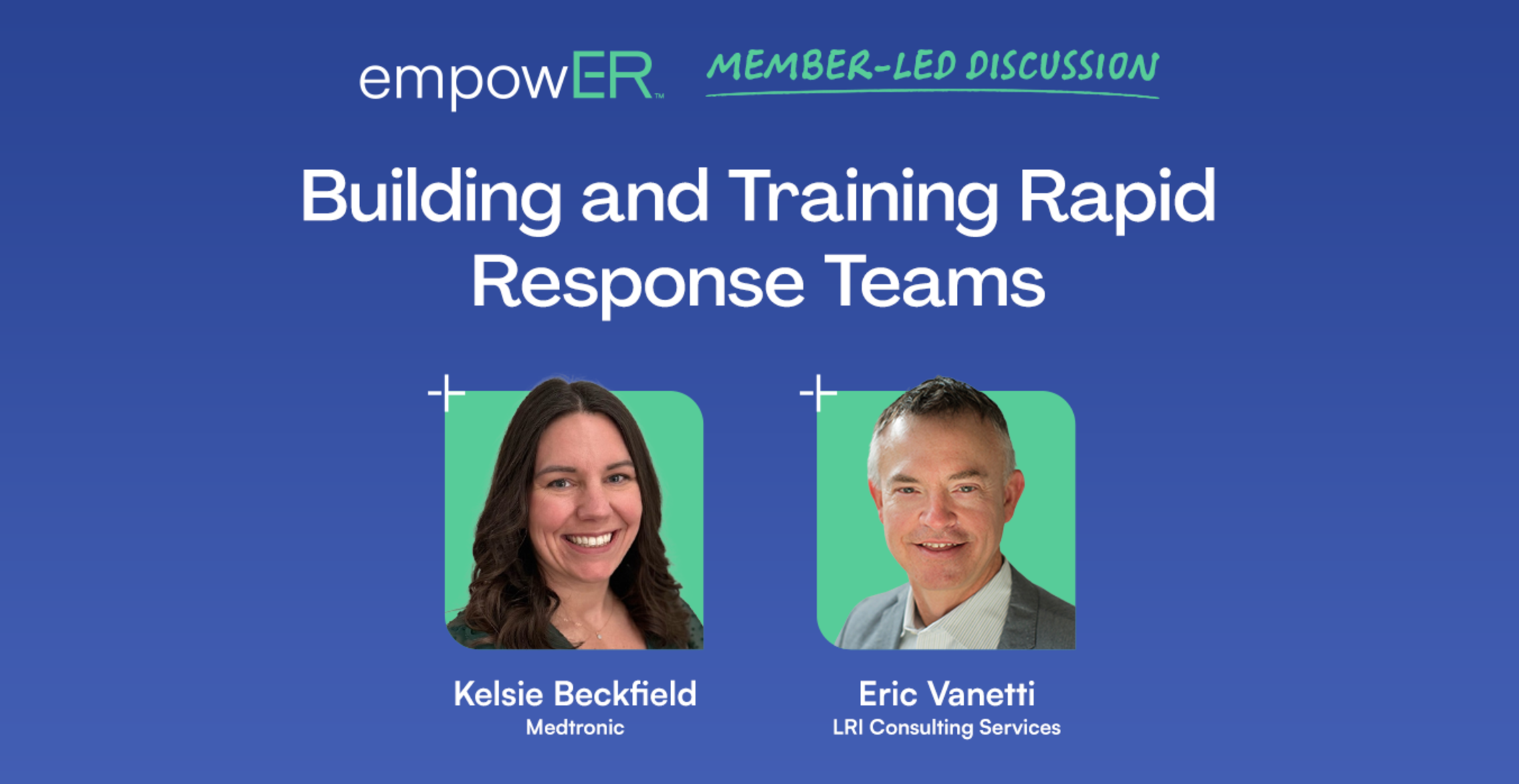
A member-led empowER™ discussion with Kelsie Beckfield of Medtronic and Eric Vanetti of LRI, October 7 at 1 pm ET.

Most employers learn how ready their response team is the day an organizing campaign surfaces, with no time left to train anyone. Supervisors field questions they have never practiced answering, and HR spends the first 48 hours sorting out who makes which call.


The employers who handle that first week well did the work months earlier. They chose the right people, trained them in a way that stuck, and kept the team active between activations so the skills didn't fade.


On October 7, Kelsie Beckfield of Medtronic and Eric Vanetti of LRI Consulting Services (LRI) will lead a member-led discussion in the empowER™ community, hosted by HR Acuity, on how to build that kind of team. The conversation will cover:

  • Who belongs on a rapid response team, and who does not

  • How to structure training people retain

  • Keeping the team sharp during long quiet stretches

  • What has worked, and what has fallen apart, once activity starts

Bring your questions, the problems your team has run into, and the practices that have held up for you. You will leave with a clearer picture of how other organizations stay prepared.


Building and Training Rapid Response Teams
Wednesday, October 7, 2026
1:00 to 1:45 PM EDT (12:00 to 12:45 PM CDT)

empowER™ membership is required, and joining is free.


States Test Federal Preemption. Who Writes Labor Law Now?

by Michael VanDervort

For most of the last century, a labor dispute in Sacramento or Syracuse ran under the same federal rules. States are now passing laws on organizing outside the jurisdiction of the National Labor Relations Board (NLRB) and sectoral bargaining. Subjects that courts have long treated as off-limits, and an approach that unions are embracing.  We've touched on sectoral bargaining, federal preemption, and other similar trends before, but it’s worth paying attention to this discussion.


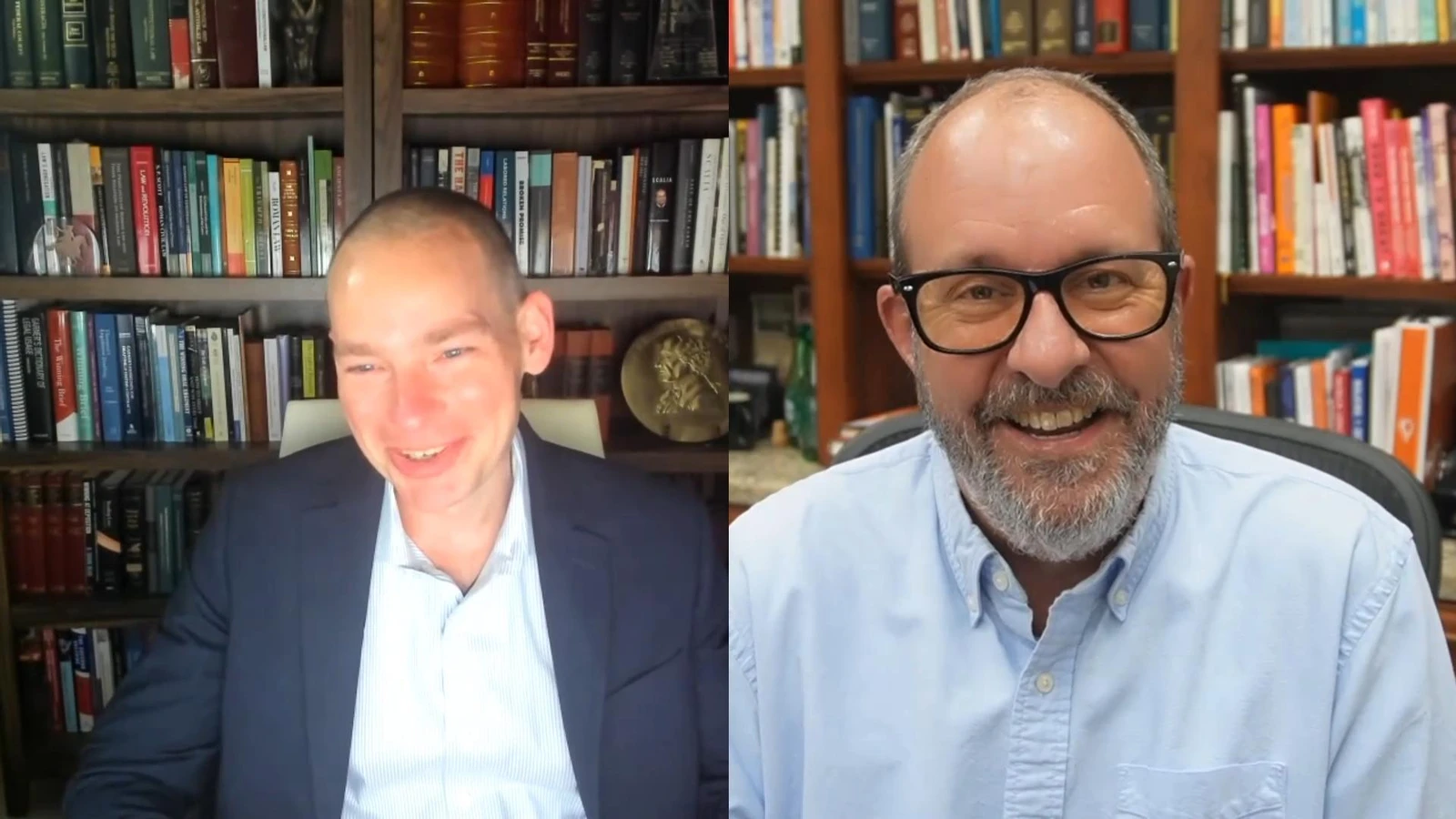
Alex MacDonald, co-chair of Littler Mendelson’s Workplace Policy Institute (WPI), joins Phil Wilson, CEO and General Counsel of LRI Consulting Services (LRI), on The Left of Boom Show podcast to explain why that assumption no longer holds, and why the shift from Washington to the states is accelerating faster than most employers realize.


Three overlapping doctrines (Garmon, Machinists, and Section 301 of the Labor Management Relations Act made labor relations a federal subject under the National Labor Relations Act (NLRA). MacDonald says many labor lawyers, himself included, dismissed the first state efforts as legally unserious. He no longer does.


Governments can require these on their own construction projects as market participants. States have stretched that exception to cannabis licensing, where more than a dozen states encourage or require them.


A federal court in New Jersey found that the state's requirement preempted, and an Oregon court reached the same result. Both rulings are on appeal. California went the other way on an unrelated "unclean hands" theory that the state has since dropped. MacDonald represents New Jersey cannabis businesses in these cases.


Massachusetts and California laws now let one union negotiate with every rideshare company, and a state agency adopts the terms as regulation. The statutes avoid the word "bargaining" to sidestep preemption. In Massachusetts, a union can be certified without an election once 25 percent of "active" drivers sign on. Active means above the median ride count, so that is roughly 12.5 percent of all drivers, and the union then represents every driver. It’s a very subjective number.


Model legislation from the Harvard Center for Labor and a Just Economy would extend this to any industry.

MacDonald also flagged Section 14(c)(2) of the NLRA as a route into NLRA-covered industries if a future National Labor Relations Board declines jurisdiction where a state has a comprehensive sectoral law.

What to Watch

Employers in licensed industries should follow the pending LPA appeals. Gig and app-based employers should expect the rideshare model to spread. Everyone should read state bills for low signature thresholds, union access to employee contact information, and regulator-set terms.


Listen to the full episode.  Alex also shared a deeper-dive article on sectoral bargaining here.


Friday Five: Strike Votes, Biker Trouble, And Lion Elastomers Set Aside

by Kimberly Ricci

This week in healthcare labor relations:

Boston Medical Center: Around 160 registered nurses who are represented by the Massachusetts Nurses Association (MNA) authorized a three-day strike. They did so “in solidarity” with at least 2,000 RNs, who are represented by SEIU Healthcare and recently greenlighting their own strike. No strike date has been set yet.


Mass General Brigham: Also in Boston, MNA-represented nurses rallied for two days before authorizing their own strike in conjunction with nurses from Brigham and Women’s Hospital. This leaves around 4,000 nurses poised for an open-ended walkout. Earlier this summer, Brigham nurses went on a one-day strike, which extended into a weeklong lockout so that the hospital could fulfill its contractual commitments to travel nurses.


Allina Health: Following a four-day strike by 150 doctors in Minneapolis, Doctors Council SEIU and the employer reached a tentative three-year deal. No wage details have been made public yet, but reportedly, the contract includes “language providing greater professional autonomy,” which is a pain point for doctors who are concerned about corporatization of healthcare systems. Members will vote “in the coming days,” and this deal took three years to reach after these doctors unionized.

Teamsters Hollywood chief Lindsay Dougherty in hot water?

The Teamsters recently broke free from its 37-year federal monitorship, but that doesn’t mean the entire union is free from drama.


Local 399 Principal Officer Lindsay Dougherty is one of three Teamsters officials under scrutiny by Independent Investigations Officer Timothy S. Hillman, who has reportedly recommended that disciplinary charges be filed over a chaotic incident at a 2024 meeting. There, Teamsters member Franz Holzinger sustained multiple facial fractures after what he claims was a brutal assault. He was allegedly struck by Hells Angels member Flint Hardman, who had reportedly been directed to “keep an eye” on Holzinger after his protests about production incentives and taxes.


Whether this investigation puts a damper on Dougherty’s media stardom remains to be seen. She previously expressed hopes that the Teamsters would become more "militant,” and siding with a Hells Angel who was accused of violently beating up a member would be (allegedly!) one way to achieve that goal.

The NLRB set aside Biden-era precedent on certain types of misconduct:

Recently, General Counsel (GC) Crystal Carey’s Memo 26-04 included a wish list of decisions that she wanted to see overturned following James Macy’s confirmation as the third GOP vote. Technically, none of those decisions have been overturned yet, but the Board set a decision aside in Lion Elastomers, which is a “close enough” result for employers.


This goes back to the NLRB’s 2023 Lion Elastomers II decision, which instructed employers to tolerate certain types of misconduct, including threats and harassment, if that misconduct could fall under the umbrella of protected activity. In Lion Elastomers II, the Board overturned the General Motors LLC standard, which has now been reinstated by the current NLRB. The legal maneuverings are complicated, but the Board relied on the Fifth Circuit’s decision (and remand order).


The result: The General Motors LLC standard returns with the Wright Line test in tow. This means that the GC must now prove that an employer used protected activity as “a motivating factor” for termination and other discipline. An employer can defend itself by showing that the discipline would have occurred regardless of whether the activity was protected.


In the majority decision, Chair James Murphy and members Scott Mayer and James Macy declared, “We are merely recognizing the court’s holding now that the case is back before us.” In a concurrence, Murphy pointed out that a full overturning would have been “beyond the scope of the current remand,” and would put the current Board in the same type of overstepping mode that the Fifth Circuit faulted the Abruzzo Board for. Whew.

AutoZone workers might unionize with the UAW for the first time:

Shawn Fain is likely coordinating a museum workers’ strike, but at least sometimes, the UAW is still trying to stay in its own lane related to automobiles. The union withdrew a July petition at a White Plains, NY store and filed another for a unit of 11 workers in August.


Progressive publication Labor Notes points out that this petition is the first effort at AutoZone since the Teamsters tried and failed to organize 200 workers at a distribution center. AutoZone has over 6,600 stores throughout the U.S., so perhaps Fain is looking for his own Starbucks. He does love his “moon shots,” after all.

A Vegas local is pushing for action on the Faster Labor Contracts Act (FLCA):

Will the FLCA see a Senate vote before the current session ends? At least one union is watching the clock.


In Vegas, the Culinary Union teamed up with Democratic Senators Cory Booker (NJ) and Catherine Cortez Masto (NV) to “urgently pass” this legislation, which, as we have previously discussed, would be terrible for both employers and workers.


The House already passed the FLCA 230 to 193, and several Republican senators, including Josh Hawley, support this Teamsters-lobbied legislation. If the FLCA passes, it would fundamentally change how first contracts are negotiated and install a federal mediator if a first contract doesn’t happen within 90 days of starting negotiations, with binding arbitration to follow if mediation fails.


The question of whether this will come to a vote this session remains a mystery. The Senate is on recess for most of October and has holiday hiatuses in November and December. That leaves limited time to push the FLCA through since much focus is likely going toward appropriations bills. There is, however, a possibility that the FLCA will be attached to a spending bill, so employers should stay tuned.



About Labor Relations INK

Labor Relations INK is published weekly and is edited by LRI Consulting Services, Inc. Feel free to pass this newsletter on to anyone you think might enjoy it. New subscribers can sign up by visiting here.


If you use content from this newsletter, please attribute it to LRI Consulting Services, Inc. and include our website: http://www.LRIonline.com 


Contributing editors for this issue: Greg Kittinger, Michael VanDervort, and Kimberly Ricci.


You are receiving this email because you subscribed to receive our labor relations newsletters and updates. You can manage your email preferences by clicking the link at the bottom of any of our email communications.


About LRI Consulting Services, Inc.

LRI Consulting Services, Inc. exists to help our clients thrive and become extraordinary workplaces. We improve the lives of working people by strengthening relationships with their leaders and each other. For over 40 years, LRI Consulting Services, Inc. has led the labor and employee relations industry, driven by our core values and our proven process, the LRI Way.


Share