Subject: LRI Ink: More Fain Drama, Labor’s AI Divide, FLCA Vote

July 23, 2026

To visit the blog post, click on the link below the article.

What's In Ink This Week:

This we cover a labor landscape pulling in several directions at once.

  • A grand jury subpoena adds fuel to Shawn Fain’s reelection fight,

  • Unions stake out sharply different positions on AI,

  • The Faster Labor Contracts Act moves toward a critical Senate vote.

  • On the Left of Boom Show, Phil Wilson and Natalie Parker explain why fixing bad leadership begins with accountability, not another training program

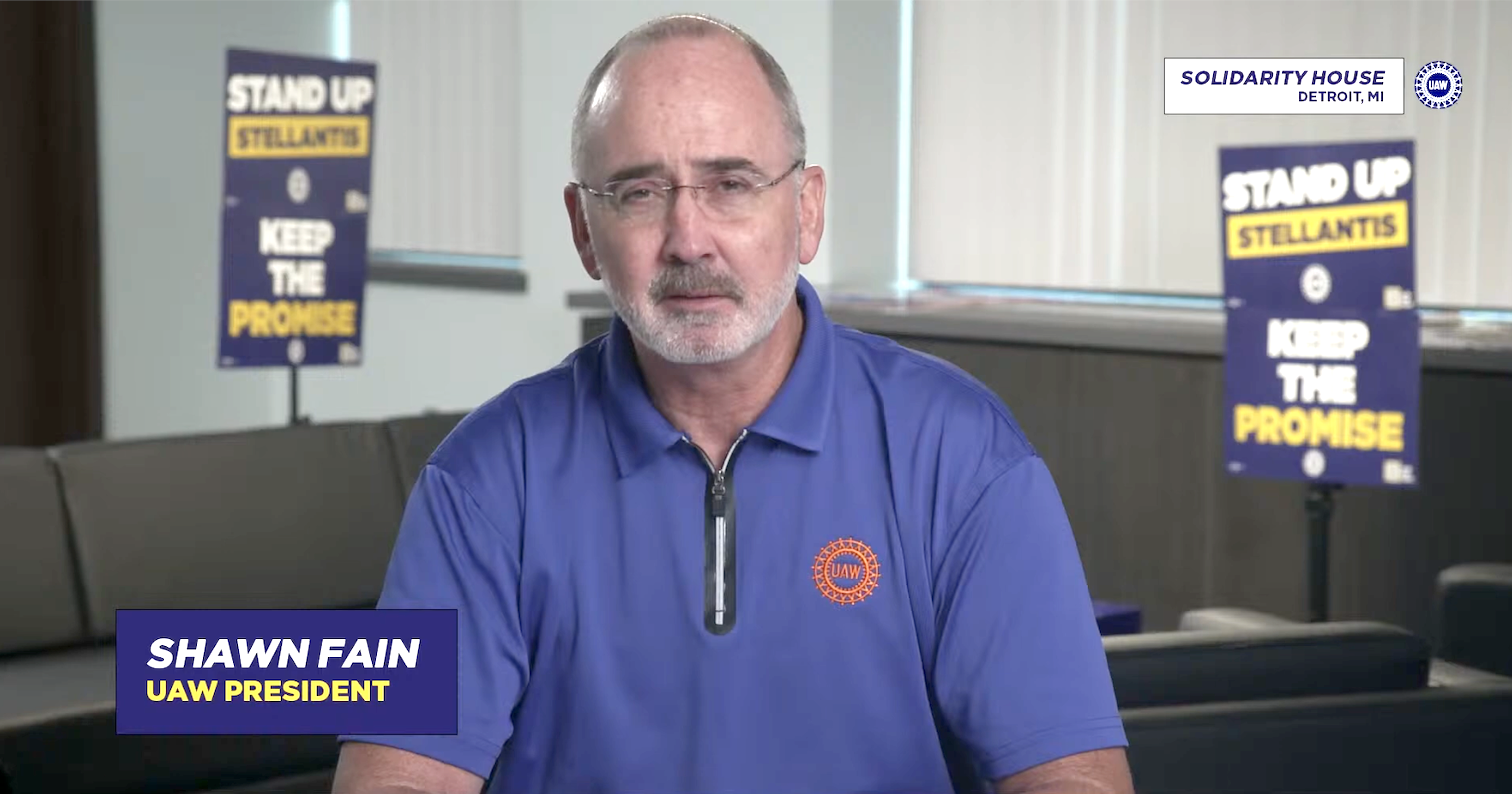
Wait, Is Shawn Fain Truly In Danger Of Losing His Presidential Role, And Worse?

by Kimberly Ricci

We knew that this fall's UAW international officer election would be a popcorn-worthy event because everything that Shawn Fain touches turns to drama. Yet admittedly, we didn't imagine that Fain would truly be in danger of losing his seat because as we recently wrote, it's not easy to remove a union chief who hasn't been charged with federal crimes.

Well, it's only been a few weeks, and things look different now.


Bloomberg Law reported seeing emails indicating that the UAW’s federal monitor, Neil Barofsky, has been subpoenaed by a grand jury regarding his watchdog reports. Labor relations watchers know that Barofsky’s latest installment, his sixteenth such report, is chock full of citations about Fain's "retaliatory" firing of VP Rich Boyer, who is now Fain’s chief election rival. Additionally, a UAW attorney clarified that the union "broadly is not the subject of a grand jury investigation." That remark suggests that this probe is all about Fain, so how bad could this get for him?


Well, Fain's own chatter–which includes his admission of threatening to physically fight Barofsky–probably isn't helping his situation or reelection odds. For that matter, this is not fantastic news for the union itself.

Let's step back and look at what's been revealed

Legally, Fain hasn't been charged with anything yet. A grand jury is an investigative body that reviews evidence to determine if there's probable cause to charge a defendant with crimes, and these juries operate under the utmost secrecy, so until an indictment emerges, we won’t know anything concrete about how much trouble could be in store for Fain.


However, grand juries typically deal with felony-level offenses, so it’s not as though they’re poking around for testimony on misdemeanors or petty crimes. If something comes from this probe, it will be a serious matter.

Meanwhile, Fain’s digging a hole

The fiery leader called Barofsky's accusations politically motivated and "total bullsh*t." He ranted, "Corporate America wants me out. The political establishments of both parties want me out." Fain denied allegations that he demanded financial favors for family members, and he thinks that Barofsky has it out for him because of the UAW's call for a Gaza ceasefire.

That claim is what led to Fain disclosing, according to meeting minutes reported by the Detroit Free Press that he "threatened to fight the monitor in the parking lot." Really: "We had it out at the meeting. We used foul language. We had a heated discussion, and I thought that was the end of it. Days later, however, Barofsky opens his first investigation into me." He added, "You know, I'm not a conspiracy theorist, but I'm also not a freaking idiot. Barofsky doesn't like me. … This is election interference, plain and simple."


Was Fain done talking? Nope:


"That's my opinion if you want my opinion. And for anybody to ever f***ing say I'm anti-Semitic, brother, I'll fight your a** in front of this building in a heartbeat," he fumed. "I do not f***ing like that, and I don't appreciate it."


First thing's first. Fain is alleging that Barofsky is simply out to get him, but Barofsky was appointed as the UAW's monitor in May 2021 to watch over the union as it presumably worked to free itself from a legacy of corruption. Fain, who was elected in fall 2022, ran as a "reformer" candidate then dissolved the union's reform caucus. In Dec. 2023, UAW made its call for a Gaza ceasefire, which Fain argues is the source of Barofsky's alleged ire.


Although Fain clearly believes that Barofsky simply “doesn’t like” him, the monitor’s findings rest on far more than a personal dispute.


Barofsky's other reports document Fain's culture of retaliation that has led to details about intimidated staffers shrinking away from their leader’s outbursts. The twelfth report, followed by a text-message-filled addendum pointed toward Fain's ouster of Secretary-Treasurer Margaret Mock and an alleged coverup. Within that saga, Barofsky interviewed staffers who corroborated that Fain threatened to "slit" or "cut" the "f***ing throats" of those who "messed" with his inner circle. Also reportedly, that twelfth report included details of Mock’s refusal to fulfill questionable expenditures, to which Fain allegedly responded, "Your only responsibility is to sign the f***ing check."


Barofsky ordered Mock to be reinstated, as was the case with Boyer.

What this could mean for Fain’s reelection and the UAW’s future

If you guessed that multiple Fain rivals would be pouncing on the grand jury announcement, you'd be correct. In a Facebook reel, Tricia Geiger called the news a "national embarrassment," "a disgrace to all our members," and "terrifying" because Fain's alleged behavior could lead to "a government takeover" of the union. That last reference could indeed mean that the UAW will remain under monitoring, or perhaps worse, after Barofsky’s appointment is scheduled to end in May 2027.


Meanwhile, Rich Boyer threw shade at Fain’s platform by posting a screenshot of a news story about the grand jury news, and Detroit news publications predict that this ruckus will fuel upcoming livestream debates.


Some legal experts further believe that the grand jury probe could slow UAW organizing momentum. For sure, the probe into Fain's unsavory behavior does not bode well in light of two ex-UAW presidents, Gary Jones and Dennis Williams, both currently serving time related to various white collar crimes including racketeering and embezzlement.

The fallout to come?

From here, the UAW's election season continues, and Fain is not the slam-dunk incumbent that he expected to be. That could complicate his plans to be around for that 2028 general strike that he’s been plotting, but the election will be over by early October, so we won’t have to wait too long to find out his fate on that end. And that grand jury probe continues.

Unions and AI: Why the Labor Movement Is Split

by Michael VanDervort

Two union organizers walk into a bar. One works construction. One works nights in an ICU. Ask them what they think about unions and AI, and you'll get two completely different answers, and both will be right. There is more than one union AI playbook.


That's the story to be paying attention to around labor unions and AI right now. It’s not "workers versus the machines.", or “unions united against a common threat." The real story is messier. Some unions, especially trade unions, are very supportive of AI projects, while other unions take a more cautionary approach.

Unions and AI: where they stand

Such is the case with North America's Building Trades Unions, three million members, who've partnered with the biggest AI companies in the country and are fighting anyone who wants to slow data center construction down. Those data centers pulled in billions this year. For the trades, that's a gold mine, not a threat.


Unions tied to other industry sectors have taken a different approach. In healthcare, the National Nurses United have issued their guiding principles around AI in a document called the Nurses and Patients’ Bill of Rights. Creative talent in film and media worry about AI cloning their likeness or their voice. 

Unions like the Teamsters are very concerned about the impact of AI on jobs in transportation and logistics.


Same labor movement, opposite ends of the spectrum on how to react. Anne Lofaso, a labor law professor at the University of Cincinnati and former NLRB attorney, told Bloomberg Law this tension inside the AFL-CIO "truly is existential," pointing directly at the jobs question.

The Writers Guild wrote AI into the contract

The Writers Guild of America wrote protection language into a contract. Their 2023 deal included protections for employees' work by defining AI, requiring disclosure when AI became the basis of someone's work, and creating a standing meeting every six months to discuss how things were going. When the contract came up for renewal in 2026, almost nothing changed.


UC Berkeley's Labor Center maintains a database where they have curated numerous technology provisions from U.S.-based union contracts, providing useful insights and examples of how workplace technologies are being addressed through collective bargaining. As an employer, you might consider adding some of these principles into your AI playbook preemptively.

Nursing shows how fast AI disputes escalate

A 2024 survey of 2,300-plus nurses found 60% didn't trust their employer to put patient safety first once AI got involved, and it’s become more contentious ever since.

Here’s a timeline showing how AI has spread through healthcare:

  • October 2024: nurses at 17 hospitals win contract language giving them a say in AI rollouts.

  • Early 2025: marches across multiple cities.

  • August 2025: a rally tied to a single contract covering 60,000 workers.

  • July 2026: nurses picketing outside a hospital industry leadership summit, timed to land while the CEO onstage was talking about moving AI "from pilots to everyday practice."

AI is now an organizing issue

Examples of how unions are responding to AI concerns are growing by the day. They are using AI as an organizing issue to raise fear among workers. One campaign built a whole story around a retail worker concerned about an AI scheduler overloading her workday.


A research group staffed by former AI-lab employees created a public guide that takes management's own AI talking points and rewrites each one as a myth with a rebuttal.


The Aspen Institute runs a private roundtable of executives, from construction to hospitality to media to tech, who've spent years figuring out how to work with organized labor instead of around it.


This week, AFL-CIO President Liz Shuler told Marketplace on National Public Radio that the federation is tying workplace AI and automation concerns directly to organizing and political mobilization. She expects AI to become a labor issue in the 2026 midterms and an even bigger one heading into 2028.

Where this leaves employers on AI

In the end, how this applies in your organization comes down to trust and the ultimate impact of AI on jobs. Unions will try to use AI to drive a wedge between the employer and employees based on fear of the impact on jobs. The employers ahead of this curve aren't staying quiet and hoping nobody notices. They're communicating transparently and directly with employees, before a union ever comes into the picture.


Left of Boom Show: Fixing Bad Leadership With Accountability

by Michael VanDervort

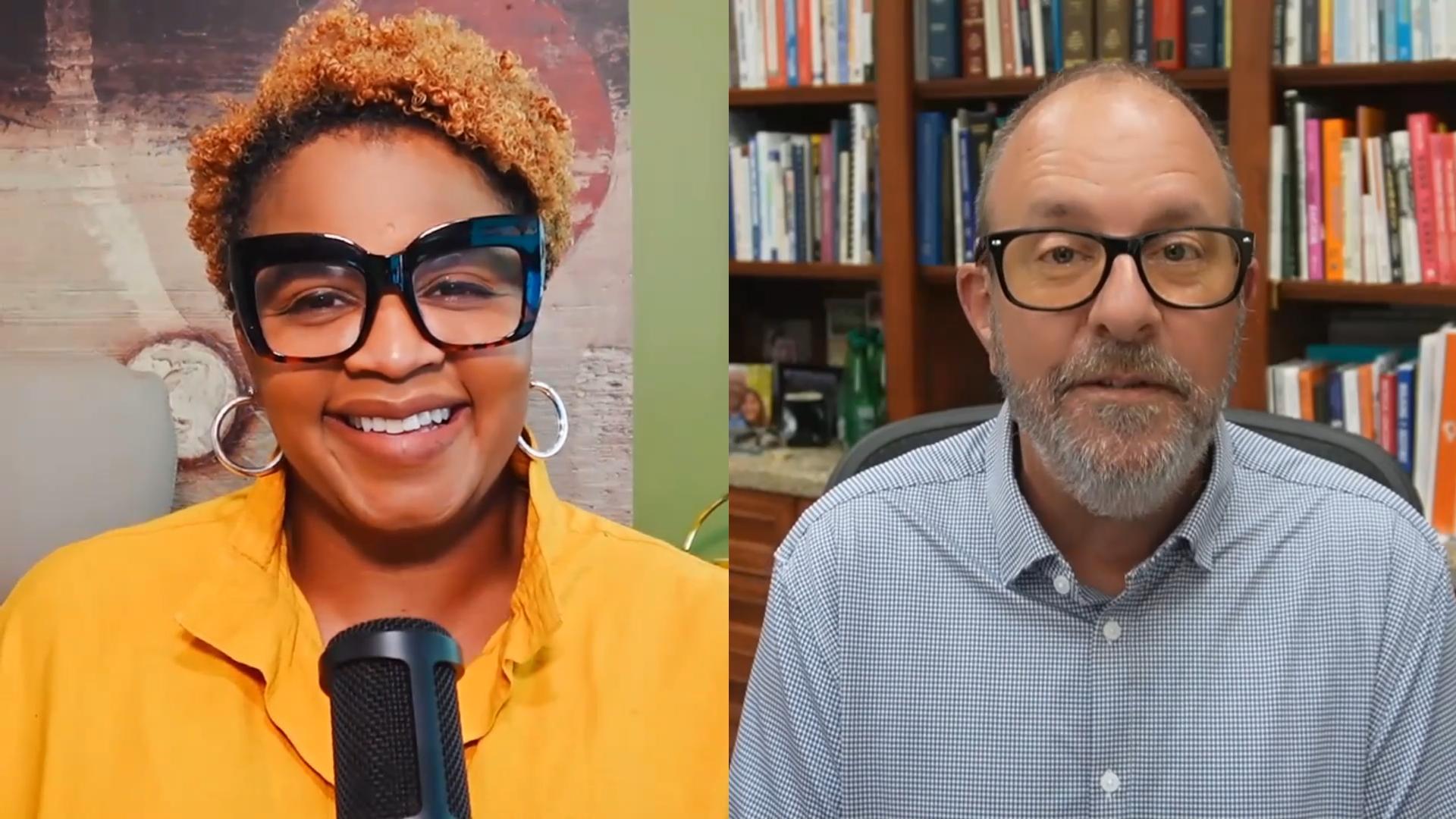
IIn this episode of the Left of Boom Show, Phil Wilson sits down with Natalie Parker who shares insights on leadership, accountability, navigating AI in organizations, and creating meaningful work environments. She discusses practical tips for leaders to foster trust, purpose, and high-quality conversations with their teams.


"Mutual accountability fosters trust and high performance." — Natalie Parker


Key Takeaways

  • Intentionality in leadership is a game changer.

  • Mutual accountability fosters trust and high performance.

  • AI can be a tool for empowerment when approached with trust.

  • Leadership is about how you make people feel, not just what they do.

  • Clear expectations and ongoing conversations prevent failure.

  • Leaders should define their legacy and impact.

  • Creating space for authentic relationships enhances engagement.

Chapters

[0.00] Introduction to Natalie Parker

[3.04] Navigating Leadership Challenges in a Post-COVID World

[5.55] The Importance of Accountability in Leadership

[9.02] Personal Experiences Shaping Leadership Philosophy

[12.00] Creating Healthy Work Environments

[14.58] The Role of Intentionality in Leadership

[18.02] Defining Success and Accountability

[20.52] Building Mutual Accountability

[24.12] Acts of Leadership Beyond the Workplace

[26.59] The Impact of Meaningful Work

[30.09] Final Thoughts on Leadership and Legacy

Resource Links

Website: thenatalieparker.com

Blog: thenatalieparker.com/blog

TEDx Talk: YouTube

Podcast: So Your Boss Sucks, Now What?:  - Apple Podcasts


The Faster Labor Contracts Act Senate Vote Is Coming: Here's How to Weigh In

by Kimberly Ricci

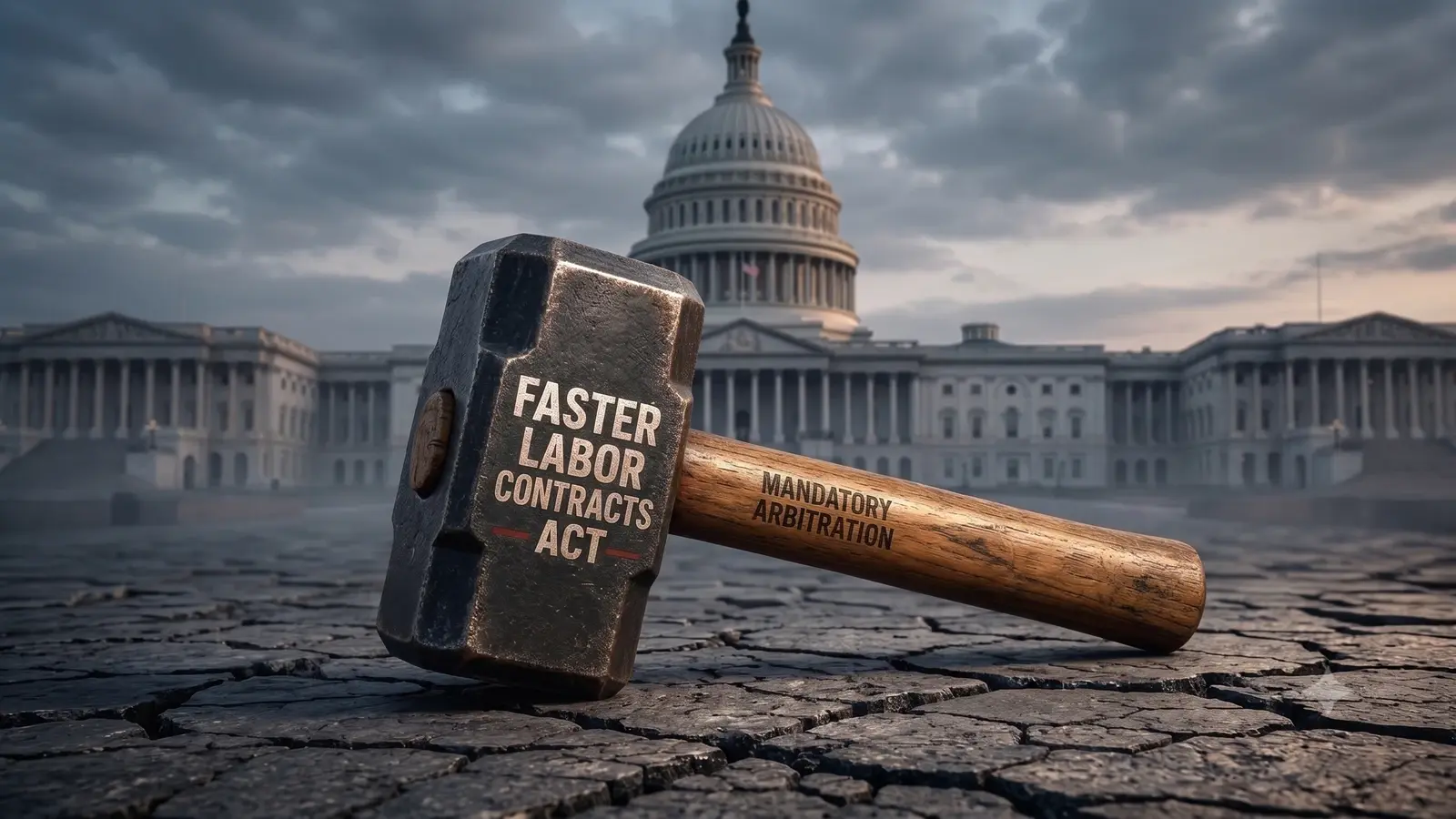
If you’re reading this, you are likely aware that the U.S. House recently passed the Faster Labor Contracts Act (FLCA) by a vote of 230 to 193 and forwarded it to the Senate. Yet if employers aren’t concerned about how this bill could detrimentally affect their businesses, they should be.


Make no mistake, the FLCA is a “Teamsters-led bill” and the pride and joy of Sean O'Brien. This legislation would fundamentally change how first contracts get negotiated by giving employers only 10 days to start bargaining after a union election. A federal mediator would take over 90 days later, and 30 days after that, a government-appointed arbitration panel would set about imposing a binding two-year contract.


Sounds unreasonable, right? That doesn’t even account for how workers wouldn’t get a ratification vote, and neither workers nor employers will get an appeal process for the imposed contracts that follow.


LRI Consulting Services, Inc.’s own research proves the mythical lengths that unions have gone to push this legislation, but before the Senate can vote, there’s a way to make your voice heard.

The Coalition for a Democratic Workplace is fighting this bill

The Coalition for a Democratic Workplace (CDW), a longstanding employer advocacy group on labor policy, is speaking out against the FLCA. The coalition strongly cautions that the bill could end good-faith bargaining as we know it. Rather, warns the CDW, this legislation “creates perverse incentives for bad-faith bargaining” that will make “stable labor relations” all but impossible, since both sides can wait out the clock regardless of how willingly the other party comes to the table.


In turn, a government arbitrator with zero knowledge of an employer’s finances or operations will take the wheel. No mechanism for accountability or guarantee of industry expertise exists in this process, so it’s easy to see, as CDW points out, how the FLCA is “a recipe for disaster.”

How to take action

The CDW has set up a page where employers and workers can send a letter directly to their senators opposing the FLCA before union lobbyists have a chance to gather 60 votes in support of passage.

Business groups are lining up against the FLCA

The House Committee on Education and the Workforce gathered reactions from at least 350 business and employee advocacy groups from a vast array of industries. Here’s a preview of where they stand:

  • Coalition for a Democratic Workplace, in a letter signed by 376 organizations, argues that the bill sidesteps employer and employee consent and “amounts to an unconstitutional taking.”

  • The Retail Industry Leaders Association warns that FLCA’s rigid statutory deadlines will lead to increased conflict within large retail bargaining units and will do everything but serve workers’ interests.

  • National Association of Manufacturers and Associated General Contractors of America express concern about the damage that will be done to workplace relationships and point to industry-specific bargaining norms that will be upended by government arbitrators.

  • The National Restaurant Association is urging Congress to avoid rushing into passing this “sweeping change to private-sector labor law,” which would inevitably lead to arbitration decisions that are “impractical, inflexible, or inconsistent with the realities” of sustainable business operations.

That’s only the beginning. Read more here from concerned parties who are sounding the alarm with similar worries. The FLCA is neither pro-worker nor pro-employer, and as the CDW declares, “only creates a broken system where government-imposed arbitration replaces voluntary agreement.”


Learn more about how to send a letter to your senator here.


About Labor Relations INK

Labor Relations INK is published weekly and is edited by LRI Consulting Services, Inc. Feel free to pass this newsletter on to anyone you think might enjoy it. New subscribers can sign up by visiting here.


If you use content from this newsletter, please attribute it to LRI Consulting Services, Inc. and include our website: http://www.LRIonline.com 


Contributing editors for this issue: Greg Kittinger, Michael VanDervort, and Kimberly Ricci.


You are receiving this email because you subscribed to receive our labor relations newsletters and updates. You can manage your email preferences by clicking the link at the bottom of any of our email communications.


About LRI Consulting Services, Inc.

LRI Consulting Services, Inc. exists to help our clients thrive and become extraordinary workplaces. We improve the lives of working people by strengthening relationships with their leaders and each other. For over 40 years, LRI Consulting Services, Inc. has led the labor and employee relations industry, driven by our core values and our proven process, the LRI Way.


Share