Subject: LRI Ink: Layoffs, AI in LR, and An Organizer Tells Their Story

July 16, 2026

To visit the blog post, click on the link below the article.

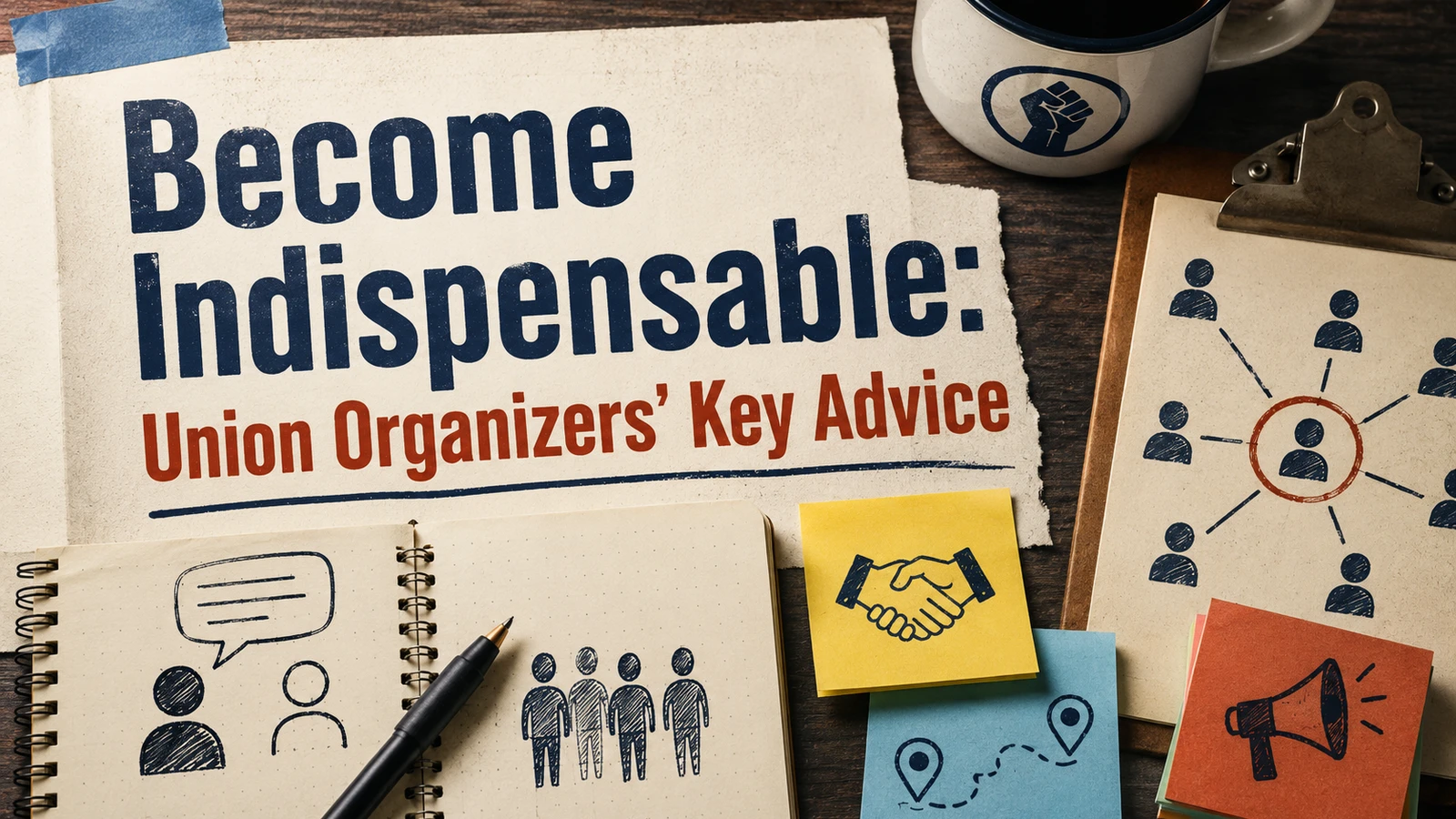
Unions Tell Workers To Become Indispensable Before Union Organizing

by Michael VanDervort

A worker at a Best Buy store in Dedham, Massachusetts, became a union organizer with a group of 65 fellow employees. No petition ever got filed. If you stopped reading there, you'd call it a non-story.


Don't stop there. The account he wrote up, Notes from Organizing a Union at Best Buy, is more useful to you than most union press releases, because nobody's spinning a win. It's a guy describing, step by step, how he built credibility, tested support, and kept an effort alive without you ever knowing it was happening.


I don't care whether every detail in it holds up. What I care about, and what you should care about, is what it tells us about how workers are being coached to organize right now: patiently, quietly, and through people you'd never suspect.

It started with a message you'd never see

He wasn't hired to organize. The idea came from a Signal message, sent by an editor at the pro-labor outlet Working Mass, asking if he'd connected with the Emergency Workplace Organizing Committee (EWOC), a volunteer network jointly run by the Democratic Socialists of America (DSA) and the United Electrical, Radio and Machine Workers of America (UE) that trains workers to organize their own shops.


One message. That's all it took to change how he saw his job.


Here's what that means for you: the employee who starts a campaign in your store doesn't need to be recruited by a union rep in your parking lot. A friend, an activist, a publication, a volunteer network: any of them can plant the idea over a phone. You're not looking for an organizer outside the building. You're looking for a worker with a grievance and someone willing to ask, "Have you thought about organizing?"

Credibility First: How This Union Organizer Built Trust

His strategy wasn't confrontation. It was becoming one of the most liked people in the building and one of the best sellers, reportedly moving $200,000 in merchandise over Black Friday. That performance did two things: it protected his job, and it bought him standing when he brought up organizing.


Forget the troublemaker stereotype. The employee with real influence in your store is usually the one you'd call dependable, competent, well-liked: the person you'd never flag as a risk. Strong performers and organizers aren't opposites. Sometimes they're the same person, and the performance is the cover.

The conversations you'll never see happen

Most of his organizing happened in two- or three-minute windows: the break room, the warehouse, the parking lot. A question about pay here, a read on who's frustrated there. He had zero organizing background and taught himself to compress the pitch to fit between customers.


None of that requires a big meeting. It requires repetition. By the time you see a flyer or hear cards are circulating, the message has already been tested, the leaders already identified, the trust already built. Quiet doesn't mean nothing's happening. Quiet is often the strategy.

Turnover isn't the shield you think it is

His momentum died when supportive employees started leaving for other jobs. When he finally asked a union for backing, they passed: too big an employer, too much instability from turnover, too much investment for an uncertain payoff.


Don't read that as protection. The same pay, scheduling, or workload problems driving your turnover are often exactly what's fueling the dissatisfaction behind an organizing push. High churn isn't a defense. It's a warning light you're choosing to ignore.

No Petition Filed. He Still Says the Union Organizer Won.

According to the article, after organizing started, the store bumped pay about $1.50 an hour, fixed break room maintenance, and started holding meetings about unionization. None of that is independently verified, and Best Buy isn't quoted anywhere in the piece.


Doesn't matter to him. He counts it as proof the pressure worked. And that's the real lesson: for many workers, success was never about winning an election. It's a wage bump, a network, a story to hand the next person who's frustrated somewhere else. The campaign didn't die when it stalled. It turned into content for the next attempt.

Key Advice for Employers: What to Take From This

  • The employee who organizes your workplace may have had zero intention of doing it a month ago. One conversation is all it takes.

  • Organizers are being told to build influence through performance and credibility, not confrontation. Don’t focus only on the troublemaker.

  • The conversations that matter most are short, informal, and built to stay off your radar.

  • Networks like EWOC hand workers a playbook before a union is ever in the picture.

  • Turnover can stall a campaign, but the conditions causing your turnover can just as easily be generating the next one.

  • No petition doesn't mean no impact. Pay, conditions, and your next organizing headache can all trace back to a campaign that "failed." You lose here if you don’t provide legitimate reasons for the changes that are unrelated to any campaign.

Don't start treating your best people like suspects. That's a fast way to poison the culture you're trying to protect. Ask instead why workers go around you in the first place. Usually, it's because they don't believe raising something in the open gets them anywhere. Fix that, and you've done more than any amount of watching ever will.


What's In Their Feed is an ongoing LRI Ink series examining the organizing messages, resources, tactics, and workplace narratives employees encounter online, and what they mean for HR and labor relations practitioners.

Conversation Recap: AI and Trust in Labor Relations

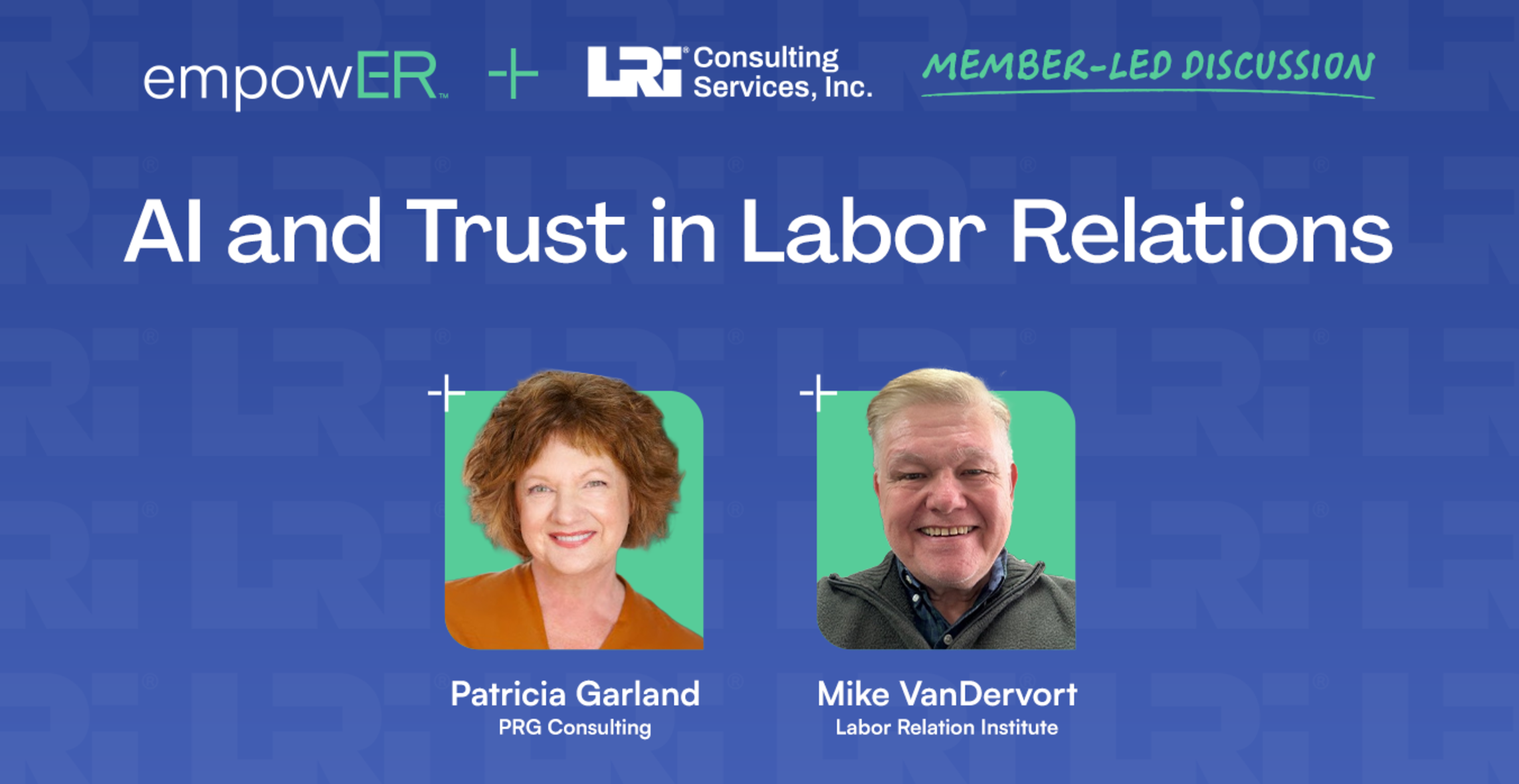
On July 15, Michael VanDervort and Patricia Garland led a discussion on AI and trust in labor relations, examining how organizations communicate about AI internally and what those messages set in motion for employees, managers, and, in some cases, unions.


The conversation moved quickly from theory to lived experience: where AI is landing well, where it is creating friction, and where the real risks may be different from what organizations expect. Below is a recap of the key themes and takeaways.

Same Rollout, Different Signals

The session opened with a simple premise: how an organization communicates about AI helps determine what happens next. The same technology can build trust or undermine it depending on the message surrounding it.


Four types of messaging were shared, framed the discussion:

  • Investment in training, messaging that supports trust and adoption

  • Replacement/reduction of jobs, messaging that activates fear

  • Overpromising on AI effectiveness that later requires a credibility-damaging walk-back

  • Leadership statements or leaks that contradict official messaging

Where Adoption Is Actually Landing

Participants described a wide range of experiences.


In short-staffed environments, some organizations are reassuring employees that AI is intended to reduce pressure, not eliminate jobs. Workers have generally responded well when the technology is presented that way.


In clinical settings, physicians were described as eager to use AI for documentation so they can spend more time with patients. But enthusiasm was not consistent across functions. HR professionals in some organizations reported greater hesitation. Others reported they were encouraged to use AI without becoming overly dependent on it, while preserving the human judgment central to their work.

The Risk Is Not Always Replacement

One of the sharpest observations came from a participant in an industry with little immediate displacement risk.


Their concern was not job loss. It was supervisors relying too heavily on AI to interpret contracts, leading to inconsistent administration of the bargaining agreement.


That reframes the issue. The risk is not only that AI may replace someone. It is also that AI may quietly weaken the judgment labor relations depends on. That risk exists even where workforce displacement is not on the table.

Fear, Intimidation, and the Union Factor

Several participants identified fear and unfamiliarity as bigger barriers than the technology itself. Employees may not understand what AI is for, how it works, or how they are expected to use it. In that vacuum, it becomes easy to vilify.

That fear can also create organizing exposure.


One participant noted that unions raising concerns about automation often capture attention more effectively than official company communications. Some unions are deliberately emphasizing those fears as an organizing tool.

Where Unions are Already Reacting to AI

The discussion pointed to current examples of this playing out. A group called Tech for Respect is targeting large employers over AI-driven scheduling and productivity monitoring.


Unions themselves are split, building trades and data-center-adjacent unions are largely aligned with AI's growth, while nurses, flight attendants, creators, and port workers are pushing back against it as a threat. Bargaining over AI implementation is already showing up across industries well beyond office AI, robots, self-driving trucks, and performance-monitoring algorithms.


One entertainment-industry union's AI contract language came up as a model, not because other employers should aim for a union contract, but because its underlying principles, defining the technology clearly, requiring disclosure, and building in a recurring review, are things any employer can adopt on their own. 

Rollout Approaches Are All Over the Map

Participants described dramatically different rollout strategies.


At one end, organizations required training and then allowed broad use, sometimes without involving HR in the rollout. At the other, employers limited AI use to a single approved tool and clearly defined when it could and could not be used, even though a formal policy had not yet been written.


A consistent conclusion emerged across both approaches: HR needs a seat at the table when AI policy is developed, not after decisions have already been made. Several organizations also described actively training HR teams rather than assuming employees already understood how to use AI effectively.

Sharing the Upside Before It Becomes a Demand

One participant raised a question worth serious consideration: if AI creates meaningful financial gains through automation, how will employees share in that benefit?


Organizations cannot wait too long to address that issue. Celebrating shareholder gains without offering a credible answer for the workforce is a quick way to lose employee support before implementation is complete.

Frame AI as Improvement, Not Replacement

A practical communication principle emerged from the discussion:

Reinforce positive outcomes, remain open to criticism involving transparency, accessibility, and improvement, and consistently frame AI as a tool for improving processes and effectiveness rather than replacing people.


It sounds simple. Participants agreed that it can make the difference between a message that builds trust and one that triggers resistance.

An Open Question Worth Carrying Forward

The session closed with a question no one fully resolved: is there a useful historical parallel for AI-driven workplace change, or is this transformation fundamentally different?


Mechanization, computers, automated production, and social media offer some precedent. Several participants, however, were not convinced those comparisons hold all the way through. That question will likely remain central as more organizations work through their own AI rollouts.

Resources

Writers Guild of America

AI contract protections (2023 and 2026 agreements)

UC Berkeley Labor Center

Negotiating Tech contract-language database A First Look at Labor's AI Values

LRI Ink

The AI Bargaining Wave Is Hitting Healthcare. Are You Ready?

How AI Is Impacting Labor Relations, and Why Employers Need to Pay Attention

HR Acuity

Tenth Annual Employee Relations Benchmark Study (2026)


Unions Still Can't Stop Layoffs, Video Game Workers Are Finding Out

by Kimberly Ricci

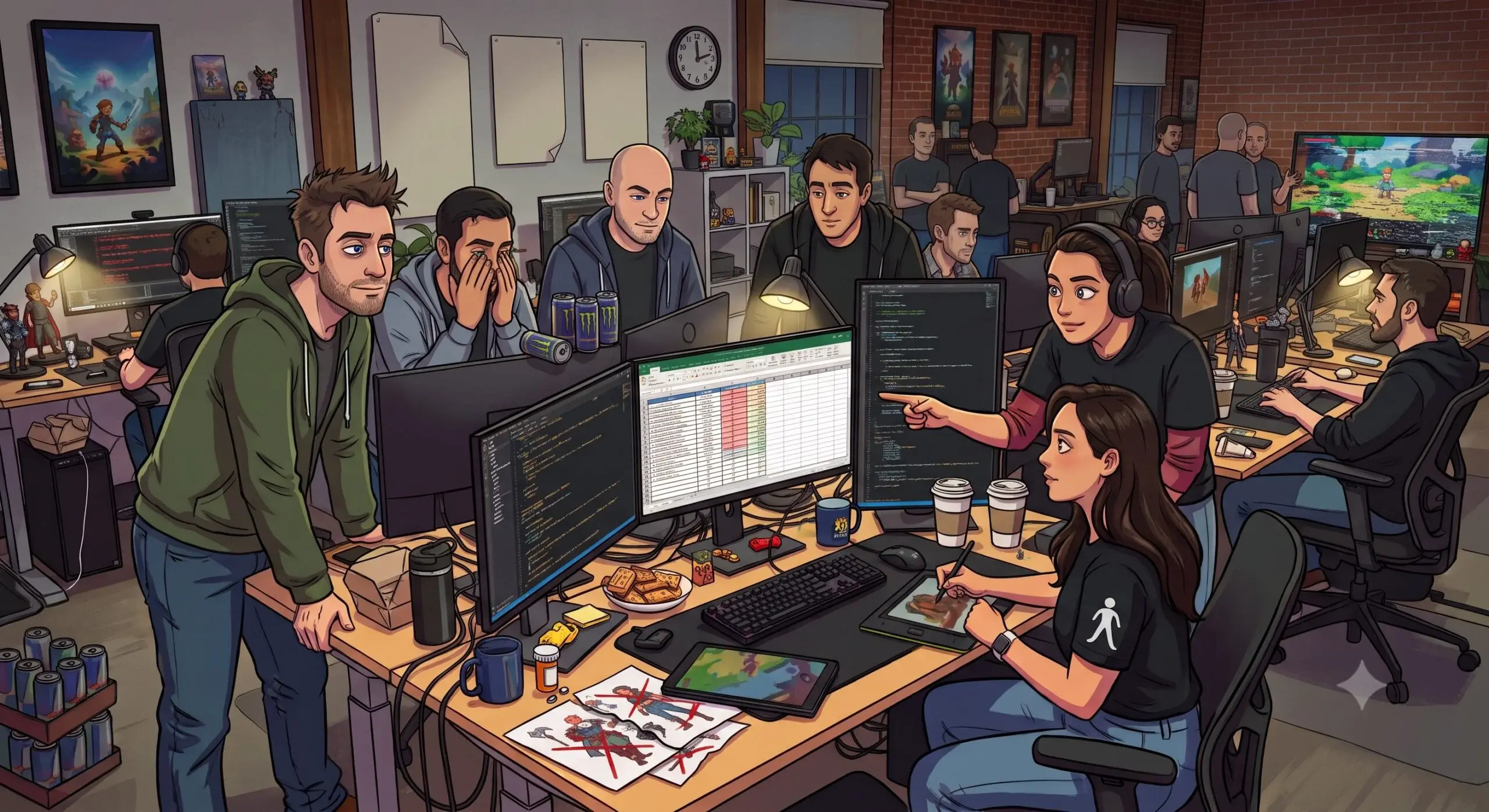
Such is the current case with workers at Bethesda Game Studios.

In July 2024, around 240 workers at the ZeniMax Media subsidiary, which is known for the Fallout and Elder Scrolls games, joined CODE-CWA to form the "first wall-to-wall union" at Microsoft. Two years later, the union and employer have not reached a contract, and for additional reasons described below, CWA announced "emergency rallies" scheduled for July 15. CWA is asking workers, allies, and gamers to join the rallies while claiming, "[t]he bosses are stealing our game industry, and we aim to take it back!"

Why This Is Happening Now

Earlier this summer, Microsoft announced layoffs of around 4,800 workers with the Xbox division accounting for 1,600 of those job losses across various studios. More losses are expected later this year, and due to overlap between studios, industry journalists were unable to pinpoint how many Bethesda workers are part of these cuts. It's also unclear what CWA aims to accomplish with these events, although a social media post from a claimed Bethesda activist hints at a strategy:

  • This is a protest, not a strike.

Workers will picket only during their lunch hours.

  • This is a "test" with a possible strike at an undetermined date.

  • Currently, the union is not seeking a boycott of games, "as this might negatively affect the teams still working on them. We'd only do that if we were sure the benefits would outweigh the harm."

Further social media activity suggests a growing list of rally locations planned across the U.S., including at Microsoft campus in Redmond, WA; Irvine, CA; Rockland, MA; and both Austin and Dallas, TX.

How CODE-CWA And UVW-CWA Got Here

It's been a minute since we checked in on union activity in the gaming industry, and we can now report that, well, it remains a mess.


To briefly recap, CWA’s formerly aggressive plan to unionize tech workers through its CODE-CWA initiative hasn’t put up gangbusters numbers. We're saying "formerly" because something curious has happened to this effort.


CODE-CWA now claims to have organized 7000+ tech workers since 2022, and in 2024, they claimed to have unionized 1,750 gaming workers.


That last number isn't insignificant, although it’s not particularly impressive in an industry that encompasses over 250,000 jobs, according to the 2026 economic impact report of the industry’s leading trade association, ESA.


In March 2025, the union kind of admitted that the old-fashioned model of organizing through individual employers wasn't moving toward their goal. At that year's Game Developers Conference, CWA announced the formation of a direct-join union, United Videogame Workers (UVW-CWA), where workers from any employer can freely join and be required to pay dues without any guarantees that the union will be able to bargain for them.


How's that been going? Well, it’s confusing. Conveniently, the UVW-CWA offshoot has been keeping membership numbers under wraps, although they clearly haven't reached the 10,000 member mark that they promised would lead to a publicized petition. Additionally, CODE-CWA members recently found out the hard way that unions cannot protect workers from layoffs, but predictably, the union is deflecting blame toward an employer.

Same Union Song, Different Verse

This feels like a case of unions realizing that they can't do anything about business realities. Yet they're still trying to keep up appearances and make an impression that they're doing something for their members. That's still the case despite CODE-CWA not reaching a union contract at Bethesda, and if workers think that UVW-CWA is a better bet, well, a direct-join union holds even less bargaining power.


What we have here is different organizing models reaching similar dead ends. That is, CODE-CWA's certified workplaces and UVW-CWA's direct-join membership have both run into the same wall. Even taking Microsoft's labor neutrality stance into account, unions really have no power against layoffs. They can still promise to protect workers, but promises aren’t real leverage at the bargaining table and beyond.

Friday Five: Nurses Ditch A Union, ILO Adopts A Gig Treaty, And NLRB Nominees Wait

by Kimberly Ricci

What about those NLRB nominations?

If you were wondering why you haven’t heard more about James Macy’s nomination to the NLRB, and David Prouty’s nomination to continue as sole Democrat, there’s a good reason. After a few reschedulings, the Senate HELP Committee put them back on the calendar for June 15, 2026.


If this hearing proceeds as scheduled, the HELP Committee will vote on whether Macy and Prouty will be advanced to the full Senate, which is scheduled to go on a month-long recess as of Aug. 10. Let’s hope that these nominees don’t get bumped from the agenda again, or the Board could lose its quorum before Prouty’s current term ends on Aug. 27. But if these votes happen quickly, then the Board could gain its third GOP member, which sets the stage for overturning Abruzzo-era precedent.

Another set of nurses gave their union the boot:

As we’ve discussed, the healthcare organizing victory rate is more complicated than it seems, and slowly but surely, more nurses are finding out that unions are not the solution to what ails this sector.


Such is the case for 191 RNs at UnityPoint Health in Sioux City, Iowa. This month, they officially booted UFCW as their “representative” after gaining legal assistance from the National Right to Work Foundation. The initial decertification effort was led by a nurse practitioner, and these nurses aren’t alone.


Last year in Minnesota, the National Right to Work Foundation provided legal support to a wave of nursing units who gave the Minnesota Nurses Association the boot at several Mayo Clinic facilities. Following one of those oustings, one worker declared, “The MNA was a very divisive force in our workplace, and I think we’ll be able to better serve our patients and the community without the union.” Hear, hear!

The world’s first gig work treaty has been adopted:

The first thing to know about this story is that the U.S. opted out of the gig work treaty adopted by the International Labour Organization (ILO).


The next thing to know is that U.S. companies will still want to read the fine print because the treaty passed 406 to 8, so any U.S. employer with gig/platform workers located in one of those nations will need to anticipate compliance with the treaty, although it’s not enforceable yet.


The ILO Convention needs at least two nations to ratify before the treaty takes effect, and then all ratifying nations will have to pass implementing legislation. In the meantime, employers with these workers should watch which countries start making moves, and some might not ratify the treaty at all, but better safe than need to scramble later for compliance.

On chain pharmacies and supervisor status:

An NLRB regional director made what could be a defining determination in the Pharmacy Guild’s efforts to unionize chain pharmacies across the U.S.

At a CVS store near Las Vegas, a Sept. 2025 representation petition included a unit of 10 workers spanning the entirety of the pharmacy department, and the company sought to declare certain employees as supervisors who should be excluded from the bargaining unit. Those employees include the Staff Pharmacists and Pharmacy Technicians who are designated as front end supervisors (FSS), yet the Region 28 Director Cornele Overstreet disagreed.


In a decision, Overstreet cited testimony from the store’s Pharmacy Manager, who relayed that the Staff Pharmacist “spends between 33 to 44 percent of her working time on team leadership and management,” including “quarterbacking the team of Technicians, calling the plays, watching workflow, and moving Technicians as needed to make the goal line.” That wasn’t enough to convince the director for supervisor status on the Staff Pharmacist role, let alone the FSS techs. This suggests that retail pharmacies will have a harder time going forward in countering the Machinists-affiliated Pharmacy Guild’s efforts to organize more stores.

A Trump v. Slaughter follow-up:

Following last week’s Supreme Court ruling that allowed President Trump to remove federal agency officials without cause, one fired agency head decided to dismiss her related lawsuit. Ex-EEOC Commissioner Jocelyn Samuels issued a statement to that effect while declaring that the Court’s opinion “leaves me without a viable path forward to continue contesting my termination.”


In Trump v. Slaughter, the Supreme Court expanded the president’s power over agency officials by doing away with their removal protections, other than providing a narrow carveout for Federal Reserve officials in the Trump v. Cook ruling. Here, U.S. District Judge Tanya Chutkan dismissed Samuels’ lawsuit without prejudice, so she could theoretically refile, although the Supreme Court has spoken loud and clear on this separation-of-powers issue.


Also, Trump v. Slaughter did not address the status of dismissed NLRB member Gwynne Wilcox, but writing for the majority, Chief Justice Roberts declared that “our opinion today should not be read” to apply to other agencies, yet it’s all but certain that Wilcox will not return to the Board.

About Labor Relations INK

Labor Relations INK is published weekly and is edited by LRI Consulting Services, Inc. Feel free to pass this newsletter on to anyone you think might enjoy it. New subscribers can sign up by visiting here.


If you use content from this newsletter, please attribute it to LRI Consulting Services, Inc. and include our website: http://www.LRIonline.com 


Contributing editors for this issue: Greg Kittinger, Michael VanDervort, and Kimberly Ricci.


You are receiving this email because you subscribed to receive our labor relations newsletters and updates. You can manage your email preferences by clicking the link at the bottom of any of our email communications.


About LRI Consulting Services, Inc.

LRI Consulting Services, Inc. exists to help our clients thrive and become extraordinary workplaces. We improve the lives of working people by strengthening relationships with their leaders and each other. For over 40 years, LRI Consulting Services, Inc. has led the labor and employee relations industry, driven by our core values and our proven process, the LRI Way.


Share