Subject: LRI INK: REI Bargaining Impasse, Who is Kim Cordova, DOL Ups and Downs

April 2, 2026

To visit the blog post, click on the link below the article.

Who Is Kim Cordova, The Controversial UFCW Leader Behind The JBS Meatpacking Strike?

by Kimberly Ricci

As far as bad behavior of Big Labor leaders goes, we pay much attention to the most outwardly combative pair, the UAW’s Shawn Fain and the Teamsters’ Sean O’Brien. Those two international union leaders share a name but are controversial for very different reasons. For starters, Fain is the focus of many federal watchdog reports that showcase his profanity-filled, retaliatory ways, and O’Brien has become an unlikely bedfellow with GOP senators while co-authoring legislation and befriending former rivals.


Lately, another union leader, UFCW Local President Kim Cordova, has been making headlines. Elected in 2010, Cordova is behind the JBS meatpacking strike, in which 3,800 workers have been on strike since Mar. 16 in Greeley, Colorado. Naturally, a war of words is afoot involving the first meatpacking strike in 40 years.


The company maintains that UFCW refused to allow workers to vote on their most recent contract offer, which Cordova alleges is too similar to a national deal struck in 2025. Yet she conveniently omits how the union lauded that deal as "historic" with “major wins” on wages, benefits, and safety. UFCW International VP Mark Lauritsen even praised the company: “Every employer in the meatpacking industry should follow JBS’s leadership and reintroduce pension plans for the hard-working men and women who keep America fed.” 


This kind of inconsistency in union leadership shouldn’t be too surprising, but as the leader of a local that represents around 23,000 grocery and meatpacking workers, Cordova is polarizing for several other reasons:


Unfair labor practices: In Feb. 2014, an ALJ ruled that Cordova violated the NLRA by attempting to shut down UFCW Local 7’s staff union, the Federation of Agents & International Representatives Union (FAIR). The judge also found that the local refused to bargain with FAIR and asked members to resign when they lodged complaints about working conditions. 


King Soopers strike fallout: In May 2025, 100+ union members called for Cordova's resignation while citing “unacceptable mismanagement” of the 11-day strike against King Soopers. Additionally, the National Right To Work Legal Defense Foundation provided legal aid to workers who accused the union of illegally fining them for refusing to join the strike.


Data breach scandal: In Dec. 2024, UFCW Local 7 suffered a cyberattack exposing the names and Social Security numbers of 55,000+ current and former members. The union did not notify members of this breach until Sept. 2025, and although Local 7 is headquartered in Colorado, the news came to light through the Maine Attorney General, which published the notification in regard to the 28 Maine residents whose data was included in the breach. 

Cordova issued no public statement on this breach, but one social media user did not hold back with a blunt response: "You waited almost a year to tell us… Negligence is an understatement. I know you love to withhold information (contracts). Have fun with those Class Action Law Suits [sic]."


Early nepotism allegations: After Cordova was elected in 2010, unknown parties hacked the Local 7 email server and sent out a message to accuse Cordova of nepotism, making false promises, and “recommend[ing] that members accept an inadequate grocery management contract.”


A Record That Speaks For Itself

The JBS meatpacking strike is in its third week, but even as a fifth-term union president, Cordova's ability to lead it may be undermined by her own record. A data breach kept secret for nine months, legal losses, and a Facebook group uniting members against her "ego monster" leadership are reminders that union leaders don’t always have members’ best interests at heart.

REI: Impasse Is Not the Breakdown. It’s the Move.

by Michael VanDervort

REI: An Impasse, the Anniversary Sale Boycott, and Two Strategic Bets Colliding in Real Time. 


REI didn’t stall at the bargaining table. It made a sequence of deliberate moves, and the union responded with one of its own.


Here is what happened. After months of national bargaining and tentative agreement on 25 items with the UFCW and RWDSU locals representing its 11 unionized stores, REI presented a last, best, and final offer in January. On February 4, workers voted to reject it nearly unanimously. According to the union, the deal fell apart because REI refused to offer unionized workers wages on the same level as their non-union counterparts. Both sides returned to the table later that month. After that session ended without a deal, REI declared impasse and began implementing the economic terms of its final offer unilaterally. The union disputed the declaration and filed claims with an arbitrator. Within weeks, the REI union members voted to boycott the REI Anniversary Sale, the co-op’s biggest revenue event of the year, and set up a website asking REI co-op members to support the boycott as well. A final call on the boycott vote is expected by May 1.

The Business Calculus

REI has posted consecutive net losses: $311 million in 2023, $156 million in 2024, on revenue down 6% to $3.53 billion. CEO Mary Beth Laughton, who took over in March 2025, has been blunt internally. In a memo obtained by KNKX, she said the company is still spending more than it brings in. The changes being implemented reflect that pressure: lower starting wages for new hires, slower vacation accrual, retirement shifted from guaranteed contributions to a match, and sick leave dropped to state minimums.

The Bet REI Is Making

Under the NLRA, impasse lets an employer implement its final offer without a union agreement. It is the only moment in bargaining where that is legal. But if the NLRB later finds the impasse was premature, every implemented change becomes an unfair labor practice. The employer does not just lose the argument. It hands the union both a remedy and a narrative weapon. That question will determine whether REI’s cuts survive. An REI spokesperson said they disagree with the union's characterization of events.


“We’re waiting on the UFCW to make any counterproposal that might restart talks, given the current impasse that was reached after REI made a last, best, and final offer in January.”

The Bet the Union Is Making

UFCW and RWDSU are not trying to win this at the table. There is no table at the moment. They are shifting the fight to brand pressure and consumer loyalty. The boycott would cover all REI locations and its website for the ten days before Memorial Day, targeting the co-op’s peak sales window. The union points to the 2025 board election as proof their audience is listening: after urging members to reject management’s nominees, over 115,000 co-op members voted, and none of REI’s candidates won. Political support from King County officials and a congressional endorsement adds another layer.

Why This One Matters

This is a live test of two questions that matter well beyond REI.


Can an employer use impasse to force movement in a first-contract fight without triggering a backlash that costs more than the savings?


And can a union replace traditional strike leverage with consumer pressure in retail, where the customer base is sympathetic?


REI built its brand on progressive values. That reputation is now the surface on which the union is running its pressure campaign.


Both models have vulnerabilities. If the boycott does not affect revenue, the union has spent its most powerful escalation tool for nothing. If it does, REI’s marquee sales event becomes an annual liability. And if the impasse does not hold legally, REI will have to unwind every cut while explaining why it made them on a legal argument it lost.

Mixed Bag At The DOL: Pro-Employer Rules Amid Setbacks And Internal Turmoil

by Kimberly Ricci

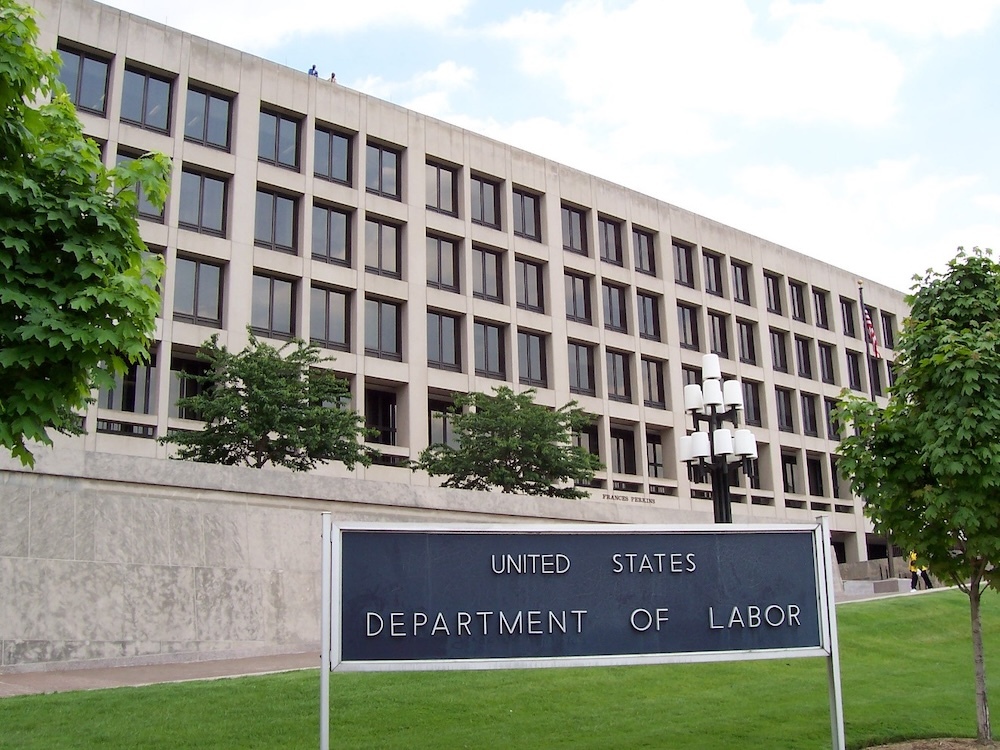
The Department of Labor is making headlines on multiple fronts. As one might expect from this administration, there’s good news for employers, including a business-friendly regulatory shift on joint employment that seems to be back on track. The less tidy news involves a federal court dismissal and more on an inspector general’s investigation, which originally came to light via a tabloid and keeps producing departures from Labor Secretary Lori Chavez-DeRemer’s inner circle.

The “old” Trump joint employer rule is back on the table

We recently told you about how the NLRB officially brought back its 2020 joint employer rule, through which businesses must exercise “substantial direct and immediate” control over core workplace conditions, shared with another business, before they can be classified as a joint employer. This is a higher threshold than the Biden standard requiring only that businesses potentially be able to influence these conditions, which increased liability for employers, even if they didn’t control wages, scheduling, benefits, etc.


Now, the DOL’s Wage and Hour Division has sent a proposed joint employer rule to the White House for review. This further signals a return to a narrower liability standard. The “new” standard is still under wraps but is expected to closely resemble the previous Trump DOL version, which involved a four-part test asking whether a company actually acted upon its power for those core workplace conditions. 


A Court blocked the DOL from unilaterally settling mine safety cases

Meanwhile, a federal appeals court rejected the DOL’s attempt to establish that the labor secretary can unilaterally close out mine safety penalty cases without going through an independent review panel. The dispute began when DOL moved to resolve contested citations worth millions of dollars against several coal companies, only to have the Federal Mine Safety and Health Review Commission's (FMSHRC) ALJs push back on the efforts.


D.C. Circuit Court of Appeals Judge Karen Henderson wrote that the court lacks jurisdiction to intervene or overrule before the FMSHRC issues a final order. Henderson also found that waiting on that final order would not harm the DOL’s legal options, including the ability to challenge the order. So, the commission's independent oversight role remains in place for now.

Scandal continues to swirl around the labor secretary's office

Back in January, the New York Post reported that Lori Chavez-DeRemer was under internal investigation by the DOL’s Office of Inspector General for alleged travel fraud, indulging in alcohol during work hours, and having an “‘inappropriate’ relationship with a subordinate.” The accusations led to four staffers, including Chavez-DeRemer’s chief of staff and her bodyguard, being placed on leave and then told to resign after allegedly assisting the secretary by concocting official travel plans for personal purposes.


Now, Director of Advance Melissa Robey has been terminated by the DOL. And unlike the other departed employees, Robey is talking to the press about what she calls an attempt “to embarrass and defame me in a failed effort to force me to resign.” Robey also alleges that, although she has been accused of racking up exorbitant travel expenses, she was made to drive an unsafe vehicle “on a 470-mile winter drive through North Dakota,” and “I did nothing wrong and have nothing to hide.” Meanwhile, the White House continues to stand behind Chavez-DeRemer. 

One real development and some noise

To sum up these stories: The scandal is a distraction, the mine safety ruling is a procedural pause, and the joint employer rule is the one with real effects for how employers structure their workforce relationships. We’ll be keeping our eyes on that one.


In the News | Kimberly Ricci Published on SHRM

by Kimberly Ricci

In a new feature for SHRM, titled Why Gen Z’s Desire for Community Has Labor Relations Implications, Kimberly Ricci examines a key reason why younger workers are turning to unions to fill a specific need.


Quite simply, Gen Z’s hunger for community and belonging at work has direct labor relations consequences. When employers don’t provide it, unions will fill the vacuum.


The belonging data examined in the SHRM article:

  • 75% of employees feel excluded at work

  • 56% of Gen Z workers want more socializing opportunities; 85% say workplace friendships increase engagement

  • Gallup links elevated stress in younger workers directly to disengagement

Gen Z’s union vulnerability:

  • 45% of workers under 30 are “union curious,” i.e. more open to third-party representation

  • Low union density means fewer Gen Z workers have parents with firsthand union experience to balance organizing messaging

More notes for employers:

  • Gen Z is becoming a dominant workforce presence as Boomers retire

  • Building genuine community addresses the underlying need before a union campaign frames itself as the solution

Read the full article on SHRM: (membership required)
Why Gen Z’s Desire for Community Has Labor Relations Implications


Friday Five: Healthcare Strike Fallout, NLRB Decisions, And Chavez Aftermath At The DOL

by Kimberly Ricci

NYC isn’t the only coastal city looking at a $30 minimum wage:

Big Labor is lobbying local lawmakers in California to raise Alameda County’s minimum wage far beyond the current $16.90 per hour. Their goal is to push up to $30 by 2030, which makes the SEIU’s decade-old “Fight For $15” campaign pale in comparison.


UAW Region 6 leaders are among the most vocal of the coalition pushing for this initiative to land on November ballots. If the issue passes with voters, then the 2030 deadline would apply to businesses with 100+ employees and who surpass annual revenue of $1 billion, and smaller companies would have an extended deadline to reach that level.


This follows word earlier that the NYC Council introduced a bill to increase the Big Apple’s minimum wage to $30 by 2030, much to the trepidation of a restaurant owner who predicted that this would make entrepreneurship unsustainable in that sector. The Teamsters and Amazon Labor Union are behind that effort, akin to SEIU-lobbied legislation that increased California’s fast-food minimum wage to $20 only a few short years ago. 


The DOL’s measured reaction to the Cesar Chavez allegations:


The aftermath won’t be over anytime soon after last week’s New York Times investigative report detailing an alleged “pattern of sexual misconduct” against United Farm Workers co-founder Cesar Chavez. This week at the Department of Labor headquarters, a portrait of Chavez was removed from prominent display, and an engraving has been covered. 


California lawmakers also took swift action this week by voting to rename Cesar Chavez Day (Mar. 31) as Farmworkers Day. This mirrors action at libraries and parks across the U.S. based upon that investigative report, which included rape accusations from Chavez’s fellow UFW co-founder, Dolores Huerta. 


Altogether, the effects of the Chavez revelations won’t become clear for some time, but it’s worth noting that the UFW’s membership rolls have fallen drastically over decades, down to less than 5,000 members, which is far fewer than 60,000 or so members from the union’s 1970s heyday. 


A long Kaiser Permanente strike didn’t bring meaningful results for union members:


Around 31,000 Kaiser nurses and other healthcare workers ended an open-ended UNAC/UHCP strike and ratified a new contract. The union has predictably lauded the deal as “historic” with 21.5% raises over four years


Kaiser repeatedly offered 21.5% raises, which include 16% in the first two years of the contract, both in late January and last fall, and the union kept nurses on strike for months before accepting that same offer.


Progressive site WSWS is now calling out the union for “a calculated betrayal of tens of thousands of healthcare workers" in accepting 21.5% as opposed to the union’s original 38% demand. Another long healthcare strike ended without meaningful results for union members.


The NLRB’s Ex-Cell-O avalanche has begun:


A few weeks ago, the NLRB reaffirmed its 1970 Ex-Cell-O standard. That decision still protects the employer’s NLRA-articulated right to refuse to bargain while challenging a union certification in court. This Board decision follows former General Counsel Jennifer Abruzzo’s aggressive quest to punish employers with “make-whole” remedies for exercising their legal right, but the Biden-era Board never finished that job. 


After the current Board declined to overrule Ex-Cell-O, GC Crystal Carey further confirmed that the standard will not be up for review again under her watch. And if you were wondering how many NLRB cases would soon reflect that stance, the answer, naturally, is “plenty.” 


At least seven Ex-Cell-O cases have been disposed of by the Board in recent days, as tracked via Matt Bruenig’s NLRB Edge newsletter. Of course, employers can still face other remedies for unlawful conduct while seeking judicial review of union certification, but the Board is wasting no time in clearing out a stack of cases that don’t merit further attention.


Meanwhile, the Cemex drama continues:


The Abruzzo NLRB’s most aggressive move, however, is still in process of cleanup by the current Board.


As we previously discussed, the Sixth Circuit Court of Appeals declined to enforce a Cemex bargaining order, thereby sticking a fork in the Board's 2023 decision that favored such an order for a single ULP. But it ain’t over yet. The Ninth and D.C. Circuits still have pending Cemex cases, and the Board has yet to issue a decision after the Sixth Circuit’s remand. 


This week, however, the NLRB reversed a regional director’s dismissal of an employer’s RM petition against CWA. In doing so, the Board rejected the argument that “promptly” under Cemex meant a two-week deadline. That standard required an employer to either recognize a union after card check or file an RM petition for an election within two weeks. According to the current Board, no deadline exists for an RM filing under Cemex


At some point, the Board is widely expected to overturn Cemex and restore the Gissel standard of only issuing bargaining orders for extreme employer conduct. This overturning might not happen until a third GOP member is confirmed, and we also await the pending appeals court decisions.

About Labor Relations INK

Labor Relations INK is published weekly and is edited by LRI Consulting Services, Inc. Feel free to pass this newsletter on to anyone you think might enjoy it. New subscribers can sign up by visiting here.


If you use content from this newsletter, please attribute it to LRI Consulting Services, Inc. and include our website: http://www.LRIonline.com 


Contributing editors for this issue: Greg Kittinger, Michael VanDervort, and Kimberly Ricci.


You are receiving this email because you subscribed to receive our labor relations newsletters and updates. You can manage your email preferences by clicking the link at the bottom of any of our email communications.


About LRI Consulting Services, Inc.

LRI Consulting Services, Inc. exists to help our clients thrive and become extraordinary workplaces. We improve the lives of working people by strengthening relationships with their leaders and each other. For over 40 years, LRI Consulting Services, Inc. has led the labor and employee relations industry, driven by our core values and our proven process, the LRI Way.


Share