 |
|
|
|
|
 |
|
|
Induced Pluripotent Stem Cell (iPSC) Industry Trends Dominating in 2026
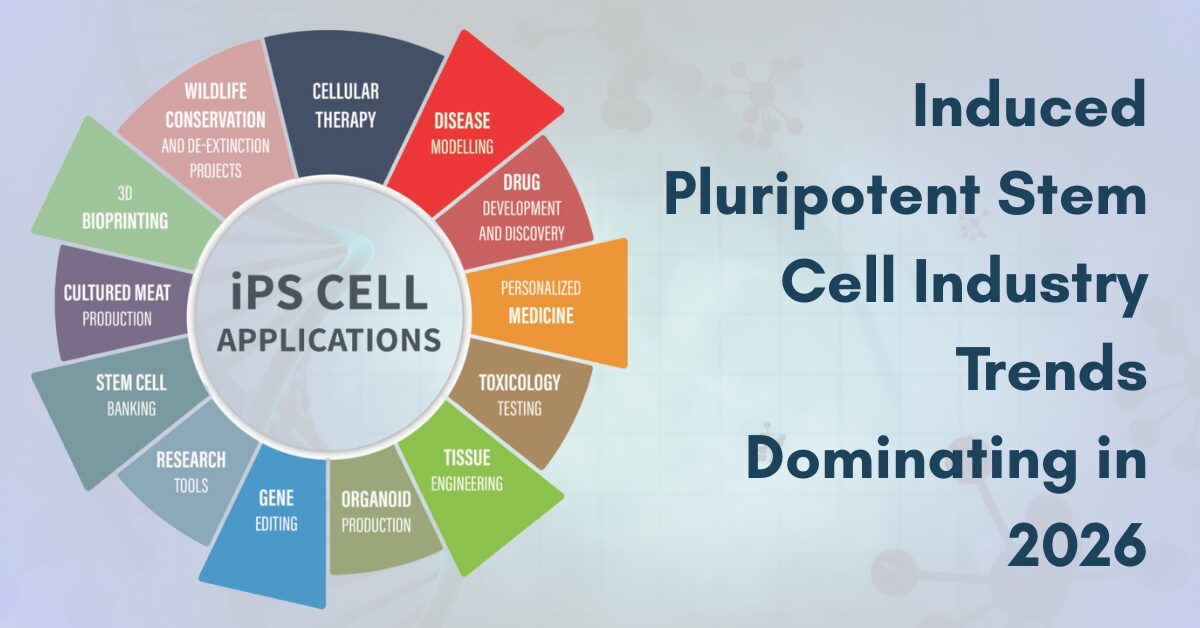
Today, iPSCs are being explored for applications related to drug screening, toxicological studies, disease modeling, cell therapy, personalized medicine, cultured meat production, and beyond. Of course, the world’s largest research supply companies are also commercializing a diverse range of iPSC-derived products and services. This article explores the various iPSC industry trends that are dominating today and the leading market competitors within each niche. |
|
|
Generate Billions of Xeno-Free Fibroblasts for Your R&D Program
Designed with scalable manufacturing in mind, RoosterVial™-hDF working cell banks contain >1 million cryopreserved xeno-free primary human dermal fibroblasts (hDFs) isolated from normal neonatal foreskin for translational research and product development. When paired with RoosterNourish™ expansion media, leverage a manufacturing process that includes no media exchanges to efficiently generate billions of cells.
|
|
|
 |
|
|
GMP Manufacturing of iPSC Master Cell Banks for Allogeneic Therapies at REPROCELL: A Cost-Optimized Approach
Are you advancing an iPSC therapy program and planning for clinical-scale manufacturing of GMP Master Cell Banks (MCBs)? REPROCELL provides industry-standard, GMP-compliant iPSC MCB manufacturing services that support robust regulatory pathways without compromising quality or operational discipline. Through our European partnership with Histocell and its EMA-authorized facility in Bilbao, Spain, together with REPROCELL’s U.S. GMP site in Beltsville, Maryland, we offer a dual-site manufacturing network aligned with FDA, EMA, and PMDA expectations. |
|
|
Patient Enrolment Complete in Phase 2 aGvHD Clinical Trial
Melbourne, Australia; 15 December 2025 - Cynata Therapeutics Limited (ASX: “CYP” or “Cynata”), a clinical-stage biotechnology company specialising in cell therapeutics, is pleased to announce that patient enrolment has been completed in its Phase 2 clinical trial of CYP-001 in adults with newly diagnosed, high risk acute graft versus host disease (aGvHD). A total of 65 participants have been enrolled in the trial across numerous clinical centres in Australia, the USA, and Europe. Each participant was randomised to receive either steroids plus CYP-001, or steroids plus placebo. |
|
|
Esco Aster Signs Exosome Clinical cGMP Manufacturing Contract With Shine-On Biomedical For A Novel First-In-Class HLA-G Targeting Exosome Drug Delivery Platform
Singapore, 12 December 2025 – Esco Aster, a vertically integrated cell and derivatives CRDMO based at JTC LaunchPad Singapore, announced CMC manufacturing support for Shine-On Biomedical’s HLA-G targeted exosome program. Shine-On Biomedical sponsored Esco Aster in 2023 for cGMP services, starting with high-yield exosome development using Esco Aster’s cell line platform. The technical reports of process, analytical, and formulation development, exosome drug loading, GMP engineering runs, and stability studies supported Shine-On’s IND submission. The IND was cleared by the U.S. FDA in Q1 2025. |
|
|
Applied StemCell Demonstrates Efficient Knock-In of a 50 kb DNA Construct into Human iPSCs Using TARGATT™ Technology
Applied StemCell, Inc. (ASC), announced the successful knock-in of a 50 kilobase (kb) multifunctional DNA insert into human iPSCs using its proprietary TARGATT™ technology. The achievement establishes a new benchmark for the size and complexity of genetic payloads that can be efficiently and site-specifically integrated into the human genome. This work represents a significant advance in the ability to perform large, precise, and reproducible genome engineering in human cells. |
|
|
ACHU Toulouse and Cell-Easy Launch A-MUSE, a Phase 1/2 Clinical Trial Evaluating the CellReady® Allogeneic MSC Platform in Systemic Sclerosis
Toulouse, January 22, 2026 — Cell-Easy, a CDMO specialized in the development and GMP manufacturing of ATMPs, announced a new clinical milestone achieved in close collaboration with Toulouse University Hospital (CHU Toulouse). The European Medicines Agency (EMA) has granted Clinical Trial Authorization (CTA) for AMUSE, a Phase 1/2 clinical trial evaluating the safety and efficacy of an allogeneic mesenchymal stromal cell (MSC) therapy in patients with systemic sclerosis presenting perioral fibrosis and functional impairment. |
|
|
Qkine Limited and Akron Bio Announce Strategic Partnership
Cambridge, UK and Boca Raton, FL – January 27, 2026 – Qkine Limited, a leading innovator in the development of high-quality growth factors and cytokines, and Akron Bio, a leading supplier of critical materials and services to the cell and gene therapy industry, announced a strategic partnership focused on the joint development and global supply of ancillary materials to enable the development of stem cell-based therapeutics.
|
|
|
TheWell Bioscience and PeptiGrowth Enter into Marketing Collaboration Agreement to Advance Next-Generation Cell Culture Solutions
Monmouth Junction, NJ and Tokyo, Japan; January 7, 2026 — TheWell Bioscience Inc., a biotechnology company pioneering next-generation animal-free biofunctional hydrogels, and PeptiGrowth Inc., a leader in innovative synthetic peptide growth factors, announced that the two companies have entered into a Marketing Collaboration Agreement to jointly promote cutting-edge solutions for stem cell culture, organoid development, and cell therapy manufacturing.
|
|
|
WORD+2026 Connecting Global NAM Research. #Bettertogether Organoids, Organ-on-a-Chip, Assembloids and innovative NAMS
In just one week, WORD+2026 returns to Cambridge, UK, February 4–5, bringing together leading researchers, societies, and technologies. Over 40 talks span academia, industry, and pharma in an open and collaborative environment, with supported pricing for researchers. Society showcases include NC3Rs, International MPS Society, and EUROoCS, highlighting cutting-edge work from around the world under the theme #BetterTogether. Day 2 features a key discussion on challenges and adoption of NAMs with an international expert panel. Explore 40 innovative tech solutions and join the >100 poster presentations to showcase your research.
|
|
|
Novo Nordisk Ends $598M Heartseed Partnership to Refocus Strategic Priorities
Novo Nordisk has ended its $598M collaboration with Tokyo-based biotech Heartseed, marking a major shift in its approach to regenerative medicine and iPSCs, specifically. The cancelled partnership, originally launched in 2021, was focused on developing an allogeneic iPSC-derived therapy for heart failure called “HS-001”. The Danish pharma giant initially invested $55M in upfront and near-term payments and had pledged up to $540M in milestones to advance Heartseed’s lead asset, HS-001. The therapy uses iPSC-derived cardiomyocyte spheroids (tiny heart cell clusters) to regenerate damaged tissue and restore cardiac function in patients with heart failure. |
|
|
Kobe University Introduces a Simplified Cryopreservation Method for iPSCs
Researchers at Kobe University have unveiled a novel cryopreservation technique that could meaningfully streamline how induced pluripotent stem cells (iPSCs) are stored and handled in laboratory settings. The newly reported method allows iPSCs to be frozen directly within standard culture dishes, eliminating the need for cell transfer prior to cryostorage, an advancement that may significantly improve workflow efficiency across stem cell research, drug discovery, and regenerative medicine.
|
|
|
PeptiGrowth Inc. is Launching a Novel Synthetic Peptide: IL-15 alternative peptide
January 6, 2026, Chiyoda-ku, Tokyo — PeptiGrowth Inc. (Headquarters: Chiyoda-ku, Tokyo, President: Jun Minamitani) has developed a novel synthetic peptide called “IL-15 alternative peptide” which is functionally equivalent to recombinant interleukin 15 (IL-15). Designed for regenerative medicine and cell therapy, this peptide overcomes common challenges of conventional growth factors, including lot-to-lot variability, contamination risks, low stability, and high costs. Fully chemically synthesized and animal-component free, it supports xeno-free, chemically defined cell culture media while maintaining equivalent biological function.
|
|
|
BMS Makes a Bold Leap into CAR-T Buying Orbital Therapeutics for $1.5B
On October 10th, 2025, Bristol Myers Squibb (BMS) announced its plan to acquire Orbital Therapeutics for 1.5 billion dollars in cash. This decisive move places BMS directly into the rapidly growing in vivo CAR T sector. Orbital Therapeutics, based in Cambridge, Massachusetts, has been advancing a next generation RNA platform that is designed to reprogram immune cells inside the body instead of relying on the traditional practice of engineering cells outside the body. |
|
|
A Spark Becomes a Surge: How Ryoncil Reignited MSC Development
It’s official: It has been one year since the cell therapy field celebrated a historic milestone. On December 18, 2024, the FDA granted its first-ever approval for a mesenchymal stem cell (MSC) therapy, Mesoblast’s Ryoncil® (remestemcel‑L‑rknd). This landmark decision marks not just a regulatory first, but a validation of decades of research into the therapeutic potential of MSCs. Once considered experimental, MSC therapies are now stepping into mainstream medicine. The approval has ignited renewed investment, scientific exploration, and clinical interest, setting the stage for rapid growth and broader adoption of MSC-based therapeutic products. |
|
|
Top Innovators in MSC Research Products: Who’s Leading in 2026?
The field of mesenchymal stem cell (MSC) research continues to gain momentum as scientists and innovators push the boundaries of regenerative medicine, tissue engineering, and biotechnology. From developing engineered tissues to advancing cell-based therapies, MSCs are at the heart of these groundbreaking efforts. As a result, the demand for high-quality MSC research products has grown rapidly. Whether you are involved with research, clinical applications, or biomanufacturing, knowing where to find reliable MSC tools is essential for success. |
|
|
Big Pharma Makes M&A Moves to Secure Positions in In Vivo Cell Engineering
Over the past year, a striking trend has emerged in biotechnology. Major pharma companies are racing to acquire in vivo cell engineering platforms, signaling that reprogramming cells inside the body has moved from speculative science to strategic priority. In just a few months, the field has transformed. AstraZeneca, AbbVie, Gilead’s Kite Pharma, and Bristol Myers Squibb have all made acquisitions designed to accelerate their capabilities in in vivo cell therapy. Each deal highlights the growing importance of technologies that can directly engineer immune cells without removing them from the body. |
|
|
iOrganBio Emerges from Stealth with $2M and Launches CellForge™, the First AI-Powered Cell Manufacturing Platform
iOrganBio announced its launch from stealth with $2 million in funding to transform how human cells are made. The round was led by First Star Ventures along with institutional investors IndieBio, Cape Fear BioCapital, 2ndF, Terasaki Institute, and Alix Ventures. iOrganBio’s proprietary CellForge™ platform combines AI-driven prediction with high-throughput experimental control to engineer cells and organoids across multiple high-value areas spanning drug discovery, manufacturing, and cell therapies. The first-of-its-kind platform utilizes closed-loop control of 3D culture environments to dynamically optimize culture conditions during human pluripotent stem cell (hPSC) differentiation. |
|
|
Curi Bio Secures $10M Series B to Scale Human-Relevant iPSC-Based Preclinical Platforms and Advanced Data Analysis for Drug Discovery
Curi Bio, a leader in delivering human-relevant functional data for drug discovery and development, has closed a $10M Series B financing round. The round was led by DreamCIS, the leading CRO based in Seoul, South Korea. The new capital will be used to scale Curi Bio’s integrated platforms featuring human iPSC-derived cells, tissue-specific biosystems, and advanced data analysis. The investment will directly accelerate the development of new platforms for cardiac, skeletal muscle, metabolic, smooth muscle, and neuromuscular diseases and expand Curi Bio’s commercial reach across the globe. |
|
|
Trailhead Biosystems Puts iPSCs on a New Path
Biotech founder and CEO Jan Jensen has never been one for following the beaten track. As a young scientist studying the formation of insulin-producing pancreatic cells, Jensen questioned the prevailing view that these cells descended from neuroectoderm. His pancreatic embryonic tissue studies told him otherwise: insulin-producing pancreatic cells originate from within the pancreas itself. Jensen’s hypothesis, now the accepted view, and his further studies made him the first developmental biologist at Novo Nordisk, at a time when the world’s largest insulin producer had little interest in cell-based therapy. Now, 20 years later, Novo Nordisk is at the forefront of cell-based Type I Diabetes research. |
|
|
What Did 2025 Teach Us about Stem Cell Innovation and Market Dynamics?
What did 2025 teach us about stem cell innovation and market dynamics? For cell therapy professionals, 2025 was a defining year because it clarified how the future of the sector will actually be built. Instead of chasing headlines, companies focused on solving the structural barriers that have held the field back for more than a decade. New data, maturing pipelines, and shifting investment patterns brought fresh realism to a sector often driven more by optimism than operational readiness. Above all, 2025 revealed the difference between technologies that promise transformation and infrastructure that can actually deliver it. |
|
|
What Are iPSCs, Who is Funding Them, and What Trials are Underway?
Induced pluripotent stem cells (iPSCs) can be made by reprogramming mature adult cells back into an embryonic-like state. Derived from skin or blood cells, iPSCs are not controversial, because they are made from adult cells. As pluripotent stem cells, they can give rise to all of the tissues that form the human body. This article explores the therapeutic potential, diseases under investigation, active clinical trials, funding sources, and commercialization efforts underway for iPSCs globally. |
|
|
Do You Know the Top Quality Guarantees Among U.S. Cord Blood Banks?
Private cord blood banking continues to evolve in the U.S., with several large companies offering storage of newborn stem cells for potential medical use by families. Cord Blood Registry (CBR) remains the largest U.S. private cord blood bank, having stored more than one million cord blood and cord tissue units, making it significantly larger than its competition and a clear leader. In addition to CBR, other prominent private cord blood banks in the U.S. include ViaCord, Cryo-Cell, and Americord. These banks vary in experience, storage scale, services offered, and the specifics of their quality guarantee programs. |
|
|
Top Companies Developing Cell Therapy Treatments For Diabetes in 2026
With an aging population, surging rates of obesity, and the incidence of diabetes on the rise, these companies are exploring the use of stem cells and cell therapies for diabetes treatment. According to the Center for Disease Control (CDC), 29.1 million people or 9.3% of the U.S. population has diabetes. According to the American Diabetes Association, the annual cost of this disease in the U.S. is “$245 billion per annum or approximately $500,000 every minute.” |
|
|
10 Remarkable Benefits of MSCs That Make Them Exceptional
MSCs offer several advantages over other cell types. They have repeatedly been shown to be immuno-privileged, making them well suited for allogeneic transplantation by reducing the risk of rejection and related complications. In addition, advances in regenerative medicine have demonstrated their ability to support the repair of tissues such as cartilage, meniscus, tendons, and bone through homing to injury sites, paracrine signaling, immune modulation, and improvement of the local microenvironment. Together, these properties make MSCs a compelling therapeutic option for treating a wide range of acute and degenerative diseases.
|
|
|
Advances in Exosome Isolation and Characterization: Technologies, Commercial Vendors, and Clinical Implications
Because exosomes are being explored for a diverse range of therapeutic applications, it is critical to optimize exosome isolation methods for maximum yield, purity, and reproducibility. Beyond the classical ultracentrifugation method, there are now several commercial exosome isolation kits developed around specific principles, such as charge neutralization-based precipitation, gel-filtration, and affinity purification using magnetic beads, that are available in the global market. |
|
|
A Complete Guide to Induced Pluripotent Stem Cell (iPSC) Core Facilities
Induced pluripotent stem cell (iPSC) core facilities are facilities created to facilitate the derivation and distribution of iPSC lines. These facilities promote iPSC research advances by providing disease-specific iPSC lines to researchers, thereby allowing more researchers to study mechanisms of disease and new therapeutic applications. iPSC core facilities can also provide services related to iPSCs, including consultation and technical services, as well as training in iPSC technology. |
|
|
 |
|
|
[REPORT] Mesenchymal Stem Cells / Medicinal Signaling Cells (MSCs) – Advances & Applications, 2025
Today, 12 MSC-based products have received regulatory approvals. This includes 11 full approvals and a 12th conditional approval within China. The Republic of Korea has approved five products; Japan and the EU have approved two products; and India, Iran, and Australia have approved one each. Market competitors have also developed 17 biomaterial-based MSCs and MSC progenitor products, which are largely being used for orthopedic indications. Companies like Cynata are pioneering iPSC-derived MSC (iMSC) production technologies, supporting large-scale therapeutic development. In total, at least eight companies are now developing iMSCs. This report reveals critical MSC industry trends and metrics, accompanied by market size figures with forecasts through 2032. |
|
|
[SALE] Global CAR-T Cell Therapy Market – Market Size, Forecasts, Trials, and Trends, 2025
Since 2017, 13 CAR-T cell therapies have reached commercialization. Seven therapies have been approved by the U.S. FDA, after which approvals for them were issued in other major healthcare markets. These therapies include Kymriah, Yescarta, Tecartus, Breyanzi, Abecma, Carvykti, and Aucatzyl. Beyond the U.S., four CAR-T therapies (Relma-cel, Fucaso, Yuanruida, and Zever-cel) have been approved by China’s NMPA. Additionally, two therapies, NexCAR19 and Qartemi, have received approval from India’s CDSCO.
This report reveals market size figures for the Global CAR-T Cell Therapy Market, segmented by Product, Geography, and Indication, with forecasts through 2032. It quantifies CAR-T funding events, including licensing deals, collaborations, financing rounds, IPOs, and M&A transactions. It presents rates of publications, patents, grants and trials. This week only, you can claim this global strategic report for an unusual 20% off. |
|
|
[UPDATED] Global Regenerative Medicine Industry Database, 2026 - Featuring 1,920+ Companies
Regenerative medicine (RM) companies are continuing to multiply. There are now an astonishing 1,920+ companies developing RM products to advance human health. This database is designed to help you identify all known market participants in this fast-growing field, including competitors, collaborators, or acquisition targets. RM companies include those advancing stem cell therapies, cell and gene therapies, tissue engineering and biomaterials, direct cell reprogramming, exosome therapeutics, cellular scaffolds and matrices, 3D bioprinting, and more.
Because it was just updated, for a limited time, you can claim it for an $150 off. |
|
|
Interested to learn about other market segments, such as MSCs, iPSCs, CAR-T cells, exosomes, cord blood, or the cell therapy industry at large?
To view all available products, explore the BIOINFORMANT SHOP. |
|
|
*Want to advertise in this newsletter? Contact us at Info@BioInformant.com. |
 |
|
|
|
|
|
|
|
|


