|
Hi Future Fit Asia community, |
Enough hot takes on SpaceX's IPO. We'd rather share a signal than a prediction.—one that may define the next decade of value creation in Asia. |
Most investors remember Jeremy Grantham for calling major market bubbles before they burst. Over the past fifteen years, however, his focus has shifted from market cycles to the long-term risks that threaten economic prosperity itself. |
One of those risks is still largely absent from mainstream investment conversations: toxicity. Through the Grantham Foundation for the Protection of the Environment, Jeremy Grantham has supported our latest report on how toxic chemicals are reshaping health, regulation, supply chains, and innovation across Asia. |
As Grantham has often observed: "The financial world is not very interested in anything that is long term and unpleasant." Toxicity may be the next major example of this investment blind spot. |
Like climate change once did, toxicity is often diffuse, difficult to measure, and easy to underestimate—until regulation tightens, consumer expectations shift, litigation grows, or scientific evidence becomes impossible to ignore. |
|
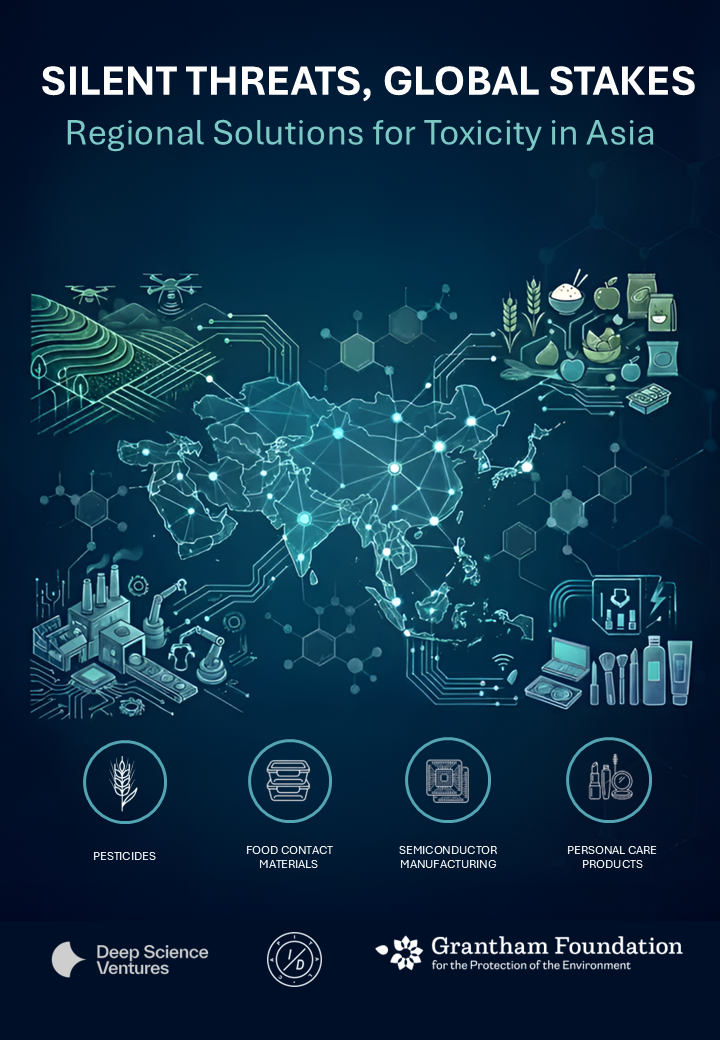
Silent Threats, Global Stakes |
Industrialisation has delivered extraordinary growth across Asia. It has also created a chemical legacy that is beginning to influence regulation, public health, supply chains, and consumer trust. |
At Future Fit Asia, we see this not only as a risk story, but as a transition story. Our upcoming report examines where toxicity risks are emerging, how policy and markets are evolving, and where capital can accelerate practical solutions. |
The evidence is already accumulating across food systems, water, packaging, consumer products, and advanced manufacturing. Many of these risks remain difficult to quantify, which is precisely why they are often overlooked. |
|
|
Toxicity isn’t a black swan-style shock waiting offstage. Several developments point to the same underlying shift: |
Millions of tonnes of discarded electronics continue to be exported from the United States to Southeast Asia despite international agreements intended to limit hazardous waste. Countries including Malaysia, Thailand, Indonesia, and the Philippines continue to absorb much of that burden. In China, food inspections continue to detect residues of pesticides that have been banned for years. Illegal sales, economic pressure on farmers, and fragmented supply chains have made these chemicals difficult to eliminate completely. Along the Salween River, expanding mining activity has raised concerns about contamination from heavy metals and other toxic substances. Communities downstream are already reporting impacts on fisheries and agriculture.
|
Different stories, but the same signal: chemical risk is becoming more visible across the region. |