Subject: The Biology Dividend: Southeast Asia’s Understated Bioeconomy Edge

Was this email forwarded to you? 

Click here to join our community and make sure you follow us on LinkedIn

Walk through any Southeast Asian market, and you'll notice something remarkable hiding in plain sight: biological resources being transformed, regenerated, and monetized across every corner of daily life. This isn't some trendy new movement, it's woven into the region's economic DNA, stretching back generations. Southeast Asian communities have long practised something far more elegant: turning nature's leftovers into revenue-generating ventures.

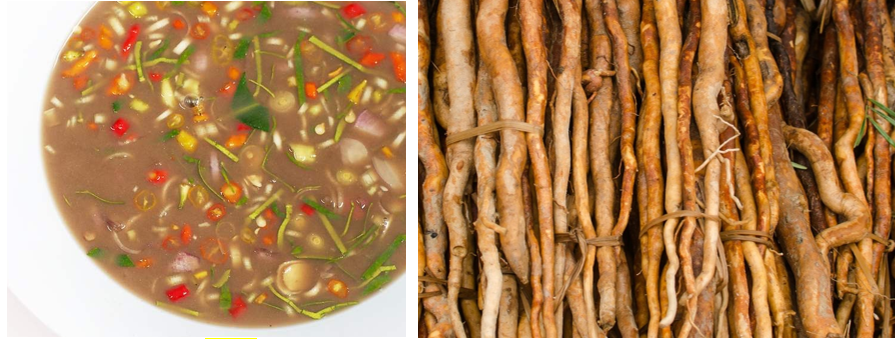
Consider the fermentation traditions that yield budu in Malaysia and fish sauce in Thailand – living processes where microbes transform humble fish into liquid gold, unlocking depths of umami while preserving sustenance across seasons. Or the wisdom keepers who have long cultivated Tongkat Ali and Misai Kucing, drawing from forest and field to restore vitality and balance. These arts have thrived in Southeast Asian hands for centuries, woven into the fabric of daily life and passed from one generation to the next – we simply hadn't yet named them biotechnology.

Left: Budu, traditional fish sauce from Malaysia

Right: Eurycoma longifolia, Tongkat Ali from Malaysia

This is the logic of the bioeconomy: a system-level model in which biological resources, biological knowledge, and circular processes power whole sectors of the economy. And Southeast Asia may be one of the regions where this model is emerging most naturally, long before the term became fashionable.

When Biology Becomes an Economy, Not Just a Technology

Around the world, biotechnology is often treated as the star: fermentation platforms, precision enzymes, engineered microbes.

But the bioeconomy is bigger. It includes biotechnology, but also:

  • Biological resources (plants, animals, microbes, biomass, organic waste)

  • Biological processes (composting, fermentation, anaerobic digestion, bio-conversions)

  • Traditional and modern ways of extracting value from nature

  • Circular business models powered by renewable inputs

This broader framing matters—because Southeast Asia’s strengths don’t lie solely in biotech R&D pipelines. They lie in the region’s ability to convert abundant biological resources into products, businesses, and income quickly.

It’s no coincidence that Malaysian Bioeconomy Development Corporation (formerly known as Malaysian Biotechnology Corporation) has since rebranded around the broader bioeconomy concept.

With relatively limited volumes of low-cost carbohydrate-rich agrifood waste (the typical feedstock for microbial biomanufacturing) compared to other Asian countries, Malaysia is better positioned to leverage the full system, not just the fermentation part of it.

From “Low-Tech Recycling” to Agile Value-Chain Climbing

It’s tempting to romanticize banana-leaf wrappers or bamboo packaging as charming “low-tech” solutions. But that undersells what is actually happening. What the region truly excels at is moving up the bio-based value chain fast.

Consider two trajectories often seen in Southeast Asian ventures:

  • Recycling banana or coconut leaves into baskets, plates, or food packaging

  • Upcycling those same resources into higher-value materials—biopolymers, bio-leathers, functional fibers, natural performance coatings

Entrepreneurs in the region tend to start with accessible, revenue-generating products, then scale upward into higher-margin biomaterials, often faster than Western peers who burn years (and cash) in the lab before testing a market.

This nimbleness—rooted in a cultural familiarity with biological resources—is one of Southeast Asia’s under-recognized competitive advantages.

Malaysia as a Window into the Region’s Bioeconomy

Malaysia provides a useful lens—not because it is uniquely advanced, but because it has built one of the region’s clearest institutional models for linking biotechnology, circularity, and commercially viable bio-based ventures.

The Malaysian Bioeconomy Development Corporation does not only support revenue-positive companies. It also works with pre-revenue startups. But the interesting insight is this:

Many Southeast Asian bio-based companies generate meaningful revenue early—even while developing ambitious technologies.

A few examples illustrate the point:

Culvita

A consumer-facing biotech brand that grew 30x in five years by producing shelf-stable probiotic drinks using locally grown organic fruit and proprietary Lactobacillus and Bacillus strains. Early products financed the development of more advanced formulations.

4tify

A biomaterials producer turning agricultural residues into commercial-scale bio-leather and bio-polymers, growing sales 6x between 2021 and 2024 while scaling production capacity rather than running pilots indefinitely.

These companies aren't exceptions—they’re representative of a broader pattern:
early revenue, rapid iteration, and biotechnology applied where the economics already work.

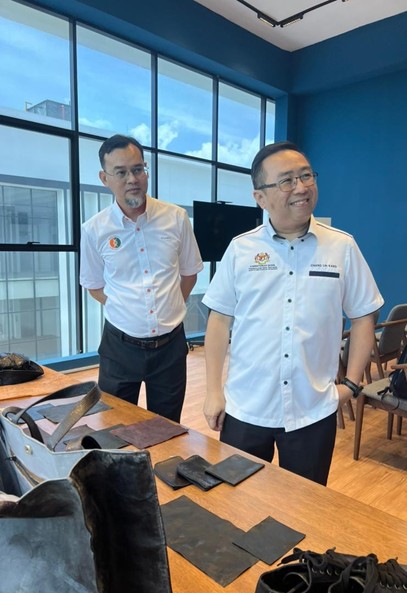
(From left) Chief Executive Officer of Malaysian Bioeconomy Development Corporation, Mohd Khairul Fidzal Abdul Razak, and Minister of Science, Technology and Innovation, Chang Lih Kang, listen to a briefing on 4tify’s biomaterials, including bio-based leather and plant-based textile auxiliaries, during the minister’s visit to 4tify’s facility in Penang on 22 September 2025.

When Biology Outperforms Chemistry, Markets Move

Southeast Asia is beginning to embrace what global biomanufacturing has shown repeatedly: biology wins when it is cheaper, cleaner, and simpler than traditional chemistry. In 2025, Malaysia's Bioeconomy Corporation joined FAO and regional partners at the Bangkok Bioeconomy Forum, signalling increased Asia-Pacific cooperation around bio-based innovation.

The classic example—Vitamin B2 shifting from seven chemical steps to a single fermentation stage with 40% lower costs—illustrates the principle. But the region is adapting it to its own resource base and industrial priorities.

Not every country has abundant cheap sugars for fermentation. But every country in the region has rich biological resources, circular waste streams, and entrepreneurial ecosystems tuned to making biology profitable.

The Bioeconomy Is Already Here—Just Not Where Most People Are Looking

If Southeast Asia becomes a global bioeconomy leader, it will be because it combines the full spectrum of innovation— from traditional biological know-how to advanced biomaterials and biomanufacturing.

Its advantage comes from entrepreneurs who start with what’s at hand, generate revenue early, scale quickly, and move fluidly from natural materials to higher-value bio-based technologies. With institutional frameworks increasingly embracing the system-wide bioeconomy, the region is learning to turn biological abundance into commercial momentum.

And often, that journey still begins with something as simple as a traditional fish sauce.

We’re continuing this conversation offline. Future Food Asia returns 12–13 May 2026 where investors, startups and innovators meet to reshape Asia’s food and agri landscape.

📍 More details soon but trust us, you’ll want this one on your calendar.

Discover all the public sources that informed this newsletter here, plus a layer of ID Capital’s proprietary research — our analysis, data, and field notes that bring it all together.