Many IVF patients focus on eggs, protocols, or embryo grading.
But one of the most important decisions in the entire process happens much earlier - at the exact moment a sperm cell is chosen.
And until recently, that choice relied largely on what embryologists could see under a microscope.
The problem? A sperm cell can appear completely normal while still carrying hidden DNA damage that may affect embryo development, implantation, or pregnancy outcomes.
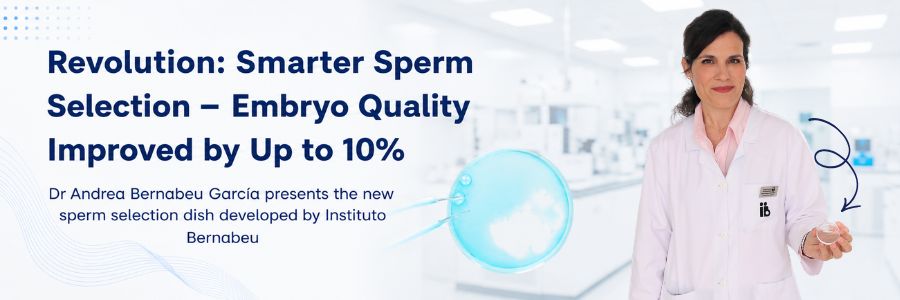
That’s why a new development from Instituto Bernabeu is attracting attention in reproductive medicine. After six years of in-house research, their team has developed and patented a sperm selection dish designed to imitate one of nature’s own selection systems.
Instead of relying only on motility and morphology, the technology recreates conditions similar to the female reproductive tract - allowing biological selection mechanisms to help identify sperm with better genetic integrity and reproductive potential.
What makes this different is the use of the patient’s own granulosa cells - the cells that naturally surround the egg. 🥚
These cells act as a biological filter, attracting and allowing passage only to sperm with greater competence and lower genetic damage before IVF fertilisation takes place.
Read the full article to see how this technology works — and why researchers believe it could improve embryo quality by up to 10%. |