Subject: Digital Dating Abuse/Harm in the Digital Age/Why Mattering is Key

New research, practical tools, and funding opportunities to support your work

DIBBLE NEWS

Love Notes Added to New CEBC Topic Areas!

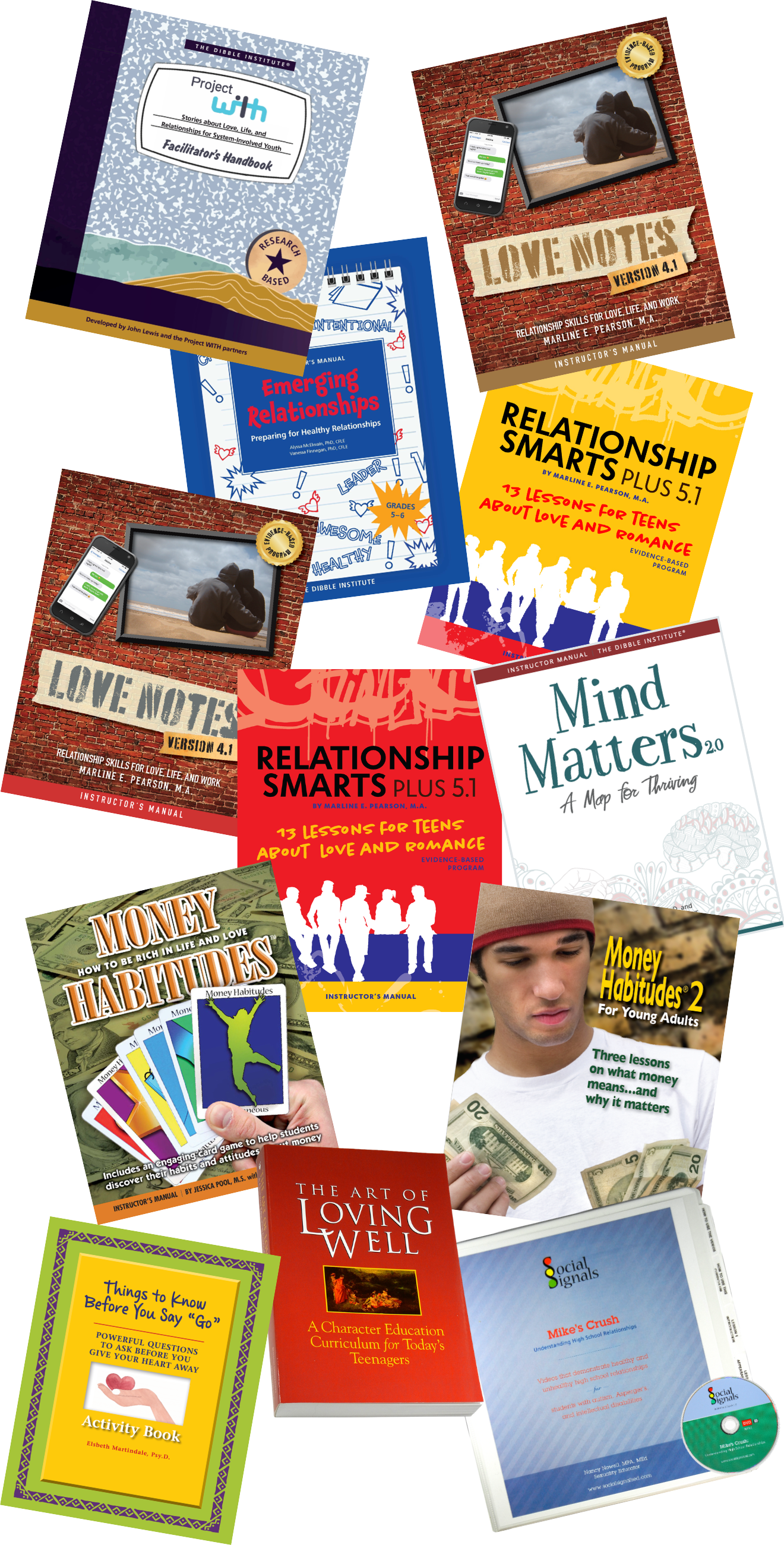
Love Notes 4.0 was recently added to the CEBC's newest topic areas. Love Notes received a ranking of 2 or "Supported Research Evidence" under their new Sexual and Reproductive Health Programs (Youth/Young Adults) topic area. Love Notes was also included in the Pregnant and Parenting Teen Services topic area due to the program content specific to serving this population of young people.


Read more...

A Note About Materials Pricing

Like many of you, we've felt the squeeze of rising costs over the past few years. After holding our prices steady for two and a half years, rising operating costs make a modest adjustment necessary. To continue providing the materials you count on, we'll be making a small price adjustment—around 5%—beginning in August. We wanted to give you as much notice as possible so you have time to stock up at current pricing before the change takes effect. Thank you, as always, for the work you do with the young people you serve.

THE LATEST

Ghosting Someone May Hurt You as much as it Hurts Them.

While ghosting someone may be common, it can deeply and negatively affect the well-being of the person being ghosted. But what happens to the “ghoster” in those situations? Does someone who ghosts others pay a price? A new study aimed to find out—and, in the process, suggested some healthier alternatives to ghosting.


Read more...

Marital Horizons: The Motivating Power of Marriage for Young Men

Dr. Jason Carroll explains that the retreat from marriage is contributing to the decline of men.


Read more…

Digital Dating Abuse: A Grounded Theory Study

New research finds that digital dating abuse in long-distance relationships operates on a spectrum — from subtle "covert" behaviors like sudden communication changes and deception, to overt patterns of control and hostility — with early, normalized behaviors often serving as warning signs of escalating abuse.


Read more…

NEWS YOU CAN USE

Relationship Educator Blog

Beginning in July 2026, NARME will publish a weekly blog for relationship educator practitioners written by leaders in the field — like you!


Please volunteer your expertise and passion to write an engaging blog for NARME Newsletter readers on a wide variety of topics, including program development, recruitment and retention, effective instruction/facilitation, program delivery, program evaluation, program administration and funding, and more.


Please contact Dr. Alan Hawkins, NARME Vice-chair and blog coordinator, about your ideas for writing a blog and to ask more questions.

Case Studies to Build Facilitators’ Youth Engagement Skills

Youth engagement is the cornerstone of developing effective programming for adolescents, yet many youth-serving professionals struggle to authentically collaborate with youth. Child Trends’ latest resource aims to address this challenge by providing frontline facilitators and other youth-supporting professionals with a practical framework for understanding youth engagement.


Read more…

Love, Breakups, and Harm in the Digital Age

As digital technologies amplify the reach and permanence of relationship-based harm among students, schools and institutions must update their Title IX and behavioral intervention policies to address AI-generated exploitation, non-consensual image sharing, and other forms of tech-facilitated abuse.


Read more…

TOOLS YOU CAN USE

Vibe Check

A private, self-guided tool for reflection, accountability, and consent education.


Read more…

Why Mattering is Key to Our Wellbeing

Feeling valued matters. Learn how to get your teen connected with the people around them.


Read more…

Developmental Relationships

Developmental Relationships help young people thrive.


Read more...

WEBINAR

June 10, 2026

Explore Mind Matters 2.0: A Map for Thriving


For years, Mind Matters has helped teens and adults do some of the hardest, most important work of their lives — building resilience, managing stress, and learning to treat themselves with compassion. We've seen what's possible when people have the right tools and the right support.


Now, we're proud to introduce Mind Matters 2.0: A Map for Thriving — a fully updated curriculum grounded in the latest neuroscience and trauma-informed care, and we want you to see it up close.


Join us for a live webinar with the author of Mind Matters, Carolyn Curtis, Ph.D., and Aaron Larson, Director of Programs, as they walk through the updated curriculum and show you what's new, what's deeper, and what's possible for the people you serve.


You'll get a firsthand look at:

  • New content in every lesson, reflecting current research on how the brain heals and grows

  • A brand-new Lesson 6 — dedicated entirely to self-compassion and resilience

  • New digital self-regulation tools designed for today's learners

  • A positive growth mindset module that helps participants see their own capacity for change

  • The research behind the updates

Mind Matters 2.0 remains designed for facilitation by non-clinicians, for participants ages 12 and up, across the wide range of settings where healing happens — schools, community organizations, justice settings, and more.


Whether you're new to Mind Matters or have been using it for years, this is a chance to see the research, explore the updates, and imagine what this program could mean for your community.


When: June 10, 2026 @ 1:00pm Pacific/4:00pm Eastern


Duration: 60 minutes


Cost: Free!

CURRENT FUNDING STREAMS

Weyerhaeuser Family Foundation

Application Due Date: June 15, 2026

The goal of the Youth Initiative is to support direct service programs that promote resilience, stability, and psycho-social health for youth ages 14 to 21 who have experienced trauma because of exposure to Adverse Childhood Experiences (ACEs).

The National Institute of Justice is offering $4 million in funding for research and evaluation on youth justice topics, with two focus areas: juvenile justice system prosecution and juvenile reentry practices. Great opportunity for organization doing research or evaluation work in the juvenile justice space.

The goal is to support scientists in becoming independent researchers. Applicants must propose a research project that focuses on at least one of the following NCIPC research priorities related to interpersonal violence and suicide affecting children and youth (birth to age 17). These research priorities include adverse childhood experiences, child abuse and neglect, youth violence, intimate partner violence (including teen dating violence), sexual violence, suicide, and cross-cutting preventions (i.e. examining two or more of these priority topics). Applicants are encouraged to explore multiple forms of interpersonal violence and/or suicide among children or youth, community factors that increase the risk of interpersonal violence and/or suicide, and the practical relevance of the research for prevention and intervention efforts.


Editor’s Note: If you apply for this funding and include a Dibble program, we would be happy to contribute training and materials for the evaluation

Research Grants for Preventing Violence

Application Due Date: July 1, 2026

This initiative is intended to support effectiveness research to evaluate innovative programs, practices, or policies to address risk for interpersonal violence and suicide among groups experiencing a high burden of these issues. Innovative approaches are those that have not been rigorously evaluated for effectiveness in reducing interpersonal violence or suicide. Analyses examining how the approach affects different populations that are most impacted by these issues are a priority. Funds are available to conduct studies focused on preventing interpersonal violence or suicide involving youth or young adults (ages 10–24 years), including child abuse and neglect, intimate partner violence, sexual violence, suicide, and youth violence.


Editor’s Note: If you apply for this funding and include a Dibble program, we would be happy to contribute training and materials for the evaluation

Children in Need of Services Grant Program

Application Due Date: July 22, 2026

The Children in Need of Services (CHINS) Grants Program provides funding for the implementation of programming for prevention from the juvenile justice system and intervention services for youth as alternatives to detention. Funding will be used to promote programming related to CHINS. Programming should be evidence supported or evidence based.


Editor’s Note - Find a local Government to partner with.

FORECASTED FUNDING STREAMS

The purpose of this program is to increase access to and provide effective trauma-focused treatment and services to children, adolescents, and their families who have experienced traumatic events.

Garrett Lee Smith Campus Suicide Prevention

Estimated Post Date: May 29, 2026

The purpose of this program is to support a comprehensive public health and evidence-based approach that: (1) enhances behavioral health services for all college students, including those at risk for suicide, depression, serious mental illness (SMI)/serious emotional disturbances (SED), and/or substance use disorders that can lead to school failure; (2) prevents and reduces suicide and mental and substance use disorders; (3) promotes help-seeking behavior and reduces stigma; and (4) improves the identification and treatment of at-risk college students so they can successfully complete their studies.

Competitive Personal Responsibility Education Program

Estimated Post Date: May 31, 2026

Estimated Application Due Date: July 30, 2026

The Family and Youth Services Bureau will be accepting applications for the development and implementation of the Personal Responsibility Education Program (PREP) in states that do not accept FY2026 allocations for State PREP. (details to come on which states are eligible) This program supports educational projects for youth ages 10–19 and for pregnant and parenting youth under age 21, focusing on abstinence and contraception to prevent pregnancy, sexually transmitted infections, and HIV/AIDS. Projects are also required to implement at least three of the following six adulthood preparation subjects: healthy relationships, adolescent development, financial literacy, parent-child communication, educational and career success, and healthy life skills.

Tribal Personal Responsibility Education Program (Tribal PREP)

Estimated Post Date: June 19, 2026

Estimated Application Due Date: July 21, 2026

Tribal PREP competitively funds projects that educate American Indian/Alaska Native (AI/AN) youth ages 10-19, and expectant and parenting youth under age 21, on both abstinence and contraception for the prevention of pregnancy, sexually transmitted infections (STIs), and HIV and promote successful transition of youth to adulthood through education on key adulthood preparation subjects (APS).

General Departmental Sexual Risk Avoidance Education (GDSRAE)

Estimated Post Date: June 22, 2026

Estimated Application Due Date: July 29, 2026

*Please note the time between release and due date*

The Administration for Children and Families, Administration on Children, Youth and Families, Family and Youth Services Bureau announce the availability of funds under the Sexual Risk Avoidance Education (SRAE) Program. The purpose of the SRAE Program is to fund projects to implement sexual risk avoidance education that teach participants how to voluntarily refrain from non-marital sexual activity. The services are targeted to participants that reside in areas with high rates of teen births and/or are at greatest risk of contracting sexually transmitted infections (STIs). The goals of SRAE are to empower participants to make healthy decisions, and provide tools and resources to prevent pregnancy, STIs, and youth engagement in other risky behaviors.

Please mark our messages as non-spam and add our address to your inbox contacts book.


The Dibble Institute® is a national, independent non-profit that empowers youth and young adults with skills to build and sustain healthy interpersonal and romantic relationships.


The Dibble Institute® does not sell or share your contact information.

In most cases, we obtained your contact information when you provided it to us when purchasing materials, at a conference, or by attending a Dibble training or webinar; or we obtained it through internal research. If you no longer wish to receive emails from us, simply click the unsubscribe button at the bottom of this email.

See our privacy policy.


Powered by:
GetResponse