Subject: Dibble Annual Report/Dating Recession/Lessons from Study of Happiness

Why are girls’ views on dating declining?

March 2026


DIBBLE NEWS

  • Dibble Has Good News to Share!

THE LATEST

  • 12th Grade Girls Are Less Likely Than Boys to Say They Want to Get Married Someday

  • State of Our Unions: The Dating Recession

  • Several Adverse Childhood Experiences Declined Modestly From 2018 to 2023

NEWS YOU CAN USE

  • Lessons From the World’s Longest Scientific Study of Happiness

  • Why Young Men Aren't Dating

TOOLS YOU CAN USE

  • How ICE Raids Are Affecting Children—And What Schools Can Do

  • Healthy Relationship Toolkit

WEBINAR - March 18, 2026


Non-Profit Advocacy 101

A quick scheduling note- we’re meeting one week later than usual this month!


FUNDING STREAMS

DIBBLE NEWS

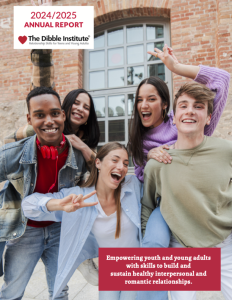
Dibble Has Good News to Share!

We're celebrating something we care deeply about: helping young people build healthy, lasting interpersonal and romantic relationships.


In this year's annual report, you'll find inspiring stories of impact and progress, including:

  • A message of hope from Executive Director, Kay Reed.

  • The launch of Project WITH, of our newest program.

  • Success in Alabama with Emerging Relationships for tweens!

  • Growing evidence that healthy relationship education works.

Read the full annual report…

THE LATEST

12th Grade Girls Are Less Likely Than Boys to Say They Want to Get Married Someday

67% of 12th graders say they’ll likely choose to get married someday, down from 80% in 1993. The decline reflects shifting views among girls.


Read more…

State of Our Unions: The Dating Recession

Young adults today are living in a depressed dating economy. In this 2026 State of Our Unions report, we pursued greater insight on the challenges of contemporary dating through the 2025 National Dating Landscape Survey, a nationally representative sample of 5,275 unmarried young adults ages 22–35 in the United States. We focused mostly on the dating experiences of those single young adults who expect to marry (86%; N = 4,539). What did we learn?


Read report…

Several Adverse Childhood Experiences Declined Modestly From 2018 to 2023

The prevalence of Adverse Childhood Experiences (ACEs) declined from 2018 to 2023, but patterns of specific types of ACEs varied over this period. According to a new Child Trends analysis of the National Survey of Children’s Health (NSCH), declines in three specific ACEs stand out: income insecurity, parental divorce or separation, and parental incarceration.


Read more…

NEWS YOU CAN USE

Lessons From the World’s Longest Scientific Study of Happiness

What is the secret to a healthy and happy life? There is no shortage of self-help gurus offering solutions to hungry audiences, but it would be more helpful to have solid empirical evidence that cuts through the latest hype and trends.


Read more…

Why Young Men Aren't Dating

New data from the Young Men Research Initiative reveals that fewer young men are actively dating—with many citing high expectations, social barriers, and difficulty meeting partners as key reasons behind this growing trend.


Read more…

Why You Should Talk About Dating with Your Teen

Your normally tight-lipped teen lets slip that someone likes them. Do you jump into lecture mode? Or course not! You’re a veteran parent able to realize that teens sometimes use these conversations to process their emotions. Ask them how they feel about it, and then sit back and listen. You don’t need to always agree but remember your role: You are there to help them understand their feelings and the world around them.


Read more…

TOOLS YOU CAN USE

How ICE Raids Are Affecting Children—And What Schools Can Do

What is immigration enforcement doing to kids and families? And what can schools do to protect their students’ mental health and physical safety?


Read more…


(Editor’s Note: Mind Matters provides trauma-informed lessons and self-soothing techniques to help students- and you- reclaim a 'hijacked brain' and restore a sense of safety both in the classroom and in daily life.)

Healthy Relationship Toolkit

The Healthy Relationships Toolkit (HeaRT) is a CDC-developed model to prevent violence in adolescence that teaches 11 to 14-year-olds healthy relationship skills to prevent violence before it starts. HeaRT’s evidence-based approach includes seven components for individuals, peers, families, schools, and neighborhoods that work together to prevent dating violence and other risk behaviors. This website has everything you need to implement the components, including trainings, implementation guidance, program materials, and many other resources.


Read more…

WEBINAR

March 18, 2026

Non-Profit Advocacy 101


Join us to learn the basics of effective advocacy and government relations for nonprofit organizations.


This webinar will include:

  • Overview of Advocacy Basics:

    • What is advocacy?

    • How can nonprofits safely engage in advocacy?

    • What is the difference between education, advocacy, and lobbying?

    • How can nonprofits use advocacy to advance their organizational goals

  • Discuss Policy Trends and Updates:

    • Discussion and analysis of current trends, and

    • Emerging legislation at the federal and state levels relevant to the field of healthy relationships

Objectives: Participants will be able to:

  • Understand the basics of government affairs

  • Learn how nonprofits can leverage government affairs to advance their policy and funding goals

  • Find out how to engage in local, state, and federal advocacy efforts

Presenters: 

  • Terri Lakowski, Esq.; Chief Executive Officer- Active Policy Solutions

  • Jason Marmon, Esq.; Chief Operating Officer- Active Policy Solutions

Who should attend: Executive Directors, CEOs, Board Members, Development Directors, Grant Writers, Program Directors and Managers, Policy “Newbies”, Community Organizers, and those interested in learning about nonprofit advocacy work.


When: March 18 @ 1:00pm Pacific/4:00pm Eastern

A quick scheduling note- we’re meeting one week later than usual this month!


Duration: 60 minutes


Cost: Free!

CURRENT FUNDING STREAMS

Child Abuse Prevention License Plate Grant (AZ Only)

Application Due Date: March 20, 206

The monies shall be allocated to Arizona programs that have a documented record of successful experience in promoting and providing trauma-informed primary prevention programs that strengthen families to prevent child abuse and neglect in all its forms for children. Funding also supports child and family advocacy centers in Arizona to provide support to victims of child abuse and neglect. Programs shall be trauma-informed, family-centered, strengths-based, and evidence-based or evidence-informed.

Weyerhaeuser Family Foundation

Application Deadline: June 15th

The goal of the Youth Initiative is to support direct service programs that promote resilience, stability, and psycho-social health for youth ages 14 to 21 who have experienced trauma because of exposure to Adverse Childhood Experiences (ACEs).  

FORECASTED FUNDING STREAMS

Research Grants for Preventing Violence

Estimated Post Date: February 2, 2025

Estimated Due Date: April 13, 2026

This initiative is intended to support effectiveness research to evaluate innovative programs, practices, or policies to address risk for interpersonal violence and suicide among groups experiencing a high burden of these issues. Innovative approaches are those that have not been rigorously evaluated for effectiveness in reducing interpersonal violence or suicide. Analyses examining how the approach affects different populations that are most impacted by these issues are a priority. Funds are available to conduct studies focused on preventing interpersonal violence or suicide involving youth or young adults (ages 10–24 years), including child abuse and neglect, intimate partner violence, sexual violence, suicide, and youth violence.


(Editor's Note: If you apply for this funding and include a Dibble program, we would be happy to contribute training and materials for the evaluation)

This initiative will solicit applications to support research employing a range of research designs and methods to expand the evidence base on approaches that address the context of people’s lives and living conditions to prevent, treat, and eliminate violence against women (VAW) to improve health outcomes for all.

The goal is to support scientists in becoming independent researchers. Applicants must propose a research project that focuses on at least one of the following NCIPC research priorities related to interpersonal violence and suicide affecting children and youth (birth to age 17). These research priorities include adverse childhood experiences, child abuse and neglect, youth violence, intimate partner violence (including teen dating violence), sexual violence, suicide, and cross-cutting preventions (i.e. examining two or more of these priority topics). Applicants are encouraged to explore multiple forms of interpersonal violence and/or suicide among children or youth, community factors that increase the risk of interpersonal violence and/or suicide, and the practical relevance of the research for prevention and intervention efforts.


(Editor's Note: If you apply for this funding and include a Dibble program, we would be happy to contribute training and materials for the evaluation)

The purpose of this program is to increase access to and provide effective trauma-focused treatment and services to children, adolescents, and their families who have experienced traumatic events.

Garrett Lee Smith Campus Suicide Prevention

Estimated Post Date: March 16, 2026

The purpose of this program is to support a comprehensive public health and evidence-based approach that: (1) enhances behavioral health services for all college students, including those at risk for suicide, depression, serious mental illness (SMI)/serious emotional disturbances (SED), and/or substance use disorders that can lead to school failure; (2) prevents and reduces suicide and mental and substance use disorders; (3) promotes help-seeking behavior and reduces stigma; and (4) improves the identification and treatment of at-risk college students so they can successfully complete their studies.

Please mark our messages as non-spam and add our address to your inbox contacts book.


The Dibble Institute® is a national, independent non-profit that empowers youth and young adults with skills to build and sustain healthy interpersonal and romantic relationships.


The Dibble Institute® does not sell or share your contact information.

In most cases, we obtained your contact information when you provided it to us when purchasing materials, at a conference, or by attending a Dibble training or webinar; or we obtained it through internal research. If you no longer wish to receive emails from us, simply click the unsubscribe button at the bottom of this email.

See our privacy policy.


Powered by:
GetResponse