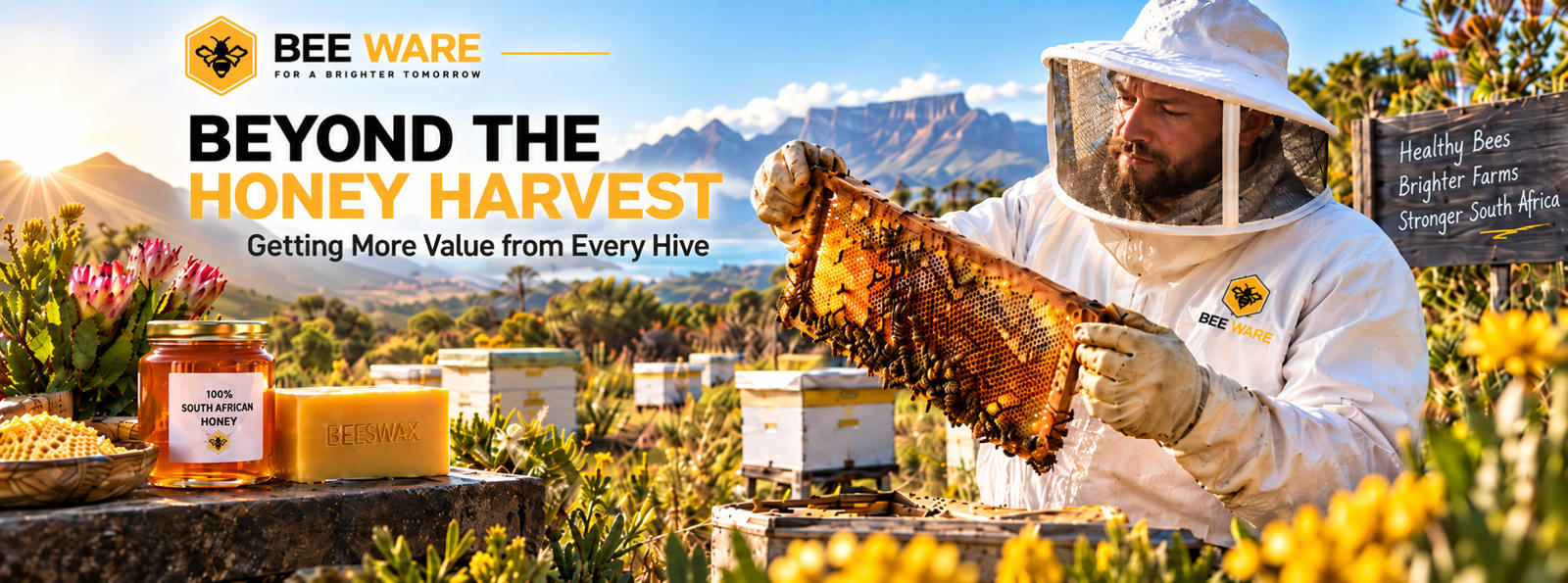
Subject: Beyond the Honey Harvest

Getting More Value from Every Hive

The honey harvest is important.

But it should not be the only measure of a successful beekeeping business.


Beyond the Honey Harvest - Copyright © 2026 Bee Ware

"The hive as a productive holistic powerhouse."

BY Bee Ware © 2026

Getting More Value From Every Hive


Every beekeeper knows the feeling. You inspect a strong colony, watch the bees working and begin to anticipate the next harvest.


You invest in equipment, manage the colony, protect its food reserves and wait for the flowers to deliver.


Then the season changes.


The expected nectar flow may arrive late. Poor weather may interrupt foraging. A colony may need more attention than anticipated.


Even when the honey is harvested successfully, its selling price may not fully reflect the work and costs involved.


That raises an important question for South African beekeepers.


Are you building your businesses around everything the bees can help us produce and deliver, or are we depending too heavily on the next honey harvest?


This week, a new report* from Farmer's Weekly brought that question into focus. (*Not new for us at Bee Ware...)

Our set of published articles cover this exact topic of

"How to Make Beekeeping Profitable"

https://beeware.co.za/news-and-events/


What the South African Industry is Telling Us


In an article published on 15 September, journalist Robyn Joubert explored how two South African beekeeping operations have developed activities beyond selling honey.


Achmat Kazie, chairman of the Western Cape Bee Industry Association and founder of The Bee Inspired Honey Company, described a business combining honey with value-added products, gifting and retail sales.

The article also featured Babylonstoren beekeeper and entomologist Arné Stander, who discussed educational experiences and services connected to the farm's apiary.


Farmer's Weekly SA


These examples offer a useful lesson: the commercial value of an apiary is not limited to the kilograms of honey it produces.

(The exact thing Bee Ware teaches people via YT, newsletters and our Courses - and, moreover, we PRACTICE them for two decades!)


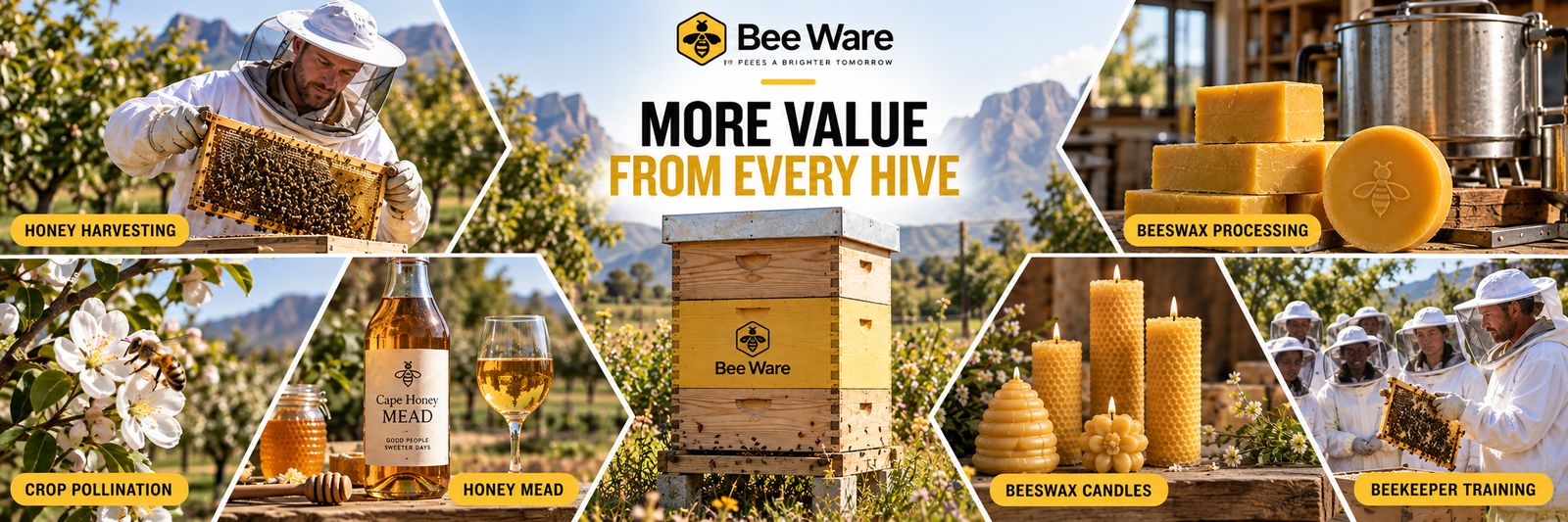
A healthy colony can provide honey and recoverable beeswax. A sufficiently strong, suitable colony can provide pollination services.


Experience gained through sound colony management can eventually support training, mentoring and advisory work.


Each activity serves a different market. Each also requires different skills, resources, standards and operating costs.


The opportunity is not simply to sell more products. It is to identify which activities fit your colonies, your experience and the customers you can serve.

BEE WARE HAS BEEN PROMOTING AND EDUCATING MULTIPLE WAYS TO HARNESS NATURE'S BIODIVERSITY THROUGH BEEKEEPING FOR OVER TWO DECADES! 


"WE’RE NOT STARTING FROM SCRATCH."
"WE HAVE PUBLISHED ALMOST 1000 SUBSCRIBER NEWSLETTERS."

1. Beeswax: make better use of a valuable hive product

Beeswax is one of the most accessible opportunities for a beekeeper already harvesting honey.


During uncapping and comb processing, suitable recoverable wax can become a useful raw material rather than an overlooked by-product.


Clean, properly processed beeswax may be used in candles, wax foundation sheets and a range of manufactured skin products, subject to the appropriate quality and production requirements.


*We have just taken over the reigns from Kobus to take your beeswax and roll it into wax sheets to send it back to you for your apiary!


For a beekeeper with a small or medium-sized operation, this raises a practical question: what happens to the beeswax after the honey has been extracted?


Is it collected and stored separately?
Is it processed into a consistent product?

Could it replace some of the wax foundation you would otherwise purchase?


Bee Ware interpretation


Before investing in new production equipment or attempting to manufacture several different products, establish how much usable wax your apiary actually produces.


Record the weight of recoverable wax, the labour required to prepare it and the cost of processing it. Moreover, find a company or beekeeping business that provides beeswax foundation rolling services converting your raw beeswax into wax sheets for you! 

{Hint: Bee Ware Offers this service}


Then assess whether producing beeswax candles or another wax product provides a genuine financial or operational benefit.


Protect the colony's productive comb. Wax recovery should not become a reason to remove sound comb unnecessarily.

For many newbees, you may only have seen the last 50 or 25 newsletters out of almost 1000 about beekeeping, honey harvesting, pollination, beeswax, mead, balms, cosmetics, sauces and bee removals just at the top level of beneficiation or other uses of the hive! 


2. Pollination: the value of strong colonies extends beyond the apiary

Pollination is another important commercial activity, but it must be approached as a professional agricultural service rather than simply placing a hive on a farm.


In his address to SABIO BEECON 2026, South Africa's Minister of Agriculture identified managed pollination as an important contributor to agricultural production and discussed the opportunities for beekeepers in commercial pollination, colony production and technical services.


South African Government


For a beekeeper, the potential value is clear.


A grower may require colonies during a particular flowering window. The beekeeper must supply colonies that are suitable for the crop, sufficiently populated and properly managed for the agreed period.


Providing that service involves much more than transporting boxes.

Colony strength, timing, hive placement, reliable access to forage, transport, pest and disease management, and communication with the grower all influence the beekeeper's ability to deliver.


Pesticide exposure, theft, poor weather and inadequate forage outside the flowering window can also change the economics of a contract.


The question is therefore not simply how many hives can be hired out.


It is how many suitable colonies the beekeeper can supply and maintain without compromising their longer-term health and productivity.


Bee Ware interpretation


Treat pollination as a service with defined costs and responsibilities. 


Agree on: 

  • colony standards, 

  • placement, 

  • timing, 

  • access, 

  • pesticide communication and 

  • payment before moving hives

  • theft and vandalism

A fee that covers transport but overlooks colony preparation, feeding, inspections, losses and recovery time may not adequately compensate the beekeeper.


3. Training and specialist services: experience becomes an asset

There is another form of value that does not come directly from the honeycomb.


It comes from understanding the bees.


Successful beekeeping requires knowledge of colony behaviour, seasonal changes, nutrition, brood development, safe handling and the correct response to problems.


That knowledge takes time to develop.


For an experienced beekeeper, training or mentoring may become a useful additional service. Other possibilities include appropriately managed swarm removal, nucleus colony production and technical support for farmers or developing apiaries.


However, these services carry responsibilities. A person removing bees from a property must be equipped to protect the public and the colony. Someone supplying bees must pay attention to colony health, quality and applicable movement requirements.


Teaching beekeeping also requires practical experience, not simply access to a training presentation.


Bee Ware interpretation


Begin with the skill you can demonstrate reliably.


If you have developed strong practical expertise in hive management, for example, structured mentoring may be more appropriate than immediately offering a wide range of commercial services.


Build a reputation around safe, competent work and realistic customer expectations.

4. The commercial question: which activity actually makes money?

Diversification is not automatically profitable.


A beeswax product may require additional equipment, packaging and labour.


Pollination requires transport, time and colony preparation. Contracts!


Training requires facilities, suitable protective equipment, insurance considerations and experienced instruction.


A beekeeper who introduces several new activities without understanding their costs may simply create more work.


A more useful starting point is to look at the apiary as a collection of productive holistic assets.


What does each colony cost to maintain?
What income does it generate from honey?
What additional recoverable products are available?
Could a new service be delivered without compromising existing colonies or customer commitments?


The objective is not to turn every beekeeper into a 

large commercial enterprise.

It is to make better decisions about where time, money and beekeeping expertise can create sustainable value.


What this means for South African beekeepers


For hobby beekeepers


Focus on healthy, manageable colonies and accurate records. Recover suitable wax during normal harvesting activities and assess whether it has a useful purpose before buying additional processing equipment.


For developing beekeeping enterprises


Examine the economics of your current harvest, then investigate one additional product or service that matches your existing skills and resources. Measure the costs and results before expanding.


For established commercial beekeepers


Assess colony productivity across honey, pollination and other services. Pay particular attention to contract profitability, colony recovery, labour demands and income concentration.

The Bee Ware Takeaway

A strong beekeeping operation begins with healthy colonies and competent management.


Honey will remain an important product of the hive. But an apiary may also support agricultural services, specialist products and valuable beekeeping expertise.


The opportunity is to develop those activities without allowing commercial ambitions to overtake the needs of the bees.

Build your beekeeping knowledge with Bee Ware


Whether you are starting your first hive or developing an established apiary, practical knowledge helps you make better decisions.


Explore our beekeeping courses, honey-processing equipment, beeswax supplies and essential hive tools.

Bee Ware — here to help you grow

Beekeeping equipment • Training • Honey processing


Bee Ware Shop


26 Jakaranda Street, Shop 6, Hennopspark, Centurion, Gauteng.


Monday–Friday: 09:00–16:00

Saturday: 09:00–12:00


Calls: 081 426 4333


WhatsApp: 061 980 6551


SHOP ONLINE Bee Ware® | Hennopspark, Centurion | South Africa


Bursting with flavour!