Subject: NOW LIVE! Measuring Main Streets: TOD on Main

Moving Canada Toward Transit-Oriented Complete Communities

To view this newsletter in your preferred language select "Translate" within your email provider.

JUST LAUNCHED

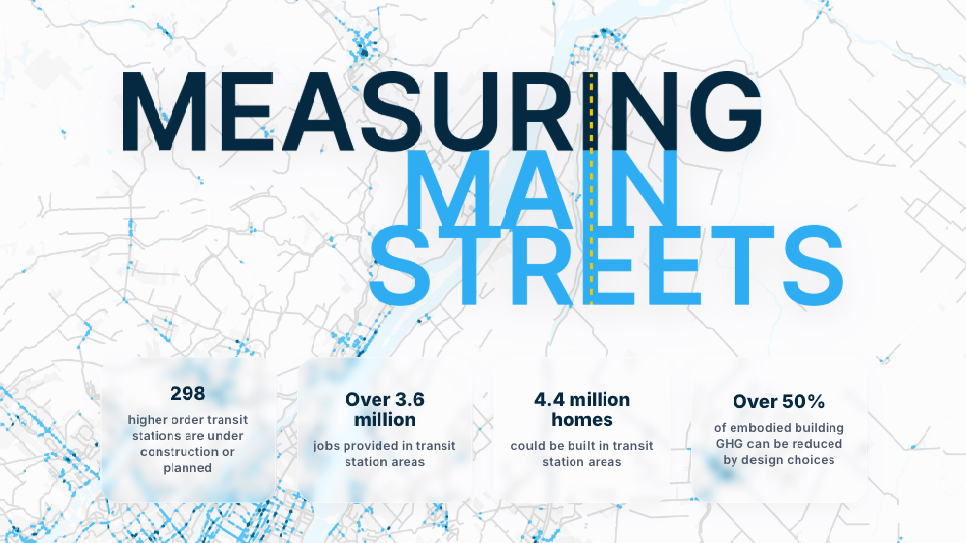
Measuring Main Streets:

TOD on Main

Data Tools to Build Transit-Oriented Complete Communities

The Canadian Urban Institute has launched a major expansion of the Measuring Main Streets platform, introducing new tools and national data to help governments, developers, and policymakers align transit investments with housing and community outcomes.


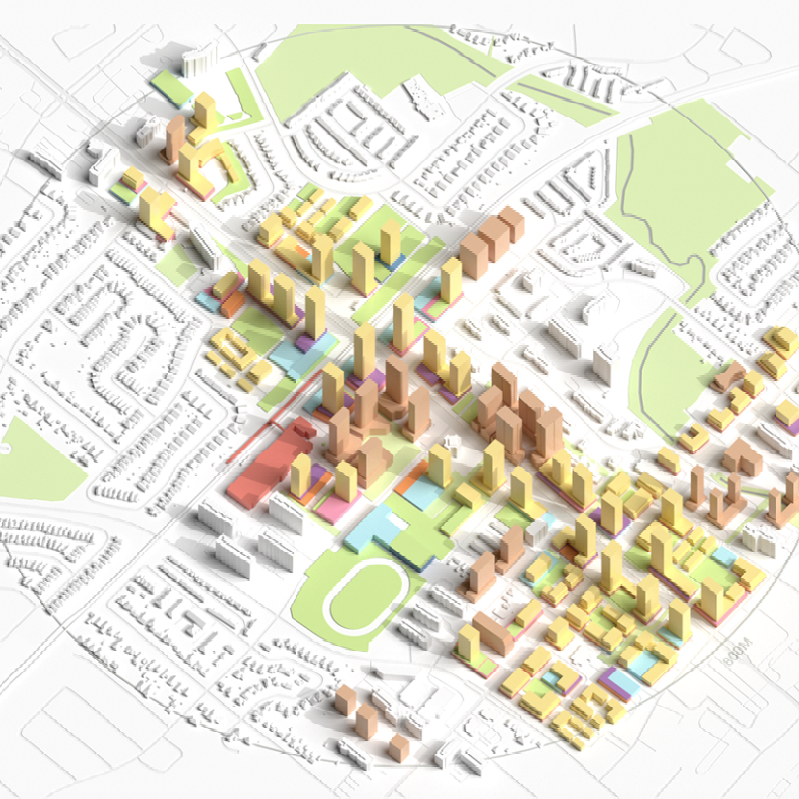
TOD on Main highlights a critical opportunity: with the right conditions in place, higher-order transit—such as subways, LRT, and commuter rail—can support the development of up to 4.4 million homes in station areas across the country, while contributing to many additional community benefits at the local scale.

4.4 million homes

could be built in transit station areas

465 higher-order transit stations exist in Canada

5.59 million Canadians live in transit station areas

But for these transit investments to deliver—and deliver communities where people want to live and can afford to stay—they must be supported by policies, land use decisions, and local conditions that shape development around them.


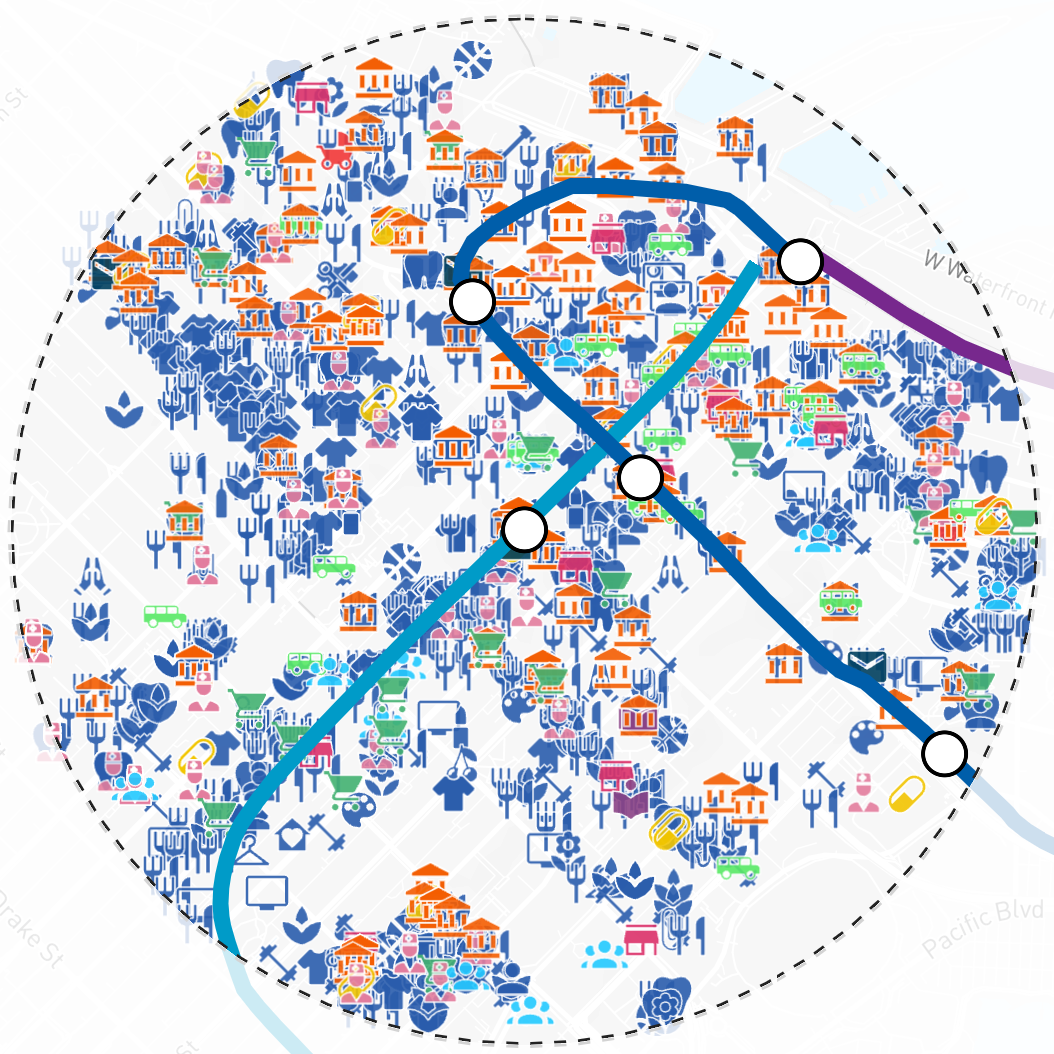
The expansion of Measuring Main Streets includes a new interactive national map of higher-order transit systems, with data on every existing, planned, and under-construction station in Canada, alongside 30+ additional reports, tools, and case studies to move Canadian cities toward Transit-Oriented Complete Communities.


The Measuring Main Streets platform is a part of the Research Knowledge Initiative of Housing, Infrastructure and Communities Canada.

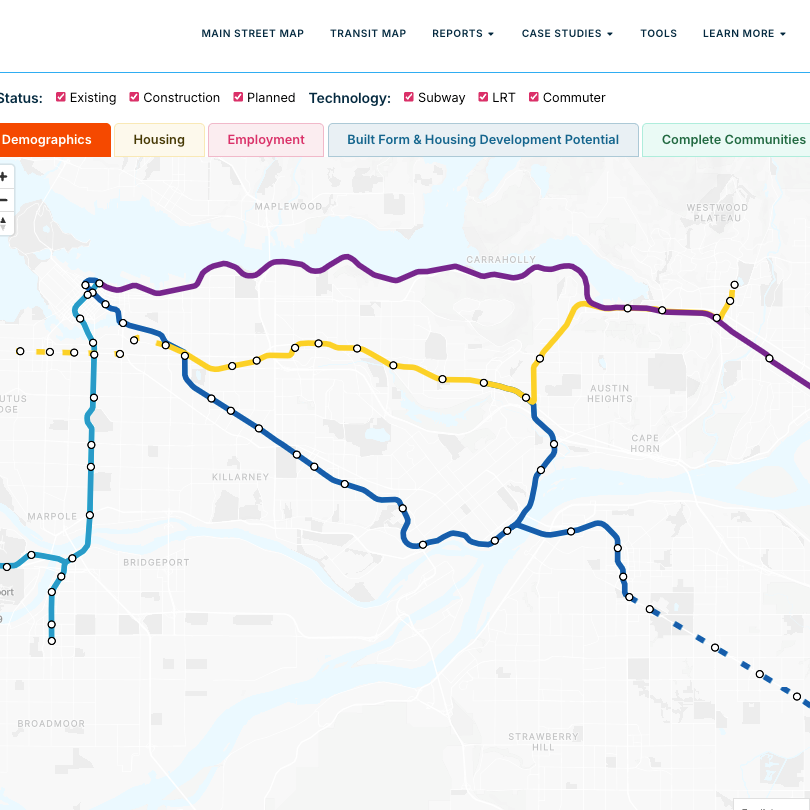
National Transit Map

A map of all existing, under construction and planned higher-order transit lines in Canada. Users can search for a station or explore the map and click on a transit station to see local conditions in the panel on the left. Use data filters to compare demographics, housing, built form, development potential, and amenity access stop-by-stop.

Research

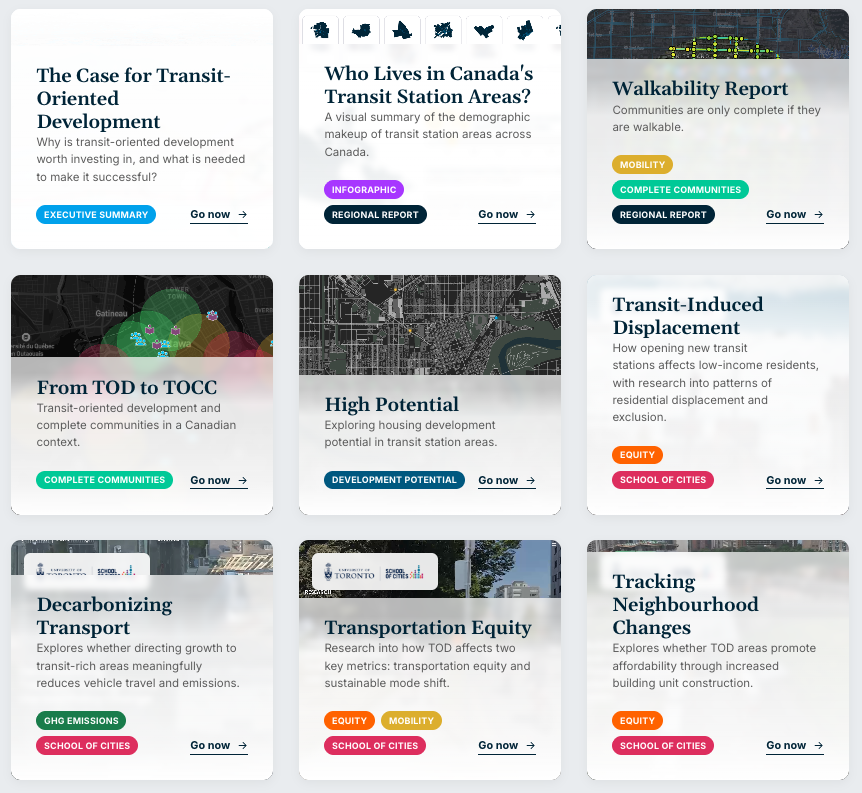
Who lives in Transit Station Areas? What are the fiscal impacts of TOD on municipalities? How do new transit developments impact low-income residents? Explore research from CUI, the School of Cities at UofT, the Canadian Alliance for Transit-Connected Housing, and Digital Public Square tackling key themes including complete communities, walkability, transit-induced displacement, and more.

Case Studies

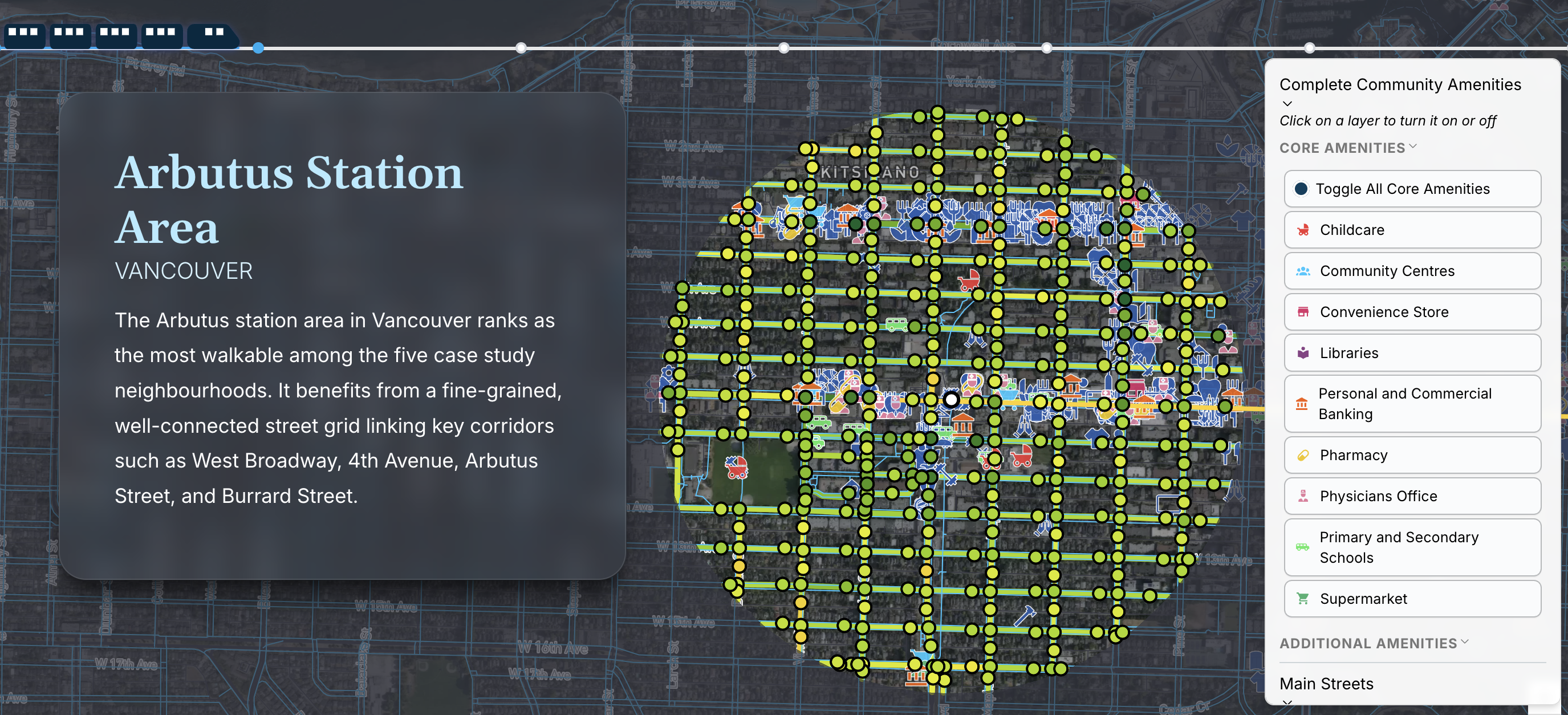
Through five detailed case studies based on real higher-order TOD in Canada’s largest urban regions, discover how policy levers, pre-existing infrastructure, and other factors can determine the kind of communities and neighbourhoods that can be created by TOD.

Tools

Measuring Main Streets research tools are designed for practitioners to support better decision making through a more thorough understanding of any main street. We regularly update this selection with new tools, so check back often to discover new ways of measuring your main street!

Public Engagement

Love Your Neighbourhood is an interactive online experience where people can learn about how the future of their neighbourhood is being shaped in the face of TOD. Check out the innovative platforms piloted in Waterloo, ON, Mississauga, ON and Vancouver, BC.

Meet Our Project Partners

We are Canada's Urban Institute

Support Our Work

Place ‧ People ‧ Potential


The Canadian Urban Institute is a national Canadian charity, doing independent and non-partisan work to further vibrancy, resiliency, prosperity, and equity in every urban community. Promoting place-based and locally-driven approaches, CUI works collaboratively across every level of government, the private and non-profit sectors, grassroots and advocacy organizations, and more. We believe that urbanism is for everyone.

Copyright © 2024 Canadian Urban Institute


Powered by:
GetResponse